





 Portuguese
  English
  Spanish
  4 min of reading
  0 comments


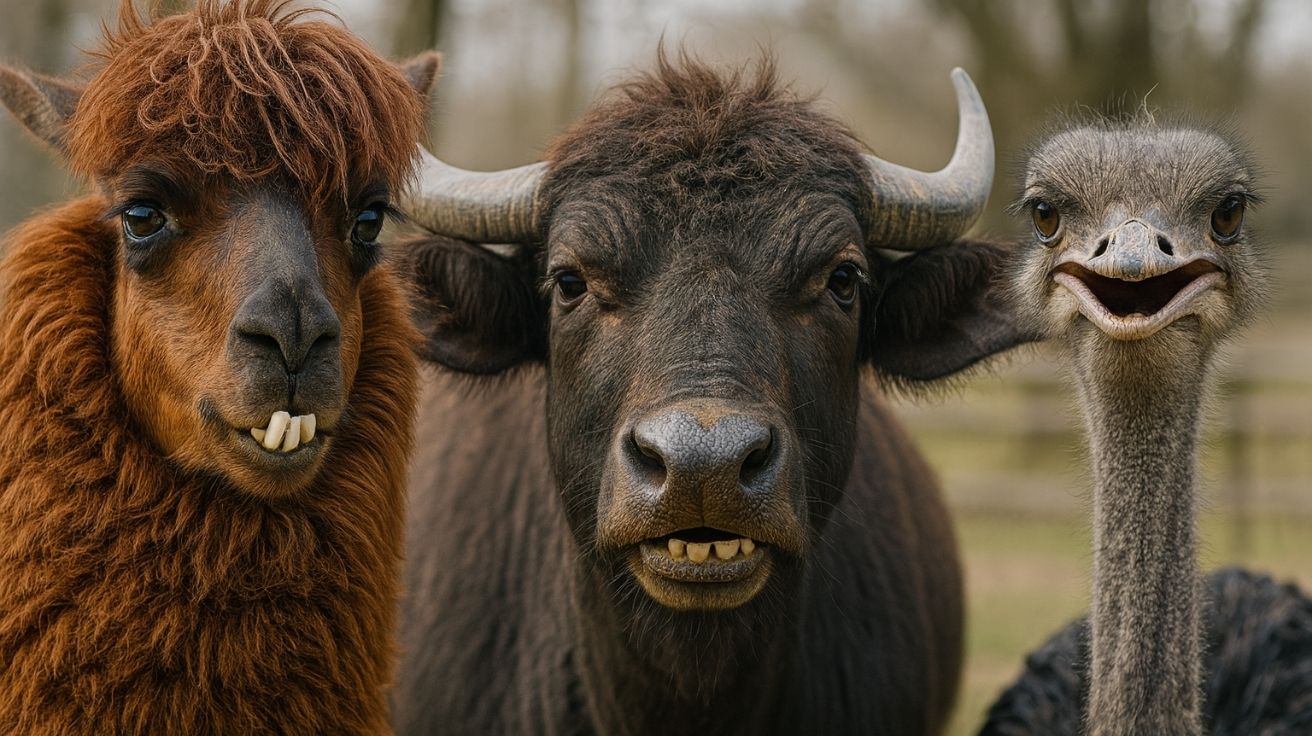
North American Breeders Profit Highly With Animals Like Llamas, Alpacas, Ostriches, and European Deer, Driven by Gourmet Demand, Field Events, and Rural Tourism
In the United States, exotic farms have gained traction among small producers and rural investors since the 1980s, attracted by the high profitability and market curiosity for unusual species such as bison, deer, llamas, ostriches, and African pygmy goats. The trend is set against the backdrop of the search for alternatives to traditional livestock, the growing demand from restaurants for “different” meats, and consumer interest in unusual animals as pets or rural attractions.
Expansion of Uncommon Species and Gourmet Demand in Exotic Farms
According to the U.S. Department of Agriculture (USDA), the number of exotic animals slaughtered annually in the country is still small, around 2,000, compared to 32 million cattle slaughtered per year. However, individual profitability is often much higher. An example is llamas, whose trained male pack animals sell for up to US$ 1,200, while breeding females exceed US$ 16,000. The ostrich, whose meat is lean and has a flavor similar to beef, was once sold for up to US$ 30,000 for an adult pair.
The marketing of meats like European venison or water buffalo has been driven by high-end restaurants and consumers seeking options with less fat and cholesterol. The meat of Asian buffalo, for example, is not only used for mozzarella cheese production but also considered leaner and equally flavorful, making it a promising alternative for warm climate regions where cattle productivity declines.
-
The rise in oil prices in the Middle East is already affecting Brazilian sugar: mills in the Central-South are seeing their margins shrink just as ethanol gains strength.

-
Rain gains strength in April, potentially exceeding 150 mm, placing the North, Northeast, and the coasts of the South and Southeast at the center of the heaviest forecast of the week.

-
A fish that survives out of water, crawls on land until it finds another river, and whose female lays 80,000 eggs at once is infesting rivers and lakes in Brazil, and no one can stop this invasion.
-
WEG took its technology to Spain to create a solar irrigation system that operates independently without needing an electrical grid, and now farmers control everything remotely via their mobile phones.



Events, Tourism, and Alternative Livestock Boost Exotic Farms Sector
In addition to direct sales for slaughter or breeding, exotic animals drive other sectors of agribusiness. Many are used as attractions in agricultural events, 4-H fairs, llama trekking tours, and have become pets for medium to high-end properties. African pygmy goats, for instance, are gaining popularity as pets due to their small size and docile behavior.
Exotic farms are also becoming rural tourism points. Owners rent llamas for eco-trails, offer accommodations among the animals, and promote sales of derived products such as wool, leather, and handicrafts. Specialized publications like Llama Life and LLAMAS Magazine help strengthen this ecosystem by sharing technical and market information with breeders.
Sanitary Challenges, Entry Costs, and Regulation
Despite the opportunities, the sector faces significant barriers. The importation of species from South America is limited due to sanitary risks, such as foot-and-mouth disease, regulated by the USDA Animal and Plant Health Inspection Service (APHIS). Additionally, the initial cost to set up an exotic farm is high. Fences up to 2 meters are required for deer and elk farming, and the construction of suitable facilities for specific feeding and incubation raises initial investments.
Another sensitive point is the lack of technical knowledge among new breeders, leading to high mortality rates among ostrich chicks and other species. Specialists from The University of Texas, The University of Florida, and Iowa State provide technical support for management and breeding, but success depends on the professionalism of the breeder and the structure of the farm.
The Case of Deer and Elk Farms
The production of European deer for slaughter and meat sales is one of the most organized niches. Lucky Star Ranch in New York has created a full structure with over 3,000 animals on 1,500 acres, exporting fresh and frozen meat nationwide with USDA inspection. According to founder Joseph von Kerckerinck, venison has less fat than chicken and high added value in the international market. However, costs for fencing, transportation, and risks from predators such as coyotes impact profitability.
Similarly, farms raising Rocky Mountain elk report waitlists of up to two years for calves. With meat prices reaching US$ 7 per pound in restaurants, return on investment can reach 20% per year, according to breeders.
Technical Sources and Institutional Support
The report “Exotic Livestock: A Small-Scale Agriculture Alternative,” published by the USDA in January 1989, was one of the first official analyses on the subject. The publication compiles data from universities, breeders, veterinarians, and industry magazines like ADAPT2, published by Successful Farming. The document also highlights experts such as Dr. LaRue W. Johnson (Colorado), Dr. William L. Franklin (Iowa), and Dr. Martin Drost (Florida), who contribute to the professionalization of reproductive and sanitary management.
In addition, organizations like the International Llama Association and the National Ostrich Breeders Association work on organizing and disseminating best practices among breeders, publishing manuals, magazines, and promoting annual events.
Perspectives and Fiscal Attention When Working With Exotic Farms
Although the market is still developing, there are indications that exotic farms will continue to grow, especially with the increasing value of rural tourism, sustainability, and the demand for alternative foods. However, the IRS (Internal Revenue Service) warns that only properties with real commercial activities can deduct costs associated with exotic animals. The differentiation between hobby and business is a sensitive fiscal point and should be noted by those interested in the segment.










-

-

-

-

-

-

33 pessoas reagiram a isso.