





 Portuguese
  English
  Spanish
  9 min of reading
  0 comments



The Roman Treasure Emerged In 1992 In The Village Of Hoxne In The United Kingdom When Peter Whatling Was Looking For A Lost Hammer And Asked For Help From His Friend Eric Lawes, An Amateur Detectorist. On November 16, The Detector Indicated Metal At A Shallow Depth And Revealed Coins, Spoons, Jewelry And Silver Vessels Dated 407 And 408 AD.
The Roman treasure that became one of the most important archaeological finds of the end of the Roman period in Britain was not the result of a major expedition, nor of a planned scientific project. It appeared in the yard of a rural property in Hoxne, United Kingdom, in 1992, when farmer Peter Whatling was simply trying to recover a lost hammer and unintentionally ended up with a collection now estimated to be worth about R$ 34 million.
As the hammer did not appear, Whatling asked for help from his friend Eric Lawes, a retired gardener and amateur metal detectorist. On November 16 of that year, the equipment began to indicate metallic signals in the ground. As they dug, the two found ancient objects buried at a shallow depth and realized that it did not seem like an ordinary find, but rather a large and valuable historical collection.
A Gigantic Find That Started With A Missing Tool

The sequence that led to the Roman treasure has something almost cinematic about it because it starts from a tiny, everyday, and even annoying problem: losing a hammer.
-
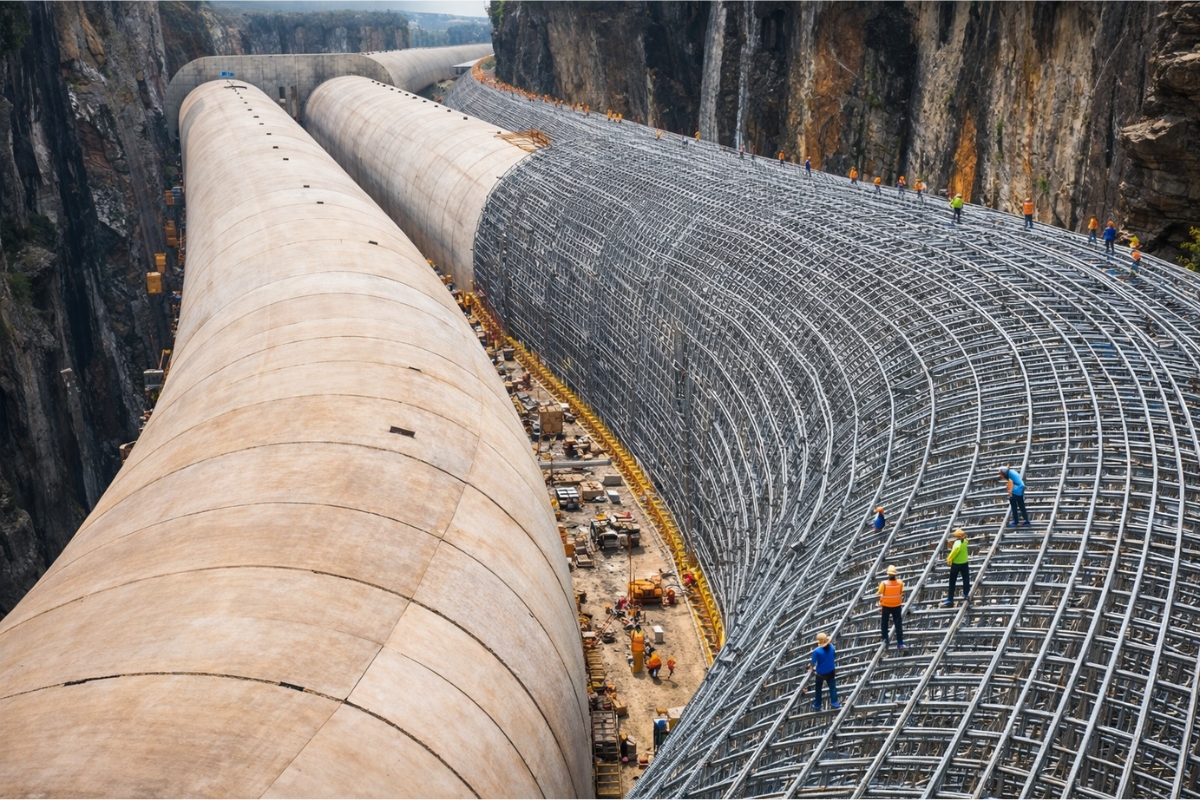
A gigantic dam project in the Himalayas could solve one crisis but silently create another for millions of people.

-
Nikola Tesla said that intelligent people tend to have fewer friends, and now science partially confirms this: a study with over 15,000 people showed that for the more intelligent, socializing too much can even reduce life satisfaction.

-
A superyacht worth US$ 17 million is delivered in impeccable condition, sets out to sail, and hits a bridge in the Bahamas just two hours later.

-
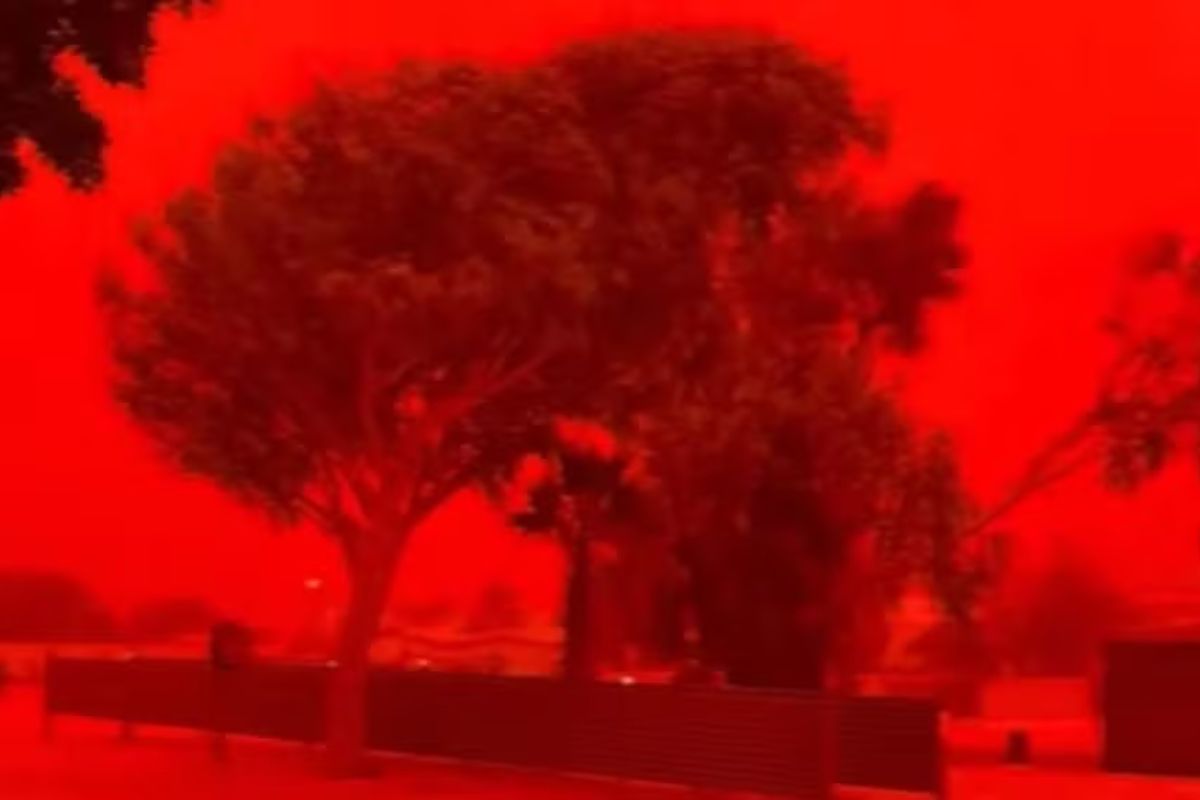
Residents of Australia woke up to a sky completely red like blood before the arrival of Cyclone Narelle, which hit the coast with winds of 250 km/h, tearing off roofs and lifting iron dust in a scene they described as apocalyptic.

The farmer was not looking for gold, did not intend to explore the land for archaeological purposes, and initially did not imagine that there was anything unusual there.
It was the combination of persistence and the presence of someone with a metal detector that unlocked the discovery. Eric Lawes, being an amateur detectorist, had the equipment, familiarity with reading signals, and willingness to help.
When the detector indicated metal, what came next was not a single piece, but a succession of items that quickly changed the moment’s significance. The earth did not return a lost object: it returned a complete and densely concentrated Roman treasure, hidden as if someone had urgency and method.
The Day November 16, 1992 And The Depth That Revealed The Secret
The detail of the date marks the exact point at which the Roman treasure ceased to be a “possibility” and became a documentable reality. On November 16, 1992, the detector indicated the presence of metal in a shallow layer of soil.
This point is important because a burial at a shallow depth tends to be more vulnerable to the elements, ground movement, and human intervention, making the preservation and concentration of the objects even more impressive.
As the initial excavation progressed, coins, spoons, and other ancient objects emerged. The type of material found right at the beginning already hinted at value and antiquity.
This was not a collection of isolated remnants; it was an intentional deposit, with diversity of items and clear signs that someone had organized everything carefully.
The Attitude That Saved The Discovery: Calling The Police And Archaeological Service
Upon realizing that they had something significant in front of them, Whatling and Lawes made a choice that defined the fate of the Roman treasure: they immediately notified the local police and the archaeological service. This decision avoided two classic risks in discoveries of this type.
The first risk is destroying the context of the find, when people excavate without technique, scatter pieces, mix soil layers, and erase essential clues.
The second risk is the illegal route, when items are removed from the site and disappear in clandestine sales, fragmenting a historical collection that should be studied as a unit.
The prompt action of authorities and specialists allowed archaeologists to make precise documentation of the location and the relative position of the artifacts. In archaeological finds, context says a lot about intention, time, and burial method. Every centimeter matters: where the coin was, how the jewelry was grouped, what type of container was used, what organic materials survived.
Hoxne Treasure: Why It Is Considered One Of The Most Important In The World

The collection was named the Hoxne Treasure, in reference to the village where it was found. It is considered one of the most important finds of gold and silver from the end of the Roman period in Britain and ranks among the five largest treasures of precious metals from the 2nd to the 7th centuries AD ever recorded in the world.
This type of classification comes not only from the material value but from the complete package of evidence: quantity, variety, preservation, and the possibility of dating and studying the burial within a critical historical context when the Roman world was rapidly changing.
The rarity here is not just having “many coins”: it is having a complete portrait of wealth, habits, and everyday objects preserved together, like a safe frozen in time.
15,233 Coins And Much More: The Detailed Inventory Of The Roman Treasure
The central number of the Roman treasure is straightforward and gigantic: 15,233 coins. This volume alone places the find in an extraordinary category.
But the collection is not limited to money. It also includes silver vessels, gold jewelry, spoons, and personal hygiene items, forming a collection that blends accumulated wealth with objects that, at some point, were in circulation in someone’s real life.
The presence of spoons and hygiene items is particularly striking because it suggests a more “domestic” collection than purely financial.
It does not seem just to be a pile of coins stored by chance. It seems like a collection carefully gathered, perhaps the result of family heritage, perhaps accumulation over time, perhaps from moments of instability when the owner decided to save what they could carry and hide.
The Roman treasure of Hoxne stands out for gathering, in the same burial, mass money and personal items, which broadens the hypotheses about who buried it and why.
The Oak Chest, The Straw And The Fabric: The Physical Proof Of Planned Storage
One of the richest details of the find is that the excavation revealed remains of wood and organic materials, indicating that the Roman treasure was stored in an oak chest. This chest would have had internal compartments and was protected by straw and fabric.
This is the type of information that transforms the discovery into a concrete history. It is not just “there was a lot buried.”
There was a specific container, a method of organization, and layers of protection. Compartments suggest separation by item type, value, or use.
Straw and fabric suggest an attempt to cushion, avoid friction, and protect the shine and integrity of objects, especially delicate pieces like jewelry and silver items.
The Roman treasure was not thrown on the ground. It was packaged, divided, protected, and buried like an improvised safe, with logic and intention.
The Dating And The Beginning Of The 5th Century: The Coins Of 407 And 408 AD
The dating of the coins indicates that the Roman treasure was buried in the early 5th century. The most specific data is that some pieces are from the years 407 and 408 AD, which offers a clear time window for the burial.
When a treasure of this size is dated with this level of precision, it gains additional scientific value. The coins function as chronological markers: if there are pieces from 407 and 408, the burial cannot be earlier than those dates.
This helps place the treasure in a period of transition and uncertainty in Roman Britain, when the political and social climate might have encouraged people to hide their wealth, fearing losses, looting, or power changes.
The Roman treasure of Hoxne is not “from just any century”: it points to a specific moment at the beginning of the 5th century, when instability was a concrete reality.
The Great Mystery: Who Buried It And Why Did No One Come Back To Retrieve It
Despite all the numbers and physical evidence, there is an essential gap: researchers have not been able to determine who the owner of the Roman treasure was, nor why the collection was hidden. This lack of identity opens up a huge space for hypotheses and historical interpretations.
Among the possibilities raised is the fear of the political instability of Roman Britain, a scenario in which hiding wealth could be an act of patrimonial survival.
Another hypothesis is that the collection may have been formed by goods obtained from looting, which would explain the variety and concentration of valuable items.
The most intriguing point is the implicit outcome: someone buried a collection with coins, silver, and gold, took care to pack and organize everything in an oak chest, and then never returned to retrieve it.
This could indicate death, forced displacement, loss of territory, continuous fear, or an abrupt break in the owner’s life. The Roman treasure is not just a set of objects; it is an interrupted narrative in the midst.
What Happened Next: British Crown, Museums And The Division Of Value
The fate of the Roman treasure followed a formal path after its discovery. In 1993, the collection was handed over to the British Crown and acquired by museums. Part of the collection is on display at the British Museum in London, which places the find in an institutional circuit of preservation and public access.
The payment for the treasure was divided between the discoverer and the owner of the land, reflecting the reality that the discovery involved both the finder and where it was found. The mentioned value is 1.75 million pounds, an amount equivalent today to about R$ 34 million.
This number helps to scale the modern impact of the find, but it also serves as a contrast: what was buried for unknown reasons at the beginning of the 5th century became, many centuries later, museum heritage, archaeological study, and a global reference in late Roman treasures. The Roman treasure left the backyard of a farm and entered global history.
Why Is This Roman Treasure So Rare Even Among Great Finds
There are treasures with many coins. There are treasures with jewelry. There are finds with well-preserved silver. What makes the Roman treasure of Hoxne so unique is the simultaneous combination of factors:
The scale of the collection, with 15,233 coins
- The variety of items, including silver vessels, gold jewelry, spoons, and personal hygiene items
- The physical evidence of organized storage, with oak chest, compartments, straw and fabric
- The precise chronological window, with coins dated to 407 and 408 AD
- The suggestive historical context at the beginning of the 5th century, with hypotheses linked to instability and looting
- The care taken in notifying the authorities, allowing technical documentation of the site
- The institutional fate, with acquisition by museums and exhibition at the British Museum
It is the combination of quantity, quality, context, and preservation that transforms the Roman treasure of Hoxne into something much greater than a “million-dollar find”.
The Human Detail That Makes History Explode: Chance, Choice And Consequence
The story has three very strong human layers. The first is chance: a lost hammer triggers everything.
The second is choice: instead of digging indiscriminately or trying to take clandestine advantage, those involved called the police and archaeologists. The third is consequence: the find becomes public heritage, historical study, and a global reference.
If Whatling had given up on the hammer, nothing would have happened. If Lawes had not had the detector, the signal would not have been perceived.
If they had dug on their own without care, they could have destroyed the context. If they had tried to sell, the collection could have been fragmented and disappeared.
The Roman treasure did not survive just because it was buried; it survived because, at the right moment, the decisions were the most responsible possible.
Do you believe that those who buried this Roman treasure were fleeing from a crisis in Roman Britain or hiding wealth obtained from looting?







-

-

-

7 pessoas reagiram a isso.