





 Portuguese
  English
  Spanish
  4 min of reading
  1 comment


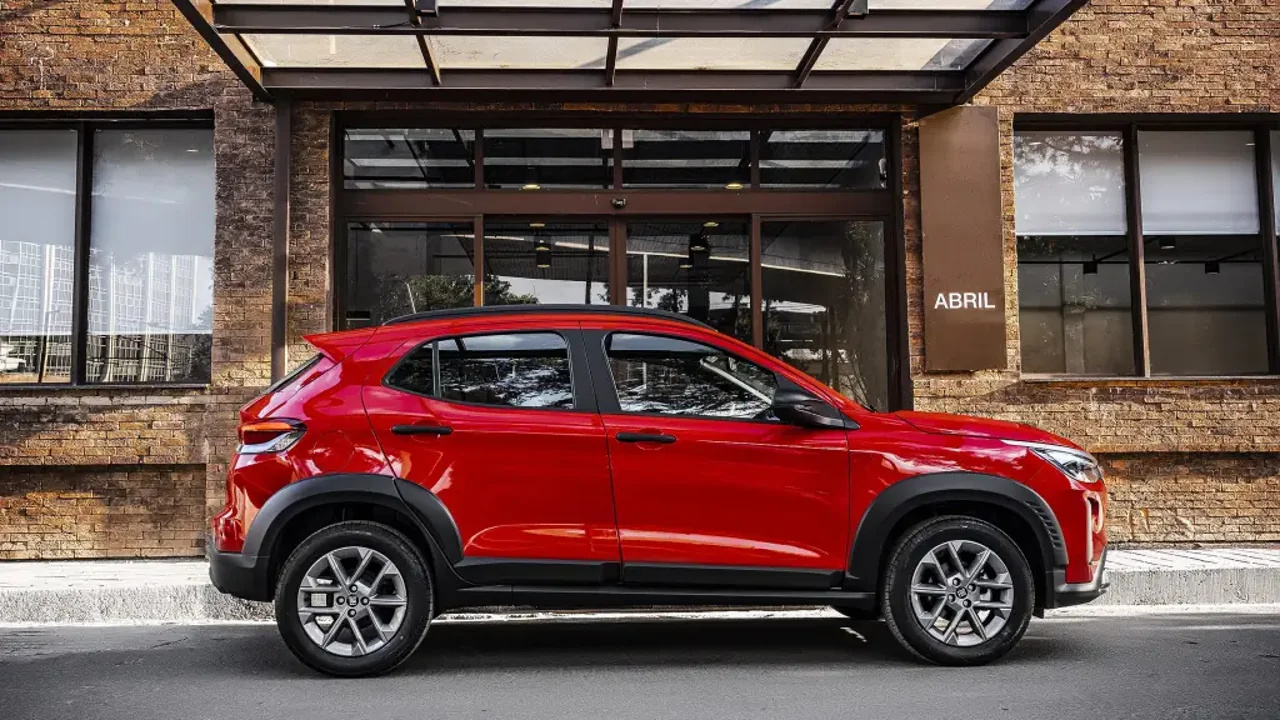


More than Low Price: Updated Design and Optional Package Try to Revitalize the Pulse Drive 1.3 2026
The Fiat Pulse Drive 1.3 manual returns in 2026, once again occupying the title of the cheapest SUV in Brazil. Now priced at R$ 99,990, the Fiat model positions itself below rivals VW Tera MPI and Renault Kardian, which have become even more expensive.
But not everything is perfect. The price increase has brought the Pulse closer to R$ 100,000, requiring consumers to carefully analyze what it truly offers compared to the competition.
Updated Design, but Still Simple
The changes in the 2026 line of the Pulse are subtle, focused on the front end. The SUV now features the same bumper as the Fiat Fastback, with vertical openings on the edges. The grilles have received new designs, but full LED headlights remain absent, appearing only in more expensive versions like the Impetus Hybrid and the Abarth.
At the rear, no news. The trunk still holds 370 liters, a number that seems competitive but falls short in real space compared to the VW Tera (410 L) and the Renault Kardian (407 L), which use the VDA measurement considered more accurate.
-
A 2024 Toyota Corolla hybrid with only 12,500 km ended up in the junkyard, and when the dismantling staff saw the car, they were shocked because they know that this model easily exceeds 300,000 km without serious mechanical issues.

-
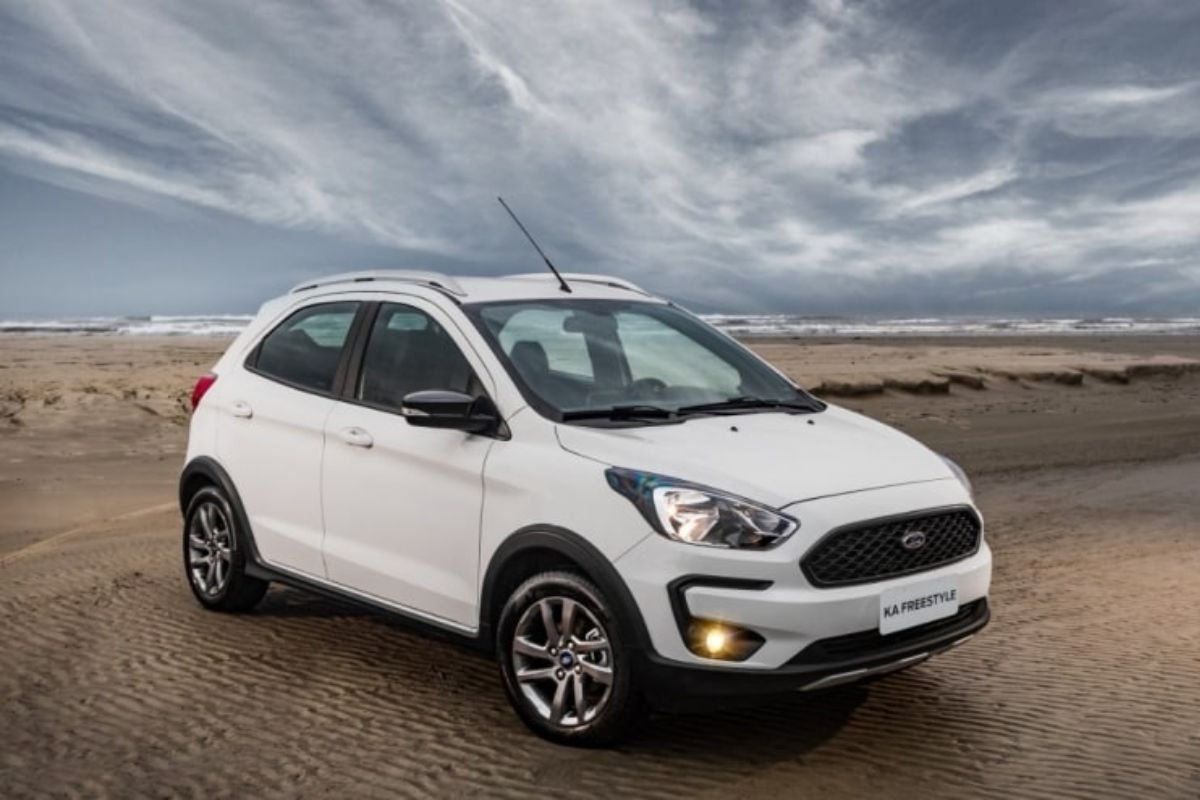
If you want a car with an SUV look but don’t have the money to buy a new one, there are 5 used models starting at R$ 17,900 with raised suspension and body protection that can handle dirt roads without fear.
-
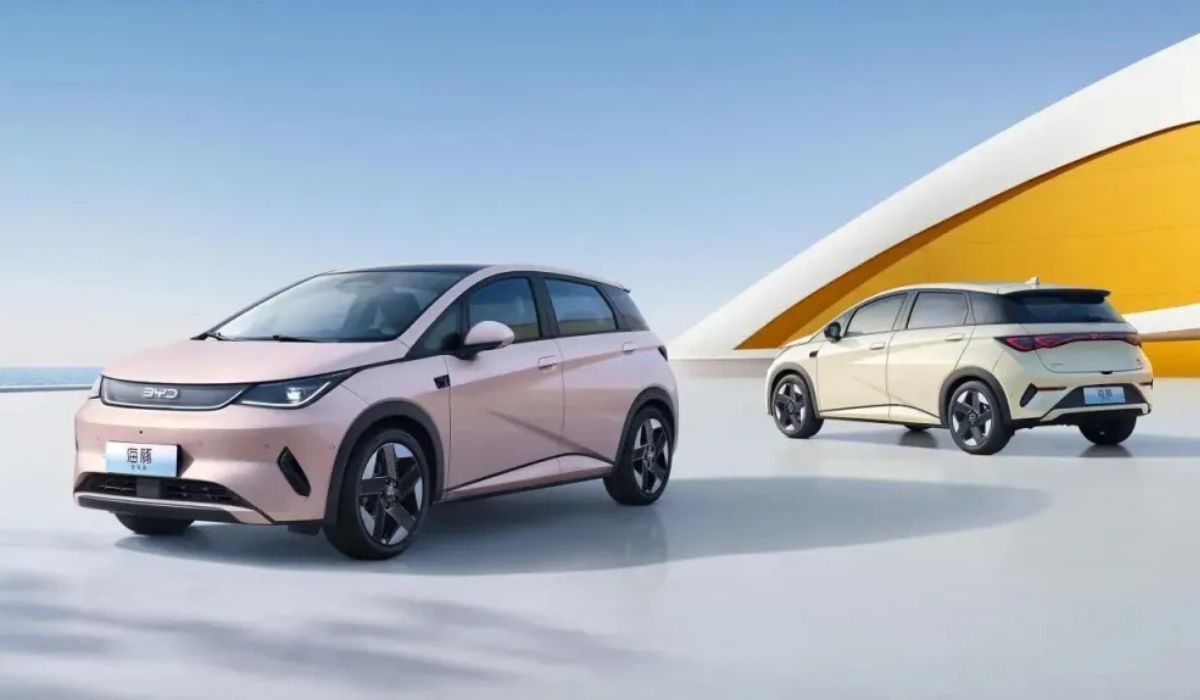
With a new look, more power, more technology, a larger size, and the farewell to a controversial item, the BYD Dolphin 2027 is getting ready to arrive in Brazil in 2026, stronger and more competitive than ever.
-
Is financing a car really worth it? Discover the impact of 25% annual interest and how you could end up paying up to R$ 39,000 more for your vehicle.


The finishing also reveals its entry-level position. Black matte mirrors and door handles contrast with rivals that offer painted finishes as standard. To improve, there is the Pack Plus (R$ 2,990), which adds alloy wheels, a rearview camera, and parking sensors.
Equipment: Hits and Misses
Among the positive points, the Fiat Pulse Drive 1.3 delivers an 8.5″ multimedia center compatible with Android Auto and Apple CarPlay, digital air conditioning — an item that is not always available in rivals — and electric mirrors.
But there are worrying gaps. The model has only four airbags (front and side). The VW Tera MPI and Renault Kardian each offer six airbags, as well as technologies like autonomous emergency braking and fatigue detectors.
In this regard, the Pulse clearly shows where it cut costs. The consumer gets a cheap SUV, but sacrifices safety features that have already become standard in the segment.
Engine and Consumption: Fair Performance, but Stagnated Evolution
The 1.3 aspirated engine delivers 98/107 hp and 13.2/13.7 kgfm (gasoline/ethanol). The five-speed manual transmission is precise but calls for a sixth gear to reduce noise at higher speeds.
In tests, the SUV went from 0 to 100 km/h in 12.4 seconds — nothing brilliant, but acceptable for the category.
Fuel consumption stands out:
- City: 13.3 km/l
- Highway: 16.2 km/l
Although good, the numbers have worsened compared to the launch in 2022, reflecting changes to the engine to meet Proconve L8 standards. Still, the Pulse remains competitive against rivals.
Is It Worth Buying?
For R$ 99,990, the Fiat Pulse Drive 2026 continues to be one of the most accessible entries into the SUV segment in Brazil. It offers advantages such as digital air conditioning and the TC+, a traction assistant exclusive in the segment.
On the other hand, it loses important points in safety and interior space, in addition to requiring consumers to invest in an additional package to avoid looking too basic.
It’s a typical case where the wallet weighs as much as the equipment list.
Performance Tests – Fiat Pulse Drive 1.3 MT
- Acceleration
- 0 to 100 km/h: 12.39 s
- 0 to 1,000 m: 34.40 s / 149.48 km/h
- Re-accelerations
- 40 to 80 km/h: 7.13 s
- 60 to 100 km/h: 11.02 s
- 80 to 120 km/h: 23.48 s
- Braking
- 60 km/h to 0: 14.21 m
- 80 km/h to 0: 25.25 m
- 100 km/h to 0: 39.92 m
- 120 km/h to 0: 57.07 m
- Consumption
- Urban: 13.3 km/l
- Highway: 16.2 km/l
- Internal Noise (without air conditioning)
- Neutral / Max RPM: 42.5 / 73.7 dBA
- 80 km/h: 67.1 dBA
- 120 km/h: 73.9 dBA
Technical Sheet – Fiat Pulse Drive 1.3 MT
- Engine: Gasoline/Ethanol, front, transversal, 4 cylinders, aspirated, 8 valves, 1,332 cm³
- Power: 107 hp (ethanol) / 98 hp (gasoline)
- Torque: 13.7 kgfm (ethanol) / 13.2 kgfm (gasoline)
- Transmission: Manual, 5 speeds, front-wheel drive
- Suspension: McPherson (front), torsion beam (rear)
- Brakes: Ventilated disc (front), drum (rear)
- Steering: Electric, 10.5 m turning diameter
- Wheels and Tires: Alloy 16″, 195/60 R16
- Dimensions:
- Length: 4.095 m
- Width: 1.777 m
- Height: 1.550 m
- Wheelbase: 2.532 m
- Weight: 1,140 kg
- Ground Clearance: 18.9 cm
- Trunk: 370 liters
- Fuel Tank: 47 liters
- RPM at 100 km/h: 2,850 rpm
- Actual Speed at 100 km/h: 97 km/h
- Steering Wheel: 2.5 turns
And you? If you had R$ 100,000 today, would you prefer the Fiat Pulse Drive 1.3 as the cheapest SUV or invest in a better-equipped competitor, even if it costs more?
Leave your opinion in the comments.





Compraria até no escuro porque já tive um 147 1979 azul tireno.
Sou fã da fiat antes de 1977 no Brasil em Betim.
Preciso ganhar na Mega para colecionar toda linha FIAT de 1977 até o último 2026