






 Portuguese
  Spanish


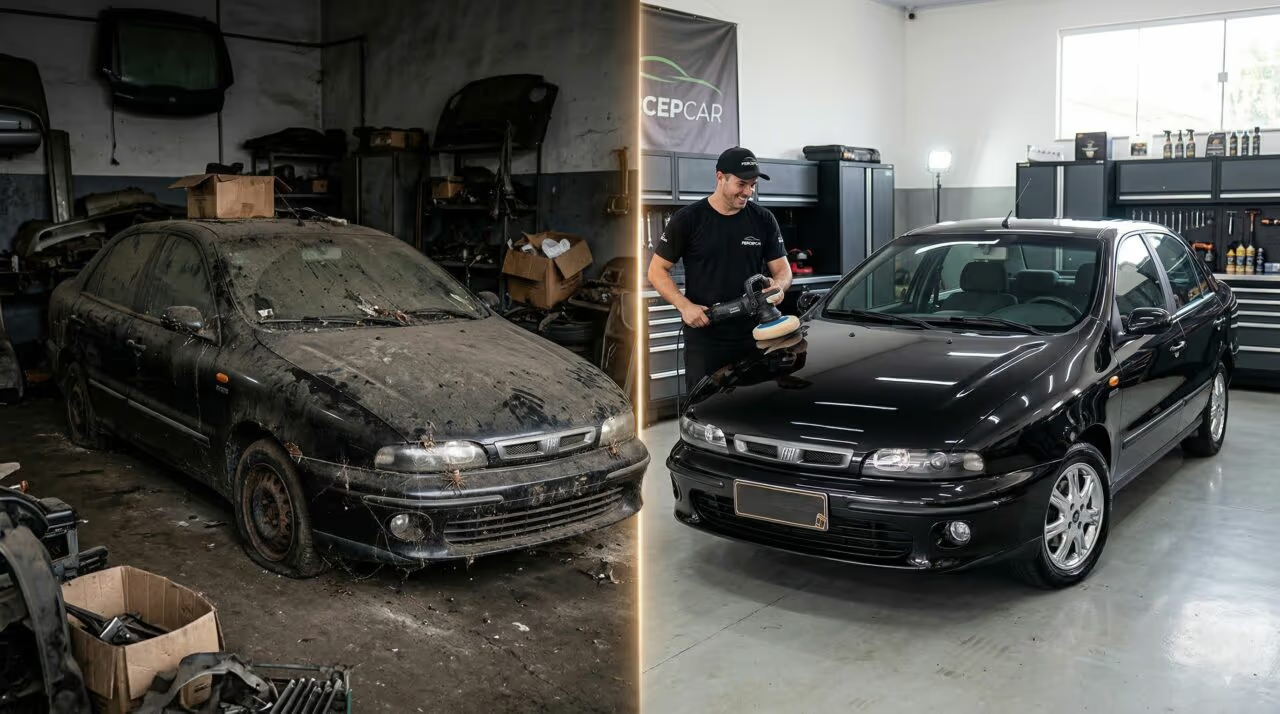

A sedan that sat for years, surrounded by rust and mechanical failures, returned to circulation after a restoration closely monitored by an automotive channel, in a story that mobilized an audience and transformed an abandoned car into a public project.
A Fiat Marea that had been sitting in a closed workshop during the pandemic was restored and, at the end of the process, delivered to a subscriber of an automotive channel.
The project was conducted by Percepcar, which showcased the recovery of the model on social media after receiving the vehicle at no cost, with the condition of completing the restoration and passing it on to its own audience.
The proposal and the stages of the restoration appear in videos published by the channel, including the episode where the car is presented as a donation and another where the team reports a small fire during the attempt to make it run.
-
2027 Toyota Corolla Cross Unveiled: New Design, Enhanced Fuel Efficiency, Reduced Maintenance Costs, Advanced Technology, Connected Services, and Up to 10-Year Warranty

-
Fiat Cronos Precision 2018: Affordable Sedan with Spacious Trunk and Reliable Maintenance
-
Volkswagen to Cut Production by 1 Million Cars by 2030, Reducing Jobs and Platforms, Focusing on More Profitable Models

-
Toyota Launches First 100% Electric Car in Brazil: bZ4X with 343 HP, All-Wheel Drive, 361 km Range, Priced at $419,990 BRL, Limited to 99 Units




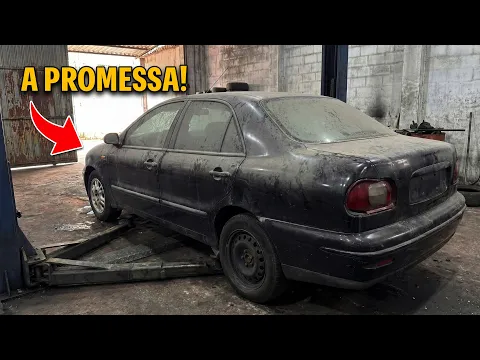
The case gained attention because the Marea arrived at the project in an advanced state of deterioration.
There was rust, signs of a long period without use, and indications of previous maintenance interventions.
Therefore, the recovery required more than a basic inspection.
The work involved disassembly, technical inspection, and repairs in mechanical, electrical, and aesthetic areas until the car was able to run again.
Abandoned Fiat Marea became a restoration project
According to the content released by the channel, the former owner decided to pass the Marea on for free but established one condition: the car could not just be repaired for internal use or resale.
The restoration needed to be completed, recorded on video, and ultimately benefit the community that follows the content.
It was from this requirement that the vehicle became the center of a series on automotive recovery.
Instead of hiding the conditions in which the car was found, the team showed the state of the automobile from the beginning.
The Marea appeared dirty, with spots of corrosion and a finish worn by time.

The channel’s proposal became to document, step by step, what would be necessary to get the vehicle running again.
This type of record attracted an audience interested in the final result as well as the costs and challenges of the process.
Mechanical problems appeared in the first attempts
The first signs that the restoration would be extensive emerged during the initial analysis.
Upon opening the engine compartment, the team found accumulated dirt, rust, and signs consistent with the long period the car had remained unused.
The scenario included cobwebs and deteriorated components, indicating the need for a broader intervention.
The attempt to start reinforced this diagnosis.
In one of the videos in the series, the channel reports that there was a small fire when the car was started, an episode that exposed significant failures and led to a more thorough review of the assembly.
From that point, the recovery began to require specialized monitoring to ensure the mechanical part was redone safely.
As a result, the project moved to a broader stage, involving disassembly, replacement of components compromised by time, and reorganization of items that no longer met adequate conditions for use.
The history of wear and signs of previous maintenance weighed on the process.
Still, the channel presented the restoration as a technical job aimed at recovering a car that was out of circulation.
How much did the restoration of the Fiat Marea cost
The amounts disclosed about the renovation indicate a total investment of approximately R$ 9,800, with most of the expense concentrated on bodywork.
Only this stage would have consumed around R$ 6,500, an amount associated with correcting dents, treating rust, and preparing the body for new paint.

The numbers were reproduced in a report about the case and also align with the content published by the channel regarding the project’s expenses.
In addition to the bodywork, the budget included mechanical, electrical, cleaning, and finishing costs.
In restorations of this type, the final cost often varies according to problems that arise only after disassembly, especially in vehicles that have been sitting for years.
In the case of the Marea, this became evident right from the first attempts to operate it.
The invested amount brought the car closer to a price range compatible with market entry-level versions of the model in recent public references, now around R$ 10,000 to just over R$ 11,000, depending on the year and configuration.
This data helps to situate the scope of the renovation.
The restoration did not change the positioning of the Marea in the market but removed the car from a low liquidity condition and placed it back in a price range close to that practiced for basic versions of the sedan.
After the recovery, the vehicle was in a condition of use and presentation compatible with that level.
Bodywork, painting, and cleaning changed the appearance
The exterior underwent a series of interventions to correct the accumulated damage.
The body, which showed wear and corrosion, received bodywork treatment and a new black paint job.
Wheels and chassis were also cleaned and revitalized, while the finishing was completed with polishing.
The set gave the car a different appearance from that shown at the beginning of the project.
Inside, the process included sanitizing, vacuuming, and cleaning surfaces such as carpets, panels, and upholstery.

The leather seats also received treatment to recover part of their appearance and texture compromised by time.
According to the channel, the internal stage aimed to restore minimum conditions for use and reduce marks typical of a car that had been sitting for years.
Destination of the car after the channel’s project
After the renovation was completed, the channel reported that it fulfilled the condition set by the former owner and allocated the Marea to a subscriber.

This outcome concluded the proposal presented from the beginning of the project, which foresaw the recovery of the car and its subsequent delivery to the community that followed the series.









