





 Portuguese
  English
  Spanish
  4 min of reading
  0 comments



Mato Grosso Court Declared Unconstitutional Municipal Law That Included Fibromyalgia Among Diseases for Full Retirement, Pointing Out Formal Vices and Usurpation of Legislative Competence.
The Mato Grosso Court of Justice (TJMT) declared on the last 11th, the unconstitutionality of Municipal Law No. 2,690/2025, of Pontes e Lacerda (483 km from Cuiabá), which had included fibromyalgia in the list of diseases that guarantee full retirement for municipal employees. The decision resonates throughout the state, reigniting the debate about the social security protection of employees with disabling diseases and the constitutional limits of legislative competence.
Understand the Case: Veto Overturned and Lawsuit for Unconstitutionality
The municipal law was proposed by a council member and approved by the Pontes e Lacerda City Council. After a total veto by Mayor Jakson Bassi (PL), the Legislature overturned the decision and promulgated the law. Dissatisfied, the Executive filed a Direct Action of Unconstitutionality (ADI), arguing formal vice of initiative.


According to the State Constitution and the Organic Law of the municipality, only the head of the Executive can propose laws regarding employees, legal regime, provision of positions, stability, and retirement. Thus, for the mayor, the inclusion of fibromyalgia in the list of diseases that guarantee full retirement constituted usurpation of competence.
-
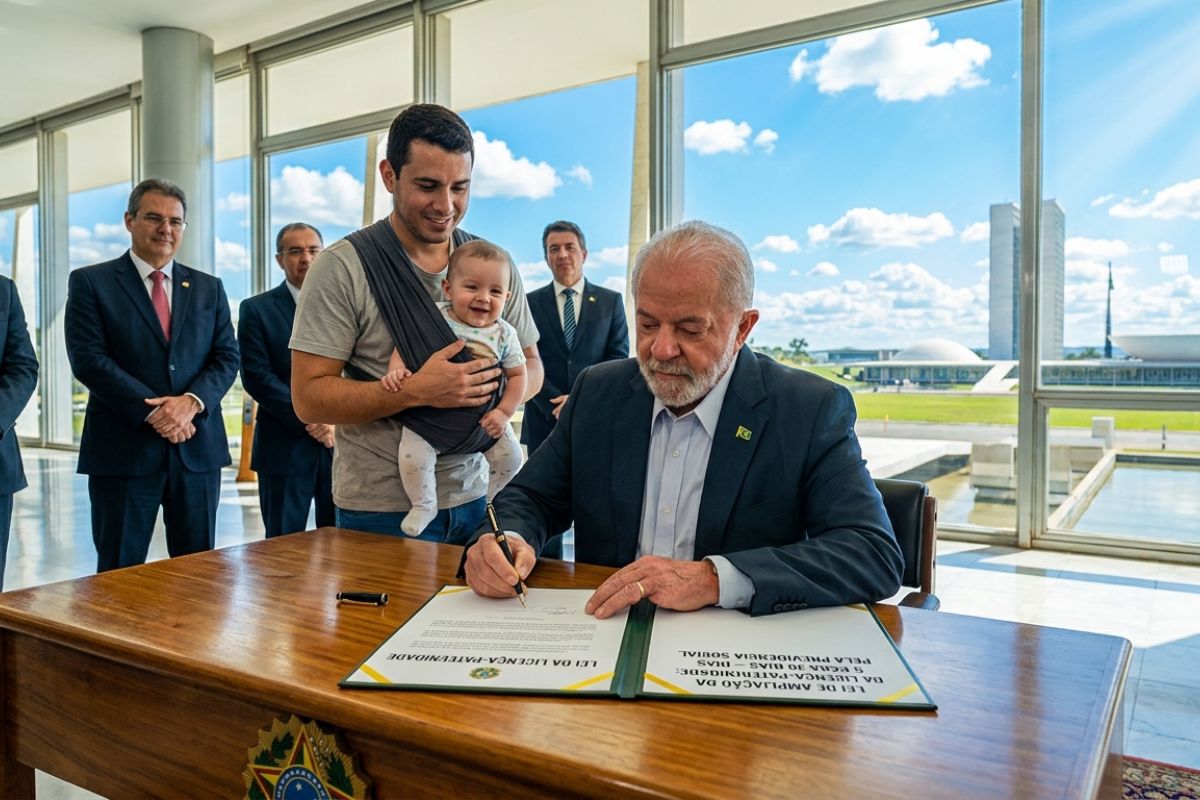
Government enacts new law: paternity leave increases from 5 to 20 days with gradual increases until 2029, and Social Security pays the paternity salary; companies no longer bear the absence cost, estimated at R$ 5.4 billion.
-
End of the 1-hour lunch break in the CLT? Current labor law maintains the break, allows for negotiated reductions, and defines rules for working hours and home office in Brazil.

-
Employee Fired After Accumulating 114 Days of Medical Leave in One Year, Labor Court Upholds Company’s Decision

-
Employee Fired While Treating Depression Wins in Court and Vale Is Required to Rehire Him Following Decision Based on the CLT and INSS Benefits


The Prosecutor’s Office issued a favorable opinion on the request, emphasizing that the formal vice does not allow for convalidation, even though the law aimed to protect employees with serious illnesses.
TJMT Decision: Formal Vices and Financial Impacts
The rapporteur, Judge Orlando de Almeida Perri, highlighted in his vote that the law suffered from an incurable formal vice:
“Upon finding the existence of a formal vice, jurisdictional action is bound, necessitating the declaration of unconstitutionality. The nullity resulting therefrom retroacts to the date of publication of the law, removing it from the legal system with ex tunc effect.”
According to him, even if the objective was legitimate, the City Council could not legislate on employee retirement, as this prerogative is exclusive to the Executive. In addition to the formal problem, the law could generate irregular financial impacts on the municipal social security system, without the required feasibility studies.
City Council Defended Social Rights
In their defense, the City Council argued that the law sought to ensure social rights for employees affected by disabling diseases. However, the TJMT reinforced that the initiative of the Legislature could not surpass constitutional limits. For the rapporteur, the protection of workers must respect the separation of Powers, under penalty of creating legal and financial instability.
Fibromyalgia: The Disease That Motivated the Law
Fibromyalgia is a chronic condition marked by widespread pain, intense fatigue, and non-restorative sleep. It results from changes in how the brain processes pain stimuli rather than a specific physical injury. Among the most common symptoms are:
- Diffuse pain in areas such as the back, arms, legs, and hips;
- Persistent fatigue that does not improve with rest;
- Sleep disorders such as insomnia and feelings of tiredness upon waking;
- Cognitive difficulties (“brain fog”), with memory lapses and concentration issues;
- Associated symptoms such as headache, intestinal changes, tingling, anxiety, and depression.

Although not considered degenerative, fibromyalgia can compromise the ability to work, making it challenging for employees in roles requiring physical effort or constant attention.
What Changes in Practice for Employees
With the TJMT decision, fibromyalgia is no longer among the diseases that guarantee automatic full retirement in Pontes e Lacerda. This means that affected employees will need to undergo medical examinations and follow general social security legislation to claim benefits, without the guarantee of full coverage provided for in the annulled law.
The decision also has ex tunc effect, meaning it retroacts to the date of publication of the law, nullifying all legal effects since then.
National Debate: Rights Versus Constitutional Limits
The case illustrates the recurring tension in Brazil between the expansion of social rights and respect for legislative competence rules. On one hand, there is a social appeal to protect workers suffering from disabling illnesses, such as fibromyalgia. On the other, there is a need to maintain legal security, the financial balance of social security regimes, and the separation of Powers.
Experts argue that any changes to the retirement rules for employees should be conducted by the municipal or state Executive, with technical studies on financial impacts, and not by the Legislature, under penalty of nullity.
The TJMT’s decision to overturn the law in Pontes e Lacerda reinforces the importance of respecting constitutional limits, even if the intent is noble. For employees with fibromyalgia, the ruling means there will be no automatic full retirement, necessitating reliance on general invalidity retirement mechanisms, through evidentiary proof.
However, the debate is far from over. The discussion about including or not fibromyalgia as a disease that grants the right to full retirement must continue in political, legal, and social instances, reflecting the difficult task of reconciling social justice, pension sustainability, and the separation of Powers.










-

-

2 pessoas reagiram a isso.