





 Portuguese
  English
  Spanish
  4 min of reading
  1 comment


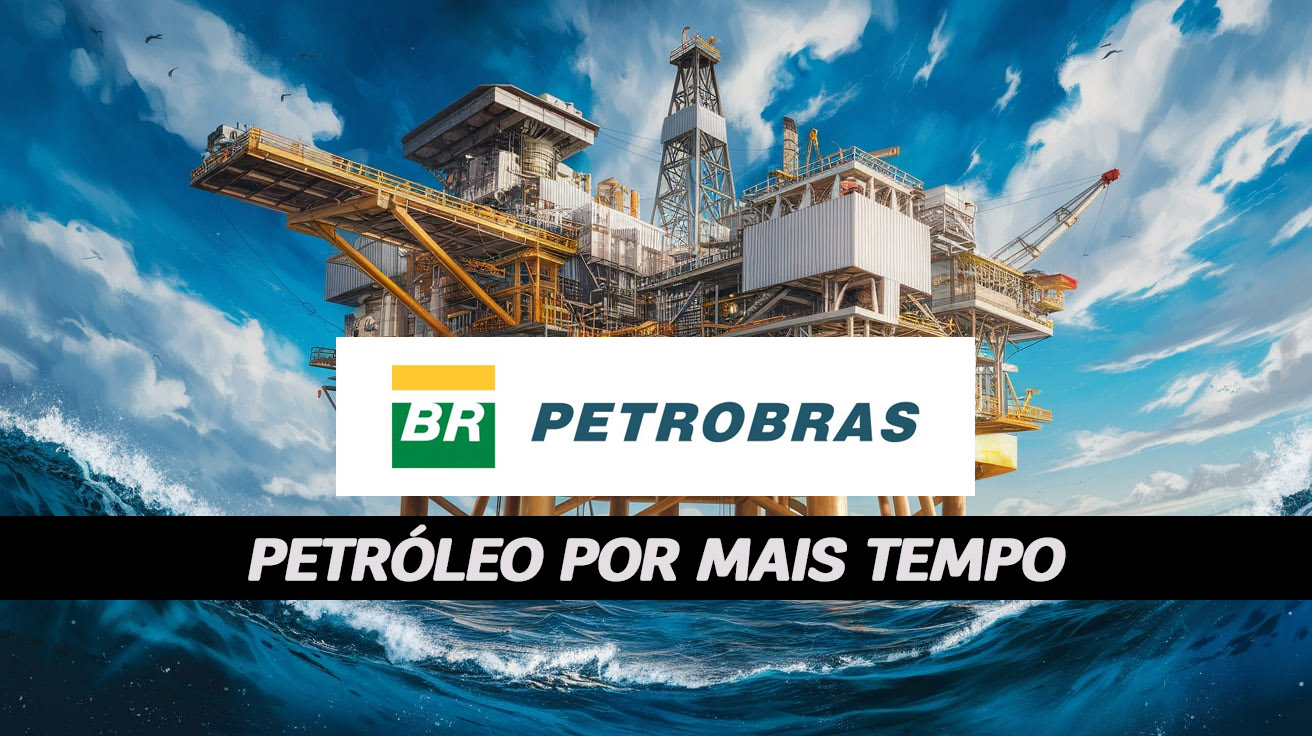


With the extension of the useful life of the Cidade de Angra dos Reis platform, Petrobras ensures more oil for Brazil and strengthens its global position in the energy sector. The decision to extend operations until 2030 reflects the company’s commitment to the safety and efficiency of production in the pre-salt.
In a strategic decision that promises to directly impact the production of Brazilian oil, Petrobras has just announced the extension of the useful life of its first major platform in the pre-salt, the Cidade de Angra dos Reis.
Petrobras, one of the largest energy companies in the world, revealed this Wednesday (22) that the platform, which has been operating since 2010 in the Santos Basin, will have its operation extended for another five years.
The news comes at a time when Brazil is increasingly becoming a world leader in pre-salt oil production.
-
The institute that trained the greatest aerospace engineers in Brazil has just opened its first campus outside São Paulo after 75 years: ITA Ceará will have R$ 445 million, new courses in energy and systems, and classes are expected to start in 2027.
-
Luciano Hang, owner of Havan, goes to Juiz de Fora after the tragedy in February, brings R$ 1 million, hands out R$ 2,000 cards, and donates up to R$ 15,000 to victims in the region.

-
The Brazilian passport allows legal residence in dozens of countries without the need for a prior visa, and most Brazilians are unaware that they can apply for residency directly upon arriving in nations in South America, Africa, and even Europe.

-
Petrobras sends a message to Brazilian truck drivers after fuel collapse and reveals plan to have 100% domestic diesel.


The Extended Useful Life of the Platform: What Does It Imply?
According to the Agência Brasil website, the Cidade de Angra dos Reis floating platform, the first to operate at scale in the pre-salt fields of the Santos Basin, has a daily production of over 50,000 barrels, a true force in the sector.
The decision to extend its useful life until 2030 was made after an addendum to the charter agreement with Tupi Pilot MV 22 B.V. and Modec Serviços de Petróleo do Brasil Ltda.
This measure not only ensures the continuity of production but also reflects Petrobras’ ability to maintain the platform’s integrity, increase production efficiency, and reduce greenhouse gas emissions, which contribute to global warming.
What many do not know, however, is that the pre-salt represents more than just a simple oil reserve.
It is an oil field located 5,000 meters below the ocean’s surface, where oil reservoirs are at depths of 7,000 meters, equivalent to more than 21 times the height of Sugarloaf Mountain.
These operations are not only technically challenging, but they also represent a great opportunity for Brazil to further consolidate itself as a global power in energy production.
The Extension and Its Impact on the Oil Market
The extension of the platform’s useful life until 2030 was detailed in a statement by Petrobras and, according to the company, the decision aligns with the Business Plan 2025-2029.
The consortium operating the Tupi Field, formed by Petrobras (with 67.2% of shares), Shell (23%), and Petrogal (9.2%), aims to ensure the continuity of operations in the Tupi field, one of the most profitable and highest capacity fields in Brazil.
The measure not only ensures more oil for Brazil but also contributes to the country’s energy security and the maintenance of Brazil’s role in the global energy landscape.
Petrobras has demonstrated in recent years a commitment to expanding its operations, even in the face of global energy crises and constant market changes.
The Role of the Santos Basin in the Global Oil Scenario
The Brazilian pre-salt, more specifically the Santos Basin, is considered one of the largest oil reservoirs in the world. The success of the Cidade de Angra dos Reis platform is just a reflection of the potential of this area.
According to recent data from the National Agency of Petroleum (ANP), in 2024, oil production in Brazil reached 36.9 million barrels per day, with 71.5% of this production coming from the pre-salt.
This data is a milestone for Brazil, which has become the leading exporter of oil in Latin America and the largest oil producer on the continent.
In addition to the Santos Basin, the country still has operations in the Campos Basin, which also plays a fundamental role in national production.
Decommissioning: What Happens When the Platform Reaches the End of Its Useful Life?
As impressive as the Cidade de Angra dos Reis platform is, like all large equipment, it will also reach the end of its useful life.
The decommissioning, which is the process of definitively halting the platform’s operations, will occur in 2030, as stated by Petrobras.
This process happens when the productive capacity of the fields begins to decline, making operations economically unviable.
In the case of the Cidade de Angra dos Reis, the decommissioning will be the last chapter of a success story in Brazil’s pre-salt. The exploration and production operations in the pre-salt require a high level of sophistication and continuous investments in technology, infrastructure, and safety.
Outlook for the Future of the Pre-Salt and Petrobras
With the extension of the useful life of the Cidade de Angra dos Reis platform, Brazil gains time to continue consolidating itself as a major oil producer.
The outlook for the future of the Brazilian pre-salt is promising, with new technologies and investments being constantly applied to improve efficiency and reduce environmental impacts.
The pre-salt is not only a valuable asset for Petrobras but also a decisive factor for Brazil’s energy security and economic growth.
The continuity of operations like that of the Cidade de Angra dos Reis is crucial for maintaining Brazil’s competitiveness in the global oil market.
The Fight for Brazil’s Black Gold
Petrobras is no longer just a national giant. With the expansion of its operations in the pre-salt and the extension of the useful life of its platforms, the company solidifies itself as a global power in the energy market.
What does the future hold for Brazil when it comes to oil? The answer may surprise.
Do you think Brazil will continue to stand out as a leader in the global oil market or will this be the beginning of the end for the pre-salt platforms? Leave your opinion in the comments!








A exploração da faixa equatorial pela Petrobras e em parceria com outras grandes petroleiras americanas ” É uma ordem ” . Senão a economia de todas as Américas gripa em um futuro ( bem ! ) próximo!. Put#@&a Cara%$#@lho !.