





 Portuguese
  English
  Spanish
 5 min of reading


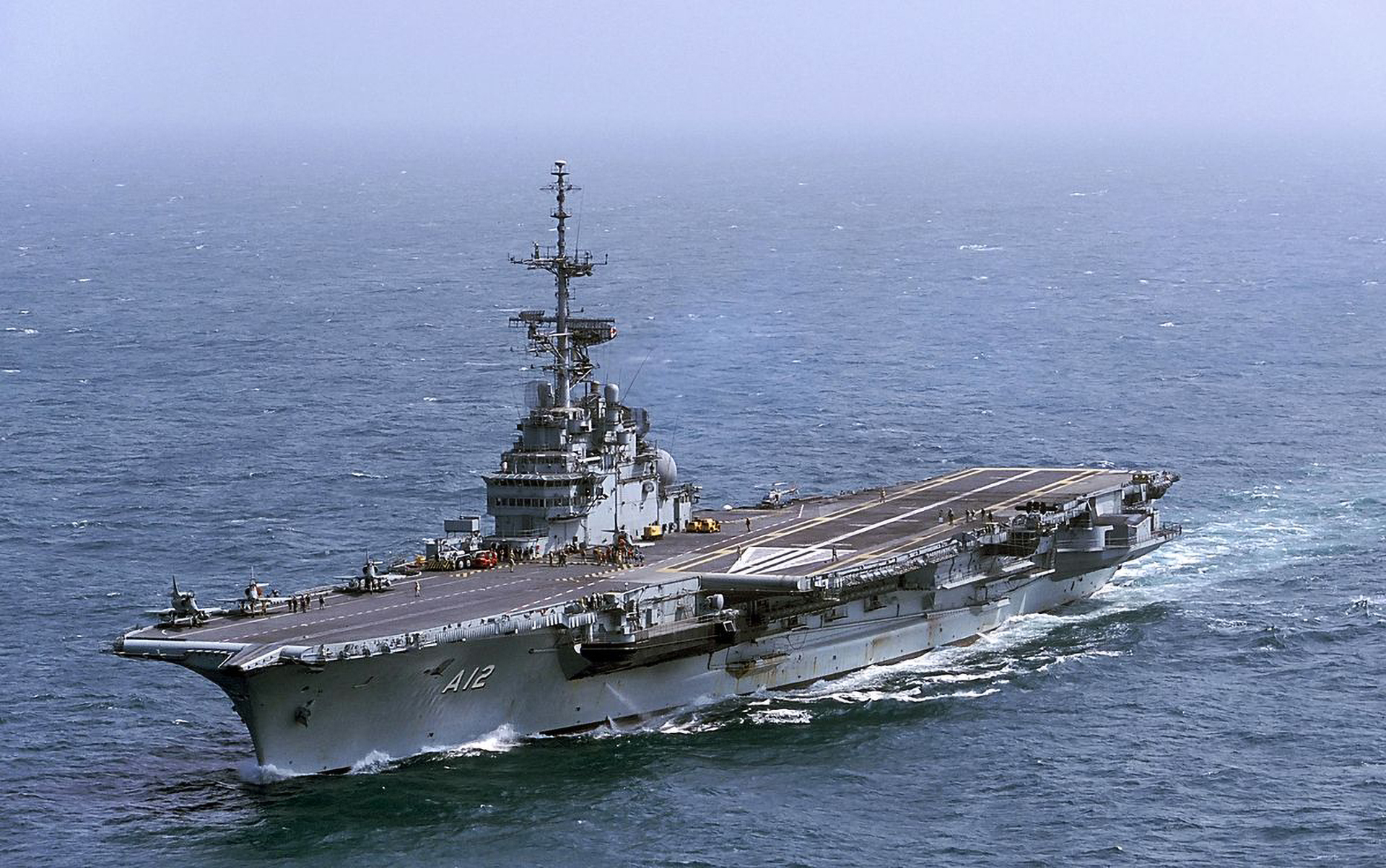
The Tugboat Transporting the Hull of the Aircraft Carrier NAe São Paulo Turned Around After Being Denied Permission to Enter Turkish Territorial Waters
The aircraft carrier NAe São Paulo, which was acquired by the Turkish company Sök Denizcilik Tic Sti for R$ 10.6 million, left the Guanabara Bay for Turkey on September 4, 2022. Once in Turkey, the aircraft carrier was to be dismantled and sold as scrap, which could yield over R$ 100 million. A few hours after the journey began, a ruling from the Federal Court ordered the return of the ship; however, the Navy claimed that it had already left Brazilian waters by the time the ruling was issued, marking the start of a series of problems.
Two months after departing from Rio to Turkey, the aircraft carrier returned to Brazil after being prohibited from entering the country. The tugboat transporting the hull of the aircraft carrier NAe São Paulo turned around after being denied permission to enter the territorial waters of Turkey and Gibraltar.
Due to the significant amount of asbestos on board, the ship was unable to obtain permission from Turkish authorities to enter the country and, as a result, was forced to make the entire trip back and has yet to receive a new permission to dock in Brazil.
-
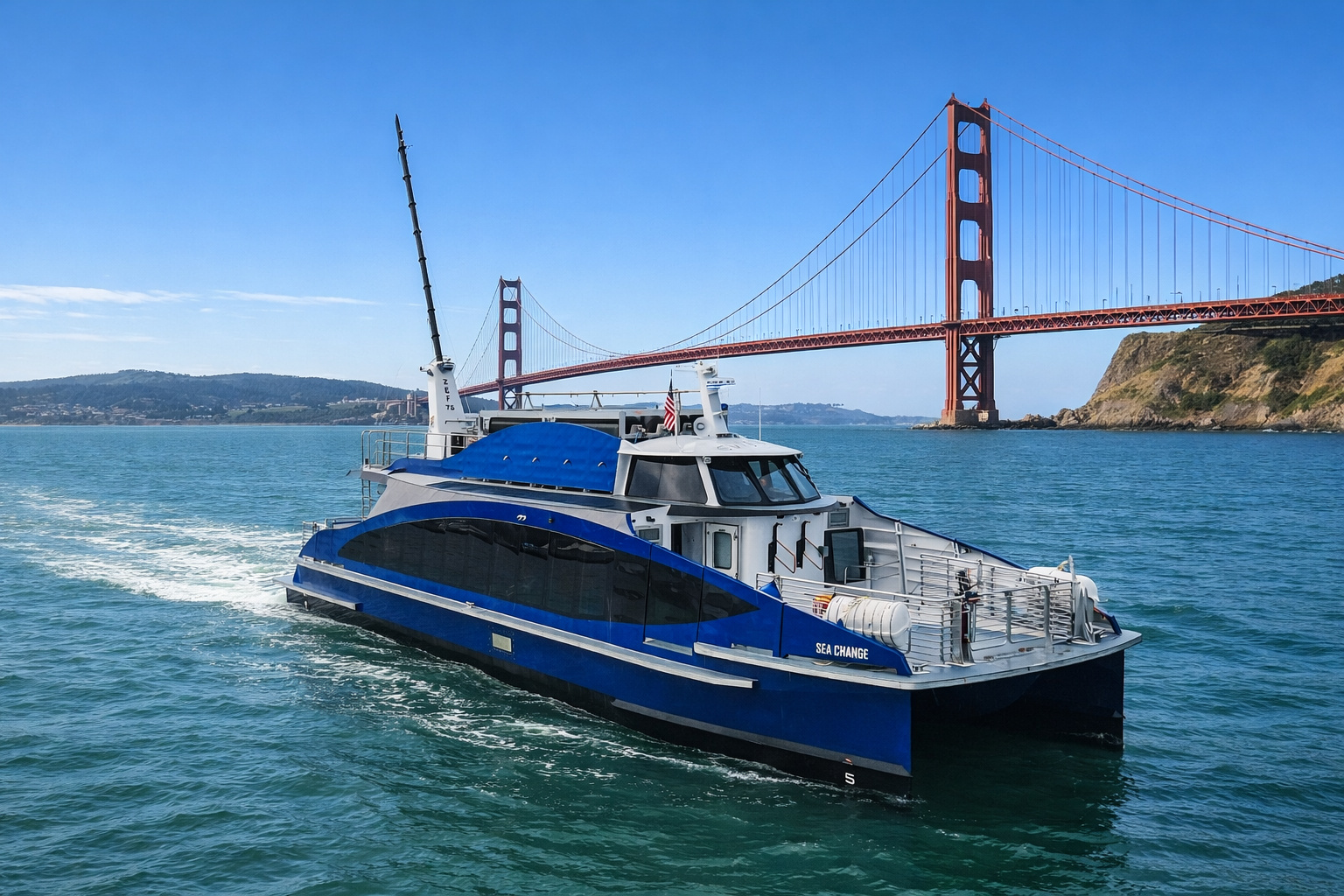
The first commercial hydrogen-powered ferry enters operation in the U.S., eliminates the use of diesel, uses fuel cells to generate clean energy on board, and transforms San Francisco Bay into a landmark of the new era of emission-free navigation.
-
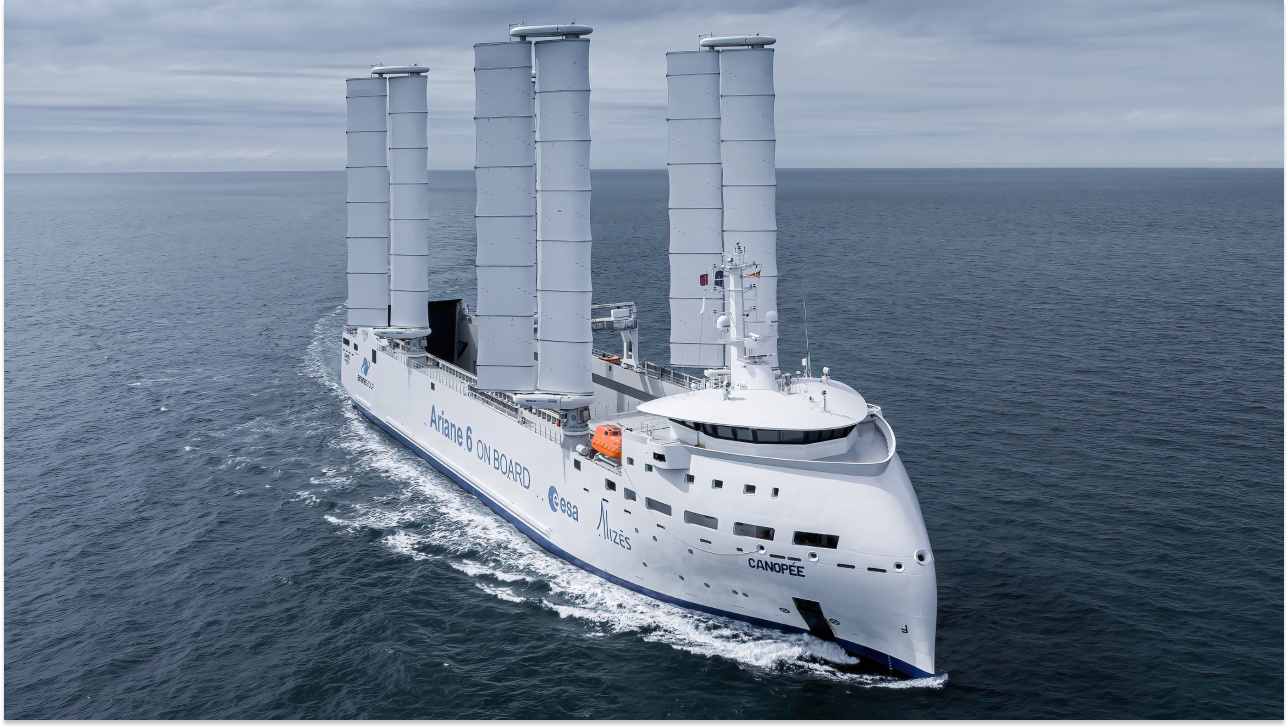
With a length of 121 meters and four rigid sails of 36 meters that automatically rotate to capture the wind, Canopée is the world’s first hybrid industrial cargo ship powered by wind, used to transport rockets and reduce fuel consumption by up to 30% on transoceanic routes.
-
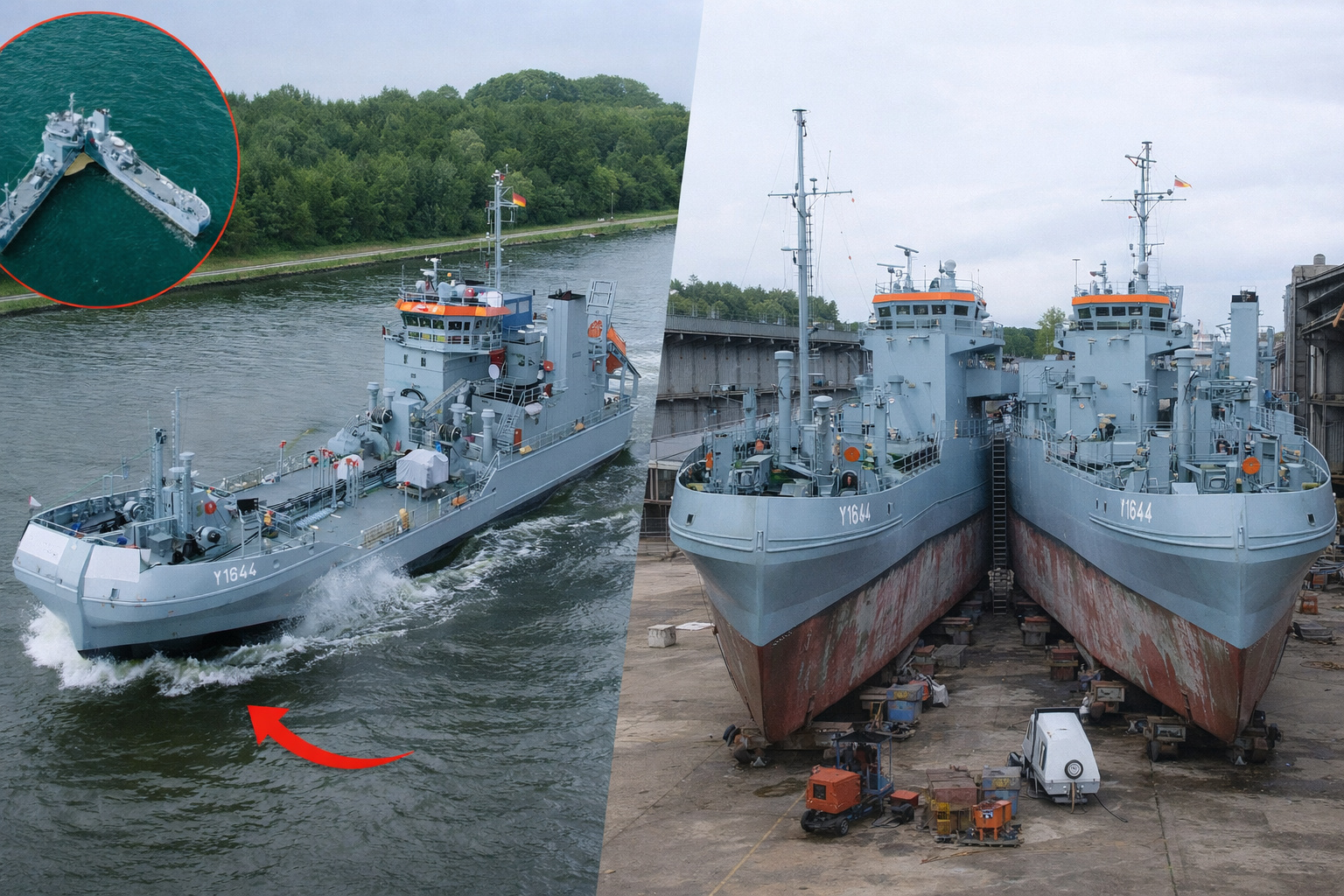
The German ship Bottsand splits its hull in two halves in the middle of the ocean to swallow spilled oil on the surface, separating the oil from the water inside a 790 cubic meter tank and then closing again. It is the only ship in the world factory-designed to split in half as part of normal operations, and the crew of six people who operate everything is civilian.
-
With almost 70 meters in width at the stern and a shape resembling a “giant slice of cheese,” the Ramform Titan tows up to 24 seismic cables to sweep the ocean floor in 3D and reveal oil reserves hidden beneath kilometers of sediment.

The aircraft carrier NAe São Paulo is anchored off the coast of Pernambuco, its buyers requested that the vessel be brought to the Port of Suape. However, due to potential environmental damage, the Environmental Agency of Pernambuco has not granted permission for this. The team has been “on the road” for two months and still does not know when they will reach dry land. During this time, the Public Labor Ministry requested documentation from the Navy regarding the existence of hazardous materials on board.
Brazilian Navy Issues Statement After Aircraft Carrier NAe São Paulo Is Blocked in Turkey and Returns to the Country
Check the full statement from the Brazilian Navy:
CENTER FOR SOCIAL COMMUNICATION OF THE NAVY
OFFICIAL STATEMENT
Regarding the final disposal process of the hull of the former Aircraft Carrier (NAe) São Paulo, the Brazilian Navy (MB) clarifies that the hull was auctioned to a foreign company through a bidding process, with a transfer and ownership agreement dated April 21, 2021. It is also noted that all actions were carried out in full compliance with current Brazilian and international legislation.
After the decision to demobilize the ship and options for disposal were studied, the MB opted for the sale of the hull for “green dismantling.” This is an unprecedented process of Safe and Environmentally Sound Recycling of Ships. The winner of the auction and current owner of the hull is the Turkish shipyard Sök Denizcilik Tic Sti, accredited and certified to carry out environmentally safe recycling. The company Oceans Prime Offshore, contracted by the winning shipyard, is responsible for fulfilling contractual clauses in Brazil, as per the requirements of the notice.
Another measure taken by the MB was to include requirements in the notice that obligate the current owner of the hull to comply with international norms, including: compliance with the Basel Convention on the Control of Transboundary Movements of Hazardous Wastes and their Disposal (1989); and the presentation of an Inventory of Hazardous Materials (IHM), audited by tests from accredited laboratories and approved by an independent Classification Society, based on the resolutions of the International Maritime Organization (IMO).
Regarding the IHM, it should be noted that the ship, while belonging to the French National Navy (MNF), underwent extensive asbestos removal in the 1990s from its propulsion compartments, catapult, auxiliary machinery, and diesel generators, culminating in the removal of approximately 55 tons of asbestos. Additionally, it is important to mention that the asbestos currently present in the former NAe São Paulo does not pose health risks in the state in which it is found.
Concerning the transfer of the hull to Turkey, the procedures were fully conducted according to the regulations issued by the Brazilian Institute of the Environment and Renewable Natural Resources (IBAMA), which is the national authority responsible for issuing permits for the export of hazardous or controlled waste, as per the Basel Convention. The said permit was granted after notification and consent from the involved countries, Brazil and Turkey.
On August 4, the hull was taken from Brazil, and upon reaching the vicinity of the Strait of Gibraltar on the 26th of the same month, the Turkish environmental authority decided to cancel the previously granted authorization. Following this decision, IBAMA suspended the permit that had been issued, ordered the return of the hull to Brazil, and notified the current owner, the Secretariat of the Basel Convention, and the Ministry of Foreign Affairs (MRE). It is important to emphasize that the Brazilian Navy has meticulously and prudently monitored the administrative processes and environmental release procedures carried out by the owner of the hull, fully observing the requests of IBAMA and the corresponding environmental authority of Turkey.
The hull of the former NAe São Paulo is located in a maritime area off the coast of Pernambuco, in order to verify the integrity of the hull and the conditions of buoyancy and stability by a Salvage Master company to be contracted by SOK DENIZCILIK VE TICAREST LTD STI. This position, in Brazilian jurisdictional waters, is geostrategically favorable for the procedures related to the re-establishment of the export process, which is the responsibility and is being conducted by the winning company of the auction, in conjunction with IBAMA and the Turkish environmental authority, as provided for in the Basel Convention.
Finally, it should be emphasized that the MB has monitored the return of the hull of the former NAe São Paulo to Brazil and continues to take the necessary actions to ensure navigation safety, safeguard human life at sea, and prevent water pollution from vessels.








Seja o primeiro a reagir!