





 Portuguese
  English
  Spanish
  3 min of reading
  0 comments


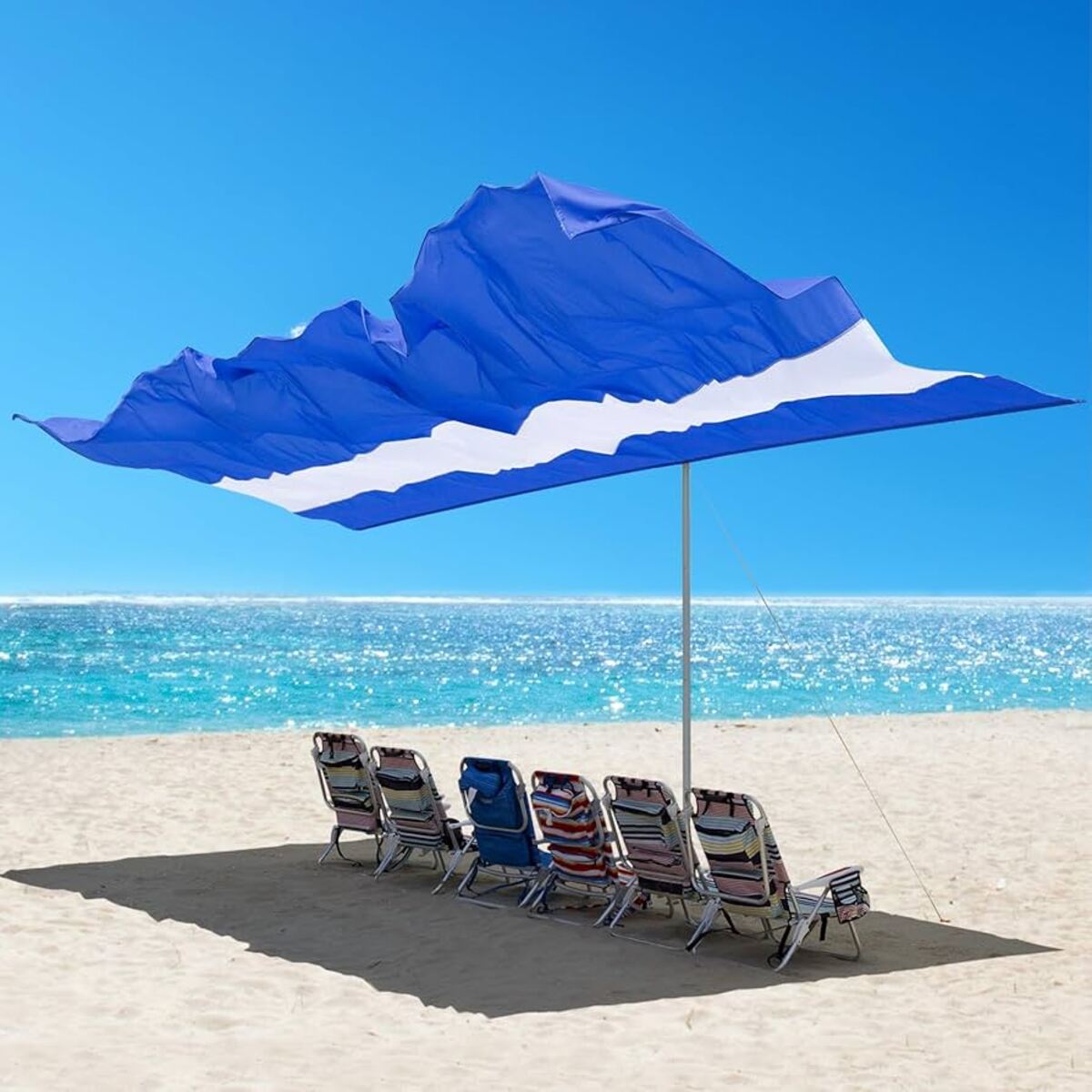
Understand Why the Wind on the Coast Is Not Just a Pleasant Feeling, It’s a Climatic Phenomenon That Has Its Importance.
For many, the constant breeze that caresses the face at the beach is an irresistible invitation to relax. However, it is a fascinating climatic phenomenon and fundamental to the dynamics of coastal regions.
Have you ever wondered why it blows at the beach so frequently and intensely? The answer lies in a complex ballet between land and sea, where temperature and atmospheric pressure orchestrate a constant natural spectacle.
Why Does It Blow at the Beach? The Meeting of Temperatures Creates Air Movement
The main reason why it blows at the beach lies in the temperature difference between land and water, and how this variation affects atmospheric pressure. This is the essence of the phenomenon known as sea breeze and land breeze.
-
With just joint compound, white glue, and pigment, you can make a homemade paint that yields double the conventional amount, saves up to 70%, and leaves the wall with a finish that no one would believe wasn’t store-bought paint.

-
Home environment can influence the brain, mood, and well-being: studies indicate an increase of up to 15% in productivity, a reduction of 12% in stress with plants, and a direct impact of the circadian rhythm on the 24 hours of the day.

-
A Brazilian millionaire couple restores a farm over 150 years old in the interior of São Paulo and transforms the historic property with Portuguese tiles, antique furniture, and new spaces into a refuge that blends tradition, comfort, and sophistication.

-
Submerged city in a lake in Minas reveals intact streets, preserved vehicles, and houses after more than 60 years, impressing divers.


During the day, the sand and soil heat up much more quickly under the sunlight than the seawater. The specific heat of land is lower than that of water, meaning it absorbs and radiates heat more efficiently.
As the land heats up, the air directly above it also warms, becoming less dense and rising. This upward movement of air creates a low-pressure area over the land.
Simultaneously, the seawater, having a higher specific heat, warms more slowly and therefore remains cooler than the land.
The air over the ocean, being colder and denser, tends to sink, creating a high-pressure area. To compensate for this pressure difference, the colder, denser air over the sea moves toward the low-pressure area over the land. This movement is what we perceive as the breeze blowing from the sea to the sand.
The Wind as Sculptor: From Sea Breeze to Land Breeze
The wind cycle at the beach does not stop with the daytime sea breeze. At night, the process reverses, resulting in the land breeze. The land, which heats quickly, also loses heat more quickly than water.
The sea, which has absorbed heat throughout the day, retains this energy for a longer time, becoming warmer than the land at night.
In this nighttime scenario, the air over the sea (now warmer) rises, creating a low-pressure area over the water. The air over the land (colder and denser) sinks, forming a high-pressure area.
Thus, the wind blows from the land towards the sea. This phenomenon is less noticeable for those at the beach at night, but it is crucial for fishermen and coastal navigation.
This constant wind dynamic is one of the reasons that shape coastal landscapes. It influences sand dune formation, environmental salinity, and even coastal vegetation, which adapts to withstand this constant force.
More Than a Feeling: The Importance of Wind at the Beach
Understanding why it blows at the beach goes beyond mere curiosity. The wind in coastal regions plays crucial roles:
- Thermal Regulation: The sea breeze acts as a natural air-conditioning system, alleviating high daytime temperatures in coastal areas and making the climate more pleasant.
- Pollutant Dispersion: It helps disperse atmospheric pollutants, contributing to air quality in coastal cities.
- Coastal Ecosystems: It influences the distribution of plant and animal species, as well as playing a role in ocean current dynamics and nutrient distribution.
- Human Activities: It is essential for water sports such as sailing, windsurfing, and kitesurfing, and for economic activities like wind energy generation.
Therefore, the wind at the beach is a fascinating reminder of the complexity and interconnection of our planet’s natural systems. It is the invisible dance between land and sea, driven by temperature and pressure differences, that gives us the refreshing breeze and shapes the beauty of our coasts.







Seja o primeiro a reagir!