






 Portuguese
  Spanish


About ten years ago, the Finn Klaus bought a deserted island that had been abandoned for 42 years, at 63° north latitude, in Finland, for a bargain. With his partner, Johanna, he rebuilt by hand a century-old log house and today lives off the grid, in full self-sufficiency, without electricity or running water, facing winters of minus 35 degrees. The documentary is from September 2025.
There are those who buy an apartment and those who buy an entire island. The Finn Klaus chose the latter: he acquired a deserted island that had been abandoned for more than four decades in Finland and turned it into a home, as shown in the documentary by the channel Kirsten Dirksen. There, he and his family live in total self-sufficiency.
The story has impressive numbers. According to the site faircompanies, Klaus and his partner, Johanna, rebuilt a log house over a hundred years old on a deserted island of 1.5 hectares, living off the grid at 63° north latitude, where the winter reaches minus 35 degrees.
The feat is not about suffering, but about ingenuity. Instead of buying everything ready-made, Klaus cut down his own trees from the deserted island, sawed the wood, and rebuilt the log house piece by piece, proving that it is possible to build a complete home in Finland with little money and a lot of self-sufficiency.
-
Colossal 100-meter, 3,500-ton machine begins to disappear under Adelaide, operates day and night with up to 20 workers inside, and opens the first 4.5-kilometer tunnel of a A$15.4 billion project that promises to cut up to 40 minutes off travel times and create 78 kilometers of uninterrupted highway.

-
India transforms a basalt mountain into a colossal temple carved from top to bottom, removes up to 200,000 tons of rock without lifting a single block, and leaves in Ellora one of the most incredible works ever carved directly into the stone.

-
Goodbye to expensive coverings: 3D styrofoam panels transform walls at a much lower cost, eliminate the need for masons, reduce renovation time, and win over residents with simple installation and a finish that surprises with its modern visual effect.

-
Couple surprises builders around the world by transforming 80,000 plastic bottles filled with sand into a 158 m² house, replacing bricks with discarded waste, building four bedrooms, a kitchen, a dining room, and two bathrooms.


Next, see who the couple is, what Klaus found on the deserted island, how he rebuilt the log house with trees from his own land, how living off the grid works, and why this story of self-sufficiency in Finland speaks directly to Brazil.
Who the couple is and the island nobody wanted
The protagonists are Klaus and Johanna. He left Helsinki in search of a different pace of life and found in the deserted island the project of a lifetime; she accompanies him in the routine of self-sufficiency, and together they raise their first child in this isolated corner of Finland.
The purchase was almost a happy accident. Klaus made a “very low” offer for the deserted island, and the seller accepted immediately, in a deal that, according to him, “emptied” his bank account, but gave him an entire piece of land surrounded by water in Finland.
The seller had his reasons. An only child, he was born in the sauna of that same abandoned island in 1946 and sold it because he had no heirs, ending a family history and making way for the couple’s new life of self-sufficiency.
The island is small, but sufficient. With 1.5 hectares, the abandoned island offers wood, space, and tranquility, everything Klaus needed to build his log house and set up an off-grid home, away from the noise and bills of the city.
Getting there is already an adventure. The crossing is done by boat, in about five minutes, or by snowmobile when the lake freezes, which gives the abandoned island an isolation that reinforces the need for self-sufficiency to live in Finland.
The island abandoned for 42 years: what Klaus found
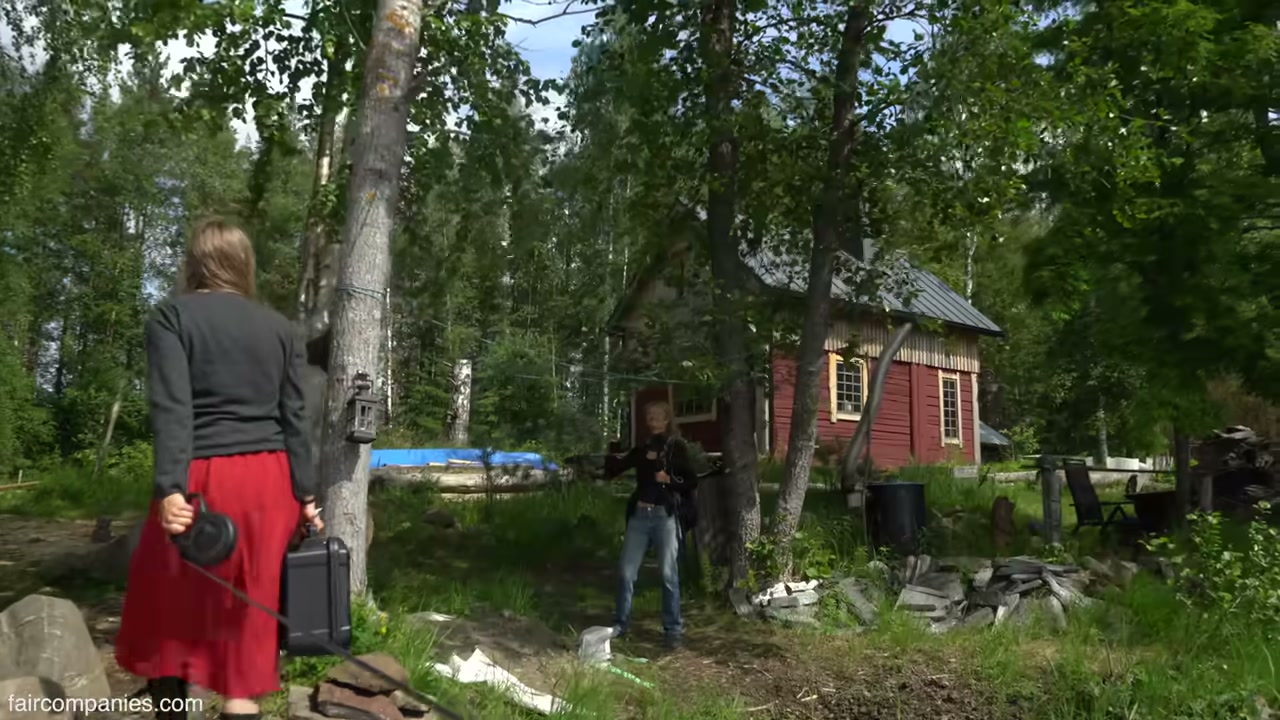
The initial scenario was bleak. When Klaus bought the abandoned island, he found a log house over a hundred years old with a collapsed roof, half of the logs rotted, and the forest taking over everything, after 42 years without anyone living there in Finland.
Only fragments of the past remained. The base of the old log house, the dark logs of a sauna from 1946, and an extension from the late 19th century were left, ruins that most people would see as a total loss, but Klaus saw as a starting point for his self-sufficiency.
The abandonment had an explanation. Like so many properties in remote regions of Finland, the abandoned island remained unused for decades because there were no heirs or market interest, a common fate for isolated and hard-to-access off-grid properties.
Klaus, however, saw potential where others saw a problem. Instead of demolishing and starting from scratch, he decided to make use of what he could from the old log house and rebuild on the history of that abandoned island, combining respect for the past with the ingenuity of self-sufficiency.
That’s how the project began. With the abandoned island in hand and a ruin ahead, Klaus rolled up his sleeves to transform that forgotten place in Finland into an off-grid home, made almost entirely with resources from the land itself.
Rebuild by Hand: The Log House Made from Its Own Trees
The heart of the project is wood. Partner of a small sawmill, Klaus cuts down trees from the abandoned island and the surrounding forest, saws the logs “like cheese” and stacks them to dry for about two years before raising the log house piece by piece.
The method is traditional and manual. Klaus rebuilds the log house using the Finnish notch system, carving each log by hand with an axe, a job that takes about an hour and a half per piece and requires patience, technique, and a lot of self-sufficiency in Finland.
He reuses almost everything. According to the report, seven trees from the abandoned island turned into 70 square meters of flooring; the roof cost about 400 euros, a dusty return from a customer; and windows and furniture came second-hand, keeping the log house cheap and off the grid of consumption.
Even the plaster comes from the ground. The internal walls are covered with clay and sand that Klaus himself took from the soil of the abandoned island, a material that seals gaps, balances humidity, and also works as thermal mass, reinforcing the self-sufficiency of the log house.
The result is an almost ready home. After years of work, the log house is practically completed, proving that it is possible to rebuild a century-old ruin on an abandoned island in Finland using local wood, repurposed material, and life off the grid.
Seven Trees Became the Floor: The Radical Economy of the Project
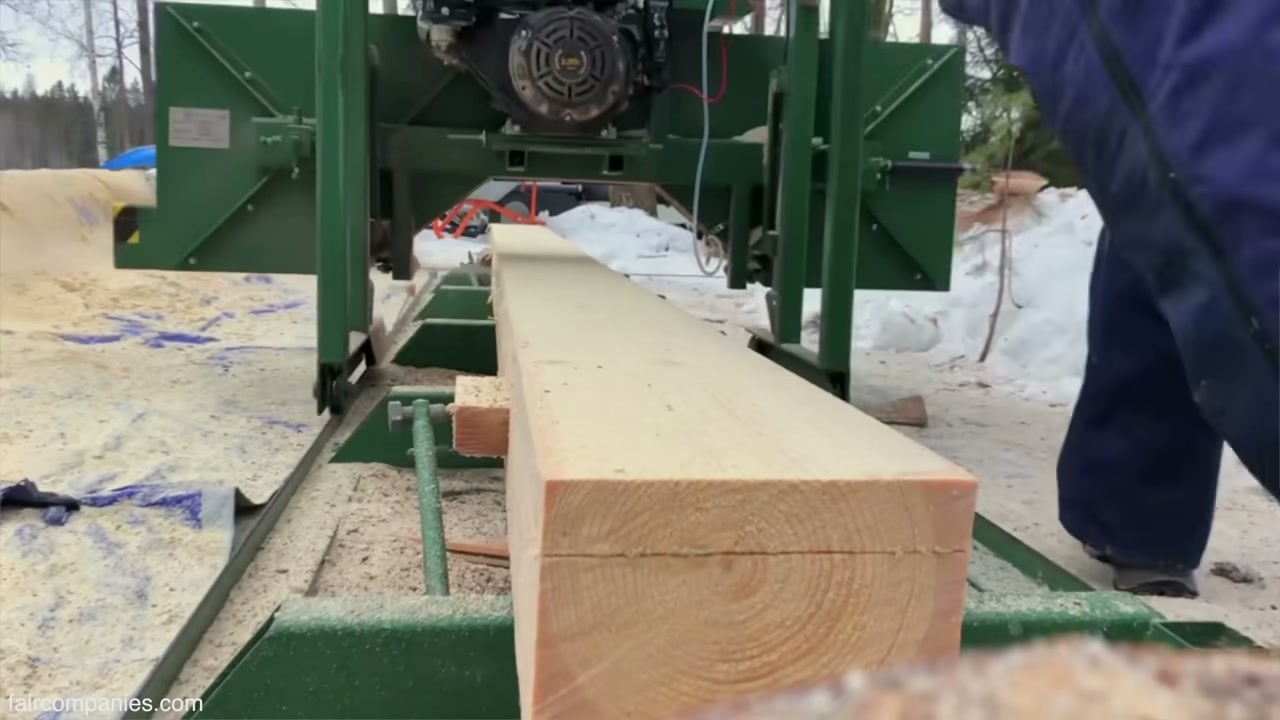
The logic of the project is to spend the minimum. Instead of financing a house, Klaus turned the abandoned island into a source of raw material, taking from there the wood for the log house and saving fortunes with a self-sufficiency that starts in the forest itself.
The numbers of reuse are surprising. Besides the 400-euro roof, Klaus got a premium cast iron stove new in the box for about 150 euros, when the full price would exceed five thousand, showing how the log house off the grid was built almost without money.
Transportation is part of the challenge. Everything that leaves the abandoned island must cross the lake by boat, and Klaus transported thousands of kilos of bricks and mortar in dozens of trips to build the fireplace, a logistical effort that only self-sufficiency justifies in Finland.
This radical economy has a greater meaning. By proving that it’s possible to have a comfortable log house with minimal expense, Klaus shows that living well doesn’t depend on credit or consumption, but on ingenuity, work, and life off the grid on an abandoned island.
This is the message that fascinates the audience. More than the landscape, what draws attention on Klaus’s abandoned island is the self-sufficiency: the idea that a family can shelter, warm, and feed themselves in Finland with resources from the land itself.
Living off the grid: sun in the summer, wood in the winter
The energy is entirely self-generated. The log house operates off the grid: in the summer, solar panels provide ample energy on the abandoned island, powering the refrigerator and induction stove, with a battery stored in the only heated room to prevent freezing in Finland.
In winter, wood takes over. When the sun disappears, the heat in the log house comes from a mass heater weighing about three thousand kilos, which Klaus lights in the morning, burns for a few hours, and keeps the environment warm for two days, ensuring thermal self-sufficiency off the grid.
Water follows the same philosophy. The abandoned island has no piped water: the couple fetches drinking water from a spring or the city, uses lake water in buckets for washing, and is drilling a well, a routine of self-sufficiency that life off the grid in Finland demands.
Nothing is wasted. The washing water drains into a stone well that infiltrates into the soil, and the couple uses only pure soap, without chemicals, respecting the environment of the abandoned island and keeping the log house in harmony with nature off the grid.
This system is ingenious and simple. By combining sun, wood, and lake water, Klaus created on the abandoned island a home that functions year-round without relying on any utility company, the portrait of complete self-sufficiency in the frozen heart of Finland.
Island food: food forest, honey, and rye bread
The pantry also comes from the land. In the backyard of the abandoned island, the couple maintains a “food forest” with berry bushes and edible plants that withstand the extreme cold of Finland, another pillar of their self-sufficiency off the grid.
The bread is homemade. Since common wheat doesn’t grow so far north, Klaus cultivates rye, the base of Finnish dark bread, and bakes his own sourdough bread in the wood-fired oven of the log house, closing the food cycle on the abandoned island.
There is also honey and forest remedies. The couple tends beehives on the abandoned island and harvests chaga, a medicinal mushroom that grows on birches, to make tea, making the most of the natural resources that Finland offers to those living in self-sufficiency.
Even the refrigerator is natural. To preserve food, the couple uses an underground earth cellar, which stays cool all year round, and in winter the frosty entrance of the log house itself becomes a cold chamber, typical solutions for those living off the grid on an abandoned island.
And the fish comes as a bonus. An elderly neighbor overfishes and shares the pike with the couple, a community gesture that shows that even the most isolated life on the abandoned island of Finland is not entirely solitary, even in full self-sufficiency.
How to live at -35 degrees on an island?
Winter is the big test. On the abandoned island, the cold reaches -35 degrees, and the log house needs to be well sealed and heated by wood to ensure the family lives comfortably off the grid, even at the height of the Finnish winter.
Isolation increases in the cold season. When the lake is between liquid and frozen, allowing neither boat nor snowmobile, the couple is temporarily stranded on the abandoned island, so self-sufficiency and food stockpiling are a matter of survival in Finland.
The house was designed for the cold. The thermal mass of the clay walls and the three-ton heater keep the log house warm for days, while the heated room protects the battery and the couple, everything calibrated for life off the grid on the abandoned island.
The darkness also challenges. In winter, the days are very short, and solar energy almost disappears, forcing the couple to rely on wood and plan every resource, a self-sufficiency routine that teaches respect for nature’s limits in Finland.
Still, there is beauty in the extreme. The same place that freezes in winter experiences the midnight sun in summer, and it is this contrast that makes the abandoned island so special, rewarding those who choose self-sufficiency and life off the grid.
What does this abandoned island have to do with Brazil?
The story speaks directly to Brazilians. While buying or building a house is becoming increasingly expensive in Brazilian cities, Klaus shows the extreme opposite: he acquired an abandoned island for a bargain and built the log house almost without money, just with self-sufficiency.
The contrast with debt is striking. The Brazilian who finances a property for decades is surprised to see a roof for 400 euros and a floor made of seven trees, proof that life off the grid in Finland can cost a fraction of an apartment.
There is also the appeal of “do it yourself.” The movement of self-sufficiency and country living is growing in the interior of Brazil, and Klaus’s abandoned island inspires those who dream of producing their own food, energy, and housing, far from the dependence on big cities.
Finally, there is the lesson about the essential. Klaus’s log house shows that shelter, warmth, and food can come from ingenuity, not credit, a valuable reflection for Brazil on consumption, housing, and the beauty of living with less, even far from an abandoned island in Finland.


Klaus’s story proves that a forgotten ruin can become a dream home. By transforming an abandoned island for 42 years into a cozy log house, he demonstrated the power of self-sufficiency and life off the grid in the icy heart of Finland.
More than the landscape, what remains is the method. Rebuilding a house with your own trees, living off the sun and wood, and eating what the land provides is a way of living that challenges everything the city teaches about consumption and dependence.
And you, would you have the courage to live on an abandoned island like Klaus’s, facing minus 35 degrees and life off the grid, or do you think self-sufficiency in Finland is too radical? Tell us your opinion in the comments and share with those who dream of leaving the city.




Very inspiring read.
All things are possible for him that believeth.
Welcome home.
Some islands face climate change threat from either unpredictable water level rise or cyclones. Is his abode not liable to disaster risks?