





 Portuguese
  English
  Spanish
  6 min of reading
  4 comments


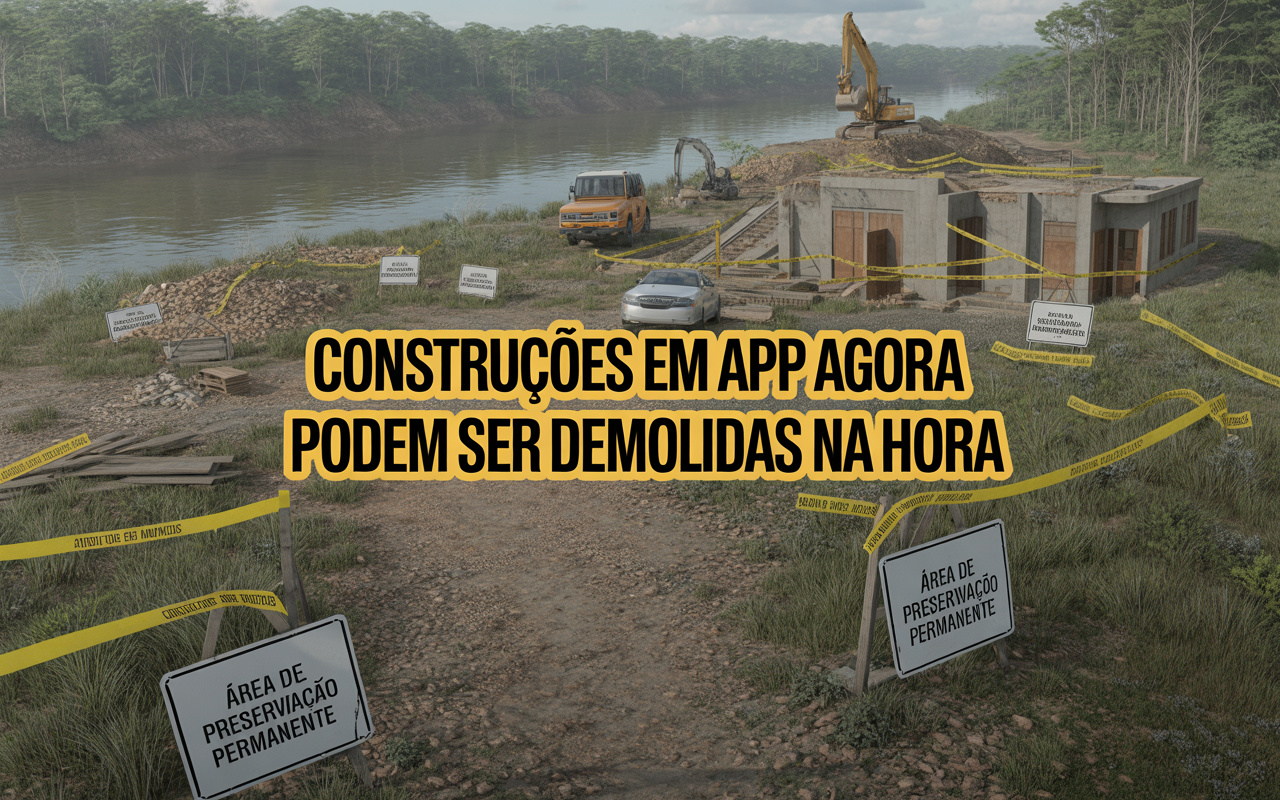


Municipalities Intensify Inspections and Impose Fines of Up to R$ 120 Thousand for Irregular Constructions in Urban APPs, with Demolitions and Mandatory Environmental Recomposition.
The intensification of inspections on constructions carried out within Permanent Preservation Areas in urban regions has ceased to be an isolated movement and has become a national trend. Throughout 2024 and 2025, several Brazilian municipalities revised their environmental regulations, reinforced technical teams, and increased the imposition of fines that can reach R$ 120 thousand, depending on the extent of the damage and the classification of the infraction.
This change stems from an increasingly stringent alignment with Federal Law No. 12,651/2012, the Forest Code, which sets clear parameters for the protection of riverbanks, springs, flood-prone areas, slopes, sandbanks, and hilltops, even when these strips are within private properties or consolidated urban lots.
The environmental regulatory framework assigns to the municipality the responsibility to inspect, license, and impose administrative penalties when there is vegetation suppression, intervention in the natural course of rivers, or irregular occupation in sensitive areas. The increase in irregular occupations in urban centers in recent years has amplified the pressure on municipalities, which have started to issue more frequent infraction notices.
-
Neither the Pyramids nor the Great Wall of China, this gigantic construction in Spain is the human mark on planet Earth that intrigues the most when seen in images from space.

-
Surrounded by cliffs, mist, and chilling stories, the ancient Hotel del Salto has been reborn as a museum while still unable to shake off its reputation as a haunted place.

-
This star-shaped fortified construction, hidden near the border of Spain, may be the largest fortress on the planet.

-
Congonhas receives the monorail promised for the 2014 World Cup after more than a decade of delays and becomes the first airport in Brazil with integrated subway.

In Manaus, for example, the Municipal Environment Secretariat conducted administrative demolitions of constructions erected on the banks of local tributaries considered APPs. In municipalities in the Southeast, technical teams have begun to use georeferencing to identify works initiated without a license within preservation zones mapped in the Master Plan.
High Fines and Objective Responsibility of the Owner
The increase in fine amounts is a direct consequence of the combination of federal legislation and complementary municipal regulations. The Environmental Crimes Law (Law No. 9,605/1998) establishes that destroying or damaging vegetation in an area considered a permanent preservation area can result in fines ranging from R$ 5 thousand to R$ 50 thousand per hectare or fraction, in addition to civil liability and additional administrative sanctions.
Municipalities with their own regulations increase this ceiling by establishing specific aggravating factors, such as the risk of sedimentation, proximity to a spring, or impact on the watercourse, which can raise penalties to amounts exceeding R$ 100 thousand, depending on the technical analysis.
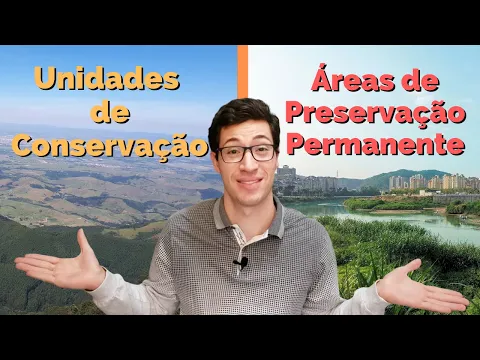

Responsibility is objective: it does not matter if the owner claimed ignorance or if the construction was included in the original project purchased from the developer. Upon identifying an intervention incompatible with the legislation, the municipality fines the responsible party, demands the immediate cessation of the work, and determines environmental recomposition.
In cases of more extensive deforestation, the obligation for recovery may include compensatory planting, specialized soil management, and monitoring for months or years. Reports produced by environmental agencies show that, in several cities, simple residential constructions — such as small balconies, retaining walls, and room expansions — have begun to be classified as irregular interventions in APP when they exceed legal limits.
How Cities Expanded Monitoring of Constructions in APP
The expansion of monitoring occurs through three main fronts: regulatory updating, technological improvement, and institutional integration. Municipalities reviewed their environmental codes, detailed licensing criteria, defined urban permanent preservation zones more precisely, and created digital maps that integrate topographical, hydrological, and occupancy information.
In some capitals, drones have started to be used to track land movements and the commencement of works in areas considered sensitive. The images are analyzed by geoprocessing teams, which send reports directly to the inspection sector.
Complaints made by residents themselves also played a significant role. Various secretariats recorded a significant increase in communications from neighbors concerned about deforestation in valley bottoms, alterations in slopes, and the suppression of vegetation near creeks. The municipal response became faster as demand grew, and embargo notices began to be issued on the same day the irregularity is identified.
Official reports collected by the Public Ministry confirm that the number of processes opened for irregular occupation in APP has steadily increased over the last two years, driven by stricter regulations and the integration of monitoring systems.
Direct Impacts on Property Owners and Urban Lots
The regulatory change directly impacts residential owners, gated communities, and urban lots. In many cases, lots sold decades ago did not have clear environmental demarcations because the municipal legislation of the time did not require detailed georeferencing. With the new technical interpretation, areas that were previously treated as usable land have begun to be identified as APP, and minimal interventions have started to require specific environmental licenses.
This has altered the relationship of Brazilians with their own land. The traditional perception that “on private land the owner can build as they wish” is no longer compatible with the new model of environmental management. The legislation establishes that environmental protection prevails over individual interest, even when the area is within a regularly registered urban lot.
In condominiums, managers and administrators have started to include additional clauses in internal regulations guiding residents on intervention limits near water bodies or preservation areas. New developments have become required to present more robust environmental studies, precisely delineating each protection strip to avoid future disputes.
Demolition Orders and Mandatory Environmental Recomposition
The application of immediate demolition orders has become more common in cases of intervention that cause significant alterations to the environment. Demolition notices are issued when the municipality finds risk to the natural course of water, soil displacement, suppression of native vegetation, or installation of permanent structures within the protected area.
In Manaus and in other municipalities that are part of complex preservation zones, technical teams have executed administrative demolitions of works that have encroached on the banks of igarapés or valley bottoms. This type of action occurs when the environmental agency identifies potential irreversible damage or when construction has begun even after an embargo notice.
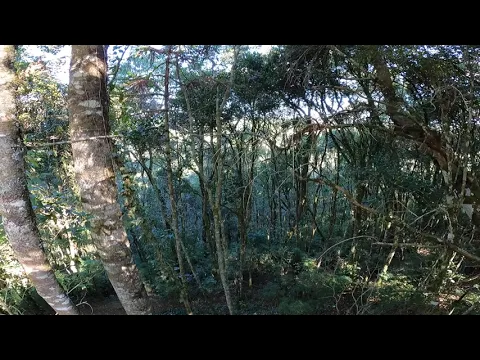
After the demolition, the owner is required to recover the area. This means replanting, stabilizing the soil, clearing drainage areas, and presenting a technical report proving environmental recomposition. The process can take months and, in some cases, requires periodic monitoring of the vegetation until the municipal secretary considers the area restored. Failure to carry out the recomposition results in new fines and referral to the Public Ministry.
How Legislation Transformed Urban Land Use
The transformation in the citizen’s relationship with urban land derives from the more rigorous application of the principles of the National Environmental Policy and the Forest Code. The expansion of cities over sensitive areas has led to a greater need for control to prevent natural disasters, sedimentation of streams, floods, and degradation of water sources.
Municipal technicians emphasize that the tightening of regulations is not punitive but preventive. By requiring prior studies and environmental licenses for any intervention, municipalities aim to reduce future risks and maintain the drainage capacity of natural areas within the urban fabric.
The strictness of the regulations is also related to the pressure exerted by control agencies. The Public Ministry has begun to demand effective actions from municipalities to contain irregular occupations in urban APPs due to the increase in extreme weather events recorded in recent years. This has led municipalities to reinforce their environmental secretariats and create specific groups to handle complaints and identify ongoing constructions without authorization.










A legislação deve ser democrática na abrange via e rigorosa na sua aplicação. Os Órgaos licenciadores devem ter pessoal competentes e livres para agir exigir e fazer cumprir.
As mansões, estão documentadas, tem luz e água encanada. Como, se é APP? São “taxas” para o fiscal da prefeitura, para a companhia de luz e água. Tente construir em área legal e pedir luz e água, verás a quantidade de papéis e burocracias.
Aí na área da APP, tudo funciona.
Quase todas as favelas estao em APPs. Aí impera o coitadismo e nenhum prefeito tem peito para perder os votos que vem de lá