





 Portuguese
  English
  Spanish
  8 min of reading
  0 comments


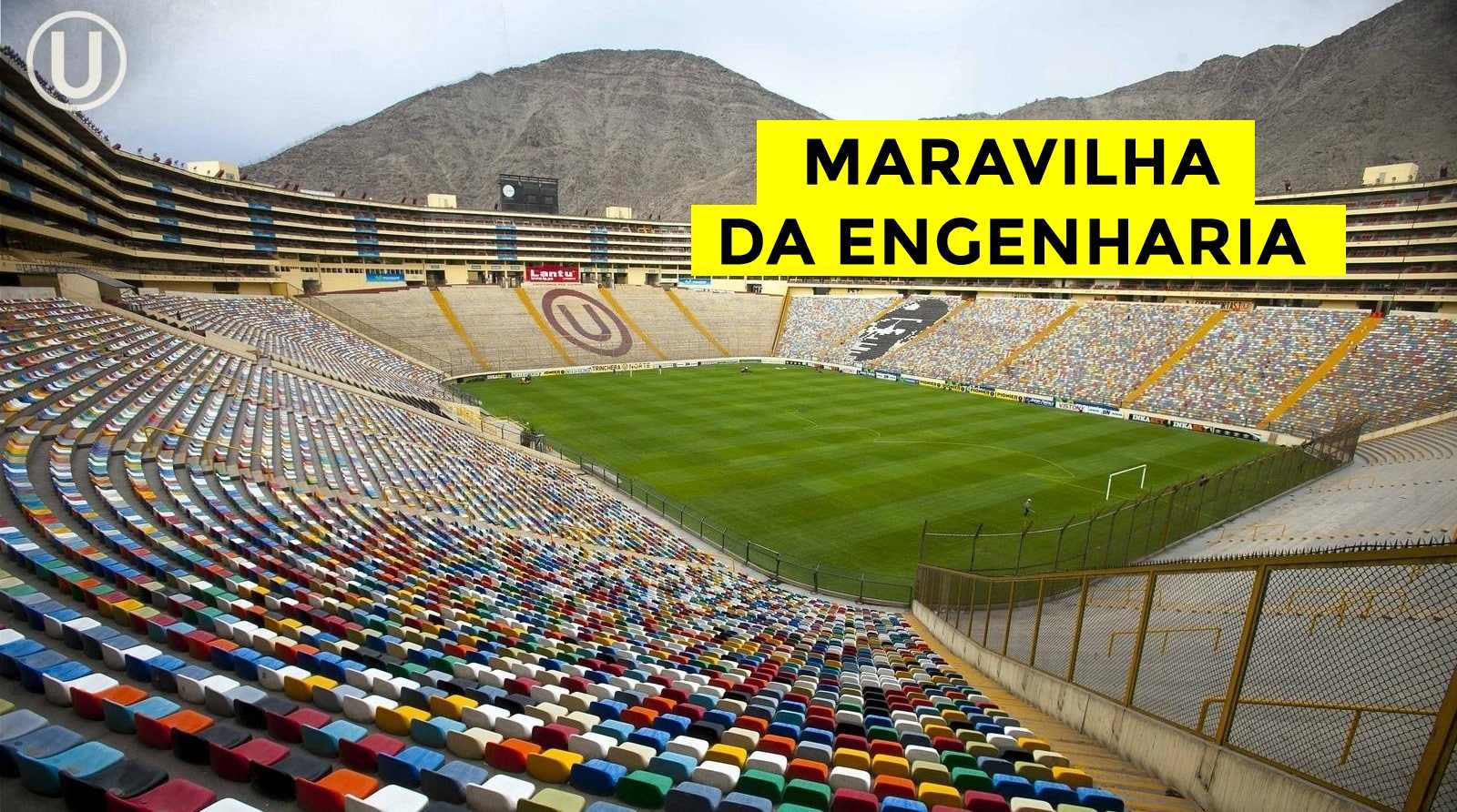
The Match Flamengo vs Palmeiras for the Libertadores Final Takes Place at the Monumental Peruvian Stadium, a Heavy Concrete Stadium with a Sunken Field, Anti-Seismic Structure, and a Set of 1,250 Boxes That Redefined Technical Standards in South American Arenas
The match Flamengo vs Palmeiras for the Libertadores final takes place at the monumental Peruvian stadium, a heavy concrete structure with a sunken field, anti-seismic structure, and a set of 1,250 boxes that redefined technical standards in South American arenas.
Imagine a giant of concrete at the foot of the Andes, in the Peruvian capital. That is the Estadio Monumental “U” in Lima – one of the largest temples of football in South America, capable of holding more than 80,000 fans.
Inaugurated in 2000, this colossus stands out not only for its size but also for its historical and cultural significance. It is the home of Club Universitario de Deportes, one of the most traditional clubs in Peru, and has been the scene of memorable moments in continental football.
-
Meta’s new smart glasses are not just for seeing; they use artificial intelligence, analyze your food, summarize messages, and can even change the way you work in professions like engineering.

-
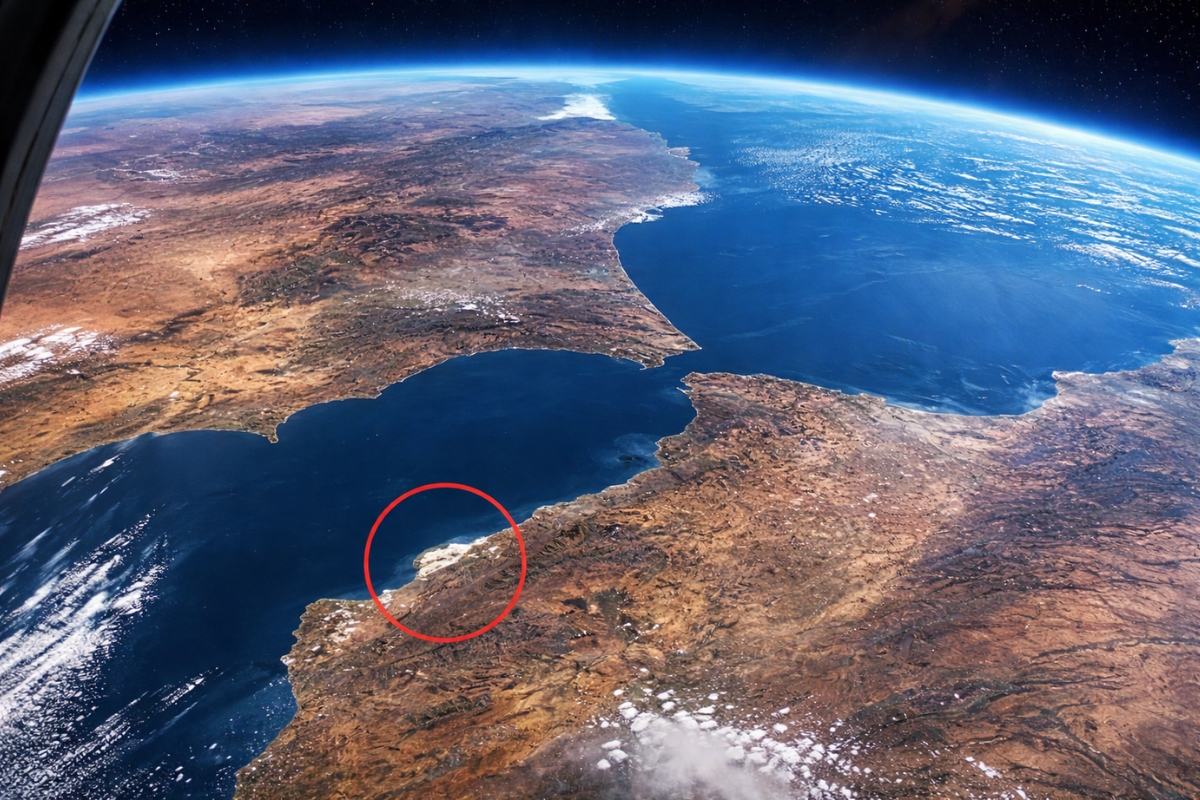
According to an analysis by NASA, only one human-made structure is visible from space, and it is not the Great Wall of China or the Pyramids of Egypt.
-
After 377 years of history, the Brazilian Army will have its first female general: Colonel Claudia Cacho has been promoted to brigadier general by Lula and will receive the sword and command baton this Wednesday in Brasília.

-
A Mercado Livre customer opened their package and found 32 resumes of people looking for jobs crumpled as protective paper inside the box, exposing names, addresses, documents, and phone numbers of dozens of candidates.


It was here, for example, that Flamengo came from behind to win the 2019 Libertadores against River Plate, and it will again be here that Palmeiras and Flamengo will decide the title of the 2025 Libertadores.
Its imposing architecture blends with the arid landscape around, with mountains creating a stunning backdrop.
In an era of modern multi-use arenas, the Peruvian stadium retains a more “authentic,” open, and grand style, reminiscent of the classic stadium era – even though it is relatively new, with just over two decades of existence.
The combination of gigantic capacity and unique environment has made the Monumental a South American sports reference, often compared to legendary venues like Maracanã.
The Origin and Context of the Project
The idea of building the Monumental arose from the ambition of Universitario de Deportes to have a stadium worthy of its fans and its greatness in the local scene.
The situation began to change when the rival Alianza Lima built its own stadium, the Alejandro Villanueva, in the late 1960s, surpassing the crema’s venue in capacity (over 30,000 seats).
This competition heightened the desire of Universitario to have a modern and large stadium that matched its dedicated and growing fanbase.
It was in this context that, in 1989, the project for a new sports complex for Universitario took form for the first time. The club’s board envisioned a large space in the Ate region – a district east of Lima, at the foot of the mountains – where not only a high-capacity football stadium would be built, but also facilities for other sports and cultural events.
The cornerstone of the new stadium was laid on January 16, 1991, symbolically marking the beginning of the ambitious undertaking. It was the starting point for building the largest stadium in Peru and, in the future, one of the largest in South America.
Compared to other Peruvian stadiums of the time, the Monumental plan was bold: it would greatly exceed the capacity of other venues – to give an idea, the Nacional of Lima held about 45,000 to 50,000 people, while local rivals’ stadiums hardly exceeded 35,000 seats.
The Monumental promised to double those numbers, offering space for over 80,000 fans.
This grand vision reflected not only internal rivalry but also Peru’s quest for a sports stage worthy of the continent’s greatest, at a time when neighboring countries already boasted colossi like Maracanã, Monumental de Núñez (River Plate), and Morumbi.
The Construction of the Monumental
Turning the dream into reality, however, required persistence. The construction of the Estádio Monumental in Lima was a long process filled with obstacles, stretching over almost a whole decade (1991–2000).
After the cornerstone ceremony in 1991, bureaucratic and financial hurdles arose, delaying the progress of the work. One of the main challenges was the complete acquisition of the necessary land – the purchase of the areas was only completed in October 1994, which hindered the immediate advancement of construction.
With the land documentation resolved, the works finally took off in 1996.
The architectural project was managed by Walter Lavalleja Sarries, a renowned Uruguayan architect with experience in large South American stadiums.
Lavalleja strictly followed FIFA’s Technical Specifications Manual for the new millennium, aiming to meet international safety and infrastructure standards necessary to host World Cup finals or major continental finals.
Under his design, the future Monumental would have innovative features for the time: total visibility of the field from any point in the stands, enhanced acoustics for concerts, quick and safe evacuation routes, as well as gigantic lateral and behind-the-goal stands.
All this included in a multi-use complex, which would also house the club’s administrative headquarters, training center, facilities for youth categories, multi-sport courts, museum, and communal areas.
The complete construction of the complex had an estimated cost of about US$ 42 million, a considerable investment for the 1990s.
A peculiar element of the project was the incorporation of a large number of VIP boxes, designed not just for luxury but also as a financing solution. The Monumental was designed with impressive 1,250 boxes.
These boxes (also called “stages”) allowed the club to raise funds upfront – many units were sold to companies and individuals, becoming lifetime property of their purchasers.
This strategy was crucial to making the project viable, although the complexity of including so many boxes in the structure contributed to prolonging the construction schedule.
Another interesting technical challenge was the decision to build the playing field 18 meters below ground level.
This engineering solution reduces the visible height of the stadium externally (only the box buildings protrude above the ground), helping to integrate the construction into the rugged terrain and providing a “bowl” effect for those inside.
After years of waiting, the Estadio Monumental was finally inaugurated in July 2000.
Structure and Capacity
Visiting the Monumental in Lima is encountering a concrete colossus in an oval shape, surrounded by buildings and with the vastness of the stands in view. Currently, it accommodates 80,093 spectators at its maximum capacity.
This occupancy is divided into two large components: approximately 58,000 to 60,000 seats in conventional concrete stands, which surround the field in the lower and middle parts, and about 20,000 seats located in the boxes and buildings around the top of the stadium.
In terms of physical dimensions, the playing field has official measurements of 105 x 68 meters and is covered with high-quality natural grass.
Interestingly, due to Lima’s unique climate – a coastal desert city where it practically never rains throughout the year – the stadium needed a modern irrigation system to keep the grass green and healthy.
The infrastructure of the Monumental also includes two electronic scoreboards (big screens) and international standard lighting equipment, suitable for high-definition TV broadcasts and night events. One of the scoreboards is a 100 m² LED panel installed at one end, ensuring good visibility of information for the public.
Facilitating amenities such as spacious locker rooms, a press room, parking, and communal areas for fans are also part of the structure.
It is worth highlighting that the arena follows FIFA safety standards, with emergency exits distributed so that the stadium can be evacuated quickly if necessary.
Even accommodating large crowds, the Monumental was designed so that the flow of people operates in an organized manner – although, as we will see later, external access to the stadium presents its own challenges.
Another remarkable aspect of the Monumental “U” is its position within the social complex of Universitario, which houses the administrative headquarters, a museum dedicated to the club, and sports areas such as courts and swimming pools.
The stadium functions as the core of this set, reinforcing the multi-use envisioned from the start. Outside, another impressive detail emerges: the Andes Mountains appear on the horizon on clear days, creating a unique scenery.
Nearby, the pre-Inca ruins of Puruchuco also appear, making the surrounding landscape one of the most special in world football.
Major Events at the Stadium
The 2019 Copa Libertadores final was moved to Lima at the last minute after social protests in Chile made it impossible to hold it in Santiago.
It fell to the Monumental to host the first single-match final in Libertadores history, and the clash between Flamengo and River Plate will forever be etched in its stands. More than 78,000 fans were present at that electrifying decision.
Beyond football, the Monumental of Lima has also established itself as one of the main stages for concerts and cultural events in Peru. Its robust structure and spacious open field have attracted large-scale musical events, consolidating it as a multi-use arena.
In addition to the Libertadores final, over the last two decades, the stadium has hosted shows from some of the biggest stars in world music. Legendary rock bands like The Rolling Stones, Guns N’ Roses, and Aerosmith have rocked the stands of the concrete giant.
Estadio Monumental de Lima Will Host Flamengo vs Palmeiras
Twenty-five years after its inauguration, the Estadio Monumental de Lima remains imposing and relevant, proving that it is much more than a static concrete giant.
It was born from an ambitious dream of Universitario and has become part of Peru’s sports identity. Today, it is recognized as one of the main stages for South American football, combining history, size, and symbolism.
Its trajectory is marked by overcome challenges – from a lengthy construction to political conflicts – and by apotheotic moments that justify the name Monumental.
Not by chance, Conmebol chose it again to host the grand final of the Libertadores in 2025. In this decision, Flamengo vs Palmeiras – two Brazilian giants – will step onto the limeño pitch to write another chapter in continental history, just as Flamengo and River did in 2019.
By hosting another Libertadores final between Flamengo and Palmeiras, the Monumental reinforces its status as a temple of Latin football. The expectation is for a full house, stands vibrating in green, red, and black, and a festive atmosphere that will unite Lima with Brazilian football for an unforgettable night.
Regardless of which club lifts the trophy in the match between Flamengo and Palmeiras, the real winner will also be the stadium itself: which consolidates its position as a living South American colossus, a witness to past glories and a stage for new achievements.
From the heights of its boxes or the heart of its stands, the Monumental de Lima continues to enchant, impress, and live up to the name it carries – truly monumental in every sense.









-

-

-

-

-

-

53 pessoas reagiram a isso.