





 Portuguese
  English
  Spanish
  4 min of reading
  1 comment


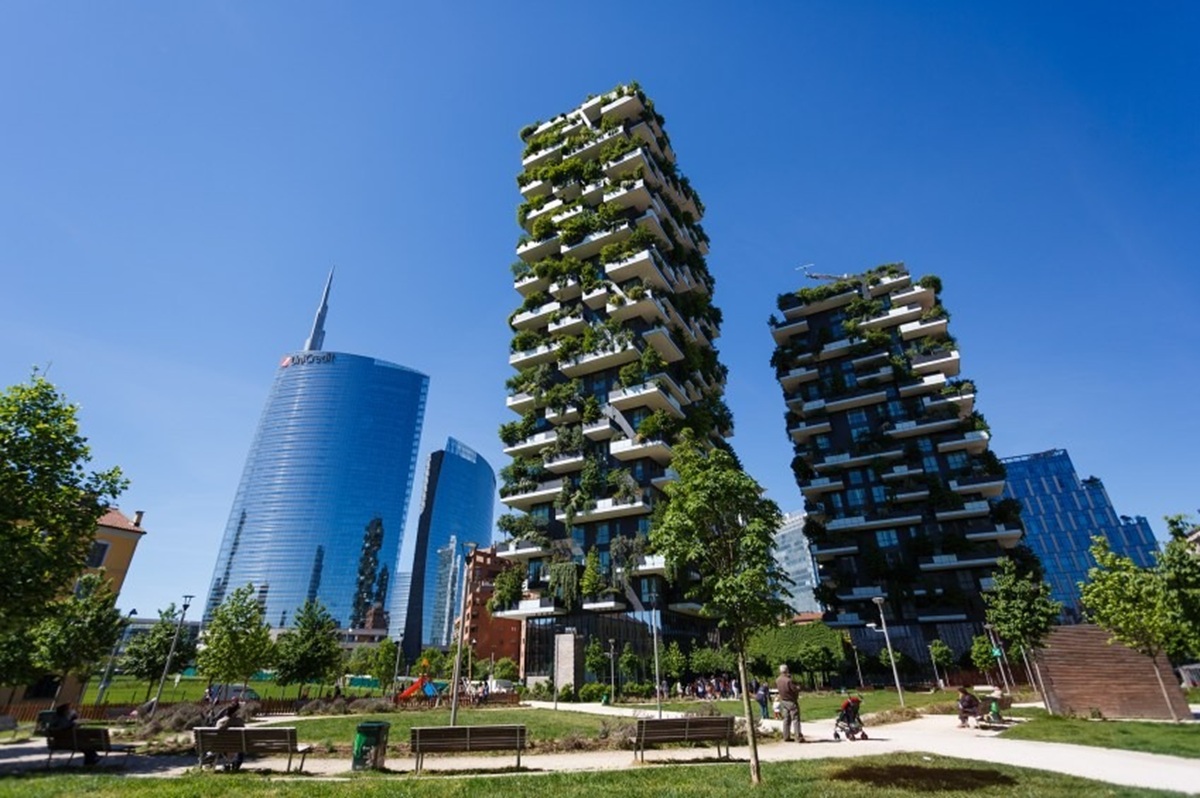


Projects of Vertical Forests, Consolidated from the Case of Bosco Verticale in Milan, Show How Residential Buildings with Green Facades Can Reduce Heat Islands, Retain Atmospheric Pollutants, Favor Urban Biodiversity, and Integrate Real Strategies for Climate Adaptation in Large Cities
Vertical forests have ceased to be mere experimental concepts of sustainable architecture and have begun to integrate urban policies and academic research aimed at mitigating air pollution, thermal comfort, and environmental recovery in large cities.
The proposal consists of incorporating tree and shrub vegetation directly onto the facades and balconies of buildings, transforming residential structures into living surfaces capable of interacting with the urban environment.
The Project That Consolidated the Concept

The most documented and widely studied case is Bosco Verticale, a residential complex inaugurated in 2014 in Milan, designed by architect Stefano Boeri.
-
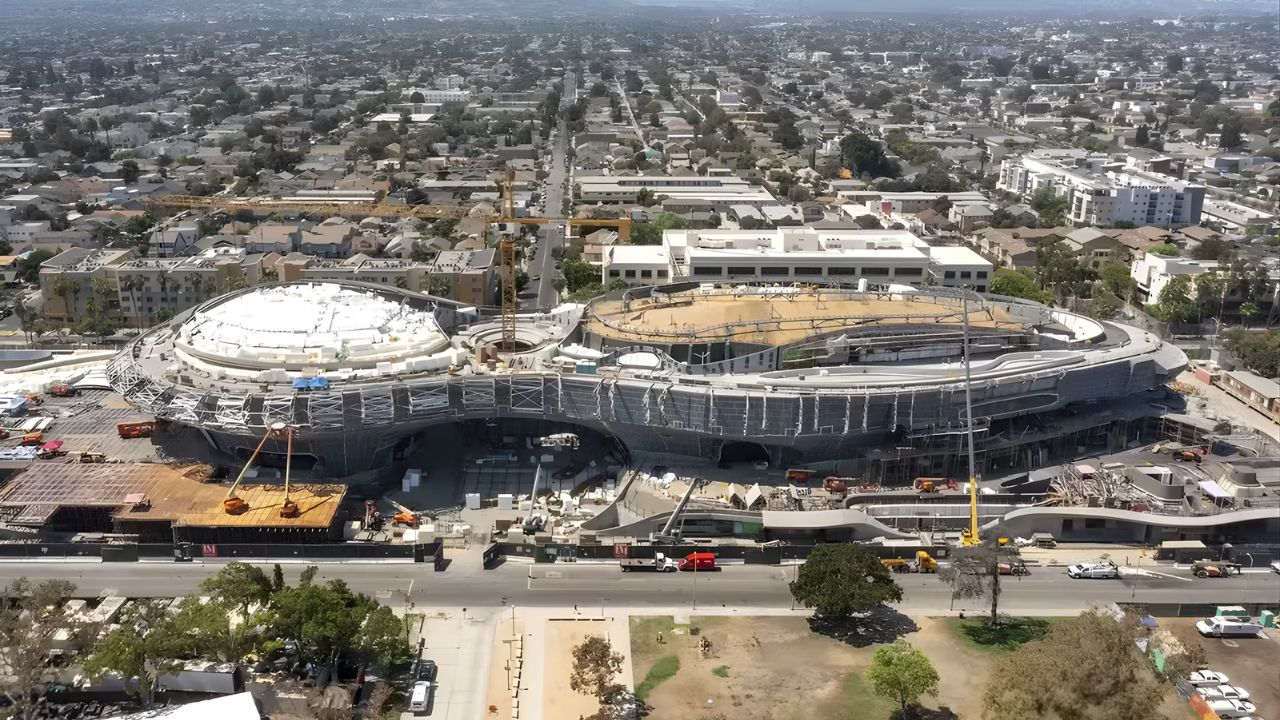
Created by George Lucas with over $1 billion, a futuristic museum in the shape of a spaceship with 1,500 curved panels is about to open in Los Angeles and will house one of the largest private collections of narrative art in the world.
-
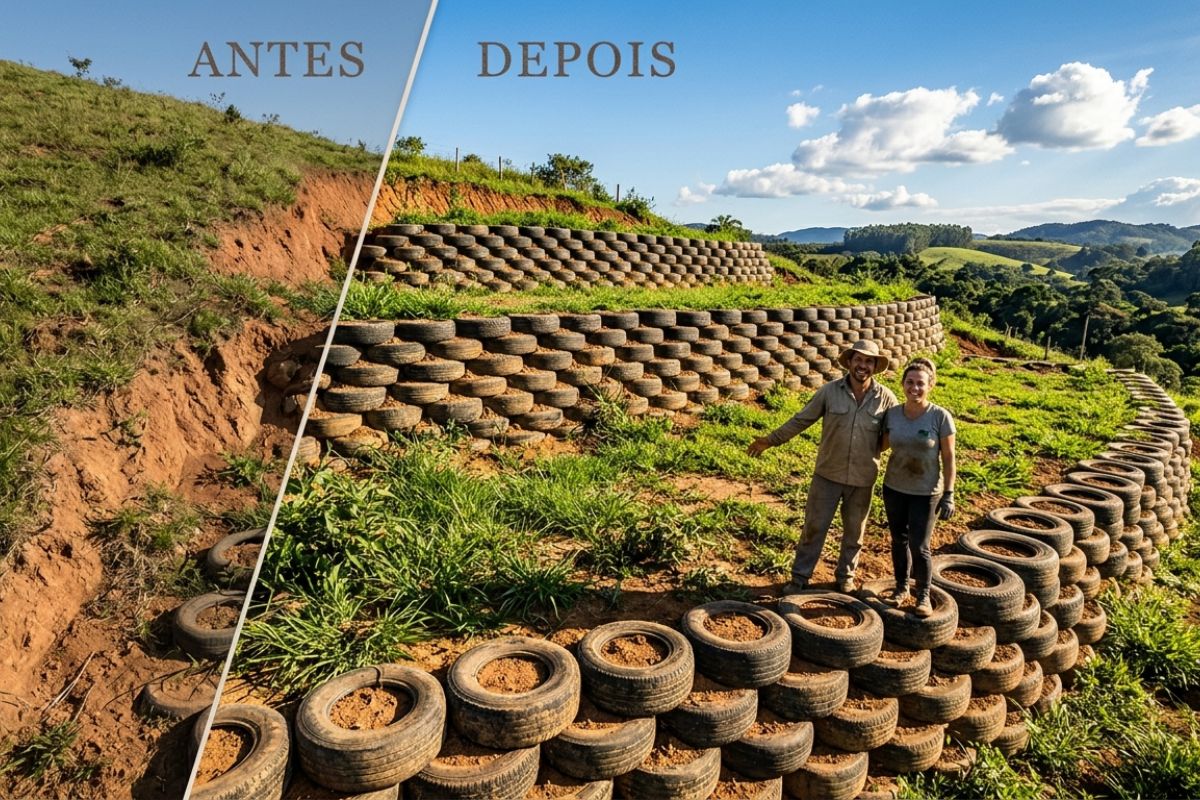
Couple shows how they built a retaining wall on their property using 400 old tires: sloped land turned into plateaus, tires are aligned, filled, and compacted with layers of soil, with grass helping in support and at almost zero cost.
-
Engineer explains drainage during the rainy season: the difference between surface water and deep water, ditches, gutters, and water outlets on the road, as well as drains and drainage mattresses, to prevent erosion, aquaplaning, and flooding at the construction site today.

-
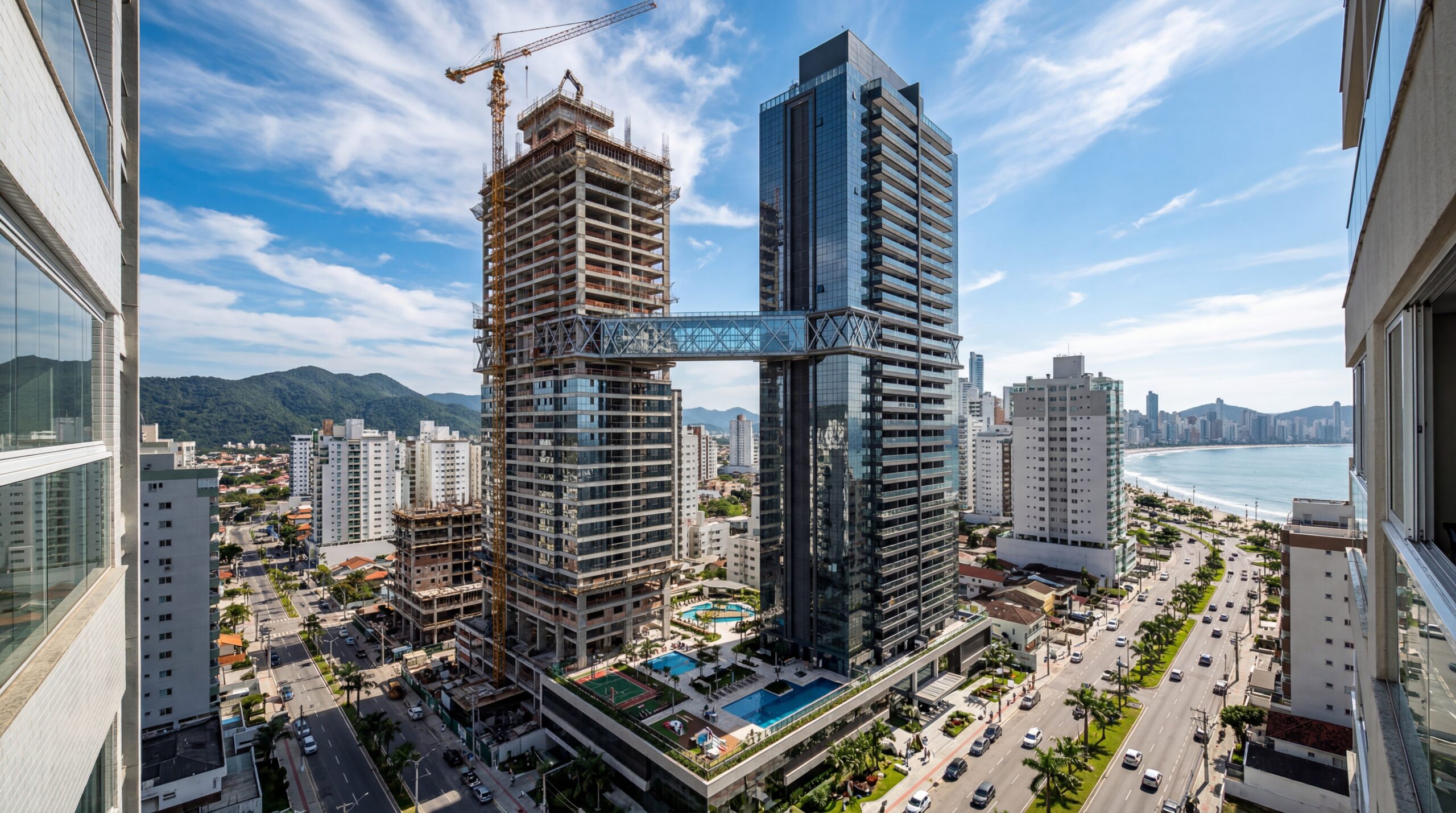
With 55 floors, 177 meters in height, a 15-meter walkway between the twin towers, ventilated facade, and 6,300 m² of leisure space, Ápice Towers already has one tower completed and another nearly at the top.

The development consists of two towers with facades entirely occupied by vegetation, integrating about 800 trees of different sizes, thousands of shrubs, and more than 10,000 perennial plants distributed throughout the floors.
According to data released by the responsible office and academic studies associated with the project, the plant mass is equivalent, in volume, to that of a small urban grove, but organized vertically.
The vegetation was selected by botanists based on criteria such as climate, wind resistance, sun exposure, and the ability to adapt to the urban environment.

Photo: Stefano Boeri/Disclosure
Urban Pollution and the Role of Cities
The relevance of vertical forests is directly linked to the impact of atmospheric pollution. The World Health Organization states that air pollution is responsible for about 7 million premature deaths annually, primarily associated with respiratory and cardiovascular diseases.
At the same time, reports from the United Nations Environment Programme indicate that cities concentrate the majority of global energy consumption and carbon dioxide emissions, despite occupying a small portion of the Earth’s surface.
In this context, green architecture emerges as a complementary mitigation strategy, focused on the local scale and integrated into the already established urban fabric without relying solely on the creation of new horizontal green areas.
Environmental Evidence and Urban Microclimate
Studies conducted by European universities demonstrate that green facades contribute to the retention of fine particles in suspension and the absorption of pollutants such as nitrogen dioxide and sulfur dioxide.
Moreover, the shading provided by plants and the process of evapotranspiration reduce the surface temperature of buildings, helping to decrease the heat island effect in densely built areas.
In the case of Bosco Verticale, thermal measurements showed a significant reduction in direct solar radiation incidence on the facades, which reflects in lower demand for cooling systems during certain periods of the year.
These effects, according to the studies, vary according to the building’s orientation, plant density, and local climatic regime.
Biodiversity Integrated into Architecture
Another widely documented aspect is the impact of vertical forests on urban biodiversity. Monitoring conducted after the occupation of Bosco Verticale recorded the continuous presence of birds, pollinating insects, and other species attracted by the diversity of plants and the availability of shelter and food.
These buildings function as vertical ecological corridors, connecting fragmented green areas and enhancing cities’ capacity to sustain wildlife. Researchers highlight that while they do not replace parks or natural reserves, these structures enhance the ecological complexity of the urban environment.
Expansion of the Model in Other Cities
The experience of Milan has driven similar projects in other regions. In Vienna, housing and environmental policies have begun to incorporate green facades, vegetated roofs, and natural shading systems in new residential developments.
Unlike the Italian model, many Austrian projects adopt hybrid solutions, integrating vegetation throughout entire neighborhoods.
Cities like Singapore have also advanced in incorporating vegetation at height, supported by urban regulations that require green compensation in new buildings. In Latin America, initiatives in cities like Mexico City have adopted modular green facades adapted to tropical and subtropical climates, focused on improving local air quality.
Costs, Limits, and Technical Evaluations
Technical reports indicate that buildings with integrated vegetation have higher initial costs than conventional construction, typically associated with structural reinforcement, the choice of suitable species, and the installation of automated irrigation and drainage systems.
In contrast, life cycle analyses suggest reduced energy consumption and indirect benefits related to the health and thermal comfort of residents.
However, scientific literature is cautious regarding extrapolations. There is no consensus that allows equating vertical forests to large areas of natural forest in terms of global carbon sequestration or oxygen production.
The proven benefits focus on the local scale, with measurable gains in environmental quality, microclimate, and urban biodiversity.
A Paradigm Shift in Urban Construction
More than an isolated solution, vertical forests represent a paradigm shift in contemporary architecture. By integrating living vegetation into buildings, these projects redefine the role of buildings in cities, transforming them from passive structures into active components of urban environmental infrastructure.
Researchers and urban planners emphasize that, when combined with policies on mobility, energy efficiency, and the expansion of green areas, vertical forests can contribute to more resilient cities, adapted to the climatic and sanitary challenges of the 21st century.








Now This is something green i can agree with.