





 Portuguese
  English
  Spanish
  5 min of reading
  0 comments


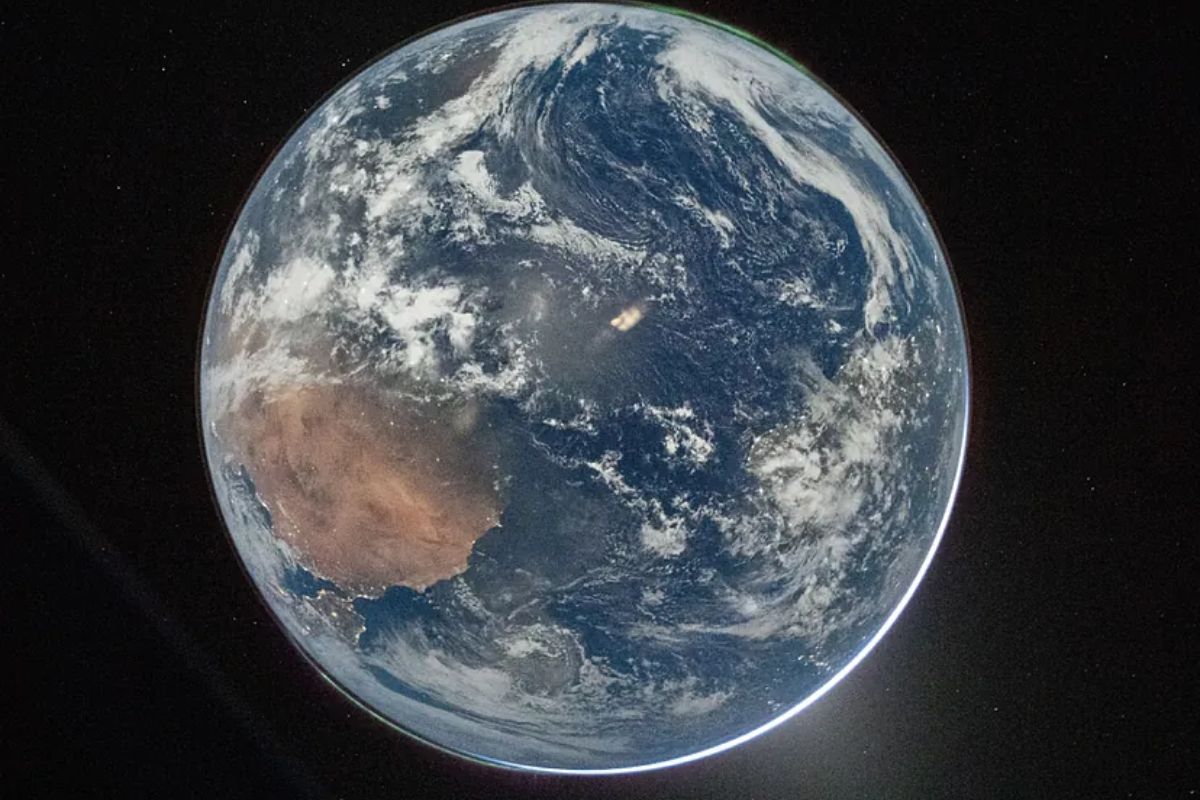
Commander Reid Wiseman photographed the Earth from pole to pole through the window of the Orion capsule during the Artemis 2 mission in deep space on the way to the Moon and said that the four astronauts were left speechless when they saw the entire planet for the first time
For the first time in over 50 years, a human looked out the window of a spacecraft and saw the entire Earth. Commander Reid Wiseman captured the image from the Orion capsule during the Artemis 2 mission, shortly after the translunar injection maneuver that set the crew on course for the Moon. The photo shows the planet from pole to pole, with two auroras visible in the corners of the image and the zodiacal light appearing as the Earth eclipses the Sun.
The record is already being treated as historic by NASA, and Reid Wiseman himself described the moment as the most spectacular of the mission so far. “You can see the entire globe, from pole to pole, and if you look closely, you will see the northern lights. It was the most spectacular moment and left all four of us speechless,” said the commander during the first press conference broadcast from deep space. No one has seen the Earth like this since the Apollo missions.
The photo that no one has taken in over half a century

The last time a human photographed the entire Earth from deep space was during the Apollo program, which ended its crewed missions in 1972.
-
Under the island of Mauritius, in the middle of the Indian Ocean, scientists found fragments of continental crust that are up to 3 billion years old, remnants of a sunken microcontinent that was once connected to Madagascar and India.
-
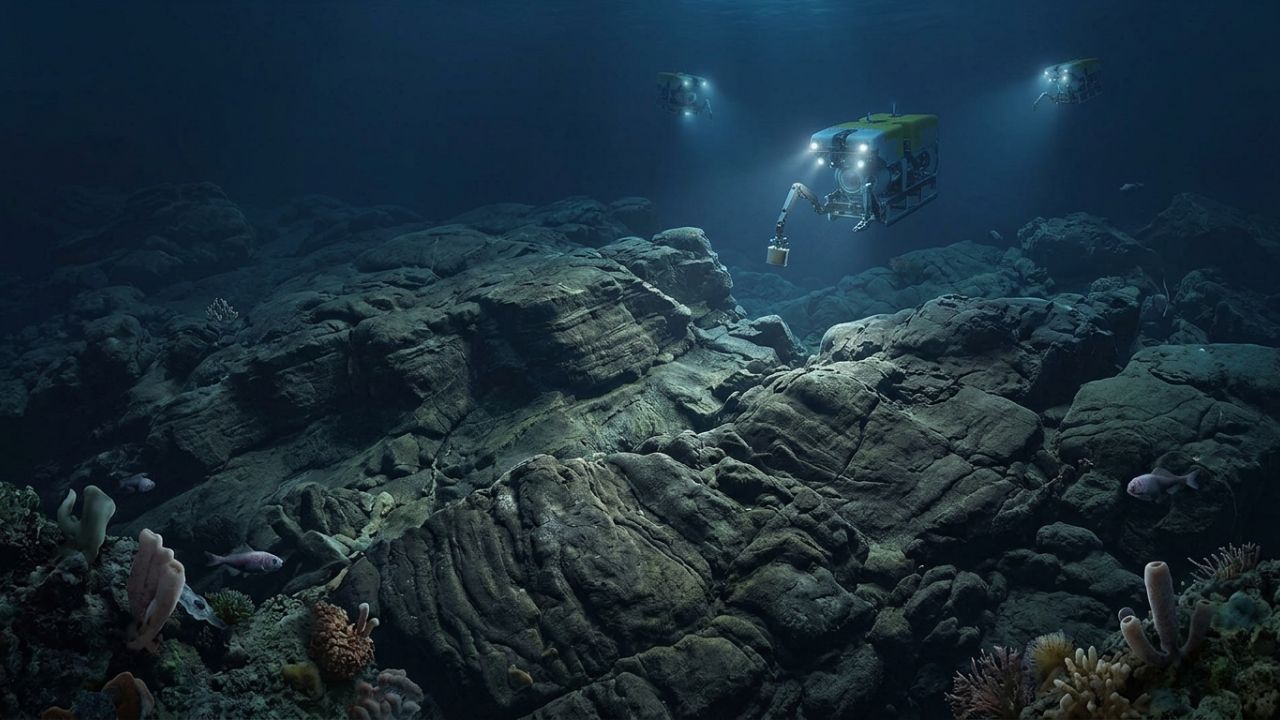
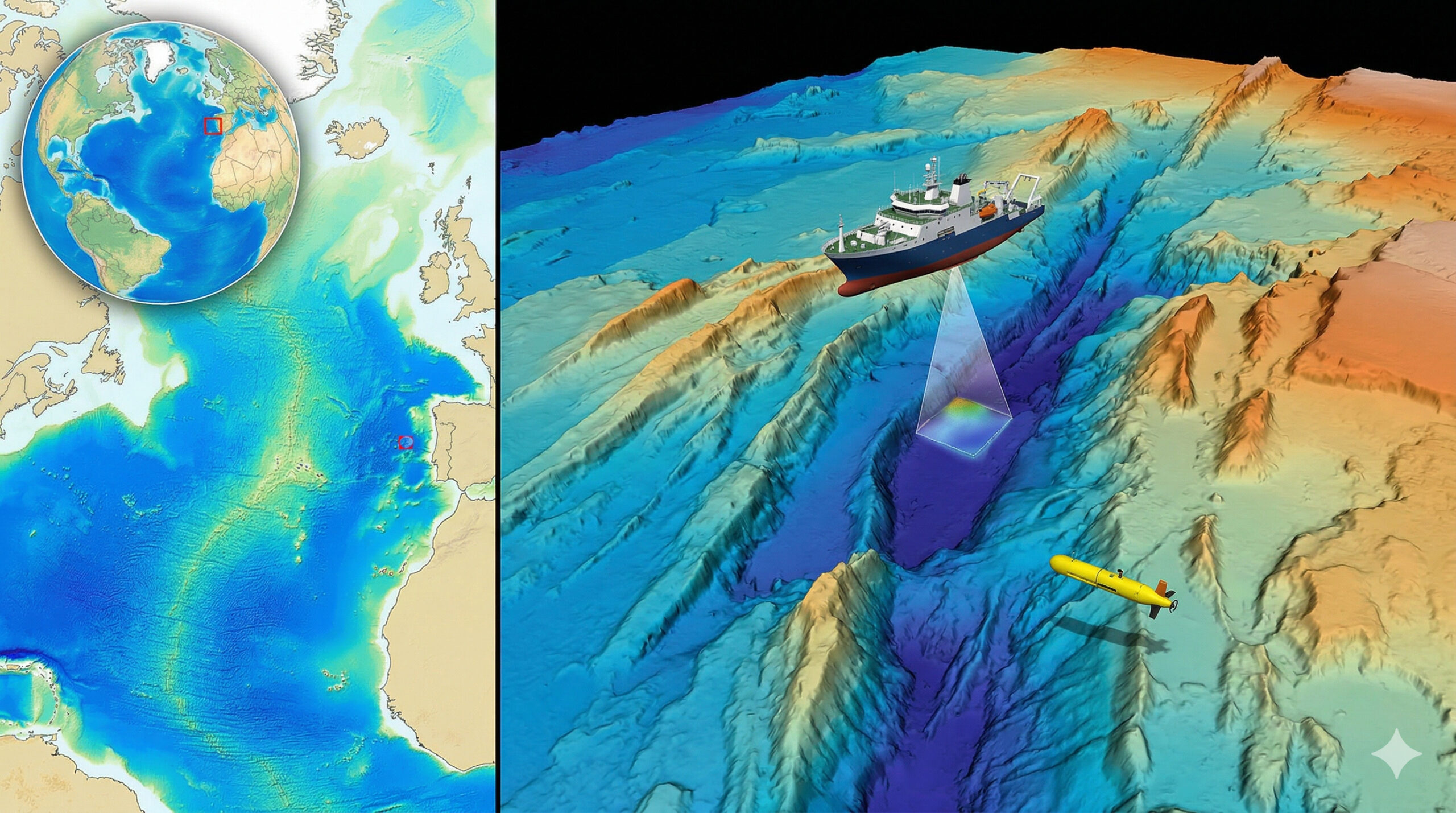
Sonar and geological mappings revealed, 1,000 km from Portugal, an underwater system of 500 km that rivals the Grand Canyon, with deep canyons and valleys sculpted on the Atlantic floor, formed 37 million years ago when tectonic plates tore the ocean like a “zipper” during the separation between Africa and Europe.
-
Solution for plastics: understand how the cockroach emerges as an ally against pollution and drives innovative sustainability pathways with real benefits for the environment.

-
The United States Navy revealed a sixth-generation fighter concept with a bat-like shape that promises to fly at four times the speed of sound and operate from aircraft carriers with stealth technology never seen before.


Since then, all photos of the Earth taken by humans have come from the International Space Station, which orbits just 400 kilometers high, too close to capture the entire planet in a single image.
The Artemis 2 changed that. After completing the translunar injection, the Orion capsule moved away from Earth’s orbit and entered a trajectory toward the Moon, placing the four astronauts at a distance that allowed them to see the Earth as a complete sphere floating in the dark.
Reid Wiseman wasted no time: he grabbed the camera and captured the image through the spacecraft’s window, producing a photo that NASA shared as the first visual record transmitted by the crew on this mission.
Reid Wiseman was already known for photographing the Earth from space
The commander of Artemis 2 is no stranger to space photography. Reid Wiseman spent 165 days on the International Space Station in 2014 and was extremely active on social media, sharing hundreds of images of the Earth seen from space.
But none of those photos compare to what he captured now from the Orion capsule, because this time he was far enough away to see the entire planet.
The difference between photographing the Earth from the ISS and photographing from deep space is like the difference between looking at a city from the top of a building and looking from an airplane. From the ISS, you see pieces: partial continents, cloud formations, strips of coastline.
From the Orion capsule on the way to the Moon, Reid Wiseman saw everything at once: poles, oceans, continents, auroras, and even the zodiacal light, that subtle glow caused by interplanetary dust reflecting sunlight.
What appears in the photo: auroras, zodiacal light, and an entire planet
NASA detailed the content of the image on its website. The photo shows two auroras, one in the upper right corner and another in the lower left corner, indicating magnetic activity in both hemispheres of the Earth.
In the lower right corner, the zodiacal light appears, visible because the planet is eclipsing the Sun at the moment of capture.
These details make the photo more than just a beautiful record. It is a scientific image that documents atmospheric and cosmic phenomena captured simultaneously by a human from deep space, something that hasn’t happened since Apollo astronauts looked out the window and saw the Earth shrinking behind them.
The Artemis 2 also produced a second photo in which the Earth appears through one of the four main windows of the Orion capsule, framed by the structure of the spacecraft.
More historic images are yet to come in Artemis 2
These two photos are just the beginning. Next Monday, the Orion capsule will approach the Moon, and the Artemis 2 astronauts are expected to capture high-resolution images of the far side of the satellite, photographing geological formations that no human has ever seen in person.
NASA expects this phase of the mission to produce records as impactful as the photo of the Earth.
Reid Wiseman and the other three astronauts, Victor Glover, Christina Koch, and Jeremy Hansen, will pass behind the far side of the Moon without communication with Earth for up to 50 minutes, and during that time they will have the opportunity to observe and photograph regions that have only been seen by robotic probe cameras.
If the photo of the Earth from deep space is already being called historic, what comes from the Moon could redefine what we understand as space photography.
Did this photo leave you speechless too?
The image captured by Reid Wiseman from the Orion capsule during Artemis 2 is the first photo of the entire Earth taken by a human from deep space in over 50 years.
Four astronauts looked out the window, saw the planet from pole to pole with auroras shining in both hemispheres, and fell silent.
Did this photo impress you as much as it impressed the crew? Are you following Artemis 2 in real time? Tell us in the comments how you felt seeing the entire Earth photographed again after half a century.








Seja o primeiro a reagir!