





 Portuguese
  English
  Spanish
  3 min of reading
  0 comments


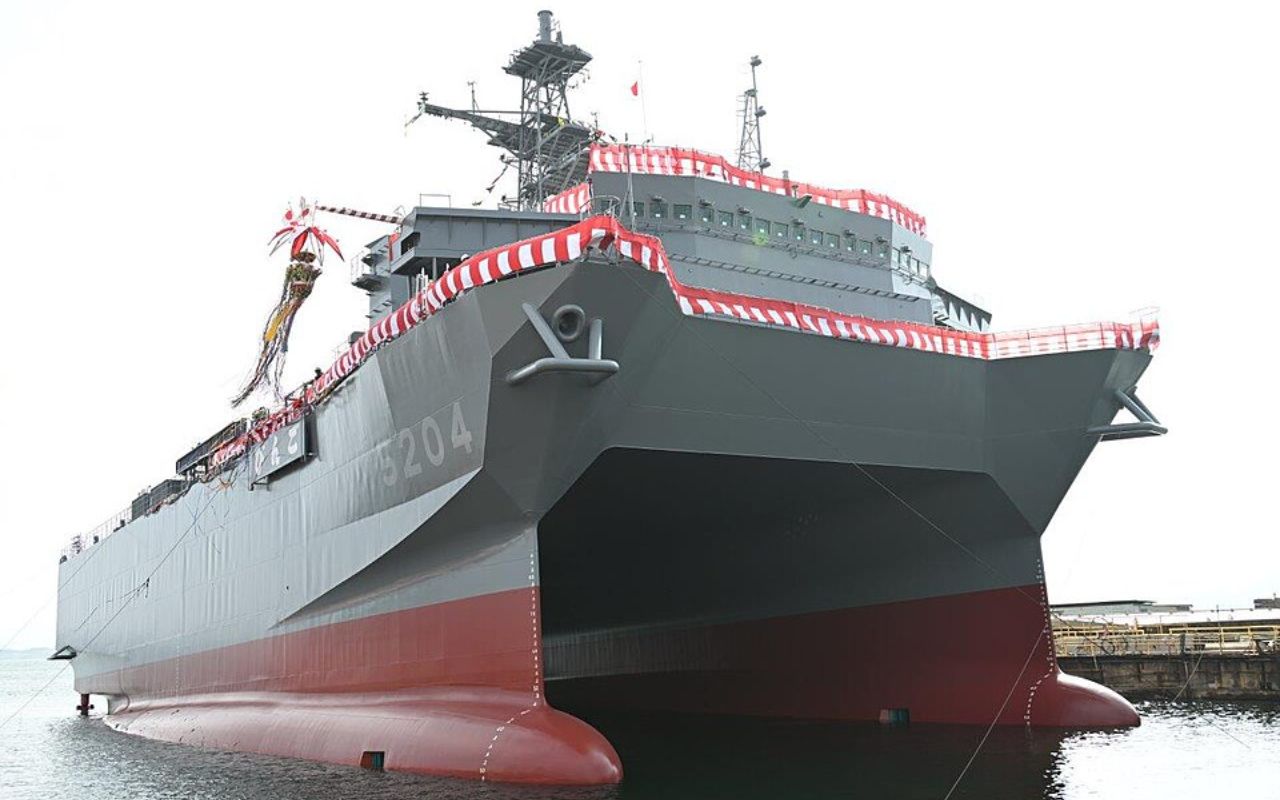
Japan Incorporates the New Acoustic Surveillance Ship JS Bingo, Fourth Vessel of the Hibiki Class, to Enhance Submarine Monitoring in the Indo-Pacific.
The Japan Maritime Self-Defense Force (JMSDF) has expanded its submarine monitoring structure after officially receiving the JS Bingo (AOS-5204), a ship specialized in oceanic acoustic surveillance.
The vessel was delivered on March 6, 2026 by Mitsubishi Heavy Industries, during a ceremony held at the company’s shipyard located in Tamano, Okayama Prefecture, Japan.
After the delivery ceremony, the new acoustic surveillance ship JS Bingo proceeded to the naval base in Kure, located in Hiroshima Prefecture.
-
Few people know, but “mega burst” attacks from the A-10 in the Middle East are intriguing analysts and even experienced former pilots of the U.S. Air Force.

-
Manufactured in Brazil and exported to Saudi Arabia and Malaysia, the ASTROS system is renamed as Fogos in 2026, gaining AI, cruise missiles with a range of 300 km, and air defense costing R$ 3.4 billion, transforming a launcher from the 1980s into the most ambitious multidomain platform in Latin America.
-
The largest military aircraft ever produced in Brazil, the KC-390 Millennium can carry up to 26 tons, refuel fighter jets in flight, and has already been exported to Europe and Asia, placing the country in the select group that designs and sells large military aircraft worldwide.

-
FAB loses Hermes 900 drone during multinational exercise in Mato Grosso do Sul and is left with only one active aircraft, raising concerns about operational fragility and strategic response capability.

The vessel will now be involved in monitoring submarine activities around the Japanese archipelago and in strategic areas of the Indo-Pacific.
Designed to capture underwater sounds at long distances, the ship functions as an advanced maritime listening system capable of identifying the presence of submarines and other vessels.
Advanced Sonar System Equips the New Acoustic Surveillance Ship JS Bingo
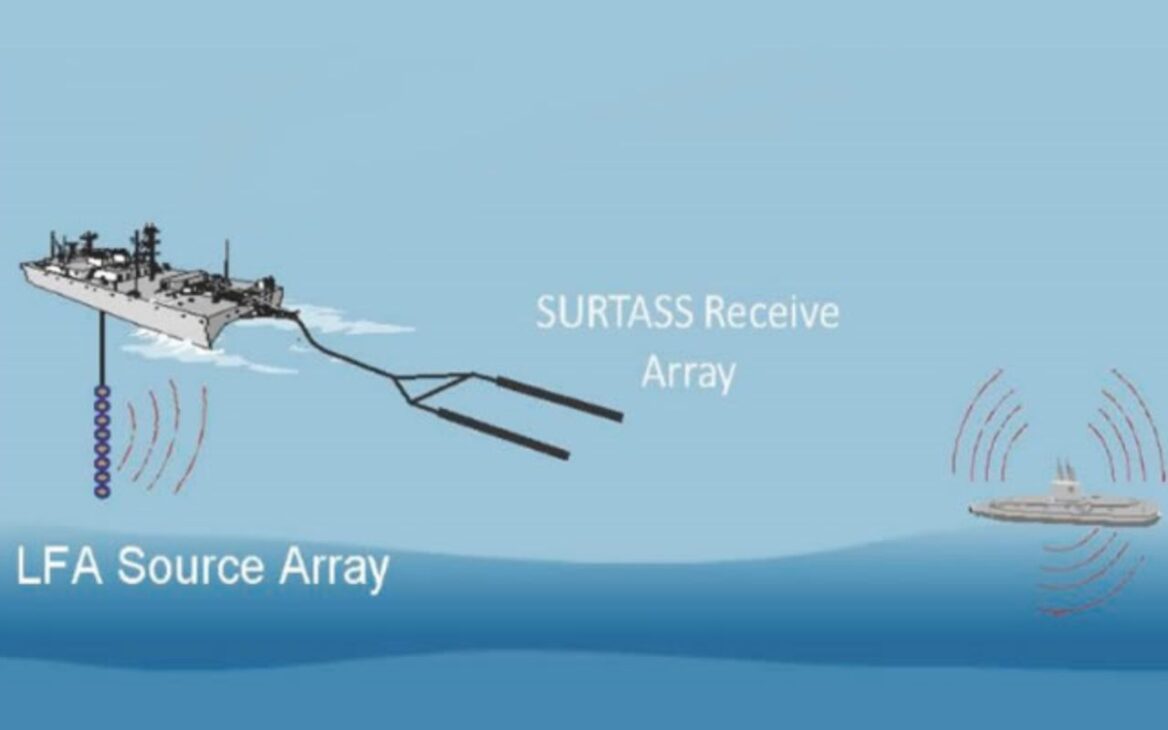
The main technological feature of the new acoustic surveillance ship JS Bingo is the SURTASS (Surveillance Towed Array Sensor System).
This low-frequency sonar uses a towed antenna that remains submerged during operations.
This way, the equipment can capture vibrations and sounds produced by submerged vessels at great distances.
The collected data is sent to specialized analysis centers and becomes part of the anti-submarine warfare operations conducted by the Japanese navy.
New Acoustic Surveillance Ship JS Bingo Joins the Hibiki Class
The construction of the JS Bingo (AOS-5204) had an estimated cost of about 19.6 billion yen, which is equivalent to approximately US$ 124 million.
The vessel is part of a naval program that has been expanded by Japan to strengthen submarine monitoring in the Pacific region.
This project originated during the Cold War, when the main mission was to monitor Soviet submarine movements in the Pacific Ocean.
Over the years, however, the program remained active and underwent expansions in response to increased submarine operations from countries like China and Russia.
Within this context, the new acoustic surveillance ship JS Bingo has become the fourth vessel of the Hibiki class, a series of ships developed specifically for underwater acoustic surveillance.
In addition to the Bingo, the class includes the vessels JS Hibiki, incorporated in 1991, JS Harima, from 1992, and JS Aki, which entered service in 2021.
Special Design Ensures Stability for the New Acoustic Surveillance Ship JS Bingo
The JS Bingo (AOS-5204) is approximately 67 meters long and has a total displacement of about 3,800 tons, operated by a crew of approximately 40 personnel.
The vessel also features a deck designed to support helicopter operations, enhancing its versatility in maritime missions.
One of the most important aspects of the design is its structural shape. The ships of the Hibiki class utilize the SWATH (Small Waterplane Area Twin Hull) concept, characterized by a semi-submerged twin hull.
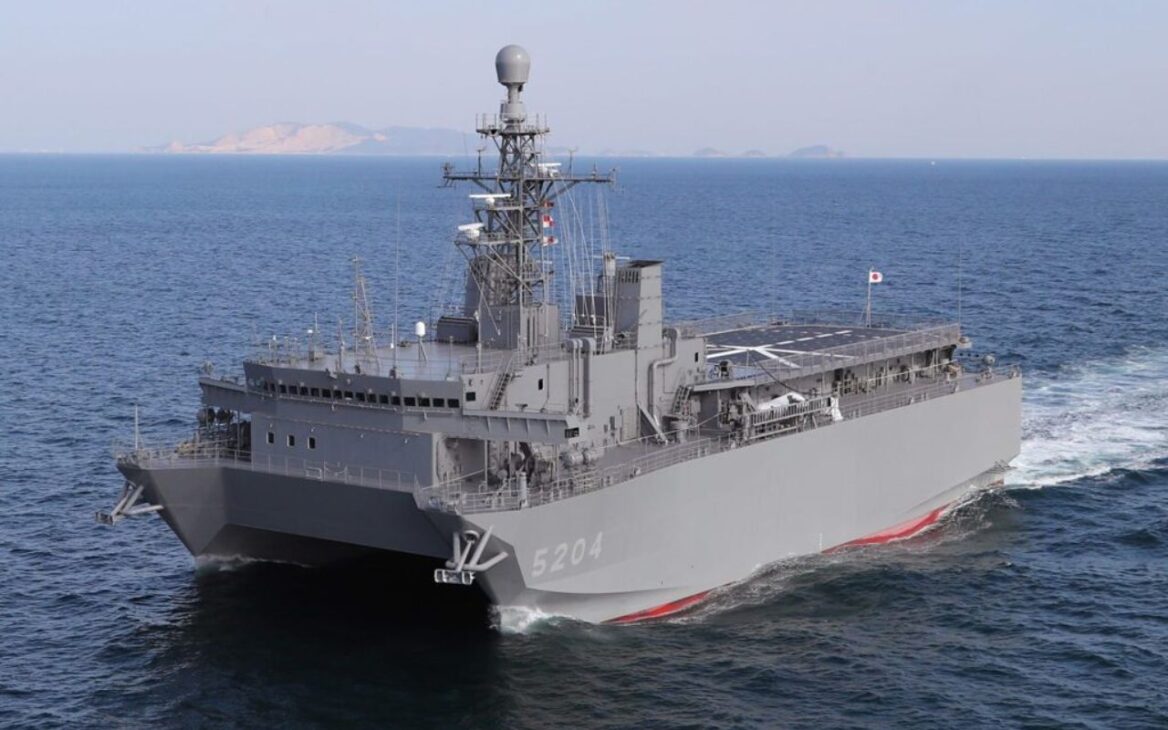
This type of configuration significantly reduces the impact of waves during navigation.
As a result, the vessel maintains greater stability even in rough sea conditions, allowing acoustic sensors to make underwater measurements with greater precision.
International Cooperation Strengthens Submarine Monitoring
The ships of the Hibiki class, including the new acoustic surveillance ship JS Bingo, also participate in a broader submarine monitoring system.
These vessels operate in cooperation with the United States Armed Forces, sharing acoustic data collected at sea.
This integration enhances surveillance capabilities along strategic maritime routes in the Indo-Pacific.
Japan Expands Submarine Sensor Network
With the operational deployment of the new acoustic surveillance ship JS Bingo, the Japan Maritime Self-Defense Force now has four ships dedicated to acoustic surveillance.
This increase strengthens the number of sensors available to detect submarine movements near Japanese territory and along strategic maritime routes.
Thus, Japan reinforces its presence in the underwater domain and enhances its monitoring capabilities in an increasingly contested region in the geopolitical landscape.
Source: Poder Naval










-

-

-

-

-

16 pessoas reagiram a isso.