





 Portuguese
  English
  Spanish
  4 min of reading
  39 comments


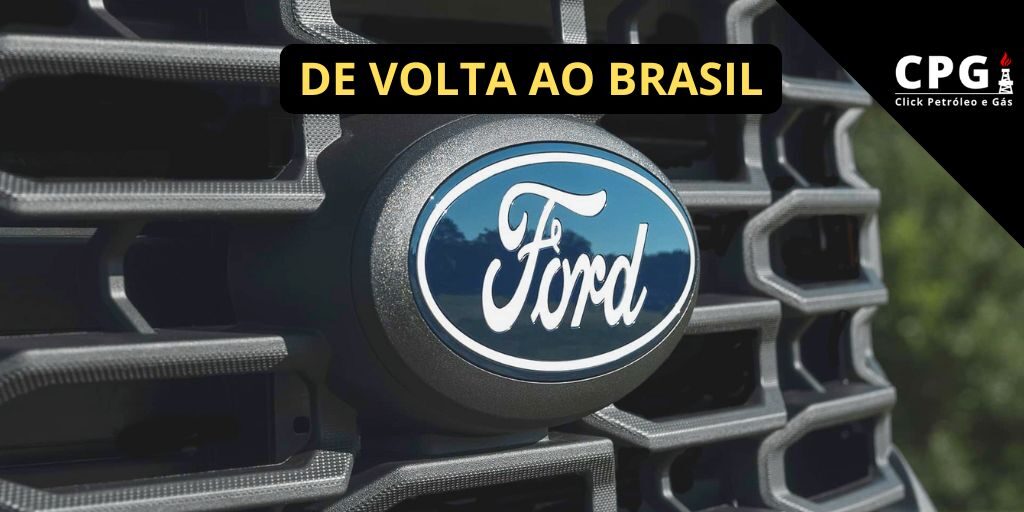


Could Ford Be Preparing For A Triumphant Return To Brazil? After The Automaker Ended Its Operations In 2021, The Country Still Remains One Of The Main Markets For The Company In Latin America. However, There Is A Key Factor For Bringing The Manufacturer Back.
According to Rogelio Golfarb, Vice President of Ford in South America, Brazil has great potential in the electric vehicle market, mainly due to the presence of essential minerals for battery production, such as lithium and manganese.
However, he emphasizes that “the country needs to accelerate the industrialization and processing of these resources.” According to Golfarb, while other countries, such as Canada, are already developing clear policies to attract battery industries, Brazil is still moving at a slow pace.
Golfarb explained that Canada, for instance, not only has lithium but is also creating robust policies to attract the battery and parts industry. He believes Brazil has the natural resources, but lacks speed.
-
The car stored for 38 years: when opening the barn door, what appears is breathtaking and looks like a scene from a movie!

-
Fiat works miracles in the Brazilian market, lowers the price of its 0 km hatch to R$ 69,990, reestablishes the model as the cheapest car in the country, and reignites the battle against Kwid and C3.
-
Chevette with cooking gas: How the gas cylinder ends up being used in cars clandestinely and why this makeshift solution can result in leaks, explosions, damaged engines, and seized vehicles.
-
Fiat launches the new 2027 Toro hybrid with 48V, 176 hp, an electric motor of 15.5 hp, a 0.85 kWh battery, up to 7% fuel savings, 8% fewer emissions, and possible exemption from IPVA.

“We have the minerals, but we are moving at a very slow pace compared to the rest of the world”, stated the Vice President in an interview with Folha de S. Paulo.
Ford’s Exit And The Challenges Of A Possible Return
Even without immediate plans to return to production in Brazil, Ford Does Not Rule Out The Possibility Of A Future Return.
The key factor for this decision is directly related to the advancement of electromobility. According to Golfarb’s statements, the company is constantly assessing the technological innovation landscape in the country.
“As the level of electrification technology increases, we will undoubtedly be evaluating local production”, he affirmed in the interview with Folha de S. Paulo.
Brazil has the potential to become a hub for electric vehicle technologies, primarily due to its abundant raw materials, skilled engineers, and a vast consumer market. However, to achieve this, it will be necessary to overcome some obstacles.
The first of these is the speed of innovation. According to Golfarb, the Brazilian industry needs to keep pace with major economies to remain competitive in the electrification of automobiles.
The Importance Of Brazilian Minerals
Brazil is one of the few countries that has a wide range of essential minerals for battery manufacturing, such as lithium, manganese, and copper.
According to the CEO of Ford, this is an important competitive advantage, but the country still needs to develop the technology for processing and industrializing these materials.
“We have an advantage in terms of mineral resources, but the challenge is to add value to these materials within national territory”, says Golfarb.
However, he warns that the great problem of the Brazilian industry is not only the reduction of its participation in GDP but the decline in the technological intensity of what is produced locally.
According to Golfarb, the electrification process can be an opportunity to reverse this scenario, increasing the relevance of the industry in GDP and expanding the use of cutting-edge technologies.
The Success Of The Chinese And Its Impact On Ford
Chinese automakers have been quick to adopt electromobility, while others, such as European, American, and Japanese companies, have faced more difficulties in competing in this market.
According to the CEO, the significant victory of Chinese companies was to get ahead and bet on electrification while other countries were still discussing whether this technology had a future.
By taking the lead, Chinese manufacturers dominated the global electric vehicle market, creating a significant dependence on their battery and component technologies.
Golfarb notes that, currently, most manufacturers wishing to produce electric cars need to rely on Chinese suppliers.
“If you want to make an electric car in the world today, you will have to buy components and batteries from China”, he explained, highlighting the global dependence on Chinese technology.
The Future Of Brazil In Electromobility
With the growing demand for electric vehicles and the search for new supply sources, Brazil finds itself in a strategic position.
“There is a growing need for alternative supply sources, which puts Brazil in a privileged position due to its mineral resources”, stated Golfarb in the interview with Folha de S. Paulo.
However, for the country to take advantage of this opportunity, it will be necessary to invest in infrastructure, technology, and industrial policies that stimulate innovation and local development.
Do You Believe That Ford Might One Day Return To Brazil? Leave Your Answer In The Comments And Justify It! Until Next Time, Reader!








Não gostaria de ver a Ford no Brasil, novamente. A empresa mostrou não ser confiável ao abandonar o país. Talvez dar oportunidade para outras montadoras com compromissos bilaterais seja melhor.
A China já resolveu entrar na fabricação aqui. À Ford resta ficar com os slogans bonitinhos para vender os importados. Perdeu a chance de ficar esmolando benefícios e forçar taxas nos elétricos.
Acho que não deve retornar ao Brasil. Foi uma péssima empresa com seus clientes (pós venda e reposição de peças, crônico até hoje).