





 Portuguese
  English
  Spanish
  2 min of reading
  0 comments


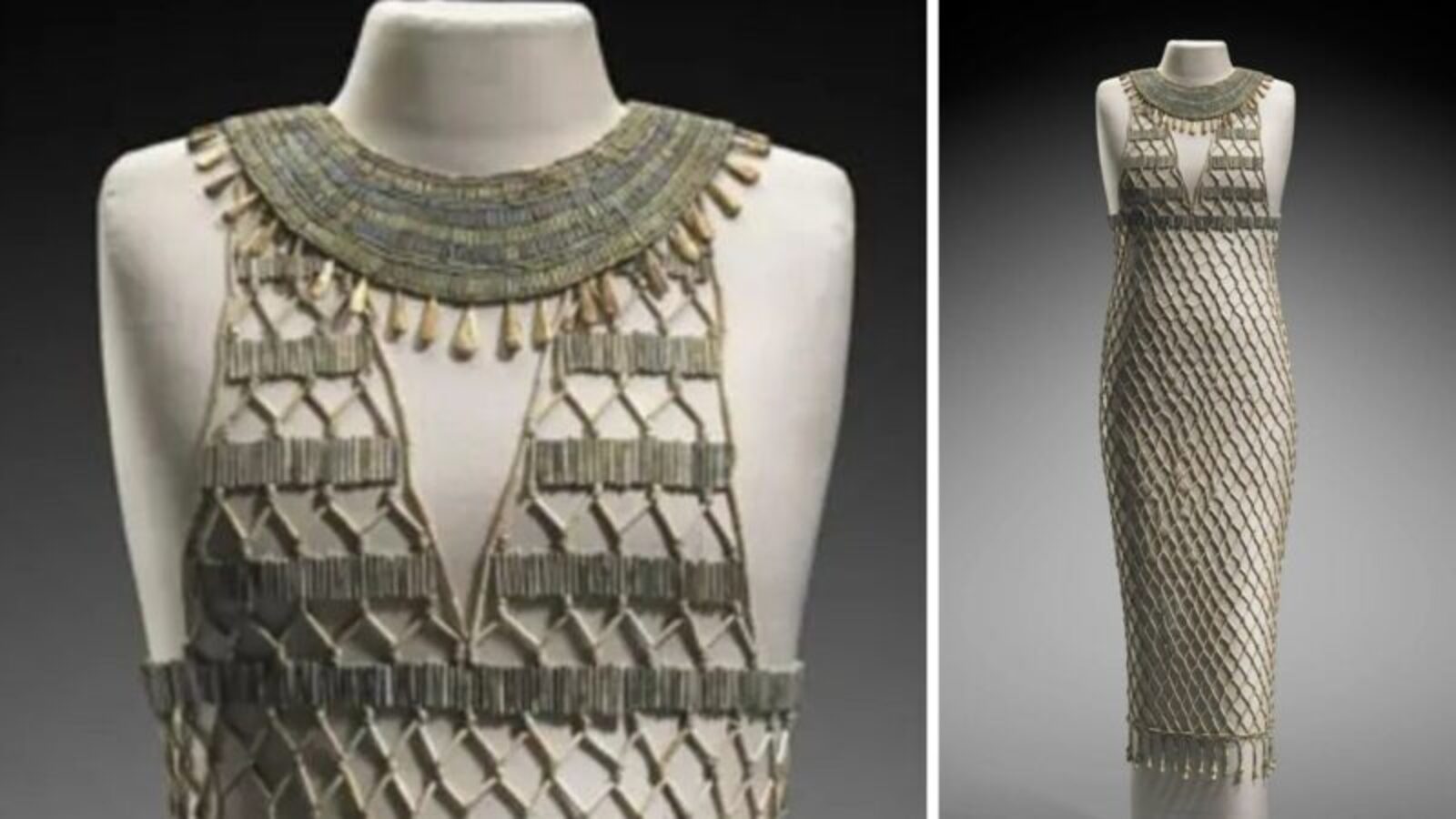
Found in Giza, the beaded dress with about 7 thousand pieces was reconstructed and is considered the oldest example of this Egyptian style
Archaeologists found in 1927, in Giza, the beaded dress of a woman from the time of Pharaoh Khufu. The piece from ancient Egypt, recreated from about 7 thousand beads, is considered the oldest known example of this style.
Found in Giza
The dress was discovered in the tomb of a woman who lived during the Old Kingdom, in the same period as Khufu.
The linen cord that held the beads together had disintegrated over time.
-
With 7.4 trillion tons of artificial snow pumped in 10 years, an extreme operation could stabilize the West Antarctic ice sheet and prevent a sea level rise of more than 3 meters, but it would require snow cannons, ocean water, and energy on an almost industrial scale at the end of the world.

-
The US no longer wants to deal with data centers: the state may prohibit projects of 20 MW that consume as much as 15,000 homes, while AI already requires energy from millions of households and even half a liter of water for 50 questions.

-
Elon Musk’s Starlink should watch out! Amazon is launching its satellite internet service with over 3,000 authorized satellites, betting on the New Glenn rocket and promising faster connectivity integrated with AWS.

-
What this solid-state nuclear battery does seems like something out of fiction: generating energy for over 100 years in ultra-low consumption devices, without recharging and without replacement, for critical missions in remote and demanding areas.

Even so, the piece could be reconstructed based on the position in which the beads were found. Representations of this type of clothing in Egyptian art also helped to recompose its shape.
How the piece was made
The Museum of Fine Arts in Boston preserves this dress and other examples of beaded nets. The making involved threads of linen and faience, a glazed pottery produced with ground quartz.
Before firing, the faience paste was mixed with copper. This process gave the beads shades of blue and turquoise, creating an effect similar to semi-precious stones like lapis lazuli and turquoise.
Shape and use of the dress
The piece has a medium length, a skirt in a diamond pattern, and a high-waisted bodice. The beads appear organized in vertical threads, while the neckline features concentric circles formed by beads.
At the hem, the dress displays a fringe of beads and seashells. The net was likely worn over a linen tunic or sewn directly onto it, rather than worn in isolation.
The Egyptian faience beads are delicate. Therefore, there is a possibility that the piece was reserved for special occasions or specifically made for the funeral of that woman.
Funeral value in ancient Egypt
Tom Hardwick, an Egyptologist at the Houston Museum of Natural Science, states that the colors blue and green may refer to the Nile River and the renewal of spring.
In ancient Egypt, both were associated with rebirth after death.
The dress is treated as the oldest known example of this style. There are about twenty similar pieces in museums around the world, and two have been reconstructed by MFA Boston, in addition to another recreated by the Petrie Museum.
When recreating the example from the Petrie Museum, Janet Johnstone concluded that the piece was too heavy for everyday use.
In the New Kingdom, between 1550 BC and 1070 BC, this type of dress lost ground to simpler nets used in funerals.
With information from Adventures in History.








Seja o primeiro a reagir!