





 Portuguese
  English
  Spanish
  6 min of reading
  0 comments


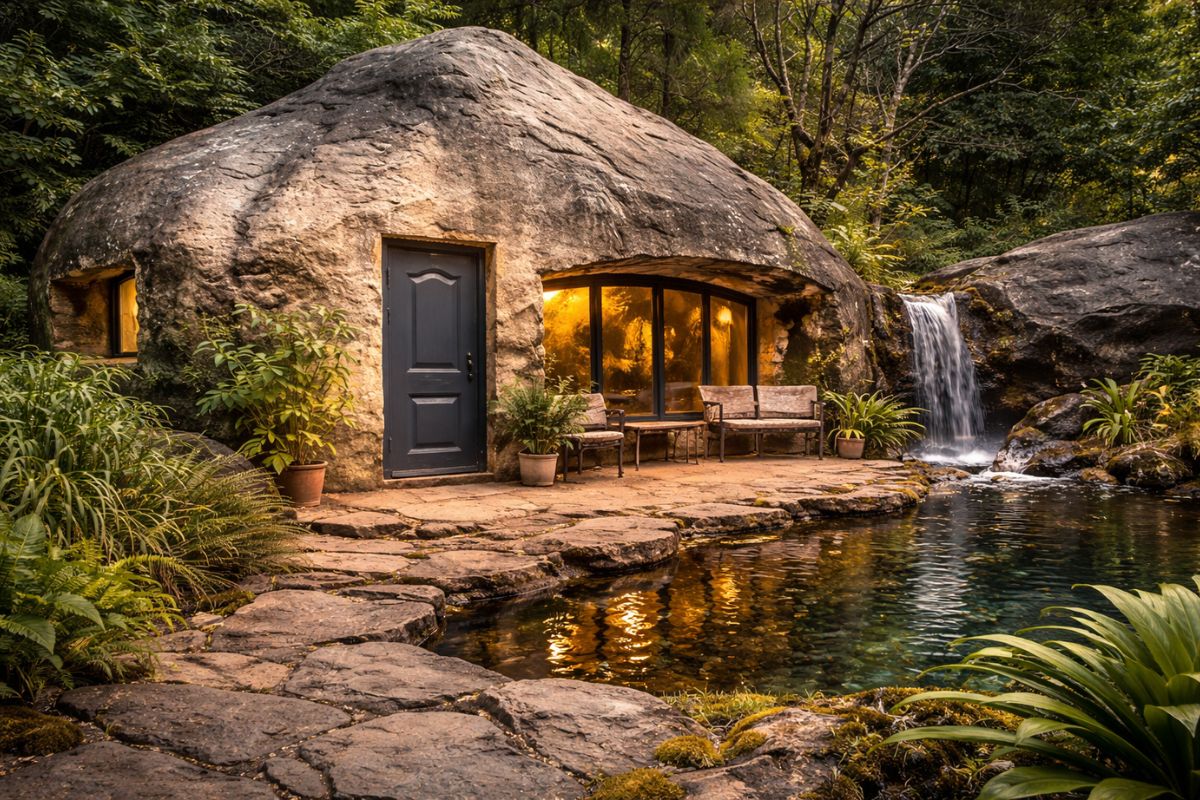
The giant rock was transformed into a stone house with continuous excavation and manual labor until revealing a real shelter within nature.
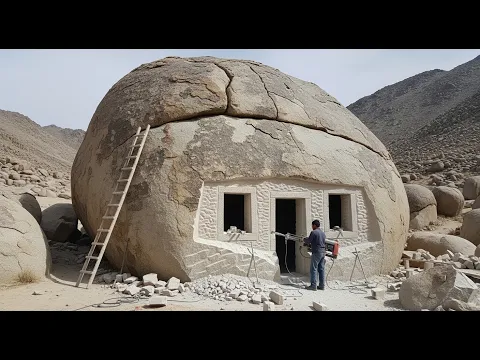
The giant rock appears at the beginning of the work covered with markings, lines, and measurements. What would be just an ordinary stone for most, for the man responsible for the project was already the starting point for a new living space, planned to be born from within the rock itself.
From the very first moments, it is clear that this is not a simple intervention. Each step depends on precision, strength, and continuity, because any mistake in the cutting point or the depth of the drilling could compromise the entire structure that was beginning to be drawn.
The giant rock was marked before any cutting

The first step was to transform the rough surface into an organized workspace. The giant rock received lines, measurements, and visual indications that defined where the outer part of the future house would be, as well as the points that needed to be cut or excavated.
-
New CCR concrete paving technology promises roads up to 3x more durable, less maintenance, and cost reduction in Brazil.

-
Made from recycled plastic, plastic wood is gaining space in the construction industry because it does not rot, resists moisture, and reduces maintenance costs over the years.

-
Florianópolis will receive a million-dollar BRT that will begin construction in 2026 with nearly 400 million in funding from the federal government and the Inter-American Development Bank, and the map already shows the routes for the exclusive bus corridors.

-
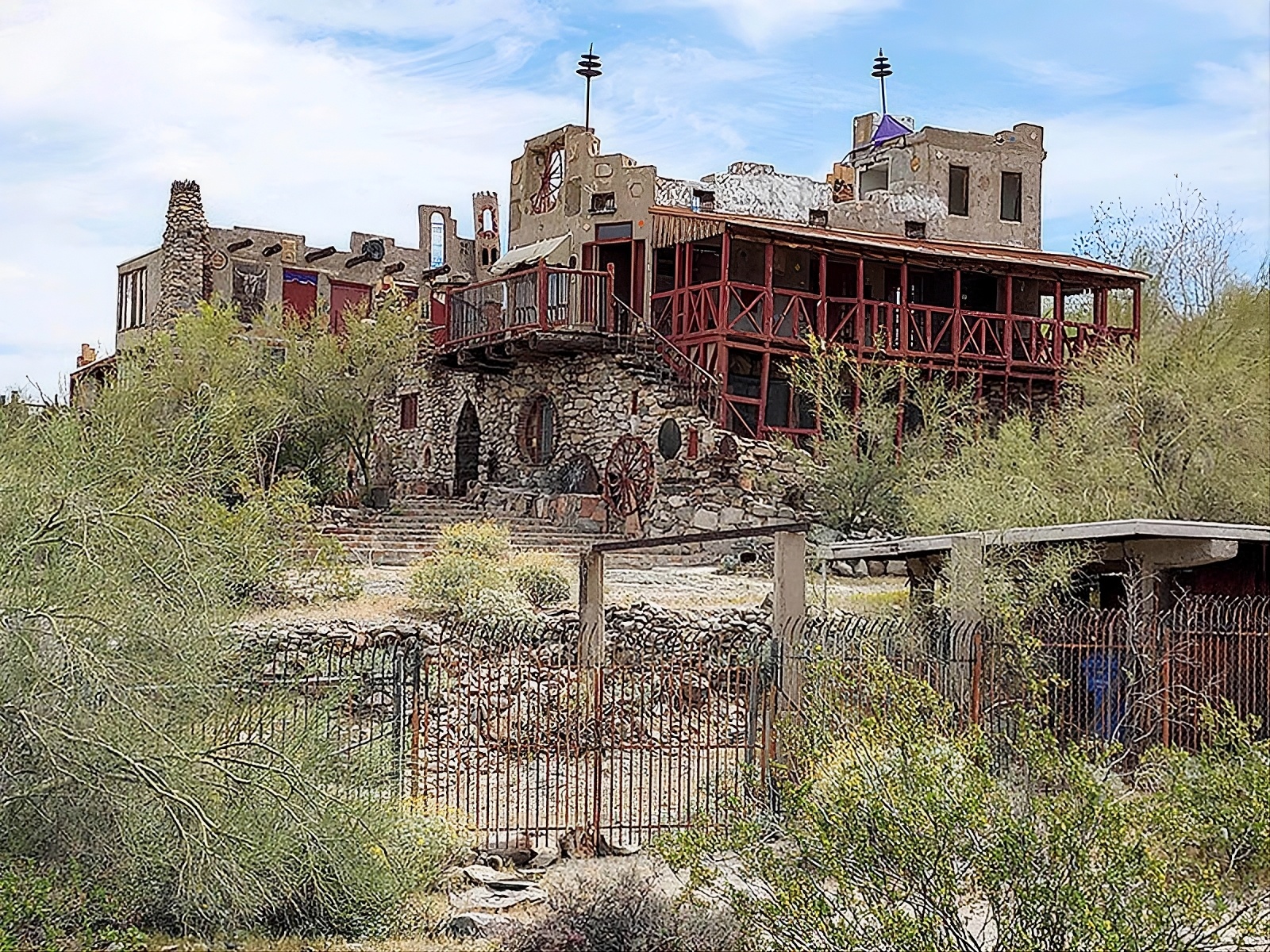
Without a blueprint, without an engineer, and using scrap from the dump, a father spends 15 years building an 18-room castle for his daughter, featuring tram tracks, 13 fireplaces, and over 700 m², which may now be demolished.
With a level and measuring ruler, the man made these markings more precise. It was at this moment that the limits of the door and the areas to be removed began to emerge. The project was still on the outside, but the house was already beginning to exist in the design.
This initial phase had structural weight. The work needed to start in the right place so that the main opening respected the logic of the internal space and did not compromise the rest of the excavation.
Drilling began the transformation of the stone

After the preparation, the first actual intervention came. Using a heavy rock drill, the man began to open the first holes at the base of the giant rock, creating the outline that would serve as the foundation for the future entrance door.
These drillings were not just isolated marks. They formed the base of the cut that would allow a path to be opened into the stone. The vibration of the machine, the noise, and the dust coming from the surface made the difficulty of the task evident.
Next, the holes began to follow a circular pattern on the face of the rock, drawing the exact line of the opening.
It was the moment when the giant rock began to stop looking like a closed block and started to suggest a habitable structure.
The door appeared when the blocks began to yield
After hours of drilling, the outline of the door finally became visible. With dozens of holes opened in the stone, the next step was to connect these points and break the first large block inward.
With a sledgehammer and successive blows, the fragments began to fall. Gradually, the entrance was revealing itself.
The giant rock began to display for the first time something resembling a house, as the main opening ceased to be a drawing and became a real access.
This moment has great visual and symbolic strength. The stone that seemed untouched began to be manually conquered, and the entrance of the future dwelling appeared before the eyes as the first concrete proof that the idea worked.
The work advanced from the outside to the inside of the rock

When the door was completely open, the work entered a new phase. Instead of only acting on the surface, the work began to advance into the giant rock, with deeper drilling and continuous removal of material.
At this stage, a robust drill began to excavate the interior with high rotation, while water and mud appeared in the process, both to cool and to facilitate cutting. This detail helped to reveal the hardness of the stone and the complexity of the internal excavation.
The transition from the outside to the inside completely changes the reading of the work. It was no longer just an opening in the giant rock, but a clear beginning of an internal space being created centimeter by centimeter.
Internal finishing required precision and control
With the main opening defined and the interior more accessible, the project entered the finishing phase of the surfaces. As the walls were still very rough, the edges began to be smoothed with a stone cutter.
This work had an aesthetic function, but also a structural one. The more regular the surface became, the better the adaptation of the following steps would be, and the cleaner the visual result would become. The most aggressive cutting phase began to give way to detailed carving.
Further along, the process reached an even more technical level, with a drilling system fixed high to advance horizontally on the wall and expand the internal space. The excavation ceased to be just brute effort and began to take on clear traits of engineering applied to stone.
The removal of debris was essential to expand the house

As the excavation deepened, the removal of blocks, stones, and debris became an indispensable step.
A transport cart began to be used to remove the broken material, freeing up space and allowing for a better view of the internal volume achieved.
Each piece removed represented more usable area inside the giant rock. However, this progress required a lot of care.
The expansion of the interior depended on physical strength, but also on constant attention, as a wrong move could compromise entire days of work.
This combination of effort and control helps to explain the scale of the project. It was not just about opening a hole in the stone, but about transforming a giant rock into a functional shelter with method and continuity.
The final result revealed a house sculpted in nature

In the final scene, the transformation is complete. What was just a mass of stone with no apparent function is converted into a habitable structure, handmade and integrated into the natural landscape around.
Every hole, every cut, every broken block, and every adjusted surface participated in the construction of this shelter. The result does not appear as a conventional work, but as a solution excavated directly from the raw material of the place.
The strength of the story lies precisely in this. The giant rock was not removed to make way for a house. It was transformed into the house itself. The final shelter emerges as proof of persistence, patience, and the ability to execute a difficult idea to the end.
From raw stone to real shelter
The entire process shows a rare transformation to witness. The giant rock started as an obstacle and ended as a structure.
Between these two points, there was marking, drilling, breaking, excavating, finishing, and debris removal, always with manual labor and gradual advancement.
The final result impresses because it maintains nature as the foundation of the construction, without hiding the origin of the material.
The house is born from the very stone, preserving the raw character of the material while simultaneously creating a space recognizable as a dwelling.
This is what makes the project so striking: the idea seemed unlikely at the beginning, but it was executed until it became a visible reality.
Would you live in a house sculpted inside such a giant rock?









Seja o primeiro a reagir!