





 English
  Francês
  Alemão
  Italiano
  Japonês
  Norueguês
  Portuguese
  Spanish
 5 min of reading


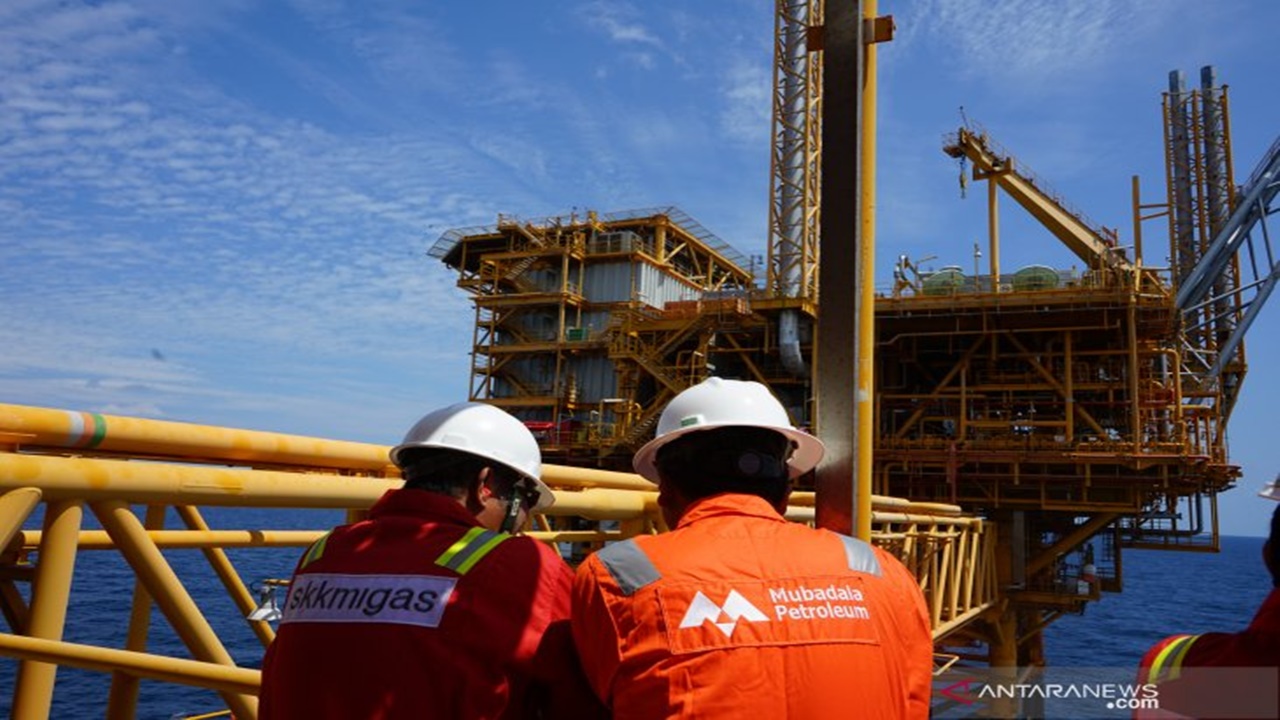
Petrobras President Said During Public Hearing at the Chamber of Deputies About the Sales of Assets of the Oil Company That the Mubadala Fund Signaled Interest in Buying National Origin Oil
On June 25, there was a public hearing at the Chamber of Deputies about the sales of assets of the oil company. At the meeting, the new president of Petrobras, Joaquim Silva e Luna, stated that the Arab fund Mubadala, which purchased the Landulpho Alves refinery (Rlam) in Bahia, offered to buy Brazilian oil as raw material for the northeastern refinery. “[Mubadala] has already expressed willingness to buy Brazilian oil,” said Silva e Luna.
Read Also
- Brazil’s Largest Oil Company Opens Bidding to Increase Diesel Production at the Country’s Largest Oil Refinery
- Electric Car Tesla Sedan Worth R$ 650 Thousand Explodes in Flames After 3 Days of Use and Traps Owner After Electronic Doors Fail
- More Divestment from Petrobras: State-Owned Company Announced Yesterday (07/02) the Sale of Three Oil Exploration Blocks in the Paraná Basin
- Ethanol Is Not Running Out of Time in Brazil Despite Fuels Being Put Against the Wall With the Arrival of Electric Cars in the Brazilian Market
- Resumption of Brazilian Shipbuilding! Modification Works on FPSO P-71 Will Be Done at Jurong Aracruz Shipyard and More Jobs Are Being Created in the Region
- The World’s Largest Provider of Port Towage Services Sees Ceará as a Strategic Market, Starts Operations at the Port of Pecém and New Jobs Are Already Being Generated
The two companies are finalizing the sale of the refinery for $1.65 billion nearly a year after they started exclusive negotiations for the asset amidst uncertainty in the oil market caused by the Covid-19 pandemic.
Rlam Is the First Refinery Sold in Petrobras’ Downstream Divestment Portfolio
The Administrative Council for Economic Defense (Cade) approved the historic transaction earlier this month.
-
Brazilian giant expands borders in the Southeast: Petrobras confirms new oil discovery in ultra-deep waters in the pre-salt of the Campos Basin.

-
Alert in the global energy market: Severe tropical cyclone hits the coast and disrupts gas production at major plants in Australia, threatening global supply.

-
Petrobras finds high-quality oil in the pre-salt at 113 km from RJ and reignites expectations about strategic reserves in the Campos Basin.

-
Ocyan opens registrations for startups focused on innovation in the oil and gas sector and will select projects for Innovation Day with the support of Nexio.


Rlam is the first refinery sold in Petrobras’ downstream divestment portfolio, and represents half of the domestic processing capacity of 2.2 million b/d.
Short-term service and supply contracts are likely for the seven other refineries that Petrobras intends to sell by the end of the year, company executives told Argus. However, with other domestic oil suppliers in the market, such as Shell and Galp, Petrobras will have more oil available for export in the coming years.
Petrobras expects its export portfolio to increase from 445,000 b/d in 2015-19 to 891,000 b/d in 2021-25, reflecting the increase in pre-salt production and downstream divestments.
Union Questions the Sale Price of Rlam
Despite various legal setbacks, oil workers’ unions and opposition politicians continue to question the sale price of Rlam. Unions represented by the Unified Federation of Oil Workers (FUP) attempted to block the sales of the refineries and pressure Petrobras to abandon its market-based price policy that supports the sale of the refineries. Such pressure is expected to increase as Brazil approaches the elections at the end of next year.
At last week’s hearing, Silva e Luna reiterated that the company does not intend to abandon price parity with imports, and emphasized that the country depends on fuel imports. When President Jair Bolsonaro appointed Silva e Luna in mid-February, investors feared federal government interference in pricing policy, a possibility that he dismissed.
The retired general and former Defense Minister stated that the sale of the refineries, as part of the state’s $25 billion-$35 billion divestment portfolio, will help finance pre-salt oil production and exploration campaigns in the border basins in the north of the country.
Mubadala Takes Over Billion-Dollar Debt of Invepar and Begins to Control the Subway in Rio de Janeiro
Mubadala, an investment fund from the United Arab Emirates, will take control of the Metroviária Concessionaire of Rio de Janeiro, MetrôRio, replacing Invepar. The process authorizing the transfer, signed by Governor Cláudio Castro, was published on the last day 11 in the Official Gazette of Rio de Janeiro.
The Rio de Janeiro subway was previously under the control of Investimentos e Participações em Infraestrutura S.A (Invepar), the majority shareholder of São Paulo International Airport in Guarulhos.
According to Globo columnist Ancelmo Gois, the Arab fund helped restructure Invepar’s R$ 2.5 billion debt in September. In return, it was agreed that Invepar would waive the concession of the subway and the Yellow Line.
However, in the case of the Yellow Line, authorization from the City Hall of Rio and the STF is needed, where the case ended up after former mayor Crivella attempted to take over the toll of the road.
Invepar, which will now focus on Guarulhos Airport, went into crisis with OAS’s problems, which had to leave the partnership after the Lava Jato scandal, leaving it in the hands of a group of pension funds.
Odebrecht Works on the Sale of Petrochemical Braskem to the Sovereign Fund of the United Arab Emirates
The petrochemical Braskem, part of the Novonor Group – formerly Odebrecht, is in the sights of acquisition by the sovereign fund of the United Arab Emirates, Mubadala. The negotiations involve the purchase of 50.1% of the company that is part of the judicial recovery plan of Odebrecht/Novonor.
Petrobras, which owns the remaining Braskem, seems not to oppose the deal. According to Broadcast Estadão, it is still expected that other interested parties will come into play, such as Dutch LyondellBasell, which may resume negotiations for a stake in Braskem.
Braskem is the largest producer of thermoplastic resins in the Americas, with an annual volume exceeding 20 million tons, including the production of other basic chemical and petrochemical products. The company operates 41 industrial units located in Brazil, the U.S., Germany, and Mexico, the latter in partnership with the Mexican Idesa.








Seja o primeiro a reagir!