Portuguese
  Spanish


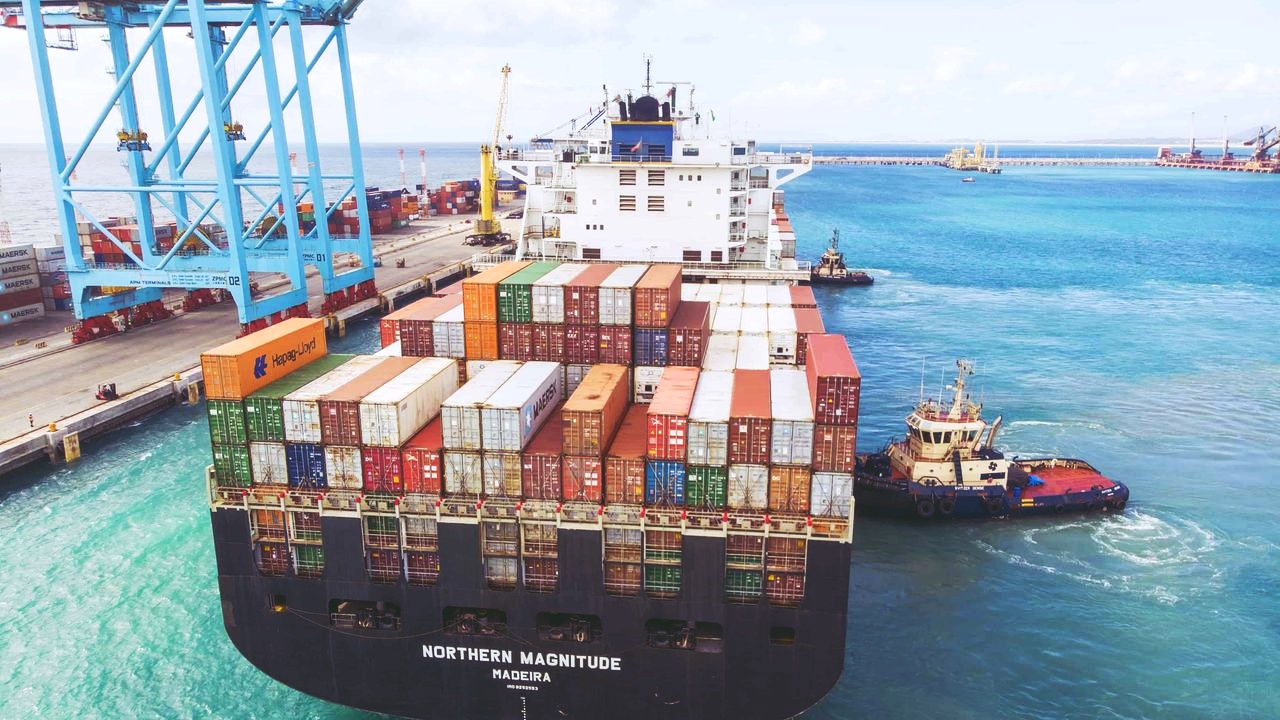

Svitzer’s Contracts with Maersk Create Job Openings in Pecém. Company Is Investing US$ 30 Million in Four Tugboats to Be Built at the Rio Maguari Shipyard (PA).
Svitzer, a global leader in towing and the port arm of Maersk, has added two new Brazilian ports to its operations, also operating in Pecém (Ceará) and Suape (Pernambuco), marking its entry into the Northeast region of the country. Svitzer’s contract with Maersk has already created 30 new job openings in Pecém. The plans are part of Svitzer Brazil’s growth strategy and represent a significant milestone in Svitzer Brazil and Svitzer Americas’ growth strategy.
Read Also
- Tesla Sedan Electric Car Worth R$ 650 Thousand Explodes in Flames After 3 Days of Use, Trapping Owner After Electronic Doors Fail
- Ethanol Is Not Running Out of Days in Brazil, Despite Fuels Being Cornered with the Arrival of Electric Cars in the Brazilian Market
- Heineken and Itaipava Grow, and the Competition with Ambev Will Intensify Among the Giant Alcoholic Beverage Suppliers
- After Halting Vehicle Production and Leaving the Country, Ford Closes Another Operation in Brazil and Takes on Billion-Dollar Expenses
- The World’s Largest Automotive Alliance, Formed by Renault, Nissan, and Mitsubishi, Makes Executive Changes to Banish the Ghost of Carlos Ghosn and Maintain Partnership with Daimler Group
The global leader Svitzer has moved two tugboats from southern ports to join the fleet at the Ceará terminal. The company has operated in Brazil since 2015 and has solidified its presence in the South and Southeast regions of the country, operating in five ports.
Svitzer Signed a Long-Term Contract with Maersk for Operations at the Port of Pecém – Ceará
Initially, Svitzer signed a long-term contract with Maersk for operations at the Port of Pecém (Ceará). The company is also negotiating new contracts with the existing customer base at the terminal, in addition to scouting unprecedented opportunities.
-
They exchanged the idea of a large house for a 35 m² warehouse, spent US$ 12,000 on the structure, and created a tiny house in Colorado with space to live and work.

-
While modern cities rely on pumps and electricity, in Iran, ancient tunnels carried water through the desert using only slope and gravity.
-
Instead of sending families far from the city, a project in Chile intentionally created incomplete houses on expensive urban land and left technical space for each to grow.
-
General Motors Replaces Over a Thousand Workers with 50 Cobots at Electric Vehicle Plant, UAW Union Criticizes Move Amid Industry’s Automation Push


“I am very pleased that we can add Pecém and Suape to our presence in Brazil. This is an important milestone in our expansion strategy in the country,” says Daniel Reedtz Cohen, CEO of Svitzer Brazil. “Most of our clients are multinationals with a presence in various ports, who appreciate tugboat operators that also have a strong presence.”
Regarding the start of operations in Ceará, Daniel Reedtz Cohen emphasizes that this is a significant milestone for the company’s expansion strategy in Brazil. “By enhancing and expanding our port coverage, we can better meet our clients’ needs and support their growth ambitions,” he adds in a note.
He argues that the growth rate of port activity at the Port of Pecém (Ceará), both for imports and exports, has stood out even during the pandemic. “Obviously, there was an impact, but what we are seeing is that mainly exports remained strong, and not only in the South, but we are also seeing the importance of the Northern and Northeastern ports,” he adds.
Svitzer’s Contracts with Maersk Create Job Openings in Ceará
Operations in Pecém (Ceará) and Suape generated about 30 new job openings. According to the executive, the company prioritizes local labor, aligning the knowledge that professionals already have with the quality standards developed by the multinational over the decades.
“The level of maritime knowledge here in Brazil and the Northeast is also high. So, for us, it greatly facilitates the operation to already have good personnel, and reaching a certain quality standard is just a matter of combining these two things,” he states.
Among the training that new hires undergo are maintenance of tugboats and systems. Svitzer also prioritizes local suppliers in Ceará in its activities.
Svitzer Is Investing US$ 30 Million in Four Tugboats to Be Built at the Rio Maguari Shipyard (PA).
According to Cohen, the company already has 14 operational tugboats in Brazil and is investing US$ 30 million in the construction of four more with state-of-the-art equipment and powers above 60 tons, which are expected to be delivered next year. The assembly of the vessels is also being carried out in Brazilian territory, at the Rio Maguari shipyard (PA).
To already start operations at the Port of Pecém (Ceará), the company moved two tugboats from southern ports. “So, even with construction just starting, we decided to begin expanding right away,” he points out.
Despite the first contract in Ceará being to serve container ships, Svitzer’s vessels cater to all types of cargo and, according to the director, the company is focusing on and monitoring opportunities that may arise from projects in development in the state, such as green hydrogen.
“We are firmly committed to the Americas, with operations in 12 countries, and we see significant growth potential in the region, both in port towing and terminals, which are our main segments,” emphasizes Arjen van Dijk, director of Svitzer Americas. “As a global and regional operator, we will seek these opportunities to expand our presence in selected countries and ports. Brazil remains a key market for us, and we are determined to continuously transform our presence, knowledge, and skills into value for our customers throughout the country.”
Based in Panama, Svitzer Americas employs 835 people and operates more than 80 vessels, providing maritime services to global and regional clients in 12 countries.