





 Portuguese
  English
  Spanish
  4 min of reading
  0 comments


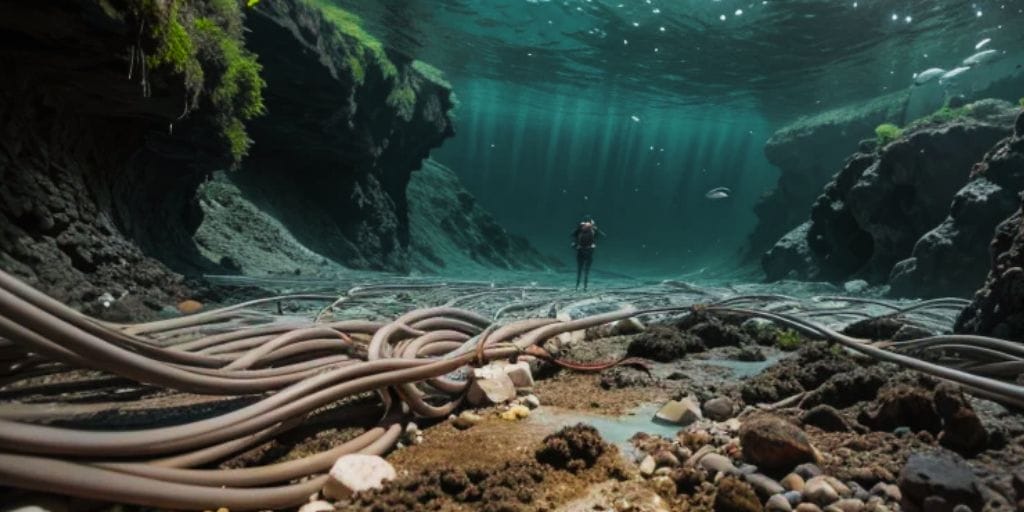
Global Geopolitics Is About to Change! British and Canadian Businesspeople Plan to Build the World’s Largest Submarine Power Interconnector, Connecting Europe and North America. This Audacious Project Promises to Revolutionize Green Energy and Combat Climate Change, but It Could Also Ignite International Disputes and Redraw Global Alliances!
A report published by the CNN states that when people living in New York City, United States, wake up and prepare their breakfast, the city’s electrical grid kicks into action, responding to the growing demand for energy.
However, much of this energy still relies on natural gas, a fossil fuel that contributes to global warming. Although the state of New York is striving to make its grid greener and combat climate change, the transition is not easy.
The ability to store renewable energy for long-term use is still not fully developed, and the availability of wind and sun is not always sufficient to meet immediate demand.
-
Russia has broken the U.S. maritime blockade to send oil to Cuba and is now loading a second ship while Trump says that “Cuba is next” in a possible military action against the island.
-
Spain challenges the USA and closes its airspace for operations against Iran, raising global tension and provoking the threat of a trade rupture.
-
While no other country manufactures tanks in Latin America, Argentina activates the TAM 2C-A2 and raises a curiosity about the technological lag in the region.
-
A Russian ship with 730,000 barrels of oil has just arrived in Cuba while Mexico negotiates fuel sales through private companies: the communist island is desperately seeking alternatives after losing its supply from Venezuela due to American military action.
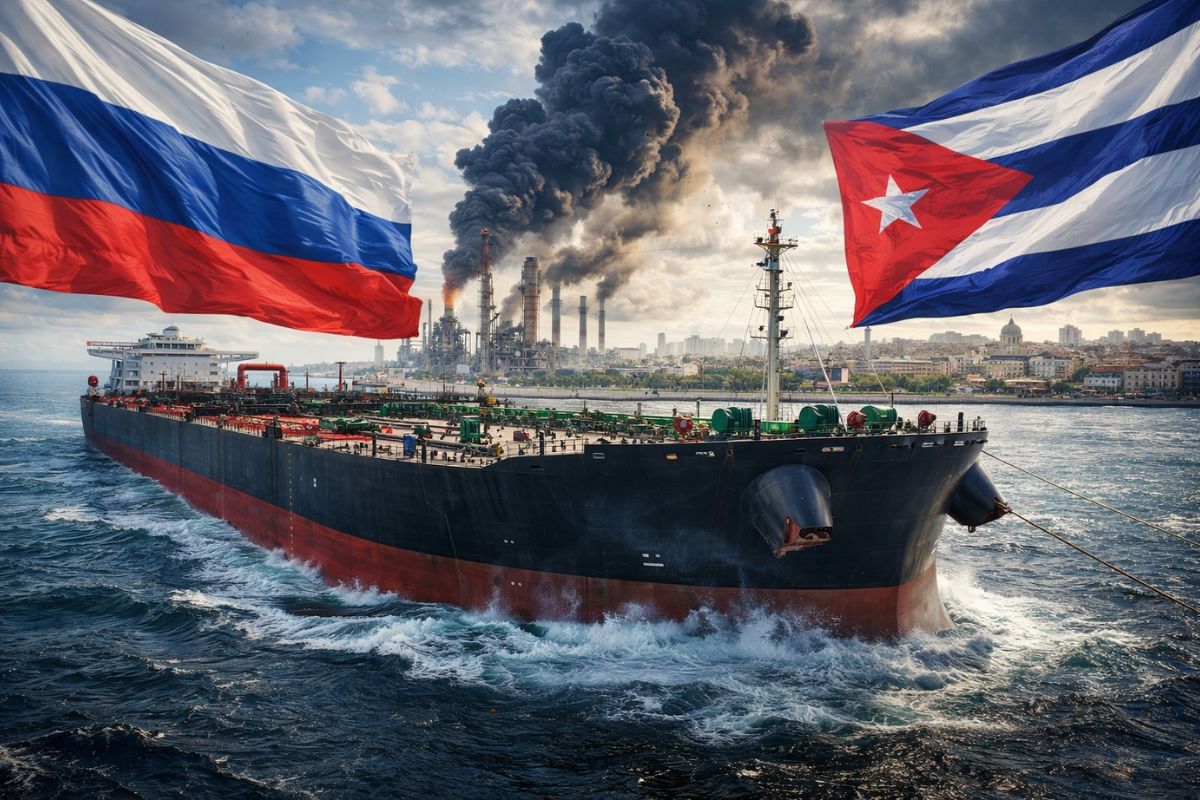

An Innovative Solution from the Other Side of the Atlantic
Meanwhile, a group of businesspeople has found a potential solution thousands of miles away, not in sunny California, but in the gray and rainy Britain. They plan to build the world’s largest submarine energy interconnector, linking Europe and North America.
This ambitious project, led by Simon Ludlam of Etchea Energy, Laurent Segalen of Megawatt-X, and other European partners, proposes to connect the west of the UK to the east of Canada and potentially New York to the west of France through three pairs of high-voltage cables, totaling over 3,200 kilometers along the bottom of the Atlantic Ocean.
“When the sun is at its peak, we probably have more energy in Europe than we can actually use,” Ludlam said in an interview with CNN. “It’s a good time to send it to a demand center, like the East Coast of the United States.” And, according to Ludlam, as Europe moves into the night, the flow of energy could be reversed, capitalizing on the sunlight from the East Coast of the U.S.
Submarine Cables: The New Frontier of Energy Wars
Although the transatlantic interconnection is still in the proposal phase, networks of green energy cables are already spreading across the world’s oceans. These cables are crucial for transmitting large amounts of renewable energy to countries struggling to transition to cleaner sources on their own. Furthermore, these projects are redesigning the geopolitical map, shifting some global energy disputes to the depths of the sea.
Example of International Cooperation
Energy cables already connect several European countries, many of which are neighbors and allies. Although not all exclusively transport renewable energy, new energy sources are under construction to ensure a greener future. The UK, for instance, is already connected to Belgium, Norway, the Netherlands, and Denmark via submarine cables and has signed an agreement with Morocco to import solar and wind energy.
Similar projects are emerging in other parts of the world. The Sun Cable project, for example, aims to send solar energy from Australia to Singapore, while India and Saudi Arabia are discussing linking their electrical grids across the Arabian Sea.
Geopolitics and Energy Security
However, the geopolitical implications of these projects are significant. The transatlantic project, termed North Atlantic Transmission One-Link (Otan-L), aims not only to mitigate climate change but also to confront Russia and compete with China for dominance in clean energy technology. The interconnection would force nations to reconsider their alliances in a rapidly changing geopolitical world, potentially avoiding diplomatic disputes and military conflicts.
“When we had the invasion of Ukraine, the interconnections responded logically,” recalls Ludlam. “We helped our neighbors, and this created a proven dependency.” Europe also turned to U.S. liquefied gas exports to replace Russian energy, strengthening ties between the two historical allies.
Challenges and Vulnerabilities
Despite the advantages, submarine cables are not invulnerable. Russia has been conducting underwater intelligence operations around energy cables and wind farms in the North Sea and Baltic. While such attacks are more psychological, they highlight the vulnerability of these infrastructures.
The Otan-L cables, descending up to 11,000 feet in the Atlantic, would be well protected against submarines, but are more vulnerable as they approach the shallow waters of the continental shelves. Any damage, intentional or accidental, can have disruptive effects, as demonstrated by a telecommunications cable cut in the Red Sea that significantly interrupted data flow between Asia and Europe.
The Bet on the Future
Despite security challenges, critical infrastructures on land are not necessarily safer. Power plants in Ukraine, for example, have been targeted during the conflict with Russia. However, submarine cables represent a strategic opportunity to strengthen energy connections and promote international cooperation.
The transition to renewable energies is not just a climate necessity, but also a geopolitical move. Gulf countries are heavily investing in renewable energy, seeking to maintain their relevance in the global energy landscape. In contrast, Russia, which has been reluctant to invest in renewable sources, may face a decline in its global influence.
Connecting North America to Europe will be politically challenging, but projects like the Otan-L promise to transcend generations and survive changes in government. “A submarine cable could be exploited by a transactional presidency to force concessions from Europe,” warns Rizzi of the European Council on Foreign Relations. “And once you build that link, it’s very hard to break it.”
Do you believe that projects like the Otan-L will truly guarantee a secure and sustainable global energy transition? Or will geopolitics still pose a significant obstacle? Leave your opinion in the comments!






Seja o primeiro a reagir!