





 Portuguese
  English
  Spanish
  4 min of reading
  0 comments


Honeycomb-Shaped Geocells Transform Common Soil into a Structural Base Capable of Supporting Tons, Stabilizing Slopes, and Reducing the Use of Concrete in Engineering Works.
In civil engineering works, one of the most common challenges is dealing with unstable soils. Slipping slopes, deformed roads, and eroding embankments can compromise highways, railways, and entire constructions. To tackle this problem, engineers have started using a relatively simple but extremely efficient technology: geocells, three-dimensional structures that resemble honeycombs.
These cells are made of high-strength polymers and are installed over the soil, forming a kind of expanded network. After being filled with earth, gravel, or sand, they create an extremely stable base. The result is surprising: common soil starts to function as a reinforced structure capable of supporting heavy loads, being used in road works, slope containment, and landscaping projects.
What Are Geocells and How Does This Technology Work
Geocells are three-dimensional structures made with strips of high-strength polymer, typically high-density polyethylene (HDPE). These strips are welded together to form a set of interconnected cells.
-
For the first time in history, the Brazilian Air Force conducted a highly complex inspection on the C-99 jet independently, without relying on foreign companies, marking a new level of logistical autonomy and operational sovereignty.

-
Beet greens that end up in the trash in many kitchens contain a high concentration of antioxidants, and a 2025 study shows that extracts may have even more potent activity when transformed into microparticles.

-
Something was orbiting Earth before any human launched a satellite into space: scientists have found thousands of unexplained flashes in old photos of the sky, and a NASA researcher says the evidence points to non-human intelligence.

-
There is a gap of hundreds of kilometers between weather observation points in the United States, and now drones flying at 6,000 meters altitude in strong winds are filling this gap to predict tornadoes before they kill.

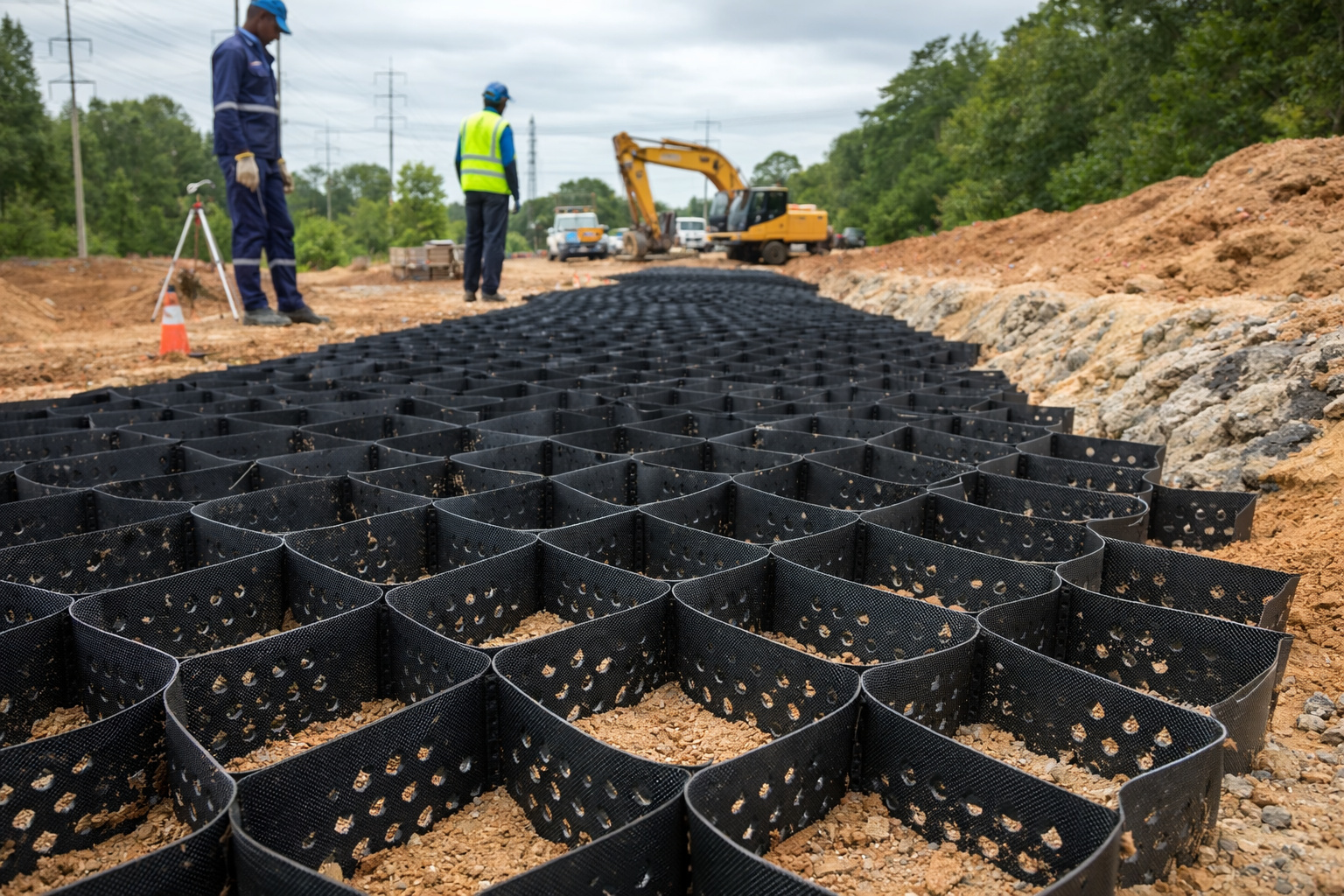
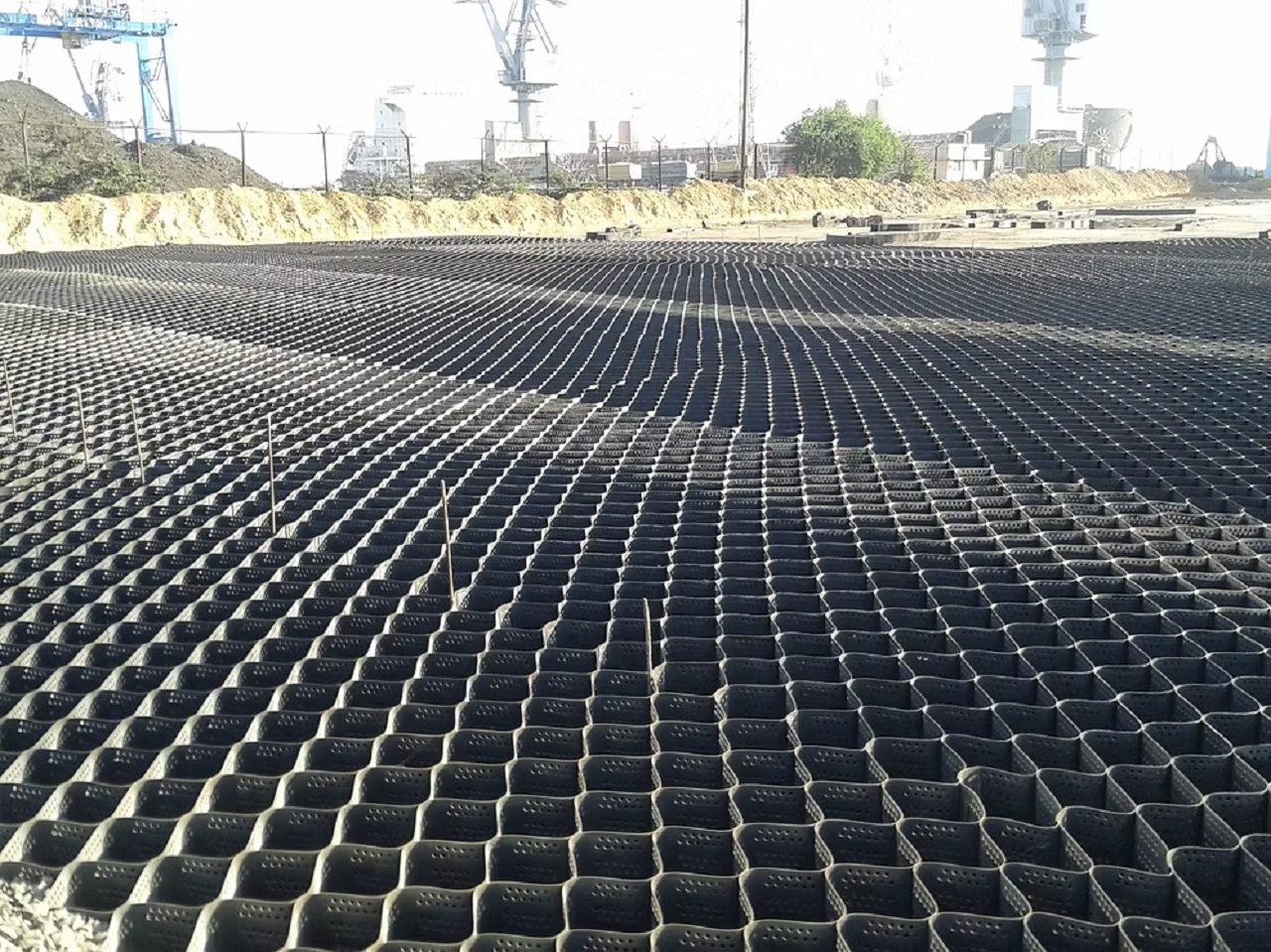
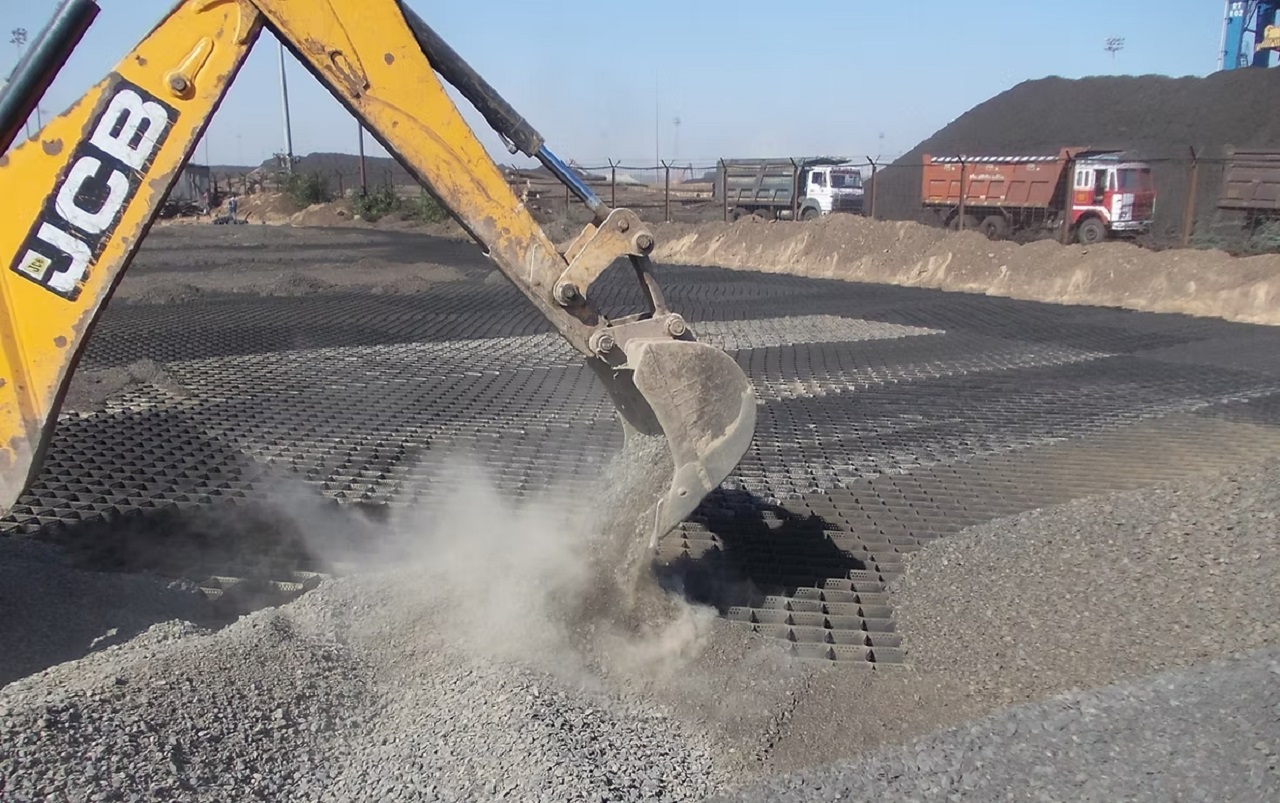
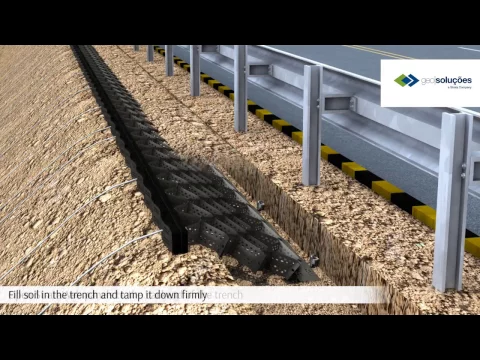
When compacted, the structures are folded and take up little space. At the time of installation, they are opened over the terrain, forming a pattern similar to a three-dimensional honeycomb. After that, each cell is filled with granular material, which can be compacted earth, sand, gravel, or local soil.
Once filled, the system creates a rigid matrix that prevents lateral movement of the material. This confinement drastically increases the stability of the soil.
Why Geocells Make Soil More Resistant
In common terrain, soil particles can easily shift when subjected to pressure. This happens mainly on slopes or areas where heavy vehicles frequently travel.
Geocells solve this problem because they create a three-dimensional confinement effect. Each cell functions as a small containment that keeps the material locked inside.
When a load is applied to the surface, that force is distributed among several cells at once. This mechanism allows the soil to support much greater loads without deformation. Therefore, structures reinforced with geocells can withstand significant pressures without collapsing.
Use in Roads and Pavements
One of the most common applications of this technology is in road construction. In many road projects, the pavement base needs to be reinforced to bear the constant weight of vehicles.
With the use of geocells, engineers can stabilize the base soil of the road using local material. This reduces the need to transport large volumes of gravel or concrete. The technology also helps to avoid common problems on highways, such as pavement deformations, ruts formed by tires, and sinking of the roadway. For this reason, the system has been used in road works in various countries.
Slope and Embankment Stabilization
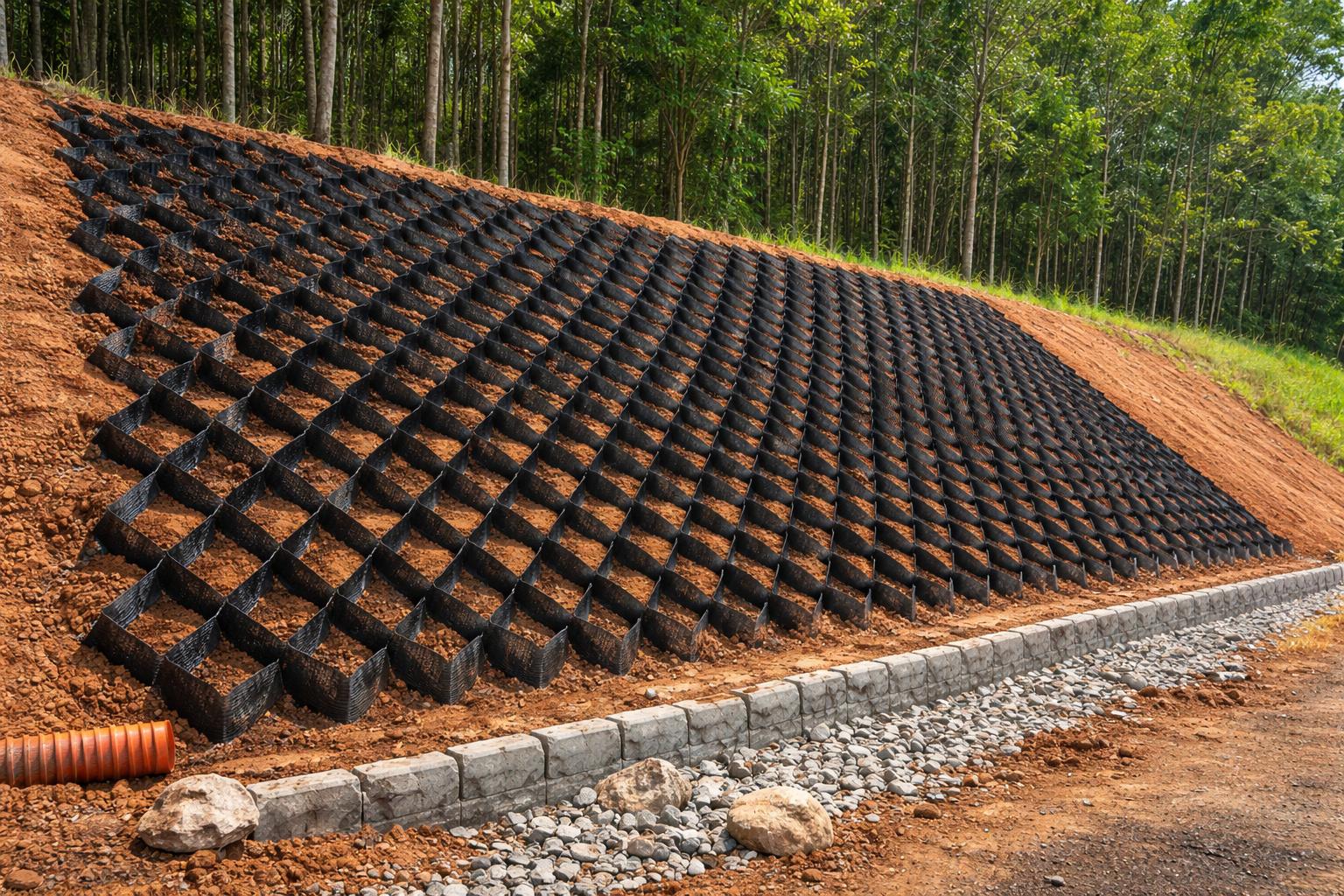
Another important use of geocells is in slope containment. Natural slopes can suffer erosion caused by rainwater. Over time, this process can lead to landslides. When installed over the sloped surface, geocells keep the soil in place. After being filled with earth and vegetation, they help stabilize the slope and reduce the impact of erosion. This technique is used in highway, railway, dam, and mining area projects. In many cases, the system replaces heavier concrete structures.
Erosion caused by water can also affect riverbanks and channels. To protect these areas, engineers often use structural coatings. Geocells filled with gravel or topsoil can be directly applied to the banks.
This system creates a protective layer that prevents the soil from being carried away by the current. At the same time, the structure allows vegetation to grow between the cells. This helps to integrate the work into the natural environment.
Applications in Landscaping and Architecture
In addition to heavy engineering, geocells have also begun to appear in landscaping projects. Architects use the technology to create stabilized surfaces in:
- Gardens
- Parking Lots
- Paths
- Circulation Areas
When filled with earth and grass, geocells allow vegetation to grow while keeping the soil stable. This type of solution is common in areas where vehicles need to circulate without damaging the lawn.
Resistance and Durability of Geocells
Modern geocells are made with polymers resistant to ultraviolet radiation and chemical deterioration. These materials are designed to remain buried or exposed for decades. Among the features that ensure the durability of the system are:
- Moisture Resistance
- Chemical Stability
- Aging Resistance
When installed correctly, geocells can remain functional for long periods without the need for maintenance.
Advantages Compared to Concrete Structures
In many situations, traditional containment structures use reinforced concrete. Although this material is extremely strong, it also has some limitations. The construction of concrete walls requires:
- Large Volume of Material
- Heavy Transportation
- Longer Execution Time
Geocells offer a more flexible alternative. Among the main advantages are:
- Less Concrete Use
- Quick Installation
- Use of Local Soil
- Adaptation to Uneven Terrains
In addition, the system allows vegetation to grow on the surface, something that does not happen with conventional walls.
Simple Technology with Impact on Modern Engineering
Despite their simple appearance, geocells represent an important advance in how engineers deal with soil and terrain stability. The idea of transforming common soil into a reinforced structure using only three-dimensional confinement has opened new possibilities for infrastructure works.

Today, this technology is used in projects ranging from highways and railways to urban parks and landscaping areas. By allowing the soil itself to function as part of the structure, geocells demonstrate how relatively simple solutions can replace more complex and heavy systems of traditional engineering.









-

Uma pessoa reagiu a isso.