





 Portuguese
  English
  Spanish
  5 min of reading
  0 comments


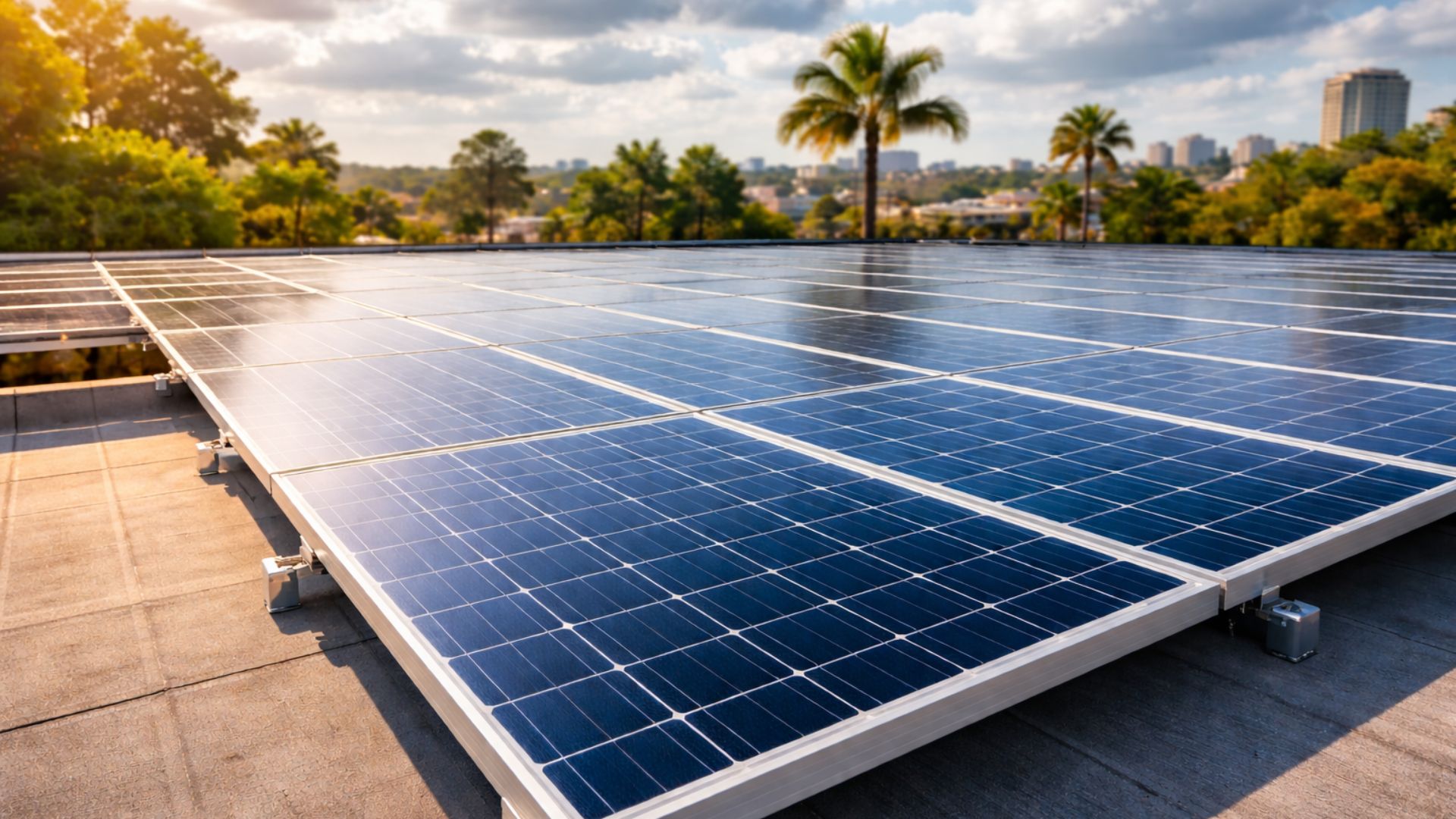
The broadcaster Globo has achieved a significant advance by operating with renewable energy in all its units, anticipating its climate goal and reinforcing sustainability practices that can influence the market.
Globo announced that all its operations in Brazil have started using 100% renewable energy, anticipating its climate goal by four years, originally set for 2030. This advance positions Globo as one of the leaders in corporate sustainability in the country, especially in a sector that historically has not been among those most pressured by stringent environmental practices.
The announcement, made with exclusivity by Exame magazine, comes at a time when companies face increased pressure to reduce emissions and transition to cleaner energy. Globo’s decision demonstrates that it is possible to align operational efficiency with environmental responsibility, even in an infrastructure and energy-intensive industry.
Globo accelerates climate goal with renewable energy in all operations
The anticipation of the climate goal by Globo represents an important milestone in the corporate sustainability agenda. The initial goal was to achieve 100% renewable energy by 2030, but the company managed to meet this target in 2026, four years ahead of schedule.
-
New mapping reveals the Brazilian states with the greatest potential for the production and use of green hydrogen in Brazil to lead the global market.

-
Historical drought and lack of snow in the Norwegian Alps threaten the largest clean energy reserve in Europe and could drive up electricity prices.

-
The Brazilian state accelerates industrial competitiveness with a focus on the extraction of strategic minerals to boost the energy transition in Goiás.

-
A Canadian retiree creates a hydroelectric system on a real river, generating energy continuously throughout the day and demonstrating how the power of water can supply a house with stability even in a simple structure.

This result covers all five regional offices of the company:
- Rio de Janeiro
- São Paulo
- Belo Horizonte
- Brasília
- Recife
This achievement reinforces the viability of large-scale energy transition. Furthermore, it occurs in a global scenario marked by geopolitical conflicts that pressure oil prices and encourage cleaner alternatives.
By taking a leading role, Globo contributes to expanding the debate on sustainability in sectors that are still in the process of adaptation.
Strategic path of renewable energy at Globo over the years
Globo’s journey towards renewable energy began in 2007 when the company migrated its main units to the Free Contracting Environment. This model allows direct negotiation with suppliers, opening up space for more sustainable and competitive choices.
Over the years, the company has made consistent progress. Before 2020, it was already operating with over 90% clean energy. The final challenge lay in the smaller units, which required specific solutions between 2022 and 2026.
Among the most recent initiatives is the solar carport project at the São Paulo headquarters, with the installation of 747 solar panels. The structure allows for clean energy generation while protecting vehicles from the sun, combining functionality and innovation.
This type of investment shows how sustainability can be integrated into the daily operations, bringing practical and environmental benefits.
Sustainability as a strategy: reducing emissions and concrete goals
Globo’s strategy goes beyond the use of renewable energy. In 2020, the company structured an ESG agenda based on six pillars that guide its decisions and investments.
Among the main focuses are:
- Circular economy
- Climate change
- Biodiversity
- Natural resources
- Environmental culture
- Legal compliance
The company has declared itself carbon neutral for seven years, offsetting emissions that it still cannot completely eliminate. Now, the new climate goal establishes a reduction of 30% of absolute emissions by 2030, considering Scope 1, 2, and 3.
Another relevant point is the use of technology for monitoring. The company maintains a platform that tracks environmental data almost in real-time, ensuring transparency and efficiency in management.
Operational innovation drives sustainability in the audiovisual sector
The audiovisual sector has not always been at the center of environmental discussions. However, Globo has been helping to change this scenario by integrating sustainability and innovation into its operations.
At Globo Studios, for example, uninterrupted power systems have been implemented that significantly reduced the use of diesel generators. This change is expected to avoid the emission of 323 tons of CO₂ per year, a significant impact within the company’s climate strategy.
Other actions also reinforce this movement:
- Tests with fleet electrification
- Increased use of biofuels
- Reduction of corporate travel
- Investment in remote event production
These initiatives show that the energy transition does not depend only on large structural changes but also on continuous and intelligent adjustments in daily operations.
Waste management advances with zero landfill goal and circular economy
Sustainability at Globo is also reflected in how the company handles waste. The goal of achieving “Zero Landfill” by 2030 demonstrates a broad commitment that goes beyond renewable energy and the climate goal.
According to the 2024 ESG Report, the company recorded its lowest historical landfill disposal rate: 14.6%.
Among the main initiatives adopted are:
- Use of bioplastic wood in sets
- Adoption of virtual sets
- Application of the Green Production Guide in 100% of productions
This guide has even crossed borders and has been used as a reference by international productions, including projects in Canada. The approach reinforces the importance of the circular economy as an essential part of an efficient sustainability strategy.
Biodiversity and environmental responsibility around Globo Studios
Globo’s sustainability efforts also consider the direct impact on the local environment. Globo Studios are located near the Pedra Branca State Park in Rio de Janeiro, which requires special attention to biodiversity.
To address this context, the company has implemented specific actions, such as:
- Creation of an informative catalog about local species
- Guidelines for proper interaction with wildlife
- Environmental awareness programs for employees
These measures show that sustainability goes beyond numbers and goals. It also involves caring for the ecosystem and responsible integration with the territory.
Globo’s influence on the market and sustainability practices
By achieving 100% renewable energy and anticipating its climate goal, Globo begins to exert direct influence on the market. Companies from different sectors tend to observe successful movements and replicate strategies that combine sustainability and efficiency.
This effect can be perceived in different aspects:
- Increased pressure for ESG practices
- Valuation of sustainable brands
- Attraction of conscious investors
- Strengthening of competitiveness
Moreover, consumers are increasingly attentive to companies’ environmental positioning. This transforms sustainability into a strategic differential, capable of directly impacting reputation and financial results.
What Globo’s trajectory reveals about the future of corporate sustainability
Globo’s experience shows that the transition to renewable energy can be planned, gradual, and efficient. The early fulfillment of the climate goal reinforces the importance of a long-term vision combined with constant innovation.
More than just meeting goals, the company demonstrates that sustainability can generate real value for the business. Cost reduction, operational efficiency, and brand strengthening are some of the associated benefits.
This movement indicates a clear trend: companies that invest in sustainability today will be better prepared to face future challenges. In an increasingly demanding global scenario, adopting responsible practices has become essential rather than optional.







Seja o primeiro a reagir!