





 Portuguese
  English
  Spanish
  7 min of reading
  0 comments


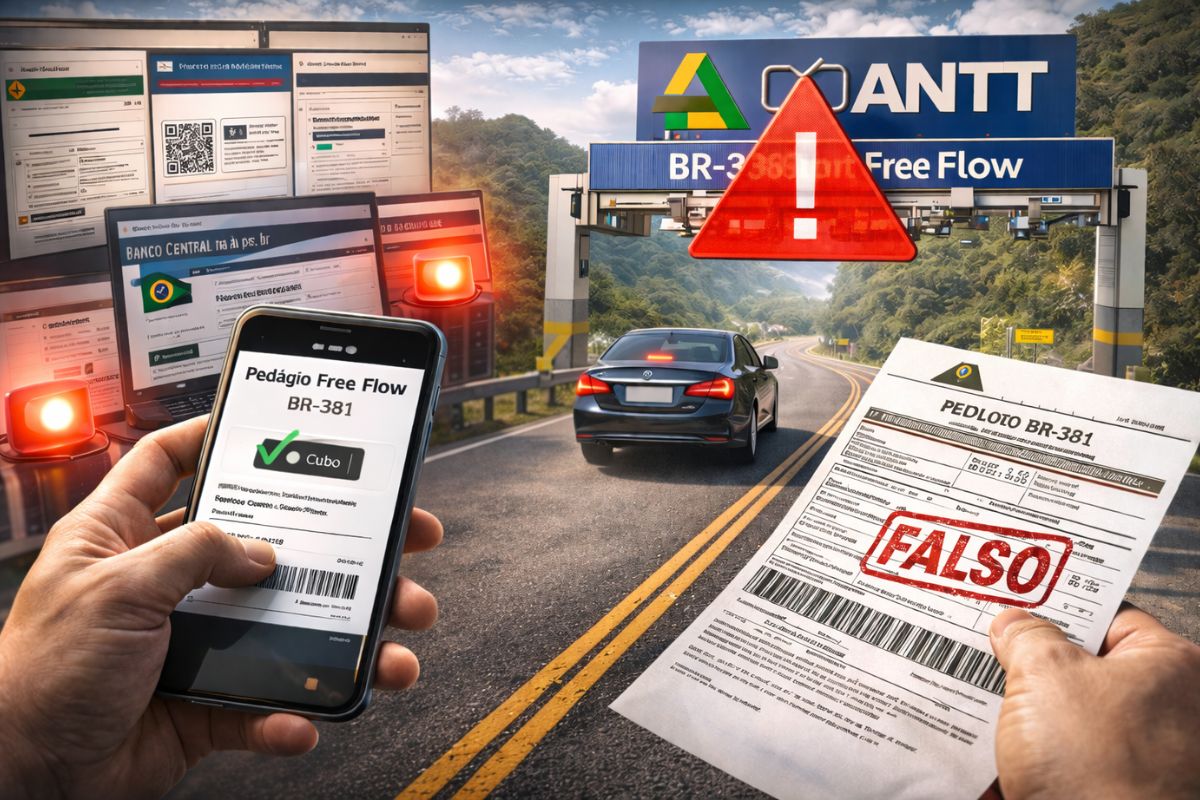
Toll Scam Grows with Free Flow Toll, Fake Toll Sites Charge Pix and Fake Bills, and ANTT Explains How the Official Electronic Toll Works.
Attention, driver. The Free Flow toll scam is already in action on BR-381 and is using the very novelty of the system to deceive those passing through the highway. Criminals create fake websites, simulate debt consultations, generate charges via Pix and non-existent bills, and take advantage of the lack of information about the electronic toll without barriers to take money from unsuspecting users.
The National Land Transport Agency warns that there is no automatic bill sent by mail, nor a single site that brings together all debts related to Free Flow toll. Each stretch has its own concessionaire and its own official channels. The user must seek these channels to consult and pay, not the other way around. Understanding how the system truly works is the first step to avoid falling into the toll scam.
How the Free Flow Toll Actually Works
Free Flow is a model of electronic toll without barriers that already operates on granted highways in Brazil. On BR-381, it is implemented between Caeté and Governador Valadares, connecting the central region to the east of Minas Gerais.
-
Archaeologists use satellite technology and find a mysterious structure of 500 m² buried up to 6 meters beneath an ancient city in Egypt.

-
Supercomputer calculates when humanity may disappear from Earth, predicts a scorching supercontinent, temperatures of up to 70 degrees, and a planet moving towards becoming uninhabitable.

-
INMET danger alert: heavy rains between the 3rd and 4th may drop up to 100 mm/day and winds of 60 to 100 km/h in several regions of Brazil require extra caution.

-
The parts crisis may bring back the drop notch and microSD in 2026; while Windows 11 promises to become lighter, leaks mention batteries of up to 10,000 mAh and 200 MP cameras.


In this system, the vehicle passes the toll point without stopping. Identification is made by cameras and sensors installed on metallic gantries over the road.
These gantries are signposted with signs before and during the passage, clearly warning that it is Free Flow electronic toll.
When the vehicle passes, the system reads the license plate or tag and generates the charge. Those with tags pay automatically; those without must settle later, within the timeframe, directly with the responsible concessionaire.
In the case of Nova 381, payment can be made at kiosks installed at stopping points, on the official website, or through the concessionaire’s own app.
In other words, Free Flow provides more fluidity, safety, and fewer lines at traditional toll plazas, but requires the driver to know where and how to pay to avoid confusing the correct procedure with a potential toll scam.
How the Free Flow Toll Scam is Being Applied
ANTT has identified that fraudsters are using the image of Free Flow as bait. The most common fraud related to the toll scam involves fake websites posing as debt consultation services.
The script is simple. The driver finds a page that appears to offer toll research, enters the vehicle’s license plate, and then receives a charge presented as overdue toll.
This charge comes with a Pix key or a bill requesting immediate payment.
The problem is that the amount does not exist, and the payment goes directly to the criminal’s account, not to the concessionaire.
There have also been cases where fake bills are sent by mail or email, using personal or vehicle data irregularly to give an appearance of legitimacy. In all cases, the objective is the same.
Creating the impression that it is an official charge and speeding up payment before the victim has time to verify if the charge is genuine.
Meanwhile, many people believe they are regularizing the toll and, in practice, are just feeding the toll scam.
What ANTT Says About Bills, Websites, and Charges
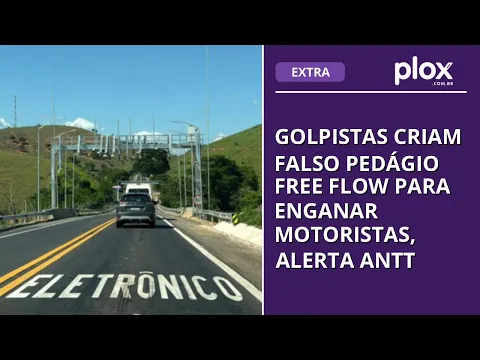

To reduce the operating space of scammers, ANTT reinforces some essential information. There is no automatic sending of physical bills related to Free Flow toll, neither by mail nor by email. If a bill arrives out of nowhere, especially with urgency to pay, the first reaction should be to be suspicious.
Another important point is that there is no single website that concentrates all toll debts from all highways and concessionaires.
Each section of the granted highway has its management, with its own site, official app, and specific customer service channels.
If an internet address promises to show all the tolls you have on any highway with a single search, that is a strong warning sign.
The agency also emphasizes the importance of carefully checking the web address of any page that requests license plate data or personal information.
Fraudulent websites usually have typos, generic language, and strange URLs, as well as a lack of digital security seals.
Reading carefully, letter by letter, could be the difference between paying a legitimate toll and falling for a well-crafted toll scam.
How to Pay the Free Flow Toll Without Falling for a Scam
On BR-381, the Nova 381 concessionaire shows the correct way to do everything legally and away from any toll scam.
One option is to use the kiosks installed at stopping points. The procedure is straightforward. The driver stops, accesses the kiosk screen, selects the option to query by license plate, enters the plate, views the list of actual debts for that vehicle on that stretch, and selects what they wish to pay.
Then, they choose the payment method, which can be credit card, debit card, or Pix made within the official system of the concessionaire.
Another alternative is the official app of the company. The user downloads the Nova 381 app from digital stores, registers the plate, and sets up the payment method.
From there, each passage through the gantry generates an automatically recorded charge in the app, without the need to click on links received from third parties. Everything happens in the official environment of the concessionaire.
It is also possible to use the official website. In this case, the safest approach is to manually type the address into the browser or access it from a link published on official channels, like the verified profile of the concessionaire or ANTT.
Then, the process is similar. The driver informs the license plate, consults the debts, and makes payment through the means provided there.
In any of these options, the principle is the same. You always start from the concessionaire to make the payment and never follow shortcuts created by scammers.
Practical Tips to Avoid Falling for the Toll Scam
To protect yourself from the Free Flow toll scam, some simple actions make all the difference. Receiving a link by message saying you have overdue toll does not mean that the charge is real.
In this situation, the best action is to ignore the link, close the message, and if in doubt, go directly to the website or app of the concessionaire of the highway you traveled.
If someone offers a service that promises to show all your tolls on any highway in one place, remember that ANTT has already stated that there is no single website with this information gathered. This promise of convenience is actually often the gateway to the scam.
Before paying any bill, it’s important to check who the beneficiary is, what the CNPJ is, and if the name corresponds to the concessionaire responsible for the stretch.
In the case of Pix, it is crucial to be suspicious of random keys linked to CPFs, emails, or unknown numbers. The official channel of the company, whether it’s website, app, or kiosk, is always the safest reference.
Just like in other scams, details in Portuguese, logos, and addresses can reveal fraud. Gross spelling mistakes, distorted brands, and strange URLs are clues that the content may be part of a toll scam and not a legitimate charge.
In case of doubt, the best thing is not to pay anything until you check the information directly with the concessionaire.
Is Free Flow Safe or Has it Become Synonymous with the Toll Scam?
The Free Flow system itself is not a scam. It was developed to bring more convenience, more fluidity in traffic, more safety, and lower fuel consumption, precisely because it eliminates the need to stop at physical toll plazas.
The technology of the gantries with cameras and sensors works as an evolution of the way to charge for the use of the highway.
The problem lies in the gap created by misinformation and hurry. Whenever a technological novelty arises, scammers try to find a way to exploit it. With Free Flow, it was no different.
The Free Flow toll scam is not in the metallic structure over the road but in fake websites, misleading messages, and bills created by those who want to exploit the user’s lack of knowledge.
Therefore, the ideal combination is to take advantage of the system’s benefits, follow ANTT’s guidelines, use only the official channels of the concessionaires, and always be suspicious of shortcuts that seem too easy to pay.
This way, you can drive with peace of mind, keep the toll payments up to date, and avoid falling for another scam that takes advantage of the routine of those who use the road.
And you, have you received a link, bill, or suspicious message charging for Free Flow toll, or do you know someone who almost fell for this type of toll scam?






Seja o primeiro a reagir!