





 English
  Francês
  Alemão
  Italiano
  Japonês
  Norueguês
  Portuguese
  Spanish
 2 min of reading
  0 comments


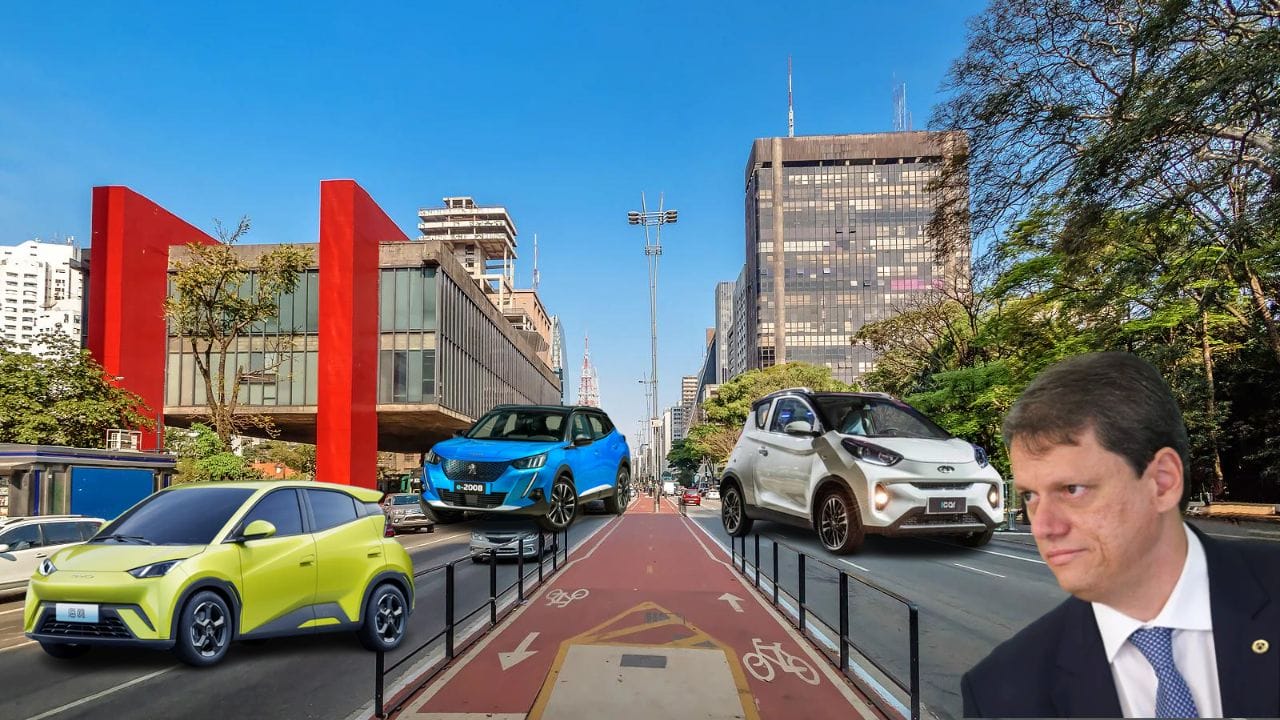
Measure Frustrates Expectations and Sparks Debate on the Effectiveness of Incentives for the Adoption of Electric and Hybrid Vehicles
In a turnaround that caught many by surprise, Governor Tarcísio de Freitas decided to veto the bill that aimed to exempt the IPVA for electric and hybrid vehicles in the state of São Paulo.
The bill, which had already passed through the legislative assembly and was only awaiting the governor’s sanction or veto, ended up being completely vetoed.
The official document, published on the website of the Legislative Assembly of the State of São Paulo, provides justifications for the veto.
-
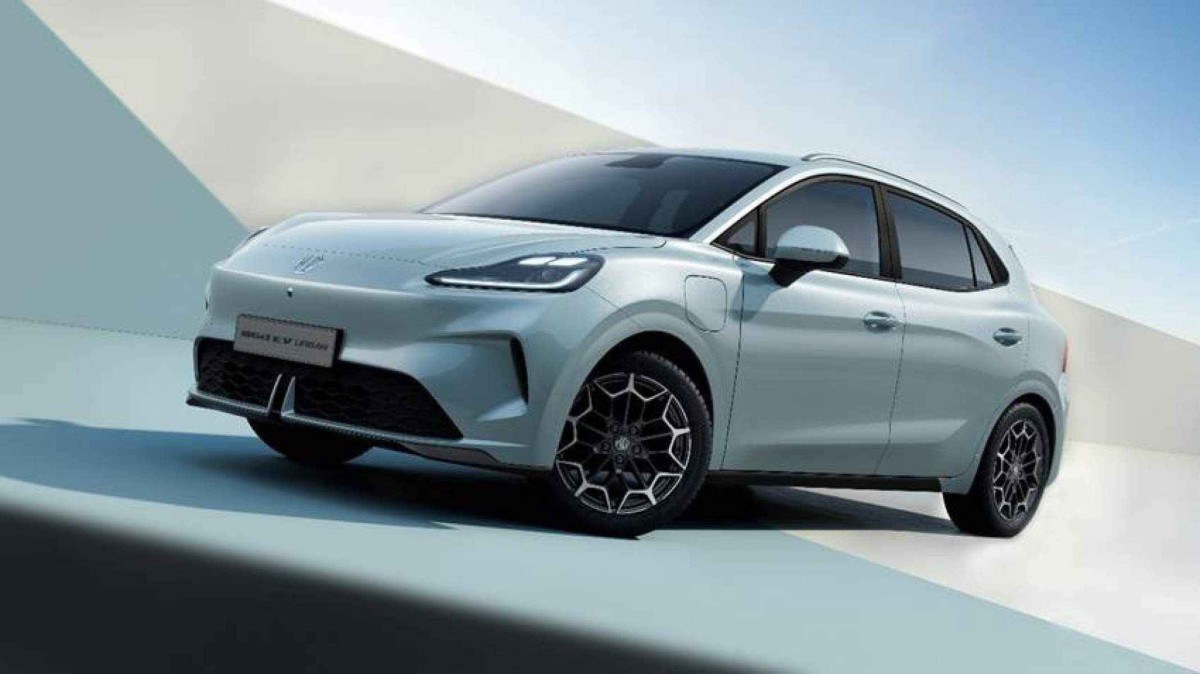
Confirmed in Brazil, the MG4 Urban arrives to firmly enter the competition of compact electric vehicles, challenging the BYD Dolphin and Geely EX2 with more power and range, intensifying a rivalry that promises to heat up even more in 2026.
-
While millions drive every day without knowing, drivers in the US and Europe are being paid to turn every kilometer into 3D maps with an accuracy of up to 5 cm, invisible data that feeds autonomous cars in a billion-dollar global market.

-
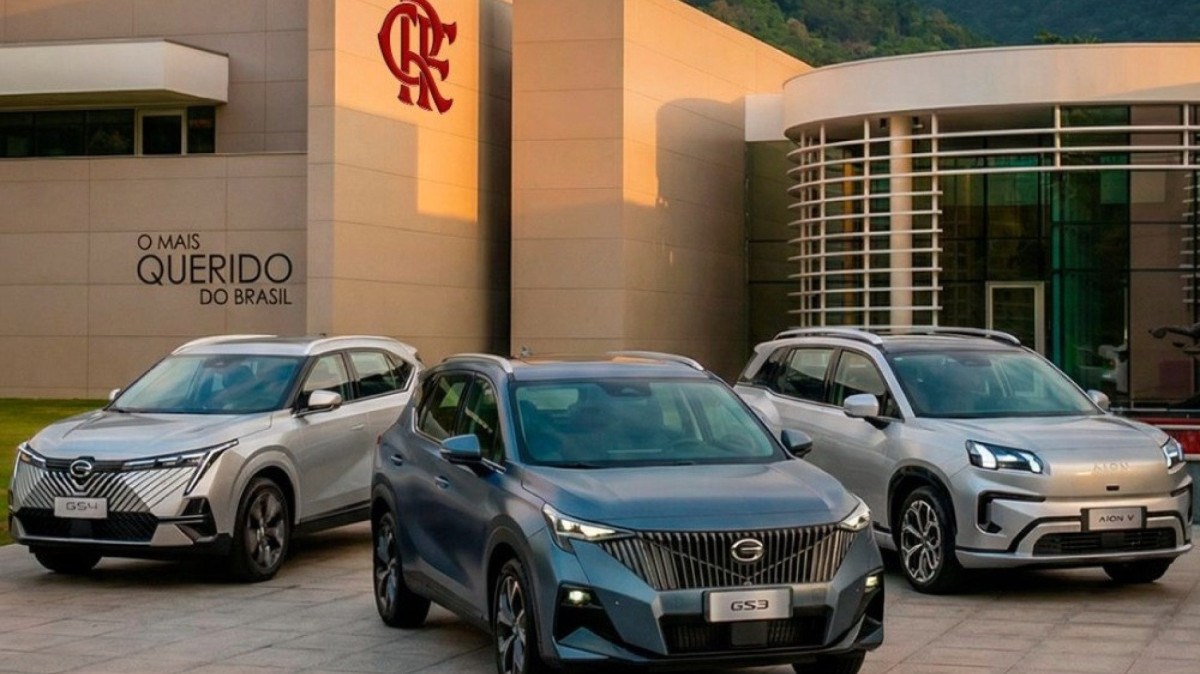
After launching the new GS3 with a 1.5 turbo engine producing 170 hp, GAC partners with Flamengo, enters the field with the largest fan base in Brazil, and accelerates an ambitious offensive to gain scale and confidence in the national market.
-
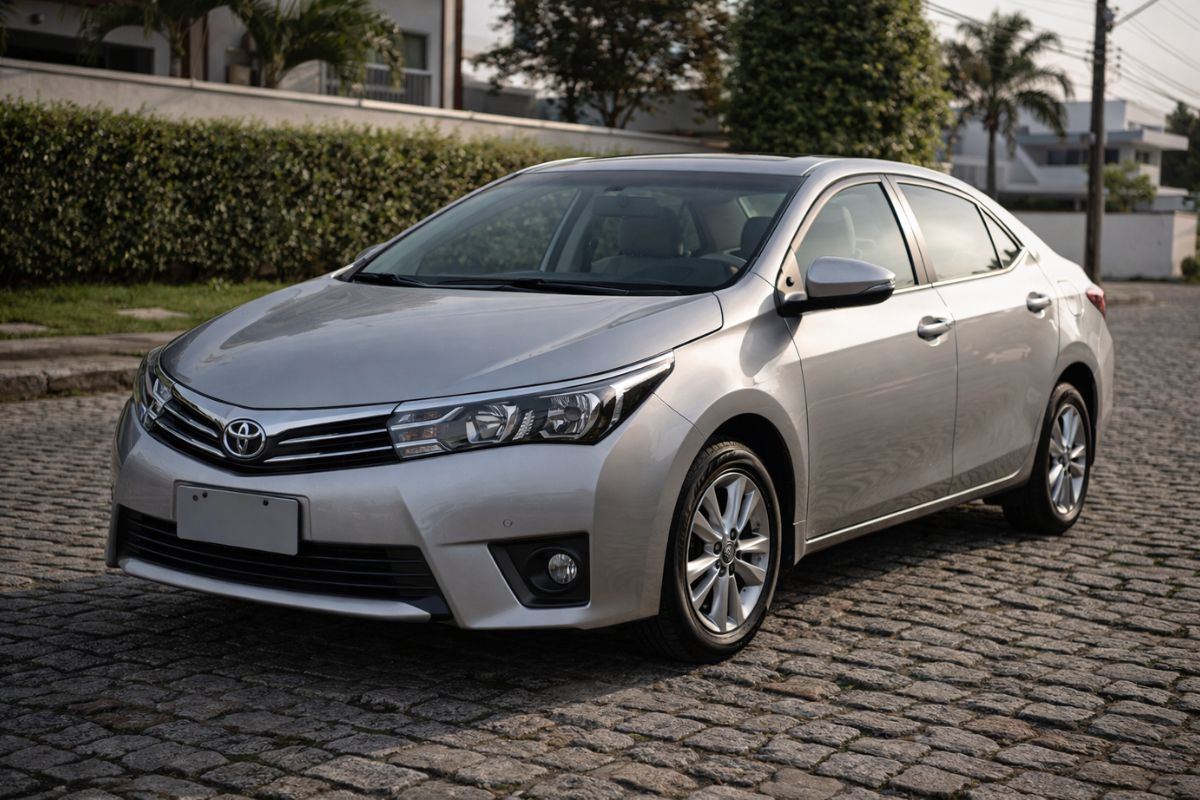
The Corolla from 2015 to 2019 depreciates so little that a 10-year-old model is still worth over 76 thousand reais, and owners treat this sedan as a safe investment thanks to its reputation for durability that no competitor has been able to match.

One of them is the inclusion of hybrid vehicles powered exclusively by gasoline in the bill. For Governor Tarcísio, the proposal should focus more on incentives for ethanol, aligned with the state’s energy policies.
A New Bill Up for Vote
But not all is lost. On the same day, the governor submitted a new bill with reformulated guidelines. There are no details yet on what changes have been made, but it is certain that the proposal also seeks exemption from the IPVA for more sustainable vehicles.
The new bill still needs to go through all legislative red tape, which makes the timeline for a possible approval uncertain.
The veto of the original bill came as a cold shower for those who were already calculating expenses to invest in an electric car. Now, the question remains: how much longer will São Paulo residents have to wait to see concrete incentives for sustainable mobility?
The Future of Electric Vehicles in São Paulo


If on one hand the veto represents a setback for the adoption of electric vehicles, on the other hand it can be seen as an opportunity to rethink and improve incentives.
Only time will tell if the new bill will be able to balance the interests of all parties involved and finally give a push in the right direction.
That’s it, folks. The game is still on and this saga seems far from a conclusion. Stay tuned for more updates on this and other topics that affect our wallets and, of course, the environment.








Seja o primeiro a reagir!