





 Portuguese
  English
  Spanish
  5 min of reading
  0 comments


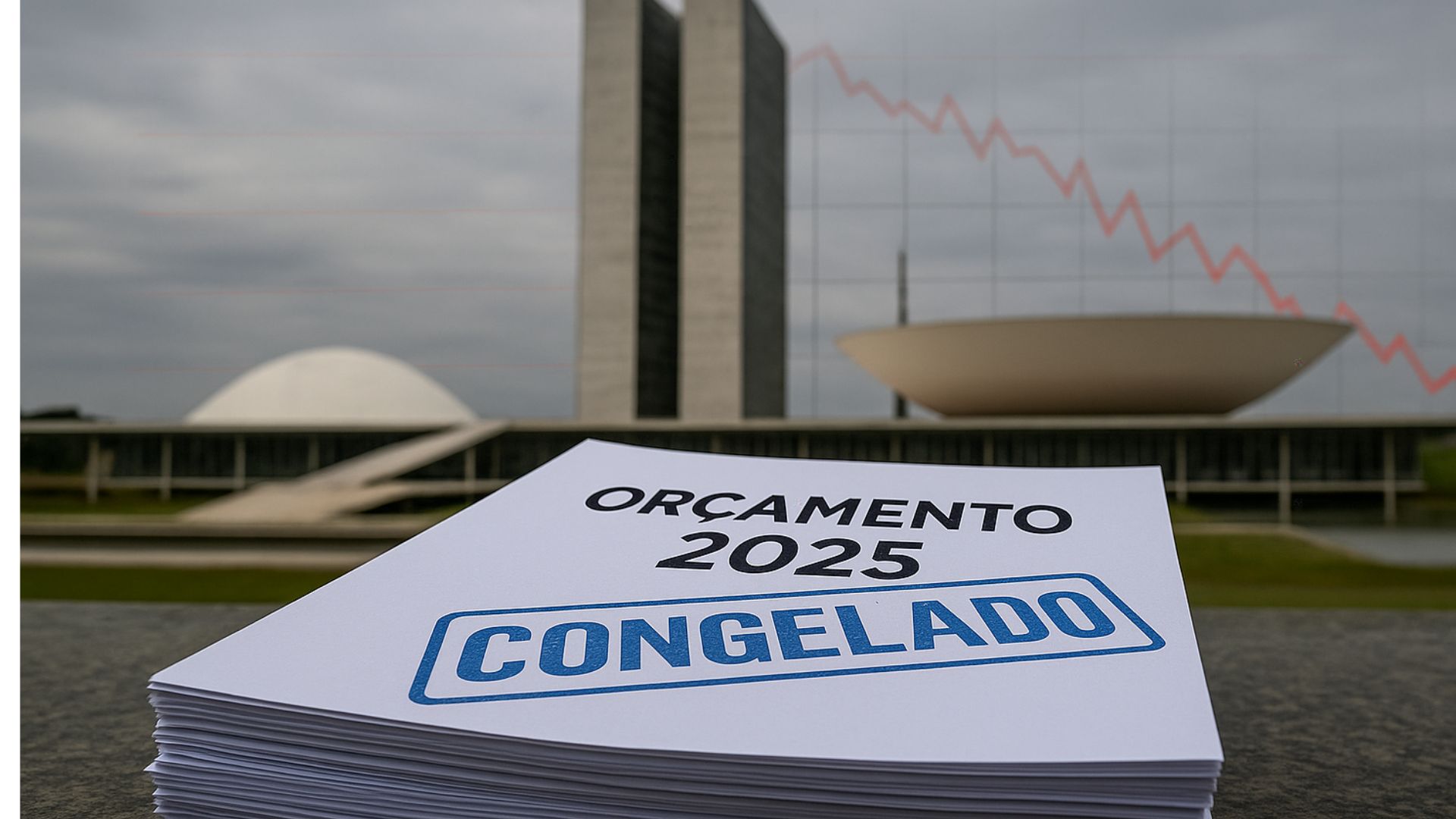
Government Blocks Resources to Curb Increase in Mandatory Expenses, While Declining Revenue Raises Alert About Fiscal Targets and Pressures Negotiations with Congress to Approve Revenue-Enhancing Measures.
The federal government has blocked an additional R$ 1.4 billion from the 2025 Budget to accommodate the increase in mandatory expenses and comply with the limit of the fiscal framework.
With the new adjustment, the total unavailable for ministries reaches R$ 12.1 billion.
The economic team, however, points to slowing revenue as the main focus of concern.
-
With a dependence of up to 80% on gas imported from the United States, Mexico is responding with a robust energy strategy, betting on shale gas, creating a scientific committee, and preparing to expand natural gas production to reduce vulnerability and strengthen its energy security in the coming years.

-
The United States proposes to Brazil a critical minerals agreement with a minimum price to combat Chinese dumping and priority for investment, but the Planalto is blocking the signing out of fear of upsetting China and due to electoral calculations in a year of competition.

-
How the world’s largest market sidestepped Trump’s tariff hike, diverted part of the cargo to new destinations, and still set a record in exports.

-
Petrobras buys back fields for billions — what no one is talking about regarding this decision and how it could impact jobs and oil in Brazil.

According to the Ministry of Finance, there are clearer signs of the effects of monetary policy on activity and, consequently, on revenue.
The executive secretary of the ministry, Dario Durigan, stated that the loss of momentum is concerning and may alter projections: “Our concern regarding revenue is significant. This may change the projections we have been relying on.”
He added that the targets remain unchanged: “Although we are closely monitoring the slowdown, especially regarding revenue, there will be no changes. The plans are set.”
While monitoring revenue, the government reiterated its request for Congress to deliberate on two proposals considered essential for closing the accounts of 2025 and 2026: the provisional measure that raises taxes and the bill that revises tax benefits.
For Durigan, the engagement of the Legislative Branch is necessary to keep the fiscal path steady.
Falling Revenue and Compensation with Dividends
In the bimonthly budget evaluation report, there was a worsening of R$ 1.9 billion in the estimated net revenue for 2025.
The decline came mainly from revenues collected by the Federal Revenue, whose projection fell by R$ 12 billion.
The reduction was partially offset by an increase of R$ 6.9 billion in dividends from state-owned companies, particularly from BNDES (R$ 5.9 billion) and Caixa (R$ 1 billion), according to the National Treasury.
There was also an increase of R$ 5.7 billion in royalties and special oil shares.
The Finance Ministry defended the use of dividends as an adjustment tool, differentiating the current strategy from past extraordinary distributions.
In Durigan’s words, “there’s no problem using bank dividends to help fiscal policy, as long as it’s done within a multi-year plan and in a scheduled manner.”
Revenue in Focus and Monetary Policy
The interest rate policy was classified by Durigan as “quite restrictive”.
Without directly attributing the risk of missing targets to the Central Bank, he expressed concern about the “dose of the medicine”, referring to the impacts on activity.
The perception is that the loss of economic traction is starting to show in revenue data, requiring heightened vigilance and coordinated action with Congress.
Fiscal Target, Estimated Deficit, and Framework Tolerance
The official projection indicates a deficit of R$ 30.2 billion in the result that counts towards this year’s target, still within the tolerance margin of the framework — which allows for a negative balance of up to R$ 31 billion against the target of zero.
The number represents a deterioration compared to the assessment in July, when the deficit considered for the target was R$ 26.3 billion.
This assessment does not capture expenses excluded from the target, such as part of court rulings and the refunds of undue discounts from INSS, estimated at R$ 43.3 billion.
Including these items, the total projected deficit for 2025 is R$ 73.5 billion, slightly below the R$ 74.9 billion expected in July.
Nonetheless, this result contributes to the increase in public debt.
Pressures and Reliefs in Mandatory Expenses
On the expense side, the strongest pressure came from BPC, with an increase of R$ 2.9 billion in the forecast.
The so-called mandatory expenses with flow control also increased by R$ 1.9 billion, as did spending on salary bonuses and unemployment insurance, by R$ 1.2 billion.
Moreover, there was an increase of R$ 1 billion in transfers to states and municipalities under the Aldir Blanc Law.
Some items, however, helped cushion the account. The estimate for social security benefits decreased by R$ 3 billion, influenced by a lower volume of court rulings.
There was also a reduction of R$ 1.3 billion in personnel and R$ 0.7 billion in subsidies.
Current Situation: Blockage Without Contingency
At the moment, there is no contingency in effect.
What is active is the blocking of expenses, a mechanism used when mandatory expenses rise to avoid exceeding the spending limit of the framework.
This blockade affects discretionary funds, which support administrative expenses and investments (works, equipment, and services).
The detailing by ministry will be defined in a decree expected at the end of the month.
Decrees and Preventive Execution
In March, the Planalto issued a decree to preventively halt the execution of expenses, due to the delay in voting on the 2025 Budget.
In practice, ministries began to execute resources at a slower pace.
At the time, the Planning Ministry stated that the measure would create a “savings” for potential blockages throughout the year. The guidance is to maintain this restraint until December.
Blocking vs. Contingency: Differences
The rules of the new fiscal framework combine a limit on spending expansion and a primary target.
As the projections of savings, prices, and mandatory needs vary, the government calibrates the budget to meet both anchors.
When there is an increase in mandatory expenses, a blocking is applied to discretionary expenses to accommodate the rise without breaching the spending growth ceiling.
If the issue lies in falling revenue, the appropriate tool is contingency, which temporarily cuts expenses to preserve the result target.
In adverse scenarios, both may occur simultaneously, compounding their effects on discretionary spending.
Next Steps and Risk of a New Round of Cuts
The next bimonthly reassessment will occur in November. If revenue weakens further, the economic team admits the possibility of a new contingency to restore balance.
The assessment in July, which was more optimistic, had released R$ 20.6 billion that were previously contingent.
The recent turn of events reinforces the dependency on revenues and the approval, in Congress, of measures to increase collection and revise incentives.
How will the Legislative Branch respond to the government’s request for approval of the provisional measure to raise taxes and the bill that cuts tax benefits, and to what extent will this reduce the need for new blockages in the coming months?









Seja o primeiro a reagir!