






 Portuguese
  Spanish
  4 min of reading
  0 comments


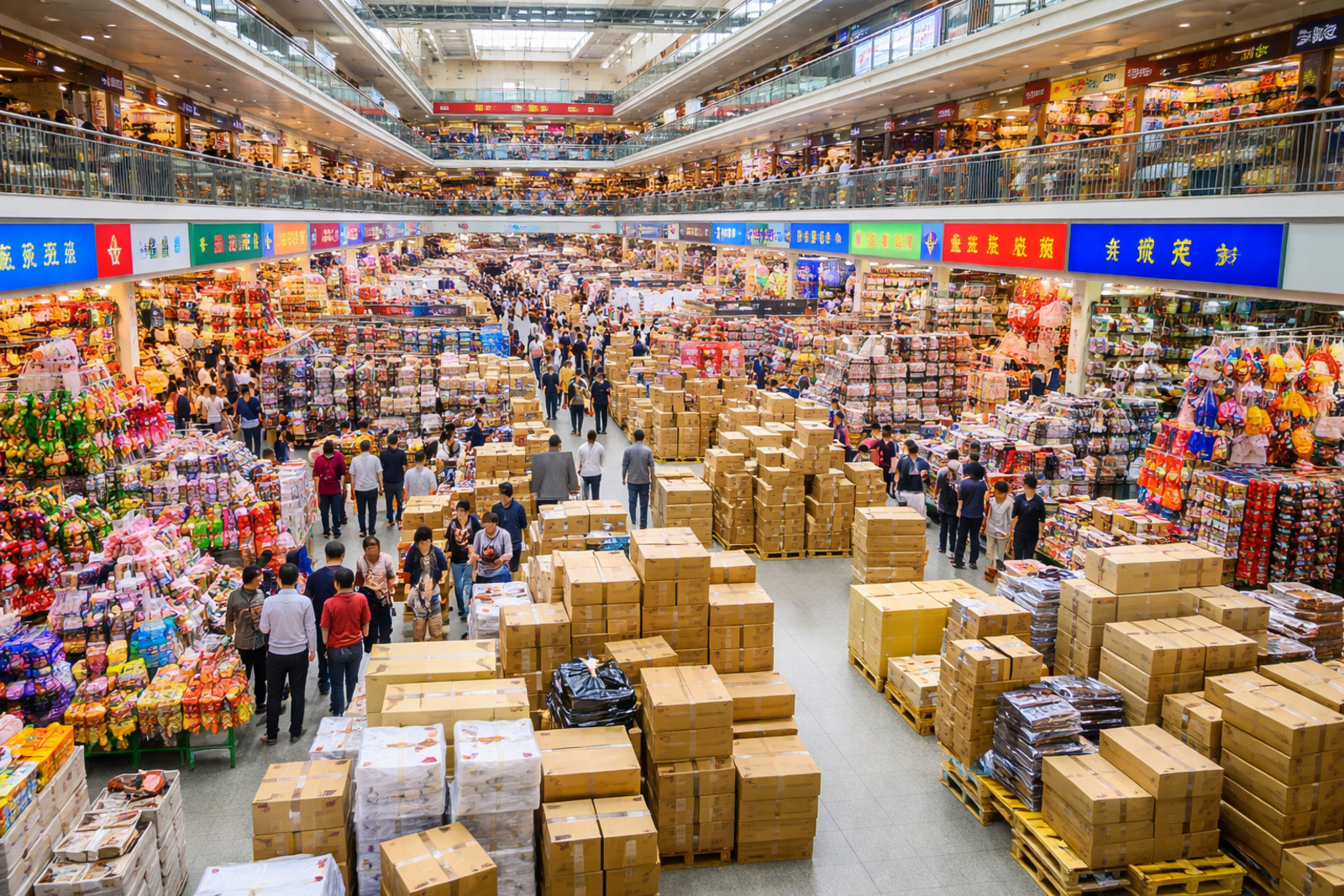
The largest wholesale market in the world, Yiwu sets records in 2025 and expands exports to Africa, Latin America, and the Middle East after tariffs
In the Yiwu market, China, merchants claim to have quickly replaced the lost space in the United States with new destinations, which helped propel the world’s largest wholesale center to export records in 2025 and early 2026.
The size of Yiwu in global trade
In Yiwu, the variety of goods helps explain why the city has established itself as a global hub for supplying cheap and domestic products to dozens of countries and sectors.
The market features electronics, wigs, buttons, zippers, precision cutting machines, bras, notebooks, pencils, license plates from various countries, Messi jerseys, Brazilian national team uniforms, and World Cup balls.
-
The urgent need to implement a severe cut in public spending and a massive increase in taxes, in addition to drastically compromising the quality of basic services and the purchasing power of the population, could result in social unrest in the country, with the population leading protests, strikes, and frequent disturbances.

-
FIRJAN’s mega plan of R$ 526.3 billion for Rio de Janeiro aims to revive Brazil’s largest industry, with two-thirds of the investments going to oil and gas.

-
China signals an increase in beef imports, Brazil has already consumed 70% of the 1.106 million ton quota and seeks to renegotiate the tariff that jumps from 12% to 55%, while demand from the US also skyrockets.
-
Food inflation rose 302% in 20 years in Brazil, but the supermarket changed: purchasing power yielded 87% more mortadella and 31% less fruit, and ultra-processed foods took over the cart.



There are also advertising materials for the regime in Afghanistan, burqas, the historical scarf of the Palestinians, and counterfeit passports from dozens of countries.
The stores also sell fishing gear, footwear, watches, clothing, Christmas decorations, items for Mexico’s Day of the Dead, crucifixes for Vatican stores, and symbols of Islam and Judaism.
In one of its wings, Yiwu sells keychains from any city in the world, aimed at tourists who, upon arriving in Rome, Barcelona, or Paris, believe they are taking home local souvenirs. All are “Made in China.”
In recent years, Yiwu has transformed into the largest wholesale market in the world. The city has 75,000 stores and produces over 2 million different items each year.
The political reading made by merchants
When the location was visited in 2023, merchants reported that they could predict election winners in democratic countries before the polls.
The explanation lay in the volume of orders for advertising materials featuring the candidates’ names, such as caps, flags, and t-shirts.
One of the items that sold the most starting in 2023 carried the name of Donald Trump, a candidate who attacked China while simultaneously dressing his voters in products purchased from Asians at lower prices.
How Yiwu reacted to the tariff hike
When reaching out again by phone to the merchants previously visited, the expectation was that the tariffs imposed by Trump and the trade war would have shaken the market’s business.
The report received was the opposite. While they were already starting production of Christmas decorations for 2026, retailers informed that the American market was quickly replaced.
The main new destinations became the Middle East, Africa, and Latin America.
The merchants themselves admit that part of the sales to third markets may serve to get products to the United States later without paying the higher tariffs.
But they claim that this movement represents only a smaller portion of the flow. The majority, they say, reflects the real opening of new destinations and new trading partners.
“We were forced to seek new markets, and this was very good for all of us,” stated one of the managers of a store specializing in religious products.
Sales records and new destinations
The numbers cited by merchants confirm the change in route. In 2025, Yiwu recorded a sales record.
In just the first nine months of 2025, exports from the world’s largest market exceeded $119 billion, with a 25.2% increase compared to the volumes sold in 2024.
For Southeast Asia, sales grew by 51%. For Africa, the increase was 21%. For Latin America, the recorded rise was 14%.
In January and February 2026, Yiwu added another $12 billion in sales, a result that represented a 52% increase.
The alert in the Middle East and the national reflection
For merchants and observers, the greater concern than the tariff hike was the closure of the Strait of Hormuz, which could cut the arrival of cheap goods to ports in the Middle East.
Among the mentioned destinations are Qatar, Bahrain, Kuwait, and parts of Saudi Arabia.
In Beijing, Yiwu is seen as proof that China can respond to American threats through new partners, adaptation, and overcoming internal obstacles.
Diplomats assess that Yiwu has become a mirror of what happened to Chinese trade after Trump’s tariffs.
In the country, 2025 ended with a new record for China’s trade surplus, which reached $1.3 trillion in positive balance.
This result is pointed out as a comfortable base to face the redefinition of international trade rules.
With information from ICL Notícias.


Be the first to react!