





 Portuguese
  English
  Spanish
  4 min of reading
  0 comments


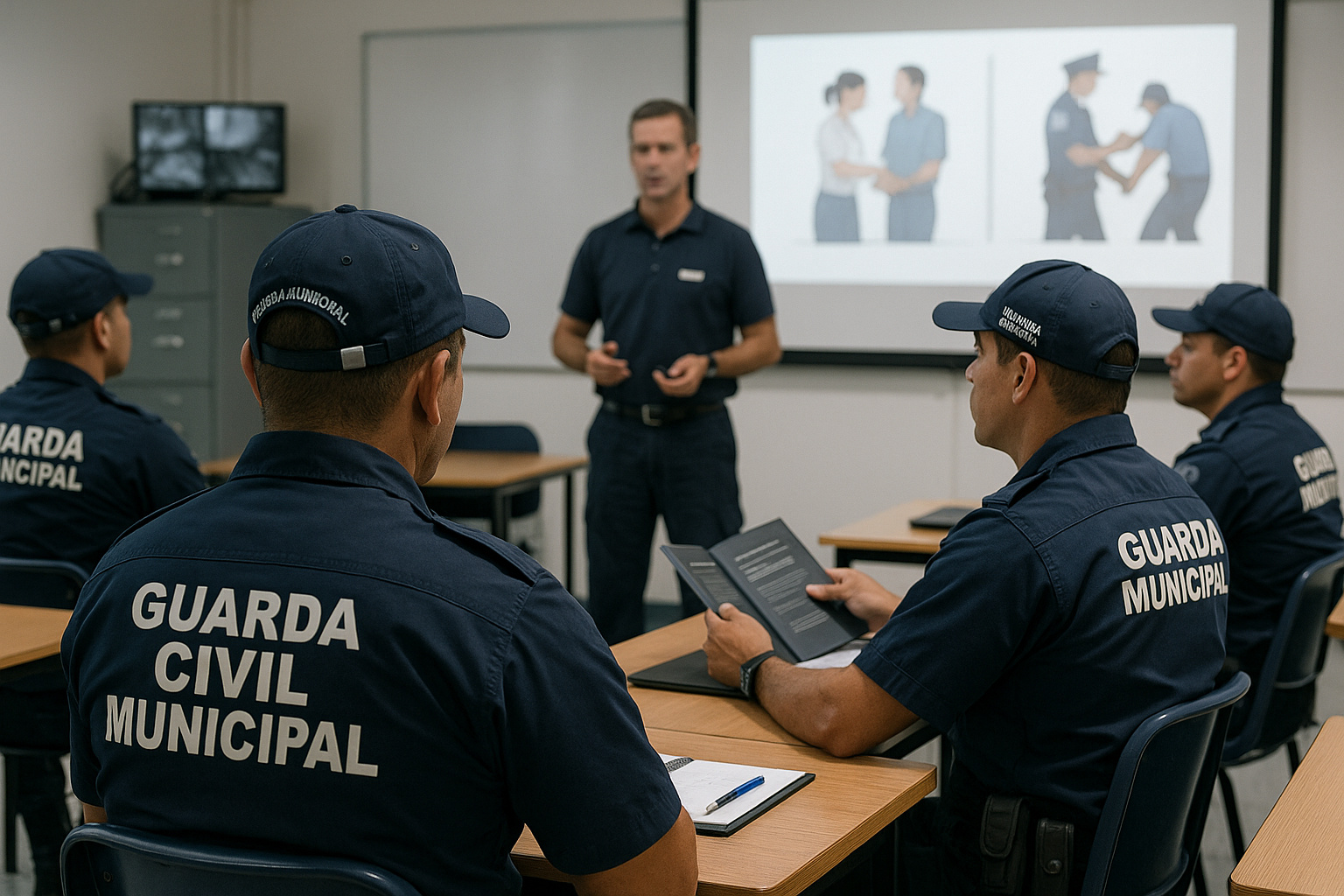
Safer City Program Promises to Modernize Urban Security and Redefine the Role of Guards Across Brazil
The federal government announced, on October 23, 2025, the Safer City Program, which allocates R$ 65 million to modernize municipal guards throughout the country. The initiative is coordinated by the Ministry of Justice and Public Security.
The investment aims to strengthen local forces, modernize equipment, and train agents with cutting-edge technology. Additionally, it seeks to standardize practices and make the guards more efficient.
According to Minister Ricardo Lewandowski, this measure marks a historic turning point in urban security. After all, the program aims to reduce violence, improve team readiness, and integrate states and municipalities.
-
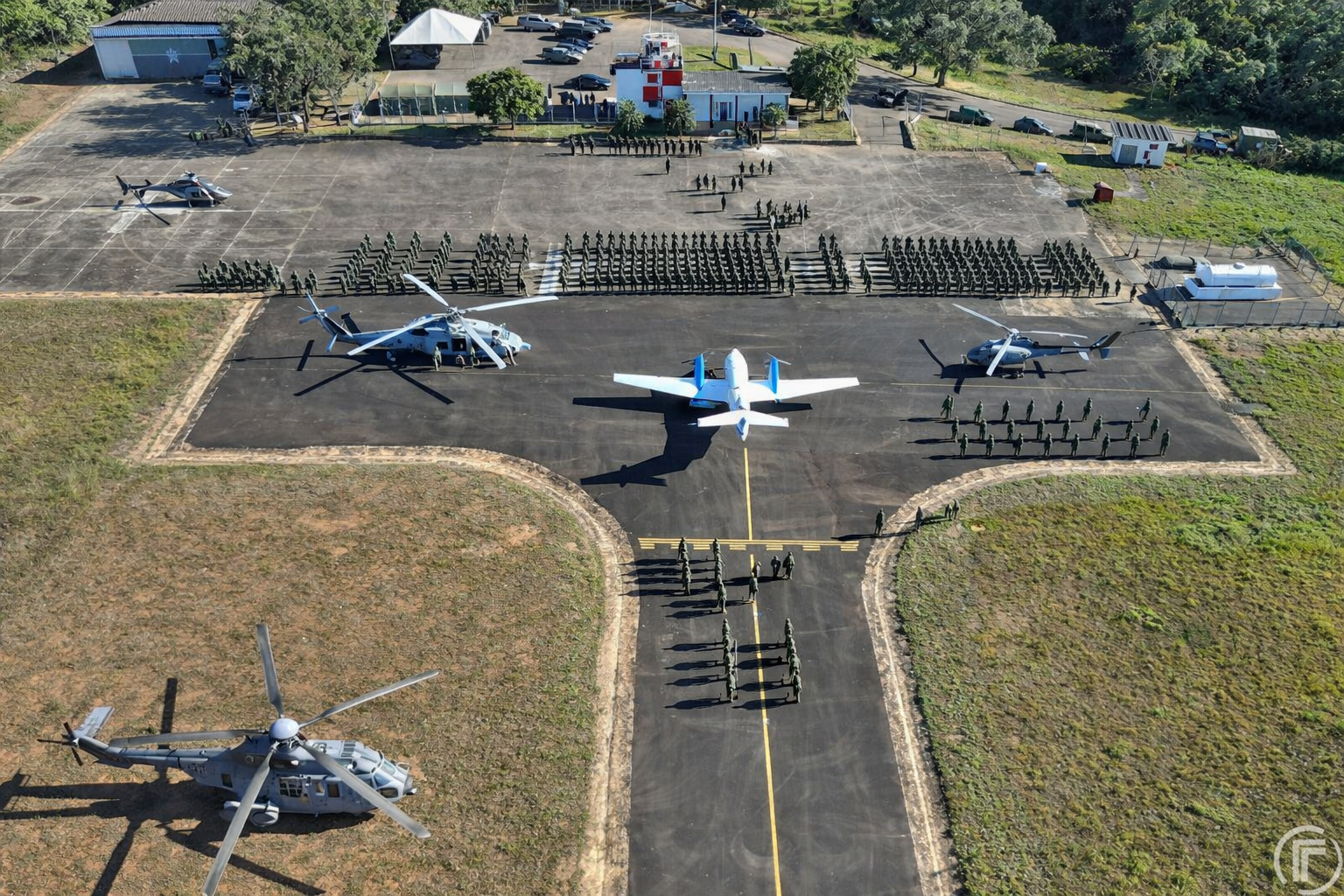
Furnas Airport is handed over to the Navy and becomes a strategic base with complete military operations, attack drones, and international mobilization at Furnas Lake.
-
Few people know, but “mega burst” attacks from the A-10 in the Middle East are intriguing analysts and even experienced former pilots of the U.S. Air Force.

-
Manufactured in Brazil and exported to Saudi Arabia and Malaysia, the ASTROS system is renamed as Fogos in 2026, gaining AI, cruise missiles with a range of 300 km, and air defense costing R$ 3.4 billion, transforming a launcher from the 1980s into the most ambitious multidomain platform in Latin America.
-
The largest military aircraft ever produced in Brazil, the KC-390 Millennium can carry up to 26 tons, refuel fighter jets in flight, and has already been exported to Europe and Asia, placing the country in the select group that designs and sells large military aircraft worldwide.


Unprecedented Training Marks the Program’s Start
The first class of the program began on October 15, in Curitiba, bringing together 80 municipal guards from different regions. Meanwhile, the second phase will take place on October 27, in Belo Horizonte.
The courses include Applied Community Policing Operator, Maria da Penha Patrols, and Operator for Differentiated Use of Force. Thus, the focus is to standardize methods and ensure a humanized approach.
Moreover, the program expands the Escuta Susp, an online psychological support service for agents. At the same time, it creates a body camera project to increase operational transparency and protect the population.
According to the Ministry of Justice, the investment comes from the National Public Security Fund, which hit a record in February 2025, with R$ 106.5 million transferred to states and the Federal District — a 46% increase.
National Research and Strategic Partnerships
The program also includes an unprecedented survey on Municipal Civil Guards. The study will be conducted by Viçosa Federal University (UFV) in partnership with the United Nations Development Programme (UNDP).
The research will map structural conditions, identify regional challenges, and guide more effective public policies. Additionally, it will provide data that will allow for a better distribution of resources.
As Minister Lewandowski stated, “the initiative reinforces the government’s commitment to proximity security, based on integration and operational intelligence.”
Public Security PEC Redefines the Role of Guards
Meanwhile, the Palácio do Planalto is betting on the Proposed Constitutional Amendment (PEC) for Public Security, presented in April 2025. The proposal aims to grant constitutional status to the Unified Public Security System (SUSP), created in 2018.
The PEC 37/2022, approved by the Federal Senate on May 27, 2025, includes municipal guards among the permanent public security agencies. Thus, they will be able to perform community and preventive policing and make arrests in the act.
The text also constitutionalizes national funds for Public Security and Penitentiary Policy. In this way, it guarantees stable and continuous transfers between the Union, states, and municipalities.
The President of the Chamber, Hugo Motta (Republicanos-PB), classified the issue as priority. However, governors and parliamentarians still show resistance, fearing overlapping functions with the Civil and Military Police.
Structural Transformation and New Directions for Urban Security
Public policy experts assess that the Safer City Program inaugurates a new phase in Brazilian security. Consultant Eduardo Paes Filho told Poder360 that “the union of technology and professional appreciation places the guards at the center of the national strategy.”
The Ministry of Justice is also preparing new bids for the purchase of vehicles, smart equipment, and real-time monitoring systems. With this, the ministry intends to consolidate modernization by the end of 2025.
Thanks to the program, Brazil is advancing towards a more modern, human, and transparent public security.
The Future of Municipal Guards in Brazil
The strengthening of the guards represents a profound structural change. After all, it symbolizes the transition to a decentralized, integrated, and community-oriented security.
On the other hand, success will depend on stable funding, continuous training, and monitoring of actions. For this, maintaining cooperation between the Union, states, and municipalities will be essential.
As the Safer City Program expands, expectations grow about how each city will apply the resources and ensure lasting results.
Brazil finally seems to have found a way to integrate its municipal forces into the national security system. But will the country be able to maintain this pace of innovation and efficiency in the coming years?










-

Uma pessoa reagiu a isso.