






 Portuguese
  Spanish


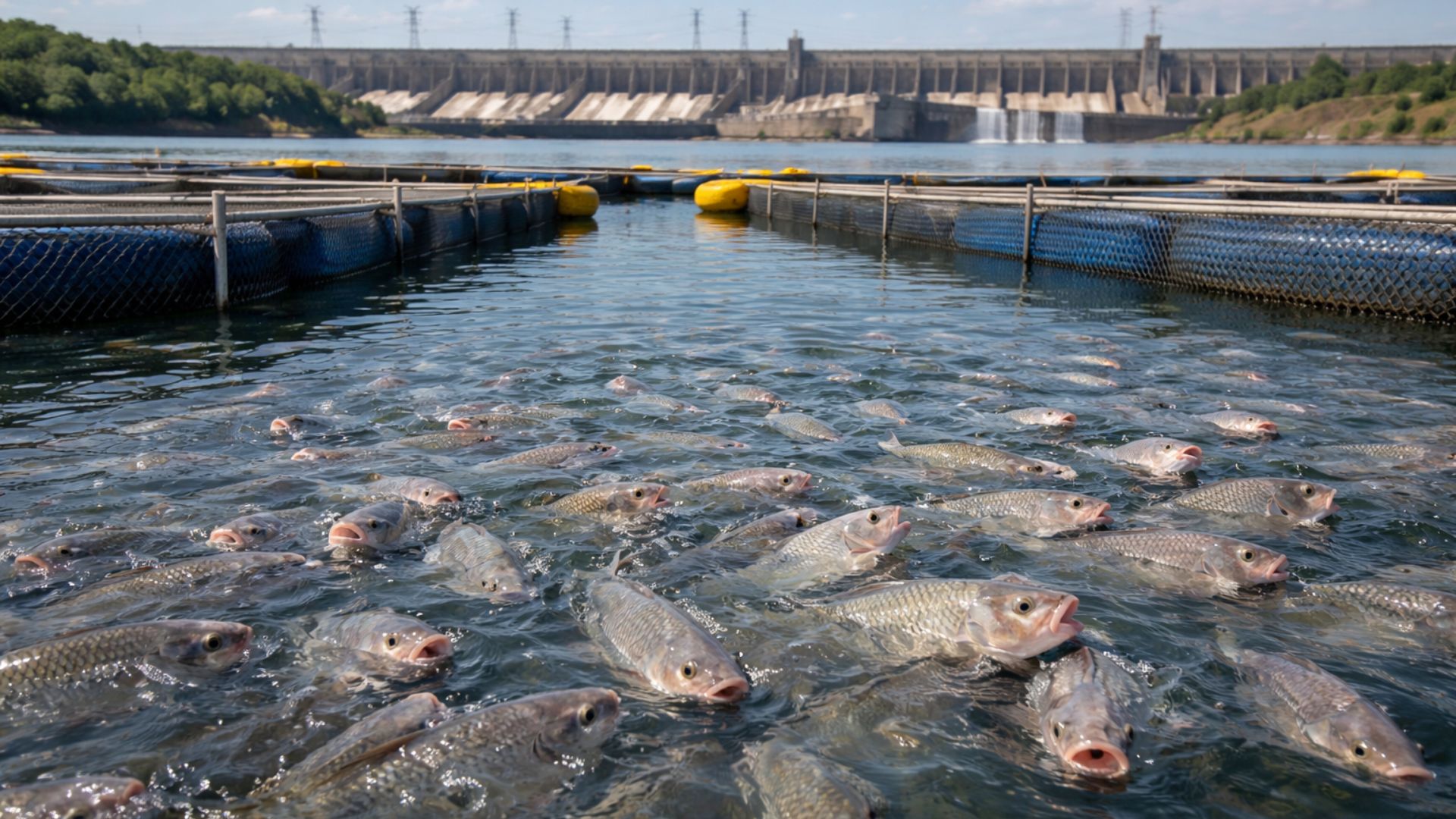


Plan to Create Up to 400 Thousand Tons of Tilapia in the Itaipu Reservoir Advances in Paraguay, But Hurdles in Bilateral Agreement and the Brazilian Congress. Plant Talks About Protocols and Multiple Use of Water, While Biologists Highlight the Risk of Escapes, Invasion and Chain Effects.
The Brazilian government’s intention to enable the cultivation of up to 400 thousand tons of tilapia in the Itaipu reservoir currently faces a political and legal obstacle: to be realized, the measure depends on a revision of the bilateral agreement with Paraguay and then on approval from the National Congress.
On the other side of the border, Paraguay has already sanctioned a law on December 22 that paves the way for the cultivation of the species in the lake of the binational plant.
The discussion gained traction because the Paraguayan text allows the cultivation of exotic species in closed and semi-open water bodies in the country, which practically removes a legal barrier for tilapia farming in the project area.
-
Brazil to Install First Operational Quantum Computers in the Northeast and Establish New Center to Boost Technological Sovereignty

-
Potential Starlink Rival: Company Tests 60-Meter Balloon to Deliver 5G Internet Without Satellites, Prepares for Unprecedented Mission in Japan
-
Android Phones Can Detect Earthquakes Before You Feel Them: How Accelerometers in Billions of Devices Confirmed Two Strong Quakes in Venezuela and Warned Residents Seconds in Advance

-
Scientists Warn WHO: Cat-Linked Parasite Infects One-Third of Global Population, Poses Risks to Vision, Pregnancy, and Neurological Health



However, the rule that applies to the reservoir shared by both countries is still the Brazil-Paraguay Bilateral Agreement, which prohibits the use of species considered exotic in the lake.
Any change in this regard must be approved by the Brazilian legislature.
With about 1,350 km², the Itaipu reservoir already supports simultaneous uses.
The area is intended for energy generation, water storage, sedimentation processes, and also for commercial production activities, in addition to serving as an environment for various species of local fauna.
It is in this multi-functional scenario that the possibility of installing net cages for tilapia fattening has begun to attract criticism from ecology and conservation experts.
Law in Paraguay and Hurdle in the Brazilian Congress
In Paraguay, the law sanctioned on December 22 was presented as a landmark to regulate the environmental licensing of the cultivation of allochthonous or exotic species in certain aquatic environments.

The regulation, according to reports from organizations and media that monitored the issue, allows for progress in negotiations to enable cultivation in the power plant’s reservoir.
Nonetheless, the central point of the debate lies in the bilateral text that governs Itaipu.
Even with the Paraguayan signal, large-scale production in the lake would depend on a formal revision of the agreement, a process that could involve diplomatic negotiations and, on the Brazilian side, processing in Congress.
So far, there is no indication that this analysis is underway.
When approached, the Parliamentary Front for Agriculture stated that there is no “concrete movement, ongoing processing or any type of articulation” at this moment to revise the agreement.
The FPA also mentioned that the discussion, if it occurs, needs to come with clear rules for the sector.
“A formal revision of the bilateral agreement could indeed go through Congress, but that is not on the table right now. The immediate focus must be to provide technical and regulatory predictability to the sector. We consider it essential for the Ministry of Fisheries to present a clear schedule of actions. The productive sector needs objective signaling to plan investments,” declared the bench.
Environmental Risks Cited by Biologists and Ecologists
Experts consulted during the discussion point out that the main fear is not just the cultivation itself, but what could happen if fish escape from the fattening systems.
Biologist and ecology professor Jean Vitule states that in net cage structures, there are records of escapes in different contexts and that such occurrences can have repercussions in areas connected to the reservoir.
“Every reservoir has adjacent rivers. Tilapia, once it escapes, is not like a chemical pollutant; it is a biological pollutant. It can run from the mouth to the headwaters, against the river flow, unlike a chemical or biological pollutant,” said the professor, who coordinates a laboratory of ecology and conservation at UFPR.
The argument relies on the invasive characteristic associated with the species and the potential for dispersion beyond the lake, should there be containment failures.


Vitule also mentions that events such as strong winds, heavy rains, collisions with logs, and even operational variations in the reservoir’s flow can increase the risk of physical damage to the cultivation structures, leading to breakage or tipping of the cages.
Another point he raises is the indirect effect of increased nutrients around the tanks.
In the professor’s assessment, the presence of tilapia on a large scale could favor the proliferation of other exotic organisms, such as the golden mussel, already cited as a problem in the reservoir.
He states that the species would benefit from the area and organic matter availability, potentially leading to incrustation on structures, increased maintenance costs, and impacts that could reach the need for chemical reagents for control.
Along the same lines, biologist Gilmara Junqueira states that tilapia has a high capacity for adaptation and resistance to different temperature and environmental conditions, even in more extreme scenarios.
For her, these advantages become even more relevant in altered environments, such as reservoirs, and increase the risk if there is an escape to other parts of the basin.
According to the biologist, once outside the controlled environment, the species may compete for food and space with native fish, alter ecological relationships in other ecosystems, and even reach protected areas.
Moreover, she warns about the possibility of introducing parasites and pathogens associated with the cultivation, with a chance of contaminating local species.
The territorial behavior and high reproductive rate are also cited as factors that favor dominance in environments where the species can establish itself.
A thematic report from the Brazilian Platform on Biodiversity and Ecosystem Services (BPBES) is mentioned in the debate as a reference to map effects associated with invasive exotic species.
In the material, tilapia appears as one of the cases with a large volume of records of impacts, according to the characterization published by specialists involved in the document.
What Itaipu Affirms About Operation and Control Measures
On the side of the power plant, Itaipu stated that the eventual introduction of tilapia into the reservoir would not affect energy generation operations and that it sees no conflict between the different uses of water.
The hydroelectric plant also emphasized that the lake is already officially a multiple use reservoir, with functions that go beyond energy production.
When questioned about how it intends to reduce environmental risks, the company stated that the central measure would be maintaining water quality, a condition that, according to the plant, is influenced by the dynamics of the surroundings.
Among the cited factors are agricultural and agribusiness activities, population occupation, and environmental conservation actions.
In addition, Itaipu listed a set of procedures aimed at monitoring and control.
The plant stated that it plans to carry out environmental monitoring of the productive areas in the aquatic environment, adoption of adequate feeds and high-efficiency feeding protocols, as well as tools to prevent reproduction, such as monosex populations and/or sexual inversion.
The plan also mentions sanitary control and preventive measures, such as vaccines, use of animals with sanitary and genetic traceability, robust cultivation structures with monitoring and automation systems, compliance with environmental conditions linked to licenses, and a preference for areas of the reservoir considered more resilient.
However, critical researchers argue that even with protocols, zero risk is difficult to guarantee in open systems, especially when the declared objective involves large-scale production.
The controversy, therefore, combines three dimensions: the political pace of a bilateral revision, the economic pressure for the expansion of fish farming, and the environmental consequences of introducing an exotic species into a reservoir connected to rivers and broader ecosystems.
If the agreement revision progresses and the topic takes hold in Congress, what will be the real weight that environmental studies and alerts will have in the decision to transform Itaipu into a tilapia farming hub?


Os estudos existem pra isso, fazer às análises de riscos, mas hoje nós poder ser criado peixes em longa escala em sistema fechado com risco zero, é só fazer investimento, são os sistemas de recirculação (rás), e o bioflocos.
Os contra o projeto acreditam que tilápias eletrificadas poderiam voar para extinguir corruptos ****, **** que tinham impunidade pelos seus crimes , com a porteira aberta naquele tempo
O risco desse peixe vir para o Brasil é um risco de contaminação e contaminam nossos rios de água doce no Brasil nós temos muito.