





 Portuguese
  English
  Spanish
  4 min of reading
  1 comment


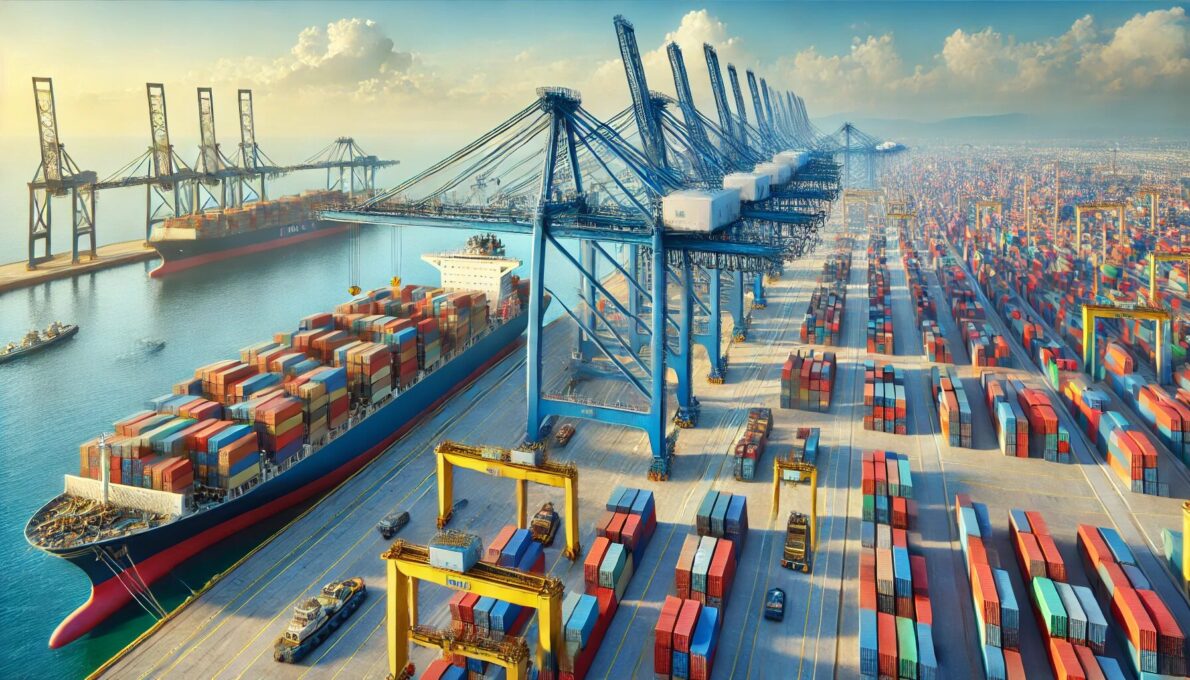

Port of Santos Prepares to Receive the Largest Investment in the History of the Brazilian Port Sector. With R$ 4 billion at stake, the concession of the new container terminal promises to revolutionize national logistics and transform the country’s foreign trade.
A colossal project is underway at the Port of Santos, and it promises to change the logistical landscape of the country.
The concession for the construction of a new container terminal is set to become the largest ever made in the Brazilian port sector.
But the true magnitude of this undertaking goes far beyond the numbers.
-
Lula responds directly to Trump and says that Pix is from Brazil and will not change under pressure from anyone, after a report from the United States pointed out the Brazilian payment system as an American trade barrier.

-
Amazon has just announced a new fee on all deliveries, and your online purchases will become more expensive starting April 17, including for those buying from the United States here in Brazil.

-
He sold his share for R$ 4 thousand, saw the company become a giant worth R$ 19 trillion, and missed the opportunity of a lifetime.

-
Elon Musk’s Starship megafrocket puts $8 billion at risk, raises alarms in the market, and could affect technology, mining, and space internet startups in the coming years.


What the government has in store for the most important port in Latin America may surprise even the most optimistic.
Although the details are still being finalized, expectations revolve around billions of reais in investments, making this a unique opportunity for Brazil.
With projected investments exceeding R$ 4 billion, the auction for the new container terminal at the Port of Santos, known as Tecon Santos 10, is poised to set records.
The government revised studies conducted in 2022 and is already in the final adjustment phase to send the draft of the announcement to the TCU (Federal Court of Accounts).
The initially projected R$ 3.51 billion has been adjusted, both due to monetary updates and changes in the offer itself, raising the total amount.
Historic Expansion: Santos in the Spotlight
The new terminal, also called STS10, will be granted to the private sector for a period of 25 years, with the possibility of extension for up to 70 years.
The auction, which will take place at B3 in the first half of 2024, will have as its winning criterion the highest value offered for the concession, meaning the amount that will be directly allocated to the National Treasury.
In addition, the auction winner will be required to commit to the stipulated investments, ensuring the expansion of infrastructure.
According to the National Secretary of the Ministry of Ports and Airports, Alex Sandro de Ávila, the contract calls for the construction of four new berths for container ships, each capable of handling around 700,000 containers per year.
Overall, the expansion could mean an increase of 2.8 million containers per year, potentially reaching up to 3 million, which would represent an increase of about 50% in the total capacity of the port.
Increase in Port Capacity
Today, the Port of Santos already handles approximately 6 million containers annually, thanks to the three existing terminals: BTP, Santos Brasil, and the private terminal of DPW.
With the new structure, the total capacity could jump to 9 million containers, further solidifying Santos’ position as the largest port in Latin America.
“Santos will receive the largest investment in the history of the port sector,” Ávila said in an interview with Folha de S. Paulo, emphasizing the project’s impact.
Additionally, the government also plans to modernize the passenger terminal in Santos, aimed at maritime cruises.
This sector, which already handles about 1 million passengers annually, could feature a more modern and efficient terminal.
“The Port of Santos is already a powerhouse in the cruise sector, and deserves a dedicated structure,” highlighted Ávila.
Parallel Projects and More Concessions in Sight
Although the focus is on the auction for Tecon Santos 10, the government has other plans for the Brazilian port sector.
As revealed by Folha, the Ministry of Ports and Airports wants to auction up to 22 port terminals by the end of 2025, with an estimated investment of R$ 8.7 billion.
Another 13 auctions are planned for 2026, totaling an additional R$ 2.3 billion.
Since the beginning of 2023, 15 auctions have already been held, demonstrating the government’s commitment to attracting private investment to modernize the country’s port infrastructure.
Minister Silvio Costa Filho emphasized that, by the end of 2026, the total number of concessions could reach 58, totaling over R$ 20 billion in new investments.
This strategy aims to ensure that Brazilian ports can keep pace with growing demand and international competitiveness.
The government aims to modernize and expand the country’s logistical capacities, boosting foreign trade and ensuring greater efficiency in the transportation of goods.
Challenges and Expectations
With so many ambitious projects, it’s natural for doubts to arise about the feasibility and execution of these plans.
The constant review of studies and adjustments to contracts aim to minimize risks and ensure that Brazil receives the expected return on investments.
However, the complexity involved in port management and the high stakes make this a significant challenge for the government.
With a growing demand in foreign trade and the strategic importance of ports for the national economy, the success of these auctions could define Brazil’s logistical future in the coming decades.
The Port of Santos, in particular, will be a crucial barometer to assess whether the country is on the right track regarding port infrastructure.
Will Brazil be able to ensure the success of these auctions and transform the Port of Santos into a model of logistical efficiency for the world? Will the impact be sufficient to change the landscape of the country’s foreign trade?








Este desgoverno vai todo o Brasil, e cadê o dinheiro ?
A dívida do Brasil triplica a cada dia !