





 Portuguese
  English
  Spanish
  4 min of reading
  0 comments


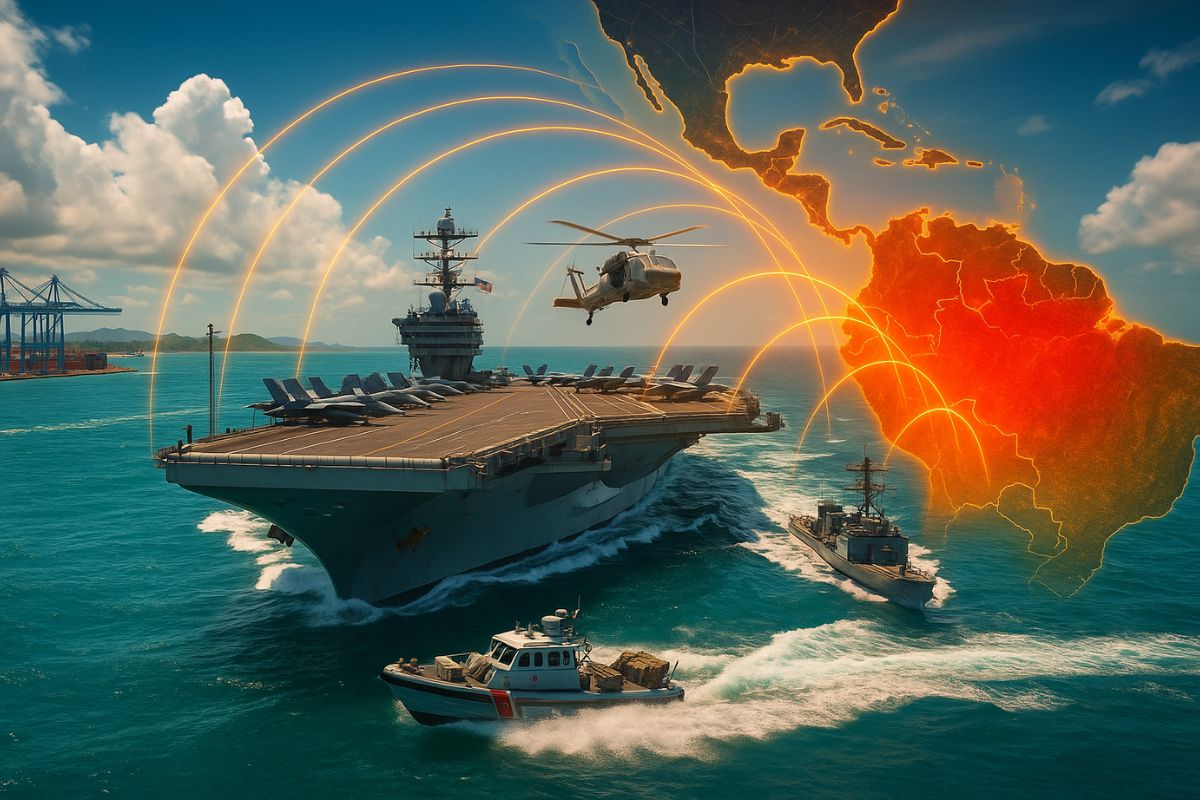
White House Positions Aircraft Carrier, Expands Naval Actions in the Caribbean, and Transforms the Military Mega Operation in Latin America into One of the Most Tense Movements in U.S. Foreign Policy in Recent Years
The military mega operation in Latin America announced by Donald Trump marks a new phase in the United States’ security strategy in the hemisphere. The U.S. government prioritizes drug trafficking and transnational terrorism and deploys large-scale military resources, reigniting debates over sovereignty and immediate geopolitical risks. The presence of an aircraft carrier in the Caribbean and the explicit focus on Venezuela elevate the perception that the scenario could change rapidly.
The military mega operation in Latin America arises at a time of growing distrust between Washington and Caracas. Under suspicions involving Nicolás Maduro’s government, the White House accelerated internal discussions, reinforced the role of Southern Command, and presented to the public what it describes as a direct response to threats that exceed borders. The diplomatic environment is already showing signs of tension and analysts believe that the coming days will be decisive to gauge how far the American offensive will go.
Why the Operation Was Initiated

The Trump administration has positioned Operation Southern Spear as a symbol of its new phase of national security.
-
Attracting around 250,000 people a year, a lighthouse 200 meters from the sea, on a 60-meter high cliff, on the North Sea coast in Denmark, becomes one of the most impressive examples of how nature can threaten historical buildings.

-
The narrowest house in the world is only 63 centimeters wide, but inside it can accommodate a bathroom, kitchen, bedroom, office, and even two staircases.

-
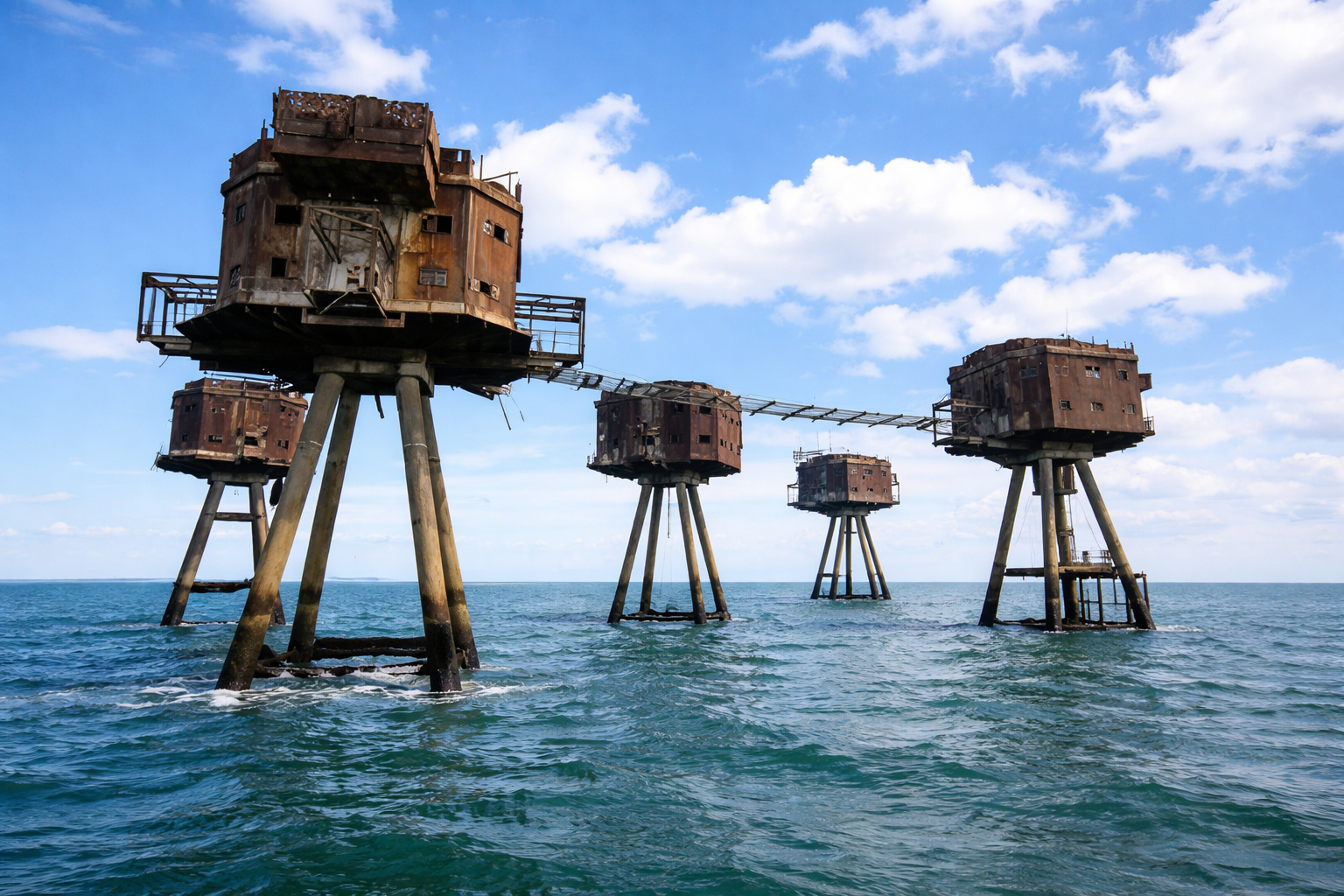
In the middle of the sea, these enormous concrete and steel structures, built by the British Navy to protect strategic maritime routes, look like they came straight out of a Star Wars movie.
-
For years, no one could cross a neighborhood in Tokyo because of the tracks, but an impressive solution changed mobility and completely transformed the local routine.


According to U.S. authorities, the goal is to prevent transnational trafficking networks from connecting to vulnerable state structures in the region.
In Washington, the prevailing view is that continental stability depends on containing organizations that move billions of dollars and are able to operate across weakened borders.
This narrative has grown following allegations of involvement by Venezuelan government figures in drug schemes, something that the United States claims to have been monitoring for years.
The final decision involved direct coordination from the Secretary of War, Pete Hegseth, and the military command responsible for hemispheric operations.
How the U.S. Intends to Act
The Americans announced that the military mega operation in Latin America will have a continuous, adaptable character, coordinated across different fronts.
The USS Gerald R. Ford is already positioned in the Caribbean and will serve as a central base for maritime interceptions.
The initial actions include boarding suspected ships and persistent aerial surveillance, with drones and fighters monitoring routes of interest.
Ground and air forces remain on standby in case new developments require rapid responses.
Intelligence analysis centers are being expanded to work closely with countries considered partners, although political divergences may limit cooperation.
Risks and Geopolitical Implications
The move reignites classic discussions about American military involvement on the continent.
Latin American governments express concern over the possibility of the conflict escalating or Washington expanding its presence without a formal diplomatic agreement.
Experts assert that proximity to Venezuela makes the scenario especially delicate, as Caracas maintains strategic relations with Russia, Iran, and China.
Among the most likely consequences are additional tensions with regional blocs, criticisms regarding sovereignty, and indirect impacts on multilateral relations with powers outside the continent.
What to Expect in the Coming Days
The operation is in its initial phase and is expected to undergo adjustments based on the political behavior of the countries involved and the advancement of military actions.
The U.S. Southern Command will play a central role in gathering intelligence and monitoring suspicious activities, focusing on maritime and aerial routes used by criminal organizations.
Cooperation with local forces may progress in some countries, stagnate in others, and cause friction where governments reject the American military presence.
Behind the scenes, diplomats are working to prevent the offensive from producing an uncontrolled escalation, especially at the Venezuelan border.
An Operation That Could Remake the Continent
The military mega operation in Latin America places the region once again at the center of U.S. security policy.
For analysts, the scale of intervention, the strategic positioning of troops, and the explicit focus on Venezuela reveal that the crisis could quickly transform into one of the greatest geopolitical challenges for the hemisphere.
If the pressure increases and there is a response from Caracas’ allies, the regional balance may be tested as it has not been seen in decades.
What is your opinion? Do you think this military mega operation in Latin America will increase security or could provoke an even greater conflict on the continent?






Seja o primeiro a reagir!