





 Portuguese
  English
  Spanish
  6 min of reading
  75 comments




Great Green Wall of Africa Shows How Food Forests Transform Arid Areas into Productive Lands and Tackle Hunger
The Great Green Wall of Africa restores soil, retains water, and practically demonstrates that well-planned food forests can transform arid areas back into productive lands, reducing hunger and restoring autonomy to local communities. Along the Sahel, one of the planet’s most vulnerable belts, the project begins to redraw the map of desertification with trees, water infiltrated into the soil, and year-round food production.
More than just a band of trees to curb the Sahara’s expansion, the Great Green Wall of Africa is recreating a functional ecological system where hard soil, hot winds, and chronic dependence on humanitarian aid once prevailed. In areas that a decade ago were practically barren, half a million people are now able to feed themselves more dignifiedly, with pastures for livestock, productive gardens, and food forests that sustain animals, plants, and people even during the nine months of drought.
What is the Great Green Wall of Africa

The Great Green Wall of Africa is a megaproject for land restoration that spans the Sahel, a transitional region between the Sahara Desert and Sub-Saharan Africa.
-
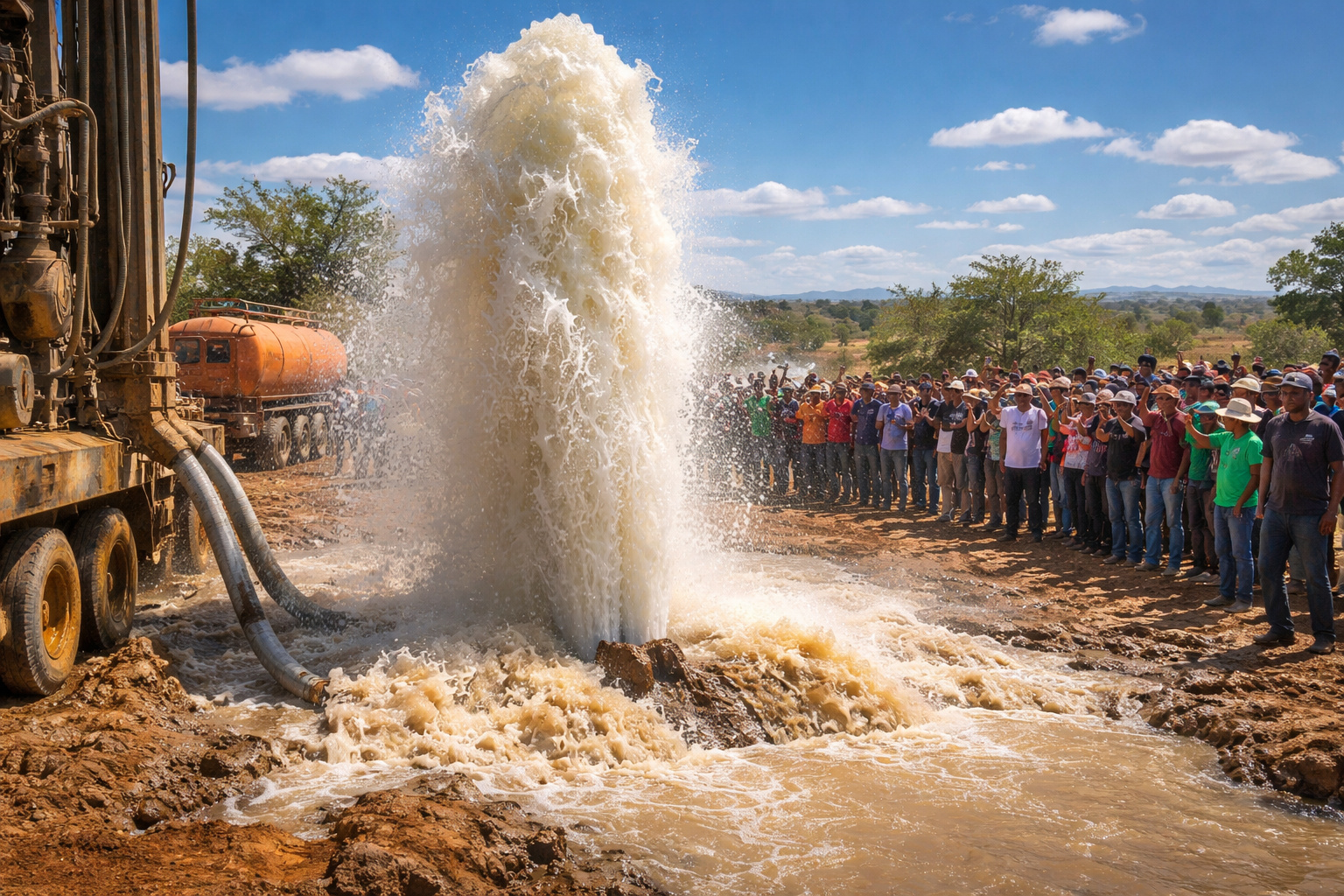
Artisanal well erupts with water in the sertão of Bahia, revealing a surprising flow with six active fissures underground and changing the landscape in the Bahian semi-arid region.
-
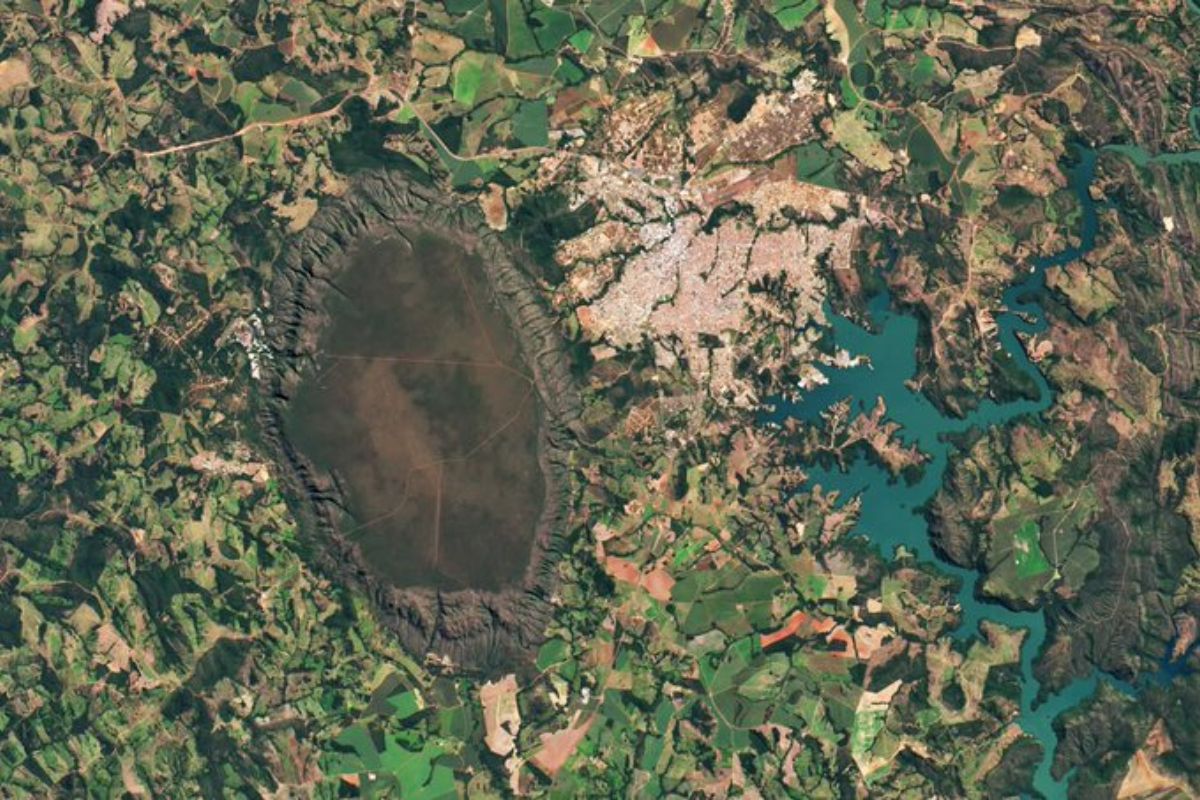
NASA published a photo taken from space of a mountain range in the interior of Goiás, and the whole world wanted to know what it was: beneath it lies the largest hot water spring on the planet, with temperatures reaching 70 degrees in the middle of the Cerrado.
-
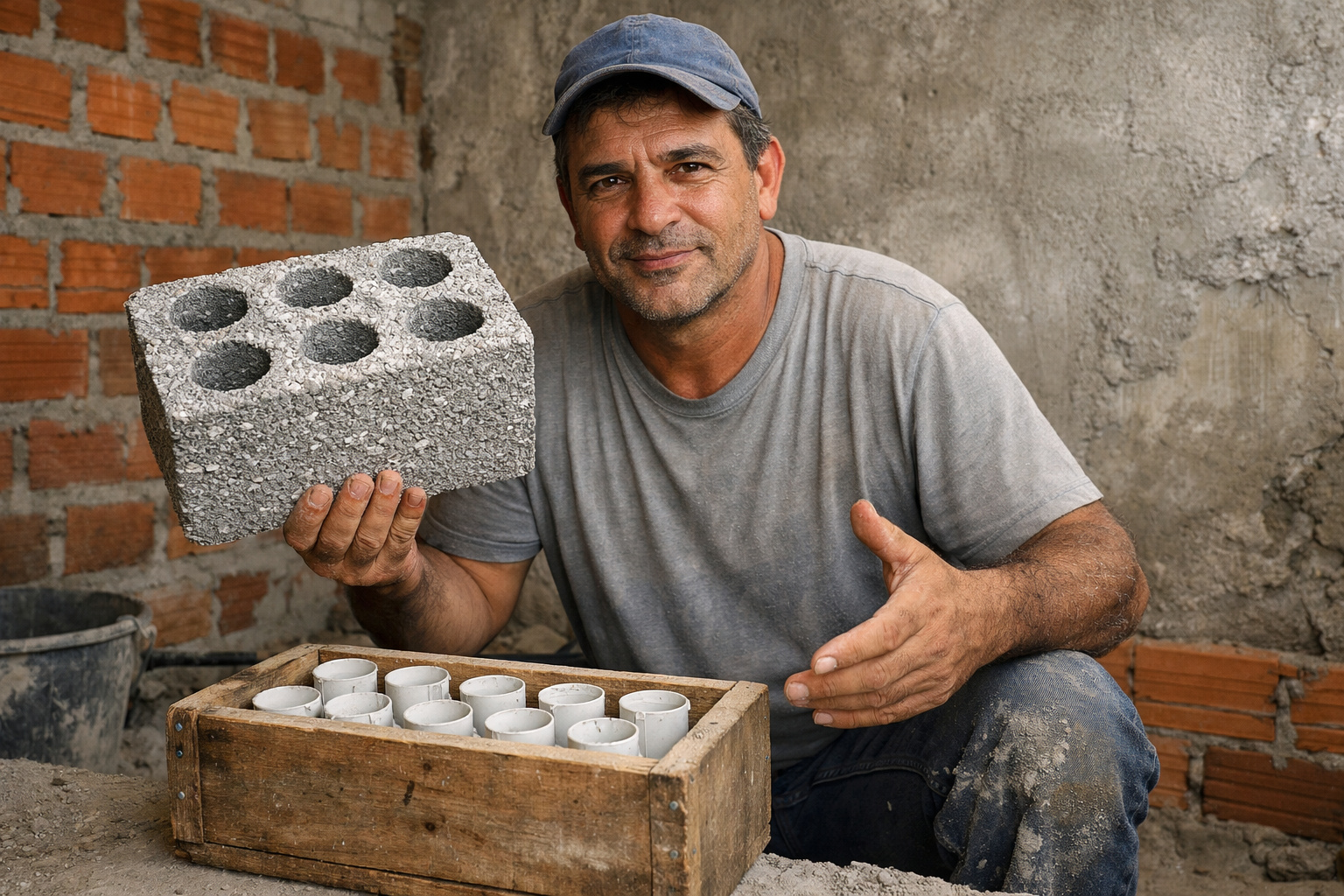
A thermal block costing only R$ 0.40 catches attention by reducing heat by up to 80% using recycled styrofoam, a common kitchen ingredient, and a manual technique capable of producing 50 blocks from a single bag of cement.
-
The item in the house that consumes the most water is not in the kitchen; it is in the smallest room of the house and can account for up to 30% of the expenditure on its own.


The central idea is both simple and ambitious: rebuild a continuous strip of vegetation to halt the desert’s advance and reactivate the soil’s productive capacity.
In Niger, one of the hottest countries on the planet, this strategy translates into hundreds of restoration sites scattered across rural villages, supported by the World Food Programme and local governments.
In an area of just 5 square miles, for example, communities have planted about 100,000 trees and distributed 20 tons of grass seeds.
In another area of 800 hectares, the previously completely bare surface now retains about 3 million cubic meters of water infiltrated into the soil, with part of this volume recharging the deep aquifer.
How Food Forests Work in the Sahel

The heart of the Great Green Wall of Africa is the so-called food forests: production systems based on trees, shrubs, grasses, and agricultural crops that function integratively year-round.
Instead of planting a single crop, communities create true perennial polycultures, capable of producing food even in the most adverse season.
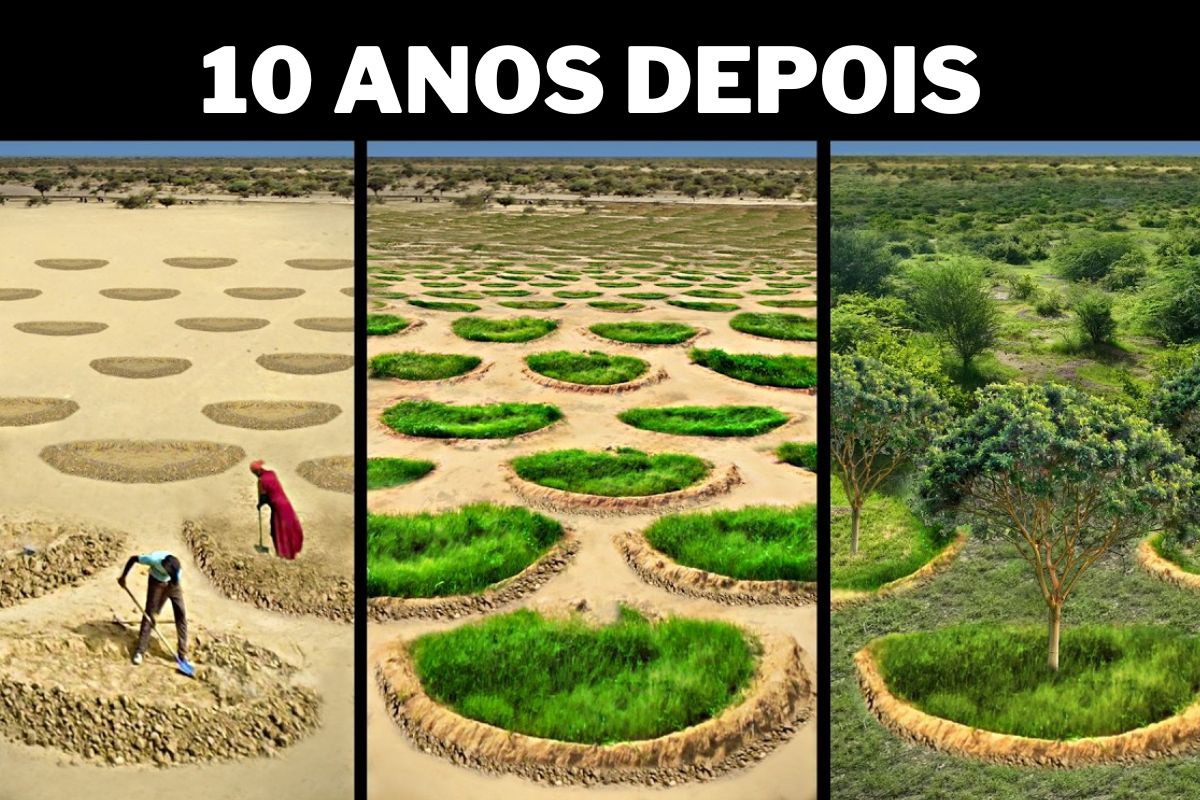
The physical basis for this transformation is traditional water harvesting structures known as half-moons, built along contour lines to intercept rainwater running down slopes.
Within and around these half-moons, zai pits are dug, small craters that accumulate organic matter and allow deep water infiltration.
In each of them, at least one tree is planted, accompanied by grasses and other seeds that germinate with the first rains, while birds and the wind add even more plant diversity.
Over the years, these water and nutrient capture points connect, forming shade, increasing humidity, sustaining the soil, and creating ideal conditions for food forests to develop.
The practical result is a mosaic of native trees, pastures, medicinal plants, fruits, and crops for human consumption, all organized to feed animals, protect the soil, and ensure food on families’ tables.
Soil, Water, and Climate: The Cascade Effect of Restoration

Before the intervention, many of these areas in Niger were described as “hard land,” with compacted, practically impermeable soil where rainwater ran off without penetrating.
The hot wind from the Sahara swept across the landscape unobstructed, drying out what little vegetation remained.
With the Great Green Wall of Africa, the system’s logic was inverted. The planted and regenerated trees function as natural barriers against dry winds, reducing local temperatures by 5 to 8 degrees compared to unrestored areas.
This temperature drop protects the soil, reduces evaporation, and creates a more stable microclimate.
At the same time, the combination of half-moons, zai pits, and vegetation cover transforms rainwater from runoff into underground storage.
The infiltration is so intense that about 15 percent of the water accumulated in these projects actually recharges the deep groundwater, regenerating springs and wells used by communities.
Satellite images from the past seven years show that the area of bare soil exposed in some of these sites has dropped to nearly zero, a clear sign that the soil has returned to retaining water, organic matter, and life.
From Regenerated Landscape to Food on the Plate

The central question always returns to the same point: how does this environmental restoration translate into food and less hunger in practice? In the case of the Great Green Wall of Africa, the answer appears on multiple levels.
First, the recovery of vegetation increases the supply of pasture for livestock. The grass that grows between the trees feeds goats, cows, and camels, ensuring milk and meat even during prolonged dry periods.
The leaves and fruits of native trees serve as emergency food during the dry season, functioning as a “living stock” of nutrients for critical moments.
Next, the rise of the water table allows for something that was unthinkable before restoration: gardens producing nearly year-round.
In a single commercial garden of 1.5 hectares, one of nine in the same region, families are able to pump water from the soil to produce vegetables, greens, and fruits in the heart of the Sahel. Before this type of project, 9 out of 10 assessed children exhibited malnutrition.
With the diversification of fresh and nutritious foods, the nutritional condition of communities begins to visibly change.
In the past five years, an average of 3 million people per year in Niger still needed emergency food assistance.
At the same time, the resilience projects associated with the Great Green Wall of Africa have already reached about half a million people who have started to sustain themselves without relying on long-term food assistance.
It’s still a partial view, but it indicates a consistent path: when the land starts to nourish people again, hunger ceases to be a fate and becomes a technical and political issue.
Scale, Challenges, and the Wall Against Hunger
In ten years, the government and partners have restored about 300,000 hectares in Niger, a figure that takes on another dimension when considering the indirect effect: each hectare restored influences approximately three surrounding hectares, due to impacts on water, wind, and biodiversity.
In practice, the ecological reach of this restoration approaches 900,000 hectares in a country with vast territory still marked by conflict, poverty, and climate vulnerability.
Nevertheless, the Great Green Wall of Africa is still a sketch of what it can become, should investments be scaled up and coordinated on a continental level.
The World Food Programme acts as a catalyst: it provides equipment, training, food, and financial transfers for people doing the fieldwork, while communities take on the central role of managing and maintaining the restored areas.
The emerging concept is that of a “green wall” not only against the physical advance of the desert but also against chronic hunger and forced migration due to lack of prospects.
By transforming degraded lands into food barns, the project places the land back in its role as a nurturing mother, capable of sustaining local populations with dignity, rather than merely serving as a backdrop for permanent emergency.
In the end, the Great Green Wall of Africa serves as a laboratory for the future: it shows that it’s possible to combine traditional knowledge, simple water engineering, and the design of food forests to regenerate entire landscapes and protect millions of people.
In your opinion, if Brazil invested in its own “green wall” to recover degraded areas of the semi-arid region and the Cerrado, do you believe we would have a similar impact on hunger and the regional economy, or is political vision still lacking for something of this scale?






Falta vontade política. Visão eles têm de sobra. São pessoas bem educadas na instrução secular, versadas nas mais variadas áreas do conhecimento. Mas se um deles resolve fazer algo pela coletividade, já é chamado de comunista, quando, na verdade, o que o coitado quer é só não ver pobreza extrema no caminho até a casa de seu amigo para ouvir música e conversar. Ele enxerga que é possível honrar a Constituição e ao mesmo tempo manter a dominação da sociedade, pois já andou por países desenvolvidos e viu que lá é assim. Não tem medo. Mas é freado pelos parentes excessivamente cautelosos cujo medo de perder hegemonia é tão grande que deixam passar a fabulosa oportunidade de entrar para a história como responsáveis pela melhoria do Saneamento, Saúde, Educação e Segurança das populações que dominam.
É claro que sim. Nos faltam gestão,empenho em resolver problemas. Veja o caso da cebolas e batatas. Jogar cebolas fora mas estradas? Não sabem processa,-las ? Falta interesse,planejamento e vergonha nos governos.!Saibam que o sistema de chuvas mudou . Daqui para frente haverá chuva quando subir Ciclone e anti ciclone dadas ondas de Rossby si tropicais..
A natureza é diretamente ligada a ocupação de Terras. Derrubar florestas, criam desertos e empobrecimento do solo. Degradação de matas ciliares reduzem a capacidade de rios com assoreamento, redução da umidade….
Assim, esse projeto é espetacular, mas não devemos nos iludir, pois o processo é demorado, e pelo menos uma década para cada plantação dessas meias luas. O resultado já é percebido.