





 Portuguese
  English
  Spanish
  4 min of reading
  6 comments




Postal Workers Strike Indefinitely in Nine States, Demanding Salary Adjustment and Better Working Conditions.
The workers of the Postal Service in nine Brazilian states decided to “cross their arms” last Thursday, August 8, triggering an indefinite strike. The decision to stop activities was approved in assemblies held in different states, including São Paulo, Rio de Janeiro, Rio Grande do Sul, and Paraná. Negotiations between the category and the company have not yet produced an agreement, and the strike is expected to be one of the biggest recent challenges faced by the Postal Service, which has already been going through a period of financial difficulties and internal restructuring. The stoppage reflects widespread discontent within the category, which demands salary improvements, better working conditions, and changes to the health plan offered by the company.
Motivations for the Postal Workers Strike
The main demands of the workers involve salary issues, working conditions, and the expansion of the workforce.
The strikers demand a salary adjustment that they consider fair and applicable for the year 2024.
-
Brazil Ignores Trump’s threats to BRICS, Buys 42 tons of gold and reduces the Dollar’s share by 6.45% in international reserves.

-
Havan buys historic football land in Blumenau for a million-dollar amount protected by a confidentiality clause and is already planning to change even the layout of streets to build a megastore in half-timbered style costing 80 million reais.

-
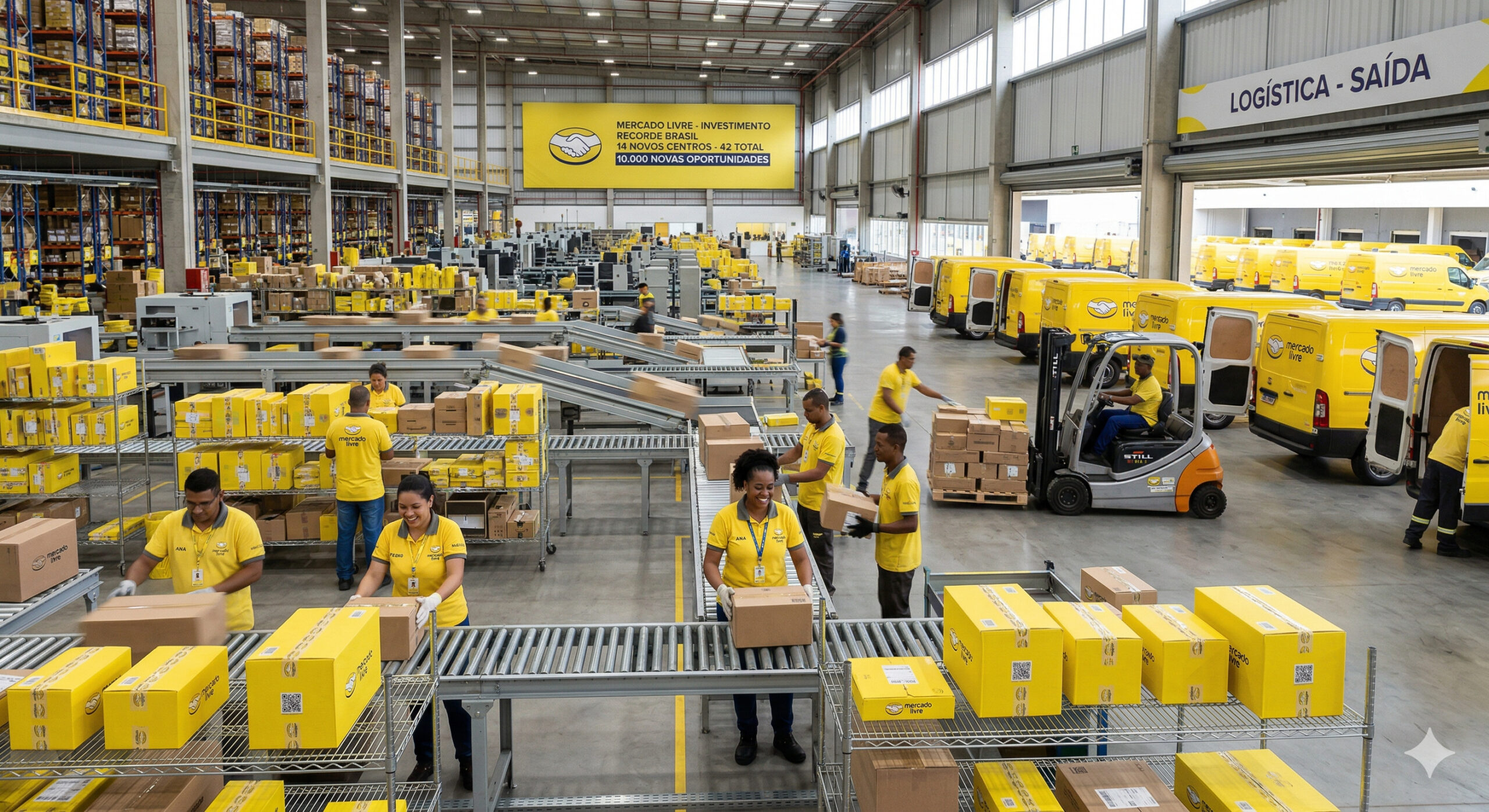
Mercado Livre “opens the vault” and announces a record investment of R$ 57 billion in Brazil in 2026, a value 50% higher than the previous year, with an expansion plan that includes 14 new logistics centers, totaling 42 units in the country and hiring an additional 10,000 employees.
-
How investment in technology can revolutionize the national economy and enhance industrial gains, according to a study that highlights the direct impact on productivity, innovation, and wealth retention within Brazil.


They also request the holding of new public competitions to increase the number of employees at the Postal Service, a measure they consider essential for improving the efficiency of the services provided.
Another point of disagreement between the employees and the Brazilian Company of Posts and Telegraphs (ECT) concerns the health plan offered by the company.
The workers criticize the high cost of the plan, which includes co-payment, and demand a reduction to 15% on costs for procedures like consultations and exams.
In an open letter, Findect expressed its demands and explained the current conditions faced by the Postal Service employees, calling for more workers to join the strike.
The union also criticized the “intransigent stance” of the ECT in negotiations, claiming that the company has not shown willingness to meet the workers’ demands.
Strike Participation and Affected States
The strike has been joined by unions in nine states: São Paulo, Rio de Janeiro, Rio Grande do Sul, Paraná, Ceará, Alagoas, Maranhão, Piauí, and Tocantins.
In these states, Postal Service operations have been variably impacted, with some locations experiencing delays and interruptions in the delivery of mail and packages.
In São Paulo and Rio de Janeiro, which handle large volumes of mail and packages, strike participation has been particularly significant, according to the union.
In other states, such as Alagoas and Tocantins, the stoppage has also raised concerns about the continuity of services, especially in more remote areas.
Response from the Postal Service
The Postal Service, on its part, claims that, despite the strike, services are “operating normally across the country.”
In an official statement released on Thursday (8), the company informed that it has taken measures to minimize the impacts of the stoppage, such as reallocating professionals and implementing overtime to cover for absent striking employees.
The president of the Postal Service, Fabiano Silva dos Santos, stated in a note that the company believes in dialogue and transparency as essential tools to build a stronger and more responsible institution.
He emphasized that the institution remains open to negotiations but has faced difficulties in recent years due to the process of near-privatization and the elimination of workers’ historical rights, measures implemented by the previous government.
The Brazilian Company of Posts and Telegraphs argues that it has been seeking dialogue with the unions and has presented proposals to address some of the workers’ demands.
Among the proposals, the company offered a 6.05% salary increase, to be applied starting January 2025, and an increase in benefits for employees as soon as August 2024.
Additionally, the Postal Service committed to opening public competitions for some positions, aiming to reinforce the workforce and improve service delivery.
Despite these proposals, the unions consider that the company’s offers are insufficient to meet the workers’ needs.
Findect criticizes the proposed salary adjustment percentage, claiming that it does not correspond to the increase in the cost of living and the accumulated salary losses in recent years.
Furthermore, the union insists that expanding the workforce is essential to ensure better working conditions and for the company to fulfill its obligations to the public.
Impacts of the Strike on the Population
The Postal Service strike brings concerns for the public, especially for those who rely on postal services for the delivery of mail and packages.
In regions where strike participation has been high, users may face significant delays in receiving letters, important documents, and products purchased online.
The stoppage may also affect businesses that depend on the Postal Service for their logistics, such as e-commerce and service providers that use the postal network to distribute their products.
With the strike extending indefinitely, the expectation is that the impact on the economy and the daily lives of Brazilians will increase if there is no agreement between the strikers and the company.
So far, there is no forecast for the end of the strike. Findect remains firm in its demands and insists that workers will not return to work until their needs are met.
The Postal Service, for its part, continues to affirm that it is willing to negotiate but also has the responsibility to maintain the continuity of services provided to the public.
With negotiations at a standstill and the strike ongoing, the scenario is one of uncertainty for both Postal Service workers and the public that depends on postal services.
It remains to be seen whether the parties can reach an agreement that meets the workers’ needs while ensuring the continuity of services to the Brazilian population.








Esse negócio de que os correios estão operando não é verdade pois o correio da Brasilândia não está funcionando tento pegar meu produto e não consigo um descaso total pra que nos prejudicar assim
Estes cara de **** querem aumento, não entregam as coisas, e dizem foram na casa e não tinha ninguém , sendo que tem gente sempre em casa
Verdade fizeram isso comigo total descaso
Isso é o desgoverno do ****. Todos setores trabalham com prejuízos bilionários. A corrupção é a imprudência dos **** ocasiona a quebradeira do país.