





 Portuguese
  English
  Spanish
  4 min of reading
  0 comments


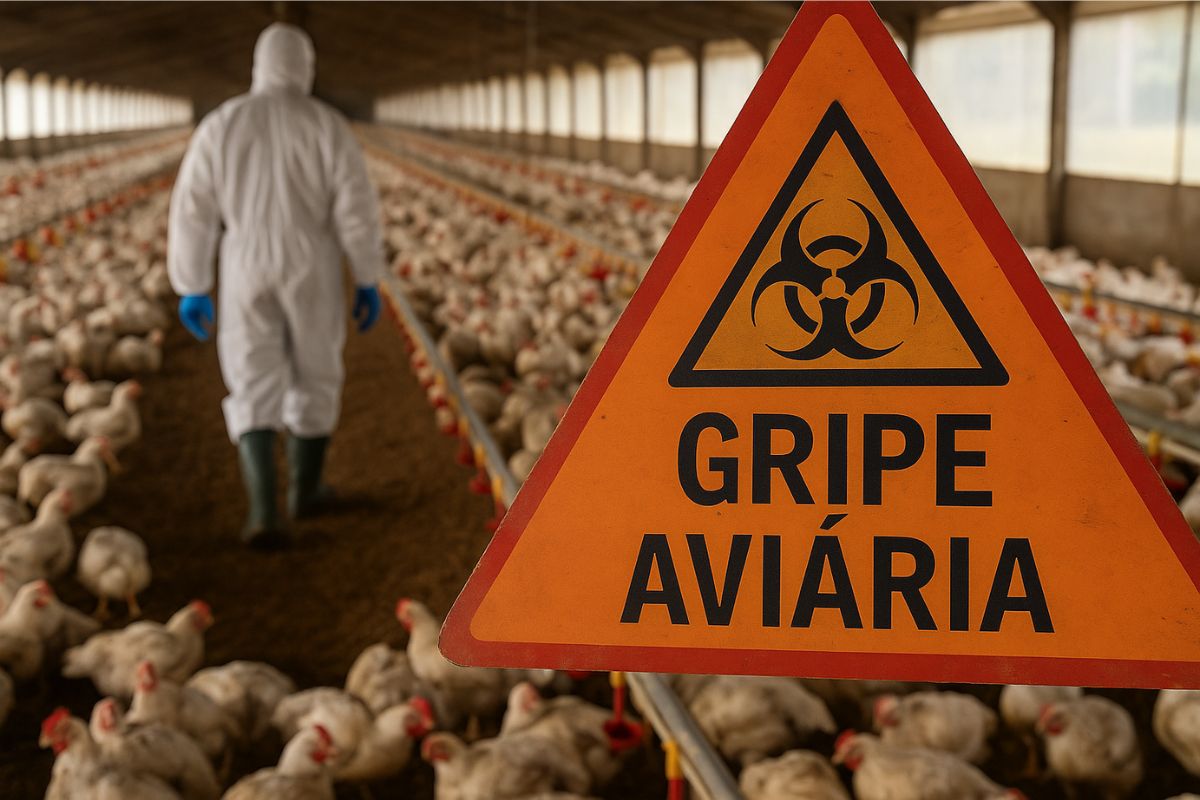
Brazil Could Suffer Billion-Dollar Monthly Losses from Chicken Export Suspension. China, EU, Chile, and Other Countries Cancel Purchases Following Confirmed Case in Rio Grande do Sul
The discovery of a highly pathogenic avian influenza outbreak on a commercial farm located in Montenegro, Rio Grande do Sul, has raised a red flag among Brazilian animal protein exporters. The case has led major countries, such as China, European Union, Argentina, Uruguay, and Chile, to temporarily suspend imports of chicken meat and its derivatives from Brazil. The economic impact could reach US$ 200 million in just one month, according to estimates released by the Ministry of Agriculture and Livestock (MAPA).
The calculation considers a volume between 50,000 and 100,000 tons of chicken meat that may not be shipped over 30 days, based on an average international price of US$ 2,000 per ton. This represents a potential reduction of up to 20% in monthly exports, which currently hover around 465,000 tons, according to data from 2025.
For Luis Rua, secretary of Commerce and International Relations at MAPA, the outlook remains uncertain. “It is likely that we will see a significant reduction in exports, but the real impact will depend on two factors: which countries will maintain or expand the embargoes, and how long these restrictions will last,” he stated in an interview with Broadcast Agro.
-
“No one will make us change the Pix,” says Lula after the US report.

-
Lula responds directly to Trump and says that Pix is from Brazil and will not change under pressure from anyone, after a report from the United States pointed out the Brazilian payment system as an American trade barrier.

-
Amazon has just announced a new fee on all deliveries, and your online purchases will become more expensive starting April 17, including for those buying from the United States here in Brazil.

-
He sold his share for R$ 4 thousand, saw the company become a giant worth R$ 19 trillion, and missed the opportunity of a lifetime.


Immediate Impact on Key Markets
China, which is currently the largest buyer of Brazilian chicken meat, completely suspended shipments of the product. The European Union followed suit. Since Brazil accounts for 35% of the global trade in chicken meat, the international repercussions were immediate. Countries such as Mexico, South Korea, South Africa, and Russia have also indicated they may adopt similar suspensions in the coming days.
The situation is concerning because, although the avian influenza virus is not transmitted through the consumption of poultry meat or eggs, the mere detection on a commercial farm is enough to trigger international sanitary protocols. The export contracts signed by Brazil with partners like China and the EU foresee total suspension of purchases in the event of outbreaks detected on productive farms.
Redirecting Part of the Production
Despite the expected losses, the government is betting on containment actions, rapid communication with international partners, and logistical redirection to mitigate the economic effects. Part of the chicken meat that will not be sent to the embargoing countries may be exported to alternative destinations or allocated to the domestic market.
“The fact that a country suspends purchases does not mean the meat will be wasted. A portion could be redirected to markets that continue to allow imports from Brazil, such as Japan, Saudi Arabia, the United Arab Emirates, the United Kingdom, the Philippines, and others that adopt regionalization of sanitary restrictions,” explained the secretary.
These countries allow the suspensions to be restricted to the affected region, such as the municipality of Montenegro or a radius of 10 km around the farm where the case was detected, according to guidelines from the World Organisation for Animal Health (WOAH).
Brazilian Government Bets on Regionalization of Embargoes
According to Rua, there is optimism regarding the possibility that broad embargoes will be reverted to localized restrictions in the coming days. “In the first days, many countries suspend all purchases as a preventive measure. However, as they receive technical data and evidence that the outbreak has been contained, the trend is to shift to a model of regionalized restriction,” he explained.
The Brazilian government is providing international sanitary authorities with all requested information, including the exact location of the outbreak, applied containment measures, and results from additional tests. The expectation is that, with this, trading partners will reestablish imports in a segmented manner, a process that could take about 28 days, according to MAPA itself.
Strong Global Demand May Minimize Losses
Even with the crisis, the global poultry scenario may end up working in Brazil’s favor. According to data from the Brazilian Association of Animal Protein (ABPA), the demand for Brazilian chicken has increased 9% in 2025 compared to the previous year, with prices higher than those of 2024. This is largely due to the presence of avian influenza in the flocks of other major exporters, such as the United States.
“The world is learning to live with the disease. The US, even with outbreaks on its own territory, exported 3.3 million tons of chicken meat last year,” emphasized Rua. This reinforces Brazil’s role as a reliable supplier, even if subject to occasional sanitary fluctuations.
According to data from ABPA, Brazil exported 5.157 million tons of chicken meat in 2024, with total revenue of US$ 9.742 billion. The major destinations were China (13%), United Arab Emirates (9.7%), Japan (8.8%), and Saudi Arabia (8.4%), all with significant strategic weight in sector revenues.
Safe Consumption and Intensified Monitoring
The Ministry of Agriculture emphasizes that there is no risk of avian influenza transmission through the consumption of properly processed poultry meat or eggs. The disease is transmitted through direct contact with contaminated birds, mainly among migratory species and flocks in open environments.
As a safety measure, sanitary surveillance has been intensified throughout the national territory, with increased testing of flocks and control of animal movement in risk areas. The swift actions of the Brazilian government are seen as crucial to prevent the impact from extending beyond one monthly export cycle.









-

Uma pessoa reagiu a isso.