Portuguese



AI can already control climate, navigation, calls, music, and some physical functions in compatible vehicles, while documentation anticipates voice messages awaiting activation
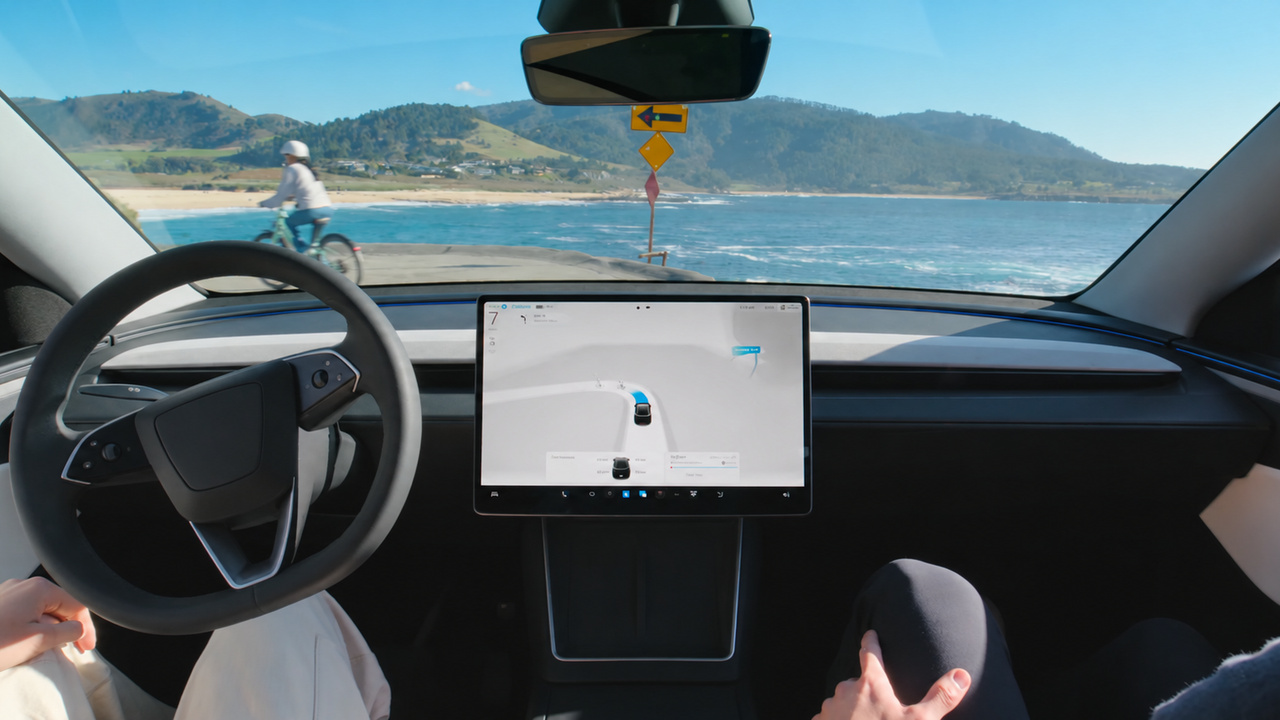
Tesla is expanding the role of artificial intelligence within its cars. In compatible Model 3 and Model Y vehicles, Grok has evolved from functioning solely as a chatbot to interpreting natural language requests to perform tasks such as adjusting climate settings, making calls, controlling media, and assisting with navigation. Now, updated manuals anticipate another feature: preparing text messages from spoken commands. However, this capability is not yet available to drivers, according to a report published by Folha BV on September 16, 2026.
Grok begins to transform common phrases into commands within Tesla cars
The most significant change is not just in the number of functions available. In practice, Tesla is beginning to replace rigid commands with an interface capable of interpreting what the occupant intends to do.
With Grok set to Assistant mode, the driver can request actions using natural phrases. Thus, there is no need to memorize a specific sequence of words or search for a particular function on the central screen.
-
Scania’s New Electric Truck Achieves 720 km Range and Introduces Megawatt Charging to Minimize Downtime

-
Affordable Citroën C3 Live Pack 1.6 Automatic 2024 Now Priced Under R$ 70,000 with 120 hp and 6-Speed Transmission

-
Toyota Project 150D 2027: Corolla Cross Platform, 2.5 Hybrid Engine, and Mid-Size Pickup to Compete with Toro, Maverick, and Ram Rampage in Brazil

-
Used 2022 Hyundai HB20X Priced Around R$ 70,000, Over R$ 10,000 Below Fipe Guide, Features 1.6 Engine with 130 HP, Six-Speed Automatic Transmission, Warranty Until 2027


Tesla’s official documentation states that the assistant can make phone calls, search and play multimedia content, assist with navigation, adjust temperature, and locate controls in the dashboard.

Additionally, certain commands reach the car’s physical functions. For example, Grok can adjust the heating and cooling of the seats, control the steering wheel’s heating, and open the glove compartment, based on the configuration available.
In this way, the artificial intelligence shifts from merely responding to questions to acting as an intermediary between the user and various electronic systems of the vehicle.
This integration illustrates how software and AI are gaining traction in the automotive industry. This shift is also visible in other manufacturers. The new Audi A2 e-tron, for instance, incorporates an AI assistant within an architecture where software, digital displays, and intelligent route planning play a central role in the electric vehicle.
Voice messages appear in manuals, but Tesla has not yet activated the feature for drivers
The next advancement anticipated by the documentation involves text messaging. According to Folha BV, the updated manuals for the Model 3 and Model Y indicate that Grok will be able to interpret a spoken request, identify a contact, and prepare a message.
Instead of dictating fragmented commands, occupants will be able to formulate a complete intention in natural language. Thus, a request to notify a specific contact that one is on the way could combine recipient, content, and action in a single statement.
However, there is an important difference between documentation and availability. Tesla had not yet activated this function for drivers as of the publication date.
Additionally, the company did not specify when the rollout will occur, which markets will receive the feature first, nor whether the system will require confirmation before actually sending a message.
This last point is important because an incorrect interpretation can select the wrong recipient or alter the meaning of the text. Therefore, confirmation mechanisms may represent a critical step before sending.
The remote update also allows Tesla to add features without replacing physical components. Consequently, compatible cars can gain new functions through software over time.
The transformation of automobiles into digital platforms is not limited to Tesla. Artificial intelligence has already reached various stages of the industry, from embedded assistants to production systems. In the Range Rover Electric, for example, the manufacturer uses artificial intelligence cameras to check electrical system components during manufacturing.
AMD Processor and Internet Connection Limit Which Cars Can Use Grok
Despite the expansion of features, Grok does not work in every Tesla. The official support page states that the feature requires a vehicle equipped with an AMD processor and compatible software.
Moreover, the assistant requires Premium Connectivity or a stable Wi-Fi connection. Thus, the experience depends on both the hardware installed in the vehicle and the connectivity available.
Availability may also vary by market, configuration, and software version. Therefore, two vehicles from the same family may not present exactly the same set of features.
To issue commands related to the vehicle, the user must select the Assistant personality. Other Grok personalities can chat and answer questions, but they do not necessarily execute automotive commands.
Tesla also states that the conversations remain anonymous to the manufacturer and are not linked to the vehicle. When the user requests a call, the system accesses the contacts stored on the connected phone to locate the recipient.
However, location-based functions require specific authorization to share precise positioning. As such, the expansion of AI also highlights the importance of privacy settings and permissions granted by the user.
Grok Controls Vehicle Functions, but This Does Not Make Model 3 and Model Y Autonomous Vehicles
The expansion of commands requires an important distinction. Controlling climate, media, navigation, or glove compartment by voice does not mean handing vehicle direction over to Grok.
Tesla’s own documentation refers to the assistant as a tool in Beta phase. Furthermore, conventional voice commands remain available regardless of Grok.
Folha BV also mentions efforts involving the possibility of activating functions related to Full Self-Driving (FSD) by voice. However, this perspective should remain separate from the features already available.
The Full Self-Driving system continues to require driver supervision under the conditions in which it is offered. Therefore, interpreting a sentence and adjusting the cabin temperature involves a completely different level of responsibility than controlling acceleration, braking, or steering.
The evolution also raises a discussion about safety. On one hand, reducing the need to navigate through menus on the touchscreen may decrease the number of manual interactions while driving.
On the other hand, lengthy conversations, unexpected responses, or misinterpretations can increase distraction. Thus, the quality of the experience will depend not only on the ability to understand natural language but also on the speed and predictability of the responses.
The next step indicated by the manuals is precisely the sending of messages. If Tesla enables this feature, Grok will gain access to yet another daily activity of the driver without requiring them to search through menus or type on the screen.
As a result, Model 3 and Model Y begin to function as platforms where artificial intelligence interprets intentions and converts them into actions within the vehicle. This change does not make the car autonomous due to the chatbot, but it illustrates how the interface between driver and vehicle can increasingly operate without relying on buttons, menus, and memorized commands.