





 Portuguese
  English
  Spanish
  5 min of reading
  0 comments


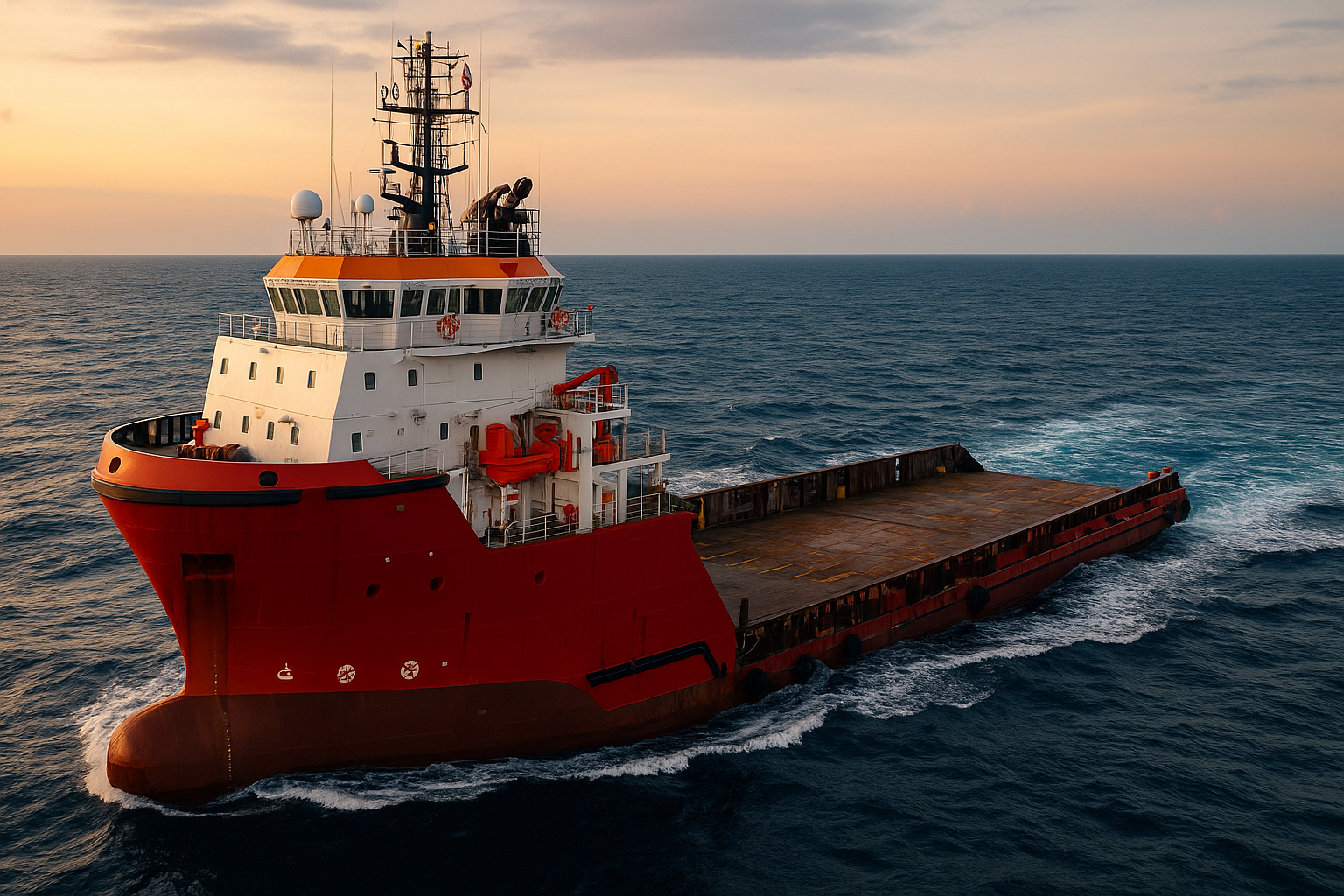
Discover How Support Vessels Are Essential for Offshore Operations, Ensuring Security, Logistics, and Efficiency at Sea.
When we talk about the functioning of activities at sea — especially those involving oil, gas, and other offshore operations — an indispensable element comes into play: support vessels.
Although often out of the spotlight, these vessels form the backbone of various naval and industrial operations in the maritime environment.
This guide is designed for both those who are beginning to take an interest in the sector and for professionals who wish to deepen their knowledge about these essential vessels.
-
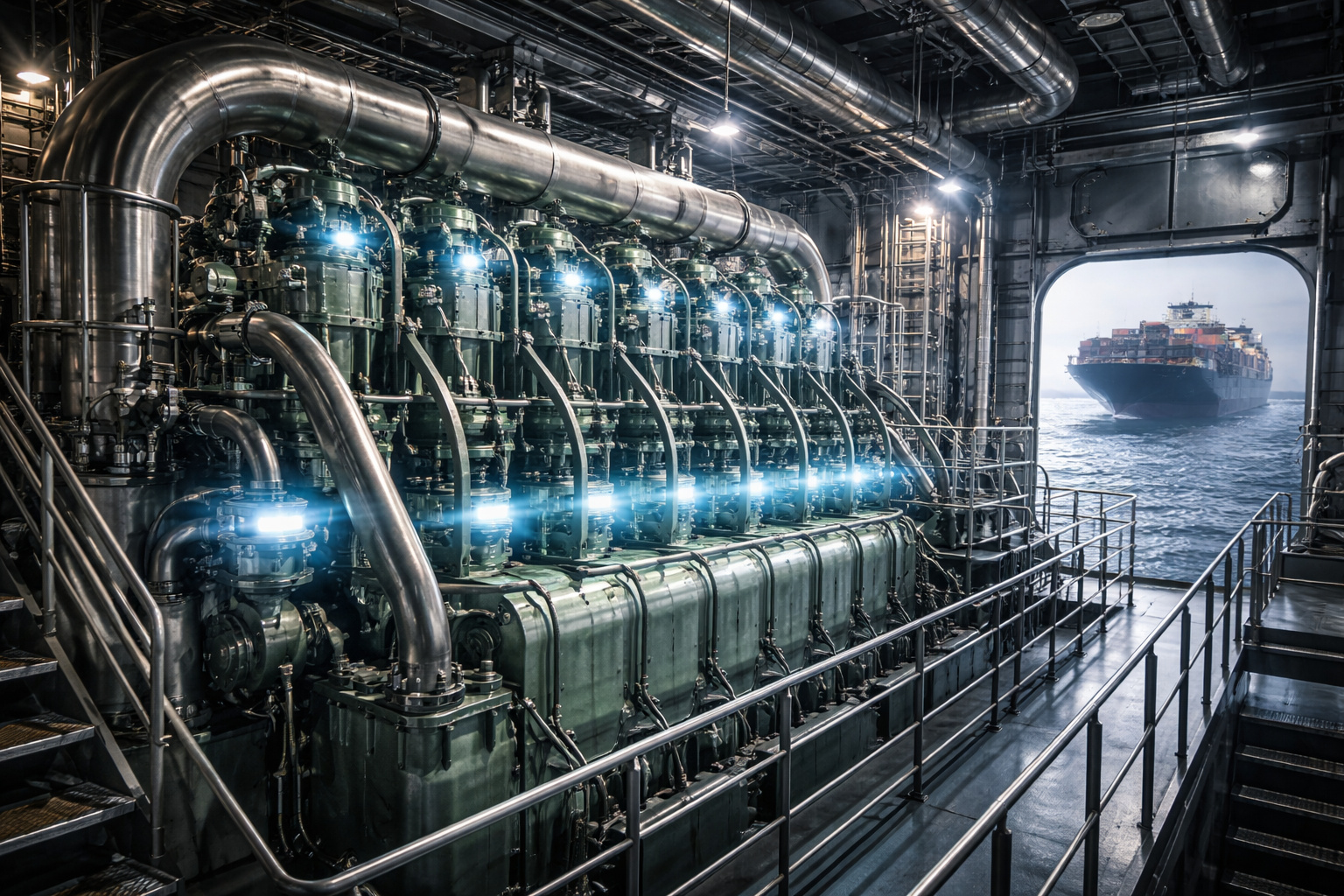
Europe is trying to create an ammonia-powered marine engine without auxiliary fuel, which could unlock the race for giant emission-free ships. The technology aims to eliminate one of the biggest obstacles to clean maritime propulsion.
-
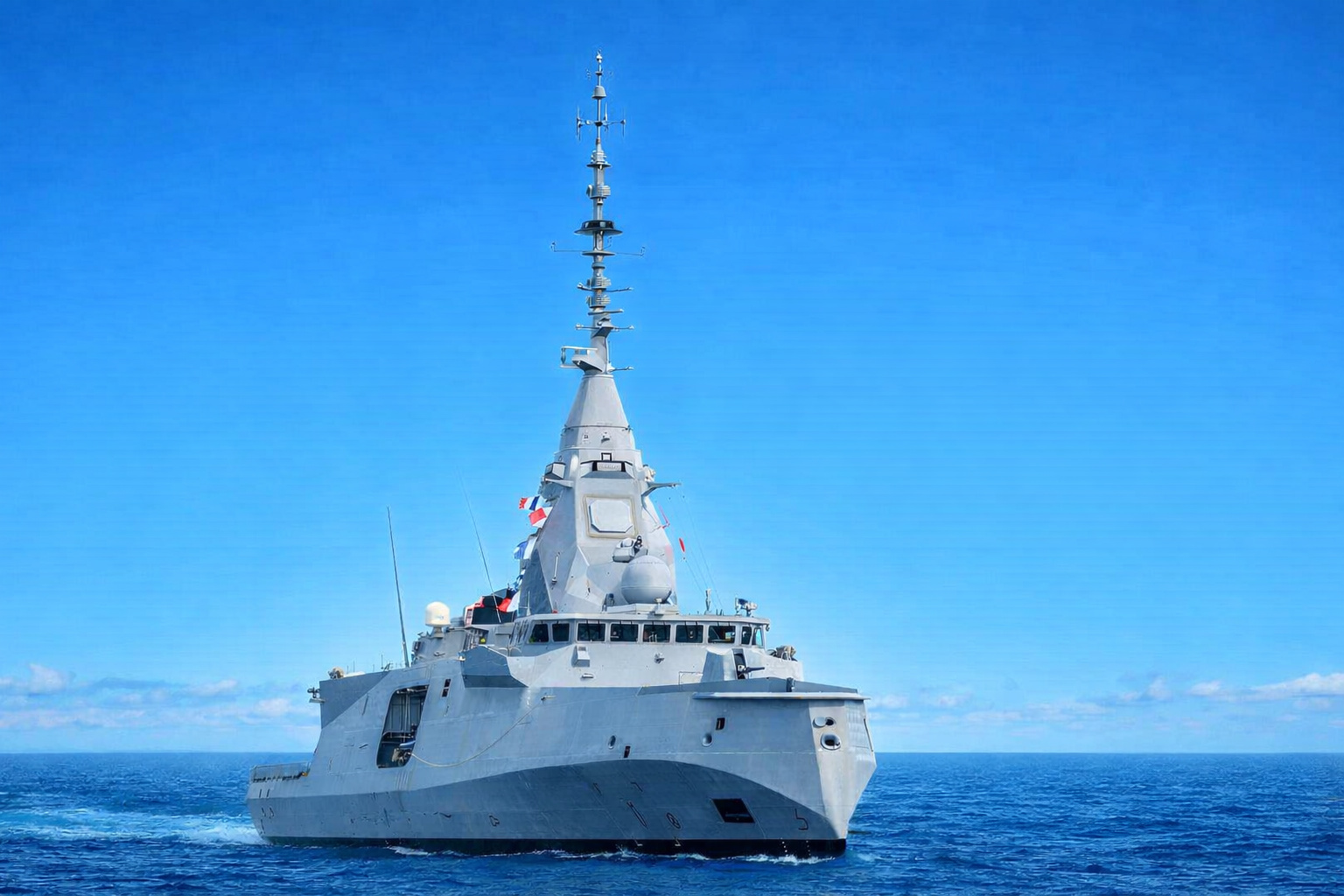
A 4,500-ton frigate with just over 100 crew members, state-of-the-art radar, and cruise missiles is being touted as the new standard of naval warfare in the 21st century.
-
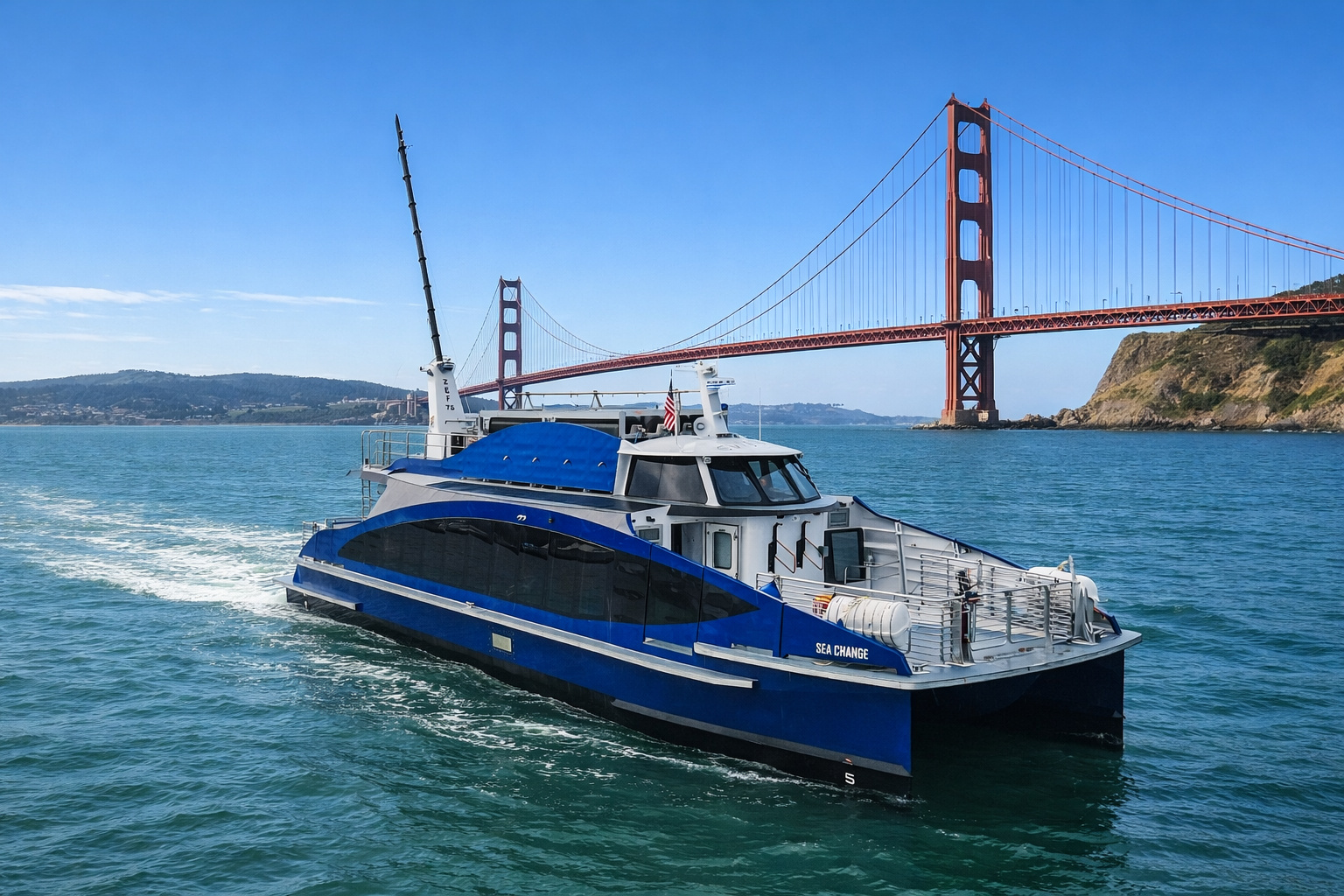
The first commercial hydrogen-powered ferry enters operation in the U.S., eliminates the use of diesel, uses fuel cells to generate clean energy on board, and transforms San Francisco Bay into a landmark of the new era of emission-free navigation.
-
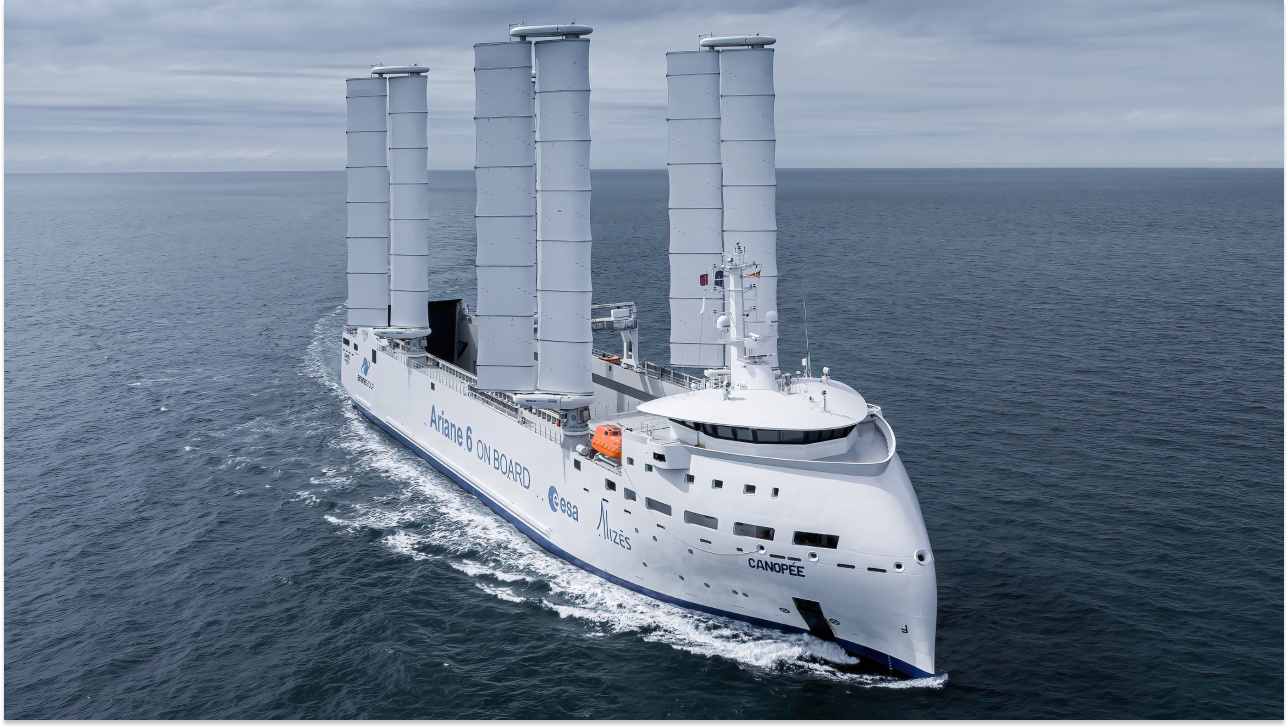
With a length of 121 meters and four rigid sails of 36 meters that automatically rotate to capture the wind, Canopée is the world’s first hybrid industrial cargo ship powered by wind, used to transport rockets and reduce fuel consumption by up to 30% on transoceanic routes.

With a straightforward approach, we will explore what support vessels are, their history, types, functions, and importance in maritime activities.
Additionally, we will discuss the technological advancements shaping the future of these vessels.
What Are Support Vessels?
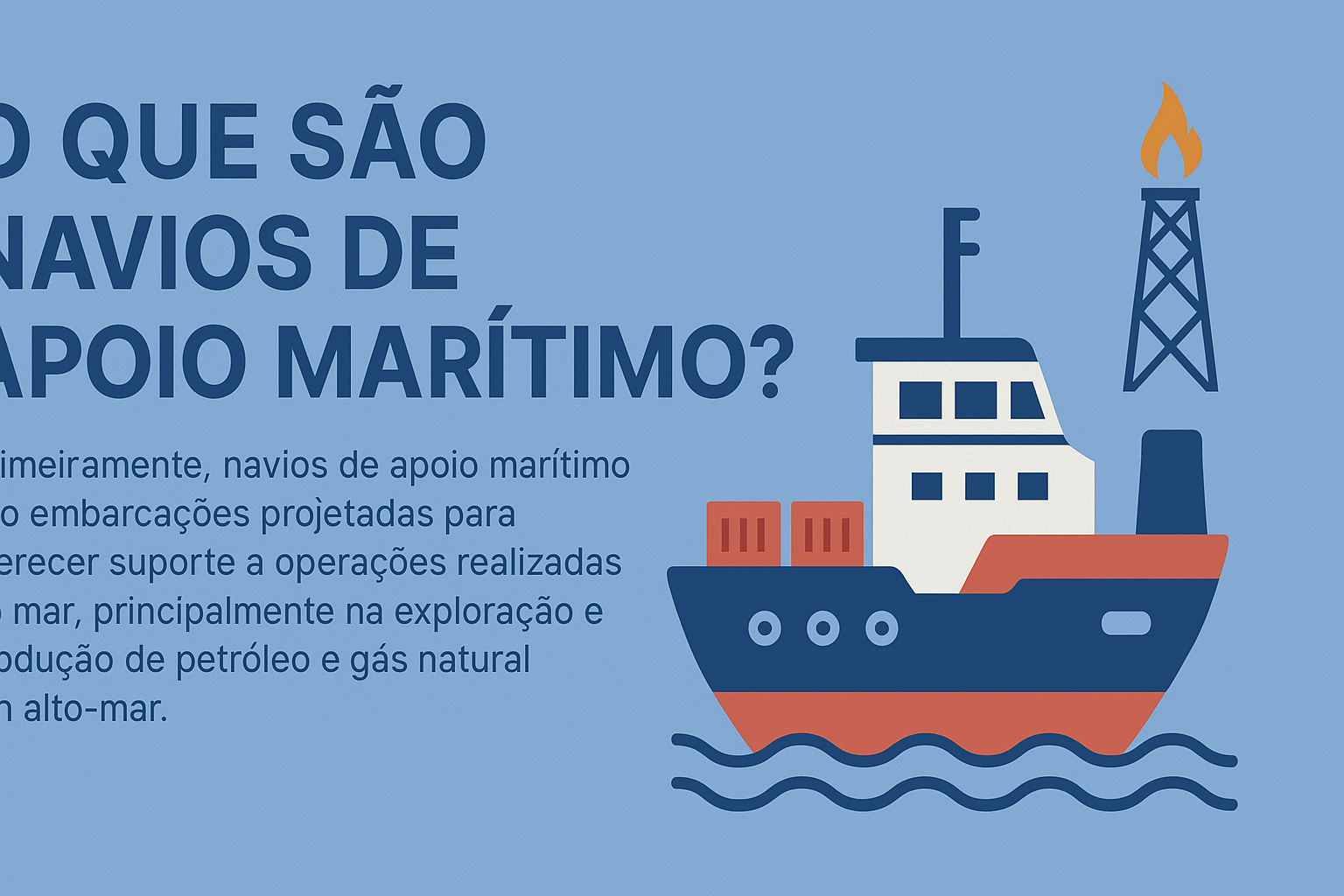
First and foremost, support vessels are boats designed to provide support for operations conducted at sea, mainly in the exploration and production of oil and natural gas offshore.
According to the National Agency of Petroleum, Natural Gas, and Biofuels (ANP), these vessels make up an essential logistical chain that supports platforms, rigs, drilling ships, and other offshore structures.
These vessels perform various functions: they transport supplies, anchor platforms, fight fires, and support divers.
Thus, their role ensures security, efficiency, and continuity in maritime operations.
Additionally, these vessels maintain the supply of water, food, spare parts, and tools for platforms that function as true floating cities.
Without them, the pace of offshore operations would lose strength.
The Origin and Evolution of These Vessels
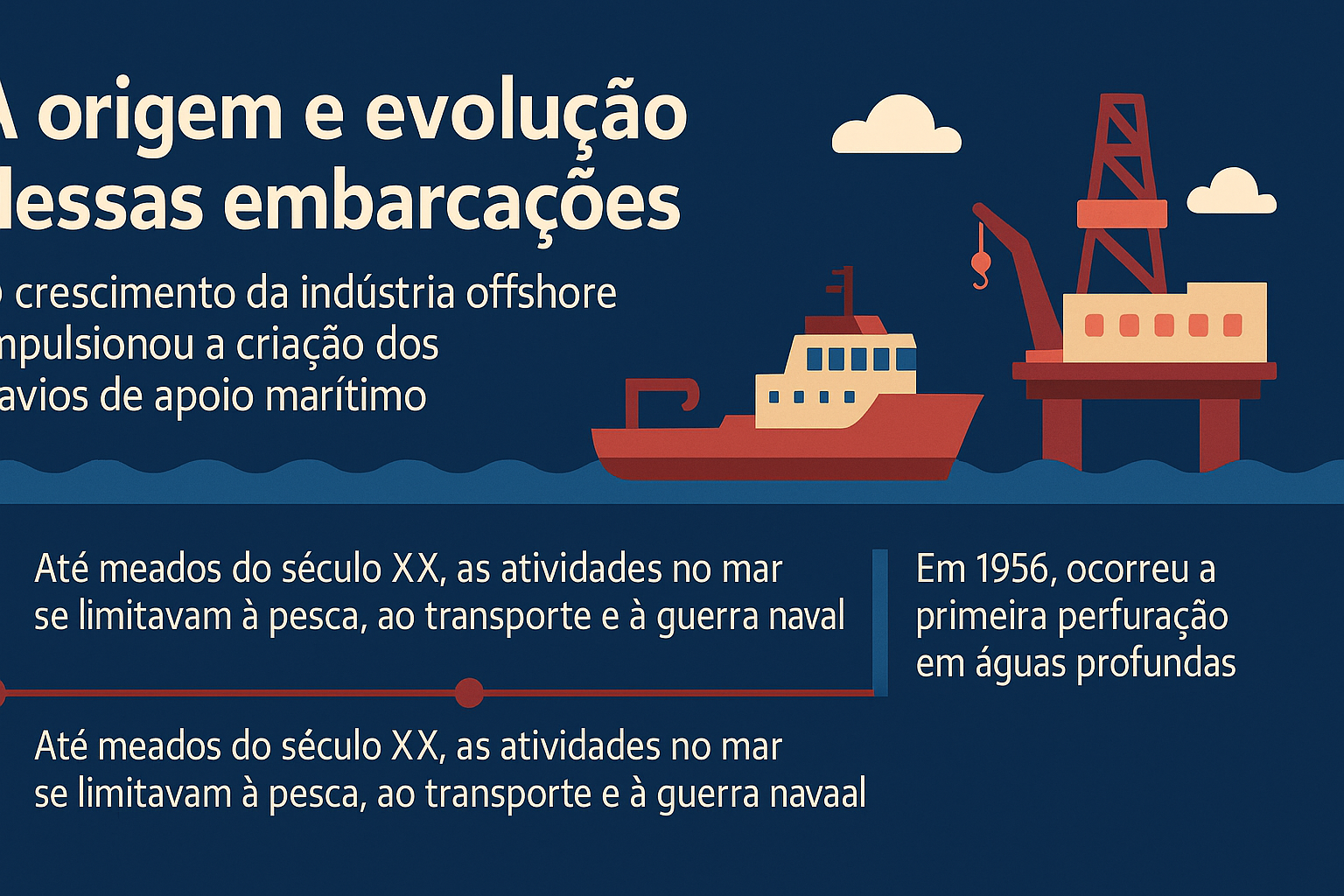
The growth of the offshore industry has driven the creation of support vessels.
Until the mid-20th century, activities at sea were limited to fishing, transportation, and naval warfare.
However, according to the U.S. Department of Energy, starting in the 1950s, with the advancement of deep-water oil exploration, the development of vessels that could meet new needs became urgent.
In 1956, the first deep-water drilling in the Gulf of Mexico marked the beginning of the modern era of offshore operations, according to the same agency.
The Gulf of Mexico was the stage for significant investments in offshore exploration.
As platforms moved further from the coast, logistical complexity increased.
Thus, the first models of support vessels emerged — initially as adaptations of existing boats, which later evolved into dedicated designs.
In the 1970s and 1980s, as recorded by the International Maritime Organization (IMO), the expansion of the industry in the North Sea, Brazil, and Africa prompted a true technological revolution.
Vessels such as supply vessels, anchor handling tug supply vessels (AHTS), and platform support vessels (PSV) brought more efficiency and safety to offshore operations.
According to the National Agency of Petroleum, Natural Gas, and Biofuels (ANP), Brazil experienced significant growth in its fleet of support vessels starting in the 1990s, following the exploration of the Campos Basin and, later, the Pre-Salt.
Today, many of these vessels leave shipyards with advanced designs, more powerful engines, and state-of-the-art electronic systems.
Engineers and designers work to ensure that each vessel meets specific demands with maximum efficiency.
Functions and Types of Support Vessels
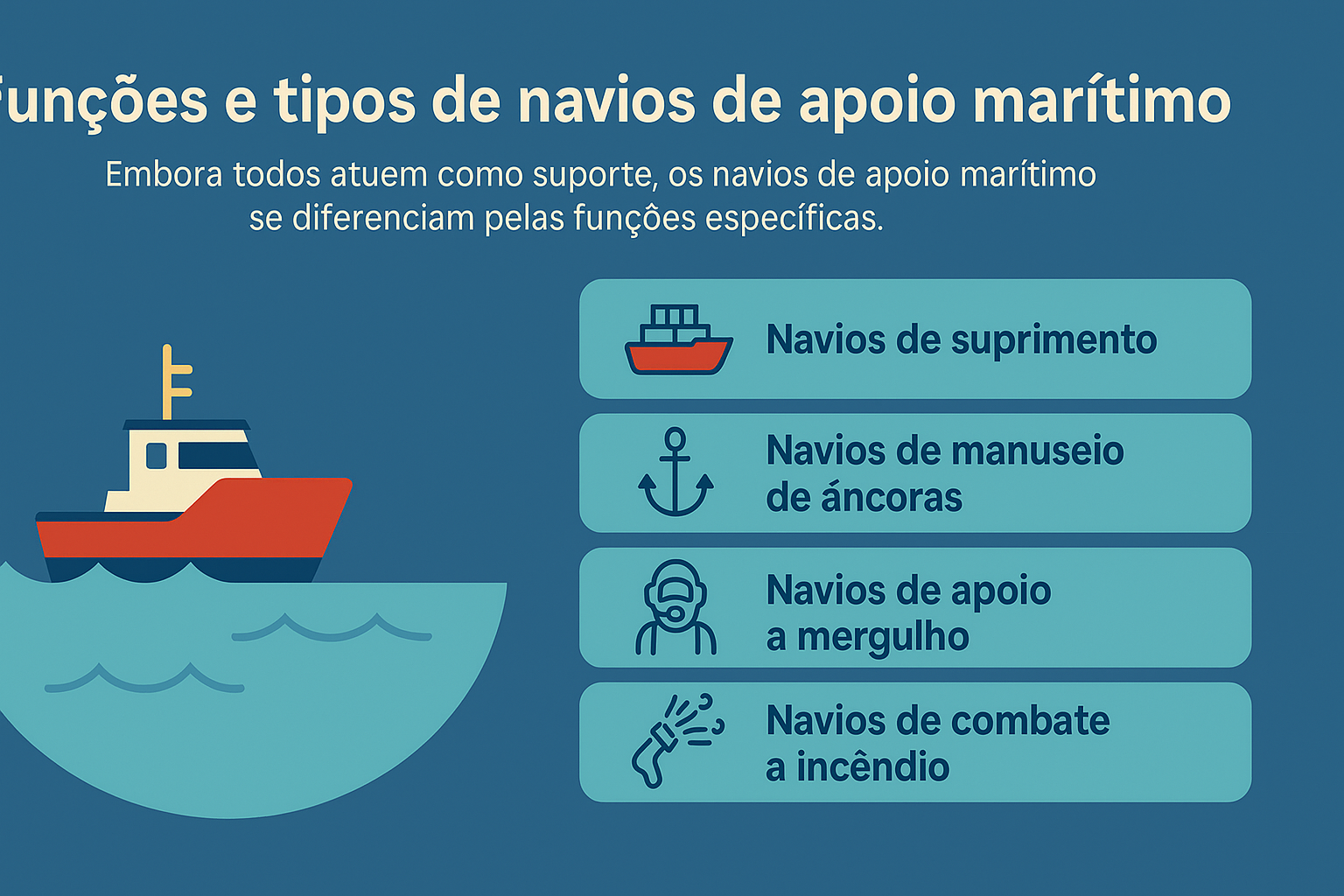
While all serve as support, support vessels differ by specific functions.
Among the main types, the following stand out:
Platform Supply Vessels (PSV): transport dry and liquid cargo such as water, fuel, and drilling materials between the shore and the platform.
Anchor Handling Tug Supply Vessels (AHTS): install and recover anchors for mobile platforms and perform towing operations.
Diving Support Vessels (DSV): have specialized systems to support divers in underwater operations.
Fire Fighting Vessels: use water and foam cannons to control fires at sea.
Oil Spill Response Vessels: contain and recover spilled oil, protecting the environment.
Some multipurpose models combine several of these functions into a single vessel.
This reduces costs and increases efficiency, especially in remote oil fields.
The Strategic Role in Offshore Operations
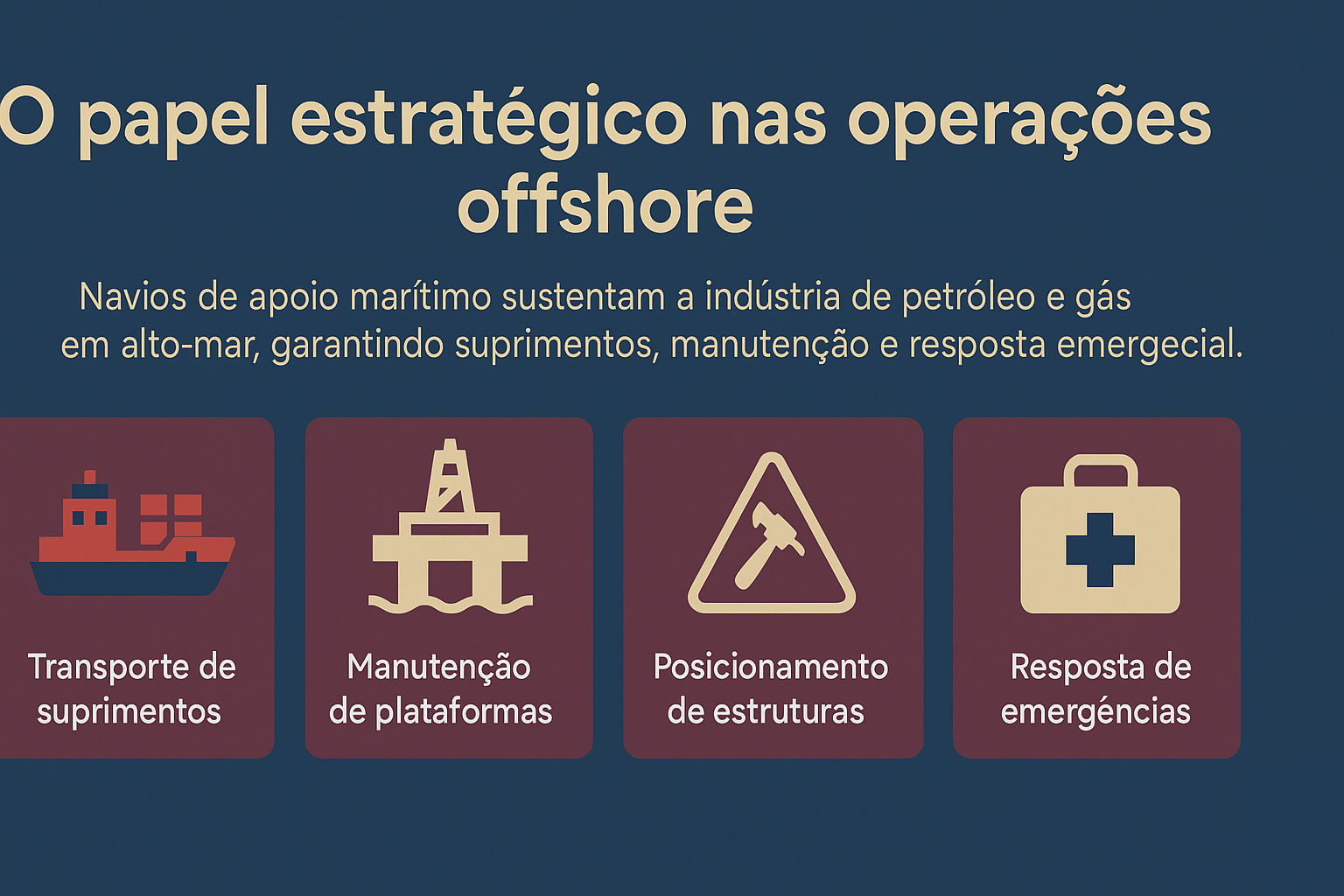
Support vessels sustain the oil and gas industry offshore.
They ensure the transport of supplies, ensure the maintenance of platforms, and provide swift responses in emergencies, such as accidents or sudden climate changes.
At sea, where everything is unpredictable, these vessels operate as extensions of the platforms.
They transport people, deliver fuel, help position underwater structures, and even provide first aid in critical situations.
In Brazil, Petrobras relies on these vessels to maintain its operations in the Pre-Salt and in other basins.
According to Petrobras, in its 2023 annual report, the fleet of support vessels is crucial for ensuring operational safety and meeting production targets.
National shipyards manufacture many of these models, and specialized companies train crews to operate in extreme conditions.
In addition, support vessels adhere to stringent international safety and environmental protocols.
The International Maritime Organization (IMO) establishes standards that ensure vessels comply with global standards for protecting human life and nature.
Frequent inspections ensure that these vessels meet these standards.
Technological Innovations and the Future of the Sector
Technology is transforming the future of support vessels.
Many are already using dynamic positioning (DP) systems, which allow the vessel to remain stationary even with currents and winds, without the need for anchoring.
This proves essential in delicate operations such as diving support or equipment installation on the seafloor.
Digitization has brought sensors and automation systems that enhance safety and reduce fuel consumption.
Some models are testing the use of artificial intelligence for real-time decision-making, monitoring weather, load, and engine performance.
Sustainability also influences the sector.
Designers have incorporated hybrid engines, alternative fuels, and solutions that reduce pollutant emissions.
This concern intensifies as environmental regulations become more stringent.
According to a report from the International Energy Agency (IEA) in 2024, the shipping industry is investing heavily in green technologies to adapt to global sustainability demands.
Another field driving demand for support vessels is offshore wind energy.
These wind farms require vessels to install and maintain turbines at sea, expanding the role of these vessels beyond oil and gas.
Support vessels are silent protagonists of offshore operations.
Their functions range from logistical transport to emergency response, from technical support to environmental protection. Without them, the machinery of the maritime sector would stop.








Seja o primeiro a reagir!