





 Portuguese
  English
  Spanish
  4 min of reading
  0 comments


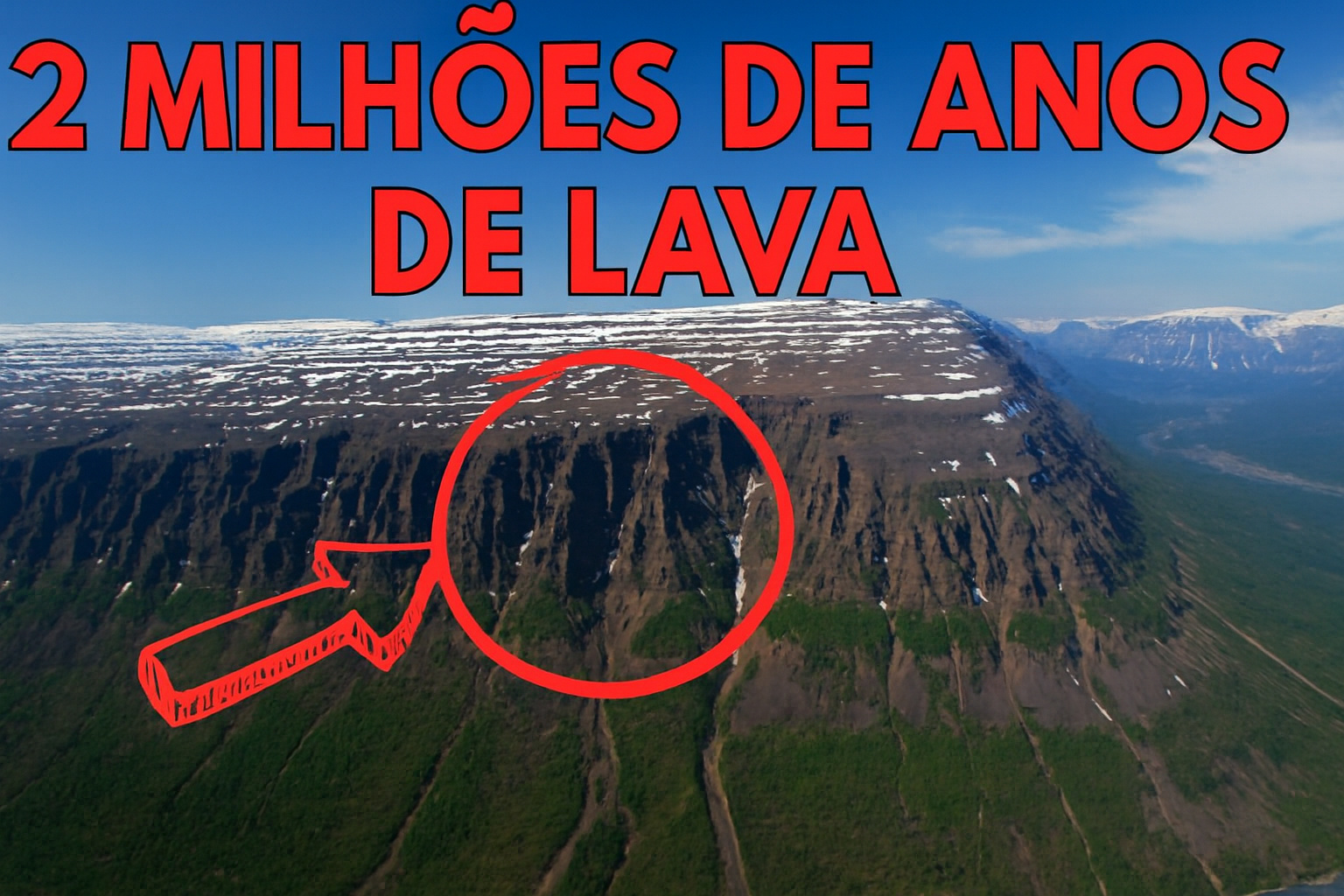
252 Million Years Ago, The Largest Lava Flow In History Covered Millions Of Square Kilometers, Altered The Global Climate, And Triggered The Largest Mass Extinction Ever Recorded By Science.
When talking about mass extinctions, the most popular image tends to be that of the asteroid that ended the age of the dinosaurs. However, the largest biological disaster in the history of Earth did not come from space. It arose from within the planet itself, in a slow, persistent, and devastating manner. About 252 million years ago, at the end of the Permian period, Earth was the stage of the largest volcanic event ever identified by science. A process that lasted not days or years, but hundreds of thousands to millions of years, releasing volumes of lava, gases, and energy on a planetary scale. This event became known as the Siberian Traps and is directly linked to the largest mass extinction ever recorded, responsible for the disappearance of up to 90% of marine species and around 70% of terrestrial species.
This collapse completely redefined the biosphere, reshaped the global climate, and paved the way for a new configuration of life on Earth.
What Were The Siberian Traps And Why This Event Has No Geological Parallel

The Siberian Traps were not a single volcano, but rather a giant igneous province, formed by thousands of successive fissure eruptions. Instead of point explosions, the Earth’s crust literally broke apart in long fractures, allowing magma to flow continuously to the surface.
-
The Android as we know it has its days numbered after a new rule from Google that could end free APKs and completely transform the system by 2027.

-
Archaeologists use satellite technology and find a mysterious structure of 500 m² buried up to 6 meters beneath an ancient city in Egypt.
-
Supercomputer calculates when humanity may disappear from Earth, predicts a scorching supercontinent, temperatures of up to 70 degrees, and a planet moving towards becoming uninhabitable.
-
INMET danger alert: heavy rains between the 3rd and 4th may drop up to 100 mm/day and winds of 60 to 100 km/h in several regions of Brazil require extra caution.

Scientific estimates indicate that:
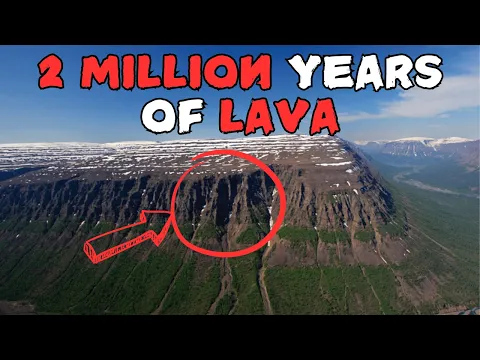
- more than 2 to 3 million cubic kilometers of lava were released;
- the affected area surpassed 7 million km², equivalent to a large part of a continent;
- basalt layers reached thicknesses of over 1,500 meters in some regions.
For comparison, this is hundreds of times greater than any historical eruption observed by humanity.
A Lava Flow That Did Not Just Destroy Landscapes, But Entire Climate Systems
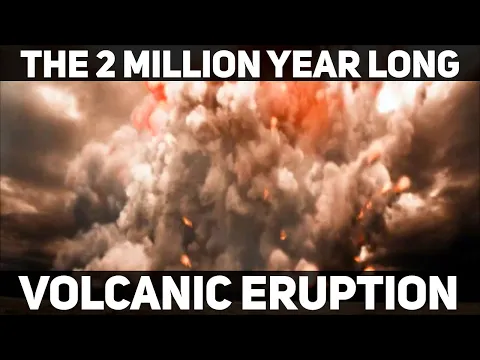
The impact of the Siberian Traps was not limited to lava. The true collapse came from the massive release of gases, especially carbon dioxide (CO₂), sulfur dioxide (SO₂), and methane (CH₄), both from the magma and from the burning of organic-rich sediments.
This process triggered a sequence of extreme climatic events:
- abrupt global warming;
- persistent acid rain;
- ocean acidification;
- collapse of ocean circulation;
- loss of oxygen in large bodies of water.
Isotopic studies indicate that the global mean temperature may have increased by 5 °C to 10 °C, a value sufficient to render vast regions of the planet uninhabitable.
The Largest Mass Extinction In The History Of Earth And Its Absolute Numbers
The result was an event known as the Permian-Triassic extinction, or simply “The Great Dying”. No other extinction event comes close to its magnitude.
The most accepted estimates indicate:
- up to 96% of marine species eliminated;
- about 70% of terrestrial species extinct;
- almost total collapse of reefs;
- disappearance of large forests;
- complete breakdown of food chains.
For millions of years after the event, Earth remained biologically impoverished, with simplified ecosystems dominated by a few resilient species.
Why The Oceans Were Most Affected By Extreme Volcanism
The oceans suffered particularly intensely. The release of CO₂ led to water acidification, hindering the formation of shells and calcareous skeletons. At the same time, warming reduced oxygen solubility, creating dead ocean zones.
Sedimentary layers from this period show clear signs of:
- anoxia (almost total absence of oxygen);
- proliferation of sulfate-reducing bacteria;
- dark coloration associated with toxic environments.
This scenario eliminated much of the complex marine life and transformed vast areas of the ocean into inhospitable environments for life.
The Role Of Methane And The Out-Of-Control Greenhouse Effect
One of the most concerning aspects revealed by recent studies is the role of methane, a gas with a much greater warming potential than CO₂.
The initial warming caused by volcanism may have released enormous amounts of methane stored in hydrates on the ocean floor.
This process created a cascade greenhouse effect, where warming released more gases, which in turn generated even more warming. Climate models show that this cycle may have been decisive in pushing the planet beyond a climatic tipping point.
How Long Did It Take For Earth To Recover From The Collapse Caused By The Siberian Traps
The recovery was not quick. Fossil records indicate that life took between 5 and 10 million years to begin to diversify significantly again.
During this period:
- ecosystems were unstable;
- large predators almost disappeared;
- biological diversity remained extremely low.
Only after this long interval did Earth enter the Triassic period, when new groups began to occupy empty niches — including the ancestors of the dinosaurs.
What This Event Teaches About Planetary Boundaries And Extreme Climate Changes
The Siberian Traps are today a natural laboratory for understanding the limits of the Earth system. They show that:
- gradual changes can lead to abrupt collapses;
- the climate can enter extreme states that are hard to reverse;
- life is resilient, but not indestructible.
Therefore, the event is widely studied by climatologists, geologists, and Earth system scientists as a deep warning about rapid global changes.
Without the Siberian Traps, the history of life on Earth would have been radically different. The event eliminated ancient dominators, made room for new lineages, and redrew the evolutionary trajectory of the planet.
It was a brutal reminder that the greatest force of destruction of life ever recorded did not come from space, but from within the Earth itself — slow, persistent, and absolutely colossal.







Seja o primeiro a reagir!