





 Português
  Inglês
  Espanhol
  5 min de leitura
  24 comentários


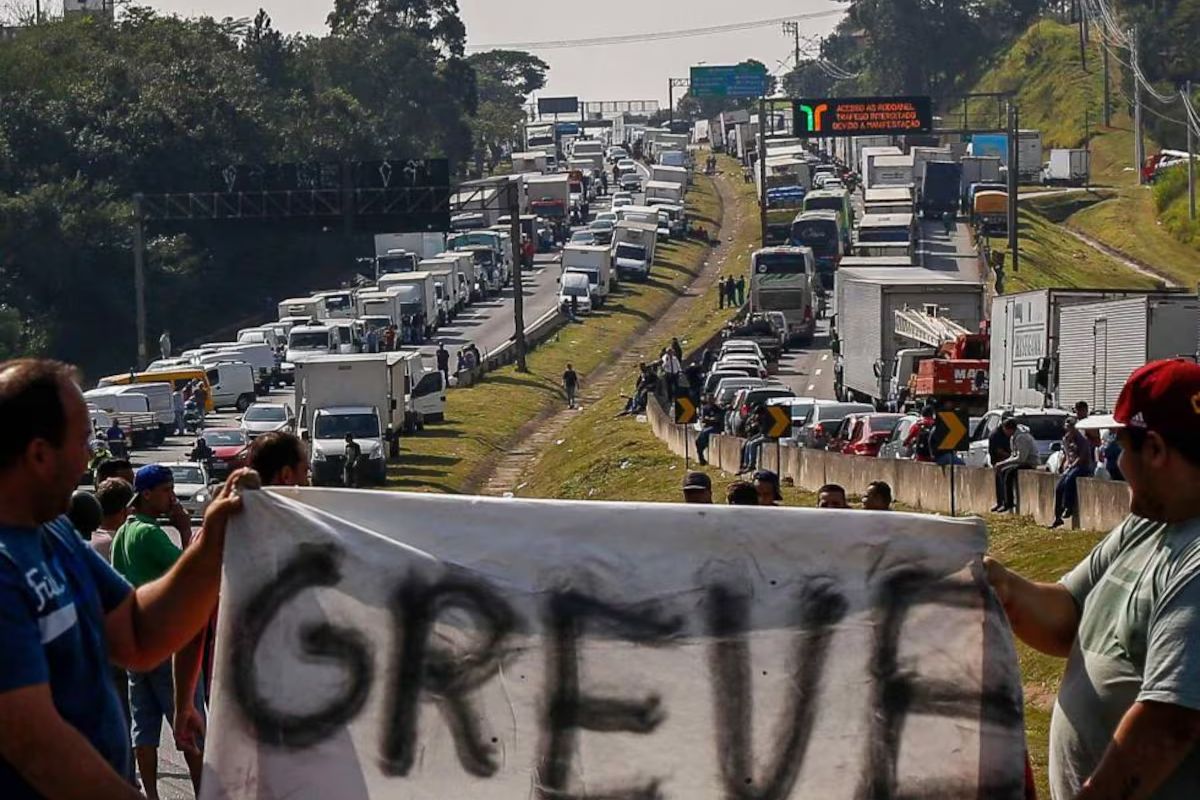


Seven Years Later, the 2018 Truck Drivers Strike Is Still a Case Study on Reliance on Road Transportation, More Than 50% Increase in Diesel, National Supply Shortage, Federal Intervention, Million-Dollar Fines, and Estimated Losses of About R$ 50 Billion in the Brazilian Economy in Critical Sectors of the Economy
The 2018 truck drivers strike definitively marked the debate on infrastructure, transportation costs, and regulatory predictability in Brazil. In just ten days, the movement reached 24 states, compromised fuel supply, interrupted production lines, emptied supermarket shelves, and highlighted the vulnerability of an economy highly dependent on the road modal.
At the same time, the strike exposed accumulated tensions around the diesel pricing policy, freight compensation, and the perception of the tax burden. Among emergency decisions from the federal government, actions from the Supreme Federal Court, and pressures from different productive sectors, the crisis produced an estimated loss of around R$ 50 billion, spread across at least 13 segments of the economy, according to sectoral surveys from the time.
How the Truck Drivers Strike Began in 2018

The outbreak of the truck drivers strike on May 21, 2018, was triggered by the sharp increase in diesel prices, an essential fuel for Brazilian logistics.
-
More tolls! The Anchieta-Imigrantes system will start implementing charges in both directions with free flow on July 1st, a fee of R$ 19.35 per segment, the end of toll plazas, and a project for a new 21.5 km lane.
-
A Brazilian city has a water park in the middle of the forest with tickets priced at R$ 29, over 300,000 m², 40 attractions, heated pools, and a record of 700,000 visitors in one year.

-
With an unusual prize, Japan transforms office chairs into a resistance race on the streets, ISU-1 Grand Prix grows, fills stages, and pays 90 kilograms of rice.
-
House in England with a 7.6-meter shark embedded in the roof attracts attention worldwide and becomes a curious attraction in Oxford.


In a year, diesel prices rose by more than 50%, driven mainly by a combination of dollar appreciation and rising international oil prices.
Independent truck drivers and some transport companies began to claim that the cost structure rendered the freight economically unfeasible.
In addition to reducing diesel prices, the movement began to advocate for a minimum freight table, which could serve as a reference for service remuneration, and incorporated, over the days, speeches against corruption and broader dissatisfaction with the economic and political environment.
Blockades on Highways and Immediate Impact on Supply

In just a few days, the truck drivers strike spread across the country with total or partial blockades of highways.
Trucks were parked on the shoulders and nearby yards, reducing the flow of cargo and directly affecting the supply of fuel, food, and industrial inputs.
By the second day of the strike, fuel stations reported lines and product shortages in different cities, while large manufacturers announced production cuts due to difficulties in accessing parts and components.
The supply chain began to disorganize, and the risk of widespread shortages became part of the daily monitoring for companies, state governments, and municipalities.
Escalation of the Crisis: Actions by the Federal Government and the Supreme Court

On the third day of mobilization, Petrobras announced a 10% reduction in diesel prices for 15 days, with a temporary freeze on increases during that period.
The measure sought to ease immediate pressure, but was not enough to end the truck drivers strike, which remained strong in several strategic logistical corridors.
On the fourth day, the effects of the strike reached urban and metropolitan public transport.
Bus fleets were reduced in municipalities from at least 15 states, in addition to the Federal District, while universities and schools suspended classes due to a lack of fuel and uncertainty regarding the transportation of students and staff.
Aviation also came into focus, with flights threatened by the difficulty of refueling.
As the crisis deepened, the government of Michel Temer deployed, on the fifth day, federal forces to clear highways and escort trucks in operation, in an effort to ensure the minimum flow of essential cargo.
At the same time, the Supreme Court authorized the removal of protesters blocking roads and allowed for fines of up to R$ 10,000 for individuals and R$ 100,000 for entities deemed responsible for blockades.
When the Truck Drivers Strike Began to Lose Force
On the seventh day of the strike, an agreement between the federal government and the Brazilian Truck Drivers Association (Abcam) was announced, with an official request for the category to resume activities.
Even so, the truck drivers strike continued in various parts of the country, reflecting the fragmentation of representation and the presence of regional groups with specific agendas.
On the eighth day, almost 100% of fuel stations in Southeast states and Bahia were out of supply, highlighting the peak of the logistical crisis.
Only on the ninth day did the mobilization begin to lose intensity, while consumers began to report cases of abusive fuel prices at some stations.
The tenth day marked the effective beginning of normalization: Armed Forces and Federal Highway Police managed to end most of the concentration points, allowing for the gradual resumption of fuel and food transportation.
The replenishment of stocks at stations and supermarkets, however, took longer, prolonging the feeling of uncertainty even after the formal end of the strike.
The Economic Cost of the Strike: Where the Loss Was Greater
Consolidated estimates after the crisis indicate that the truck drivers strike generated an impact close to R$ 50 billion across 13 segments of the Brazilian economy.
The number reinforces the dimension of the country’s reliance on highways and the continuous circulation of trucks to keep productive chains running.
The distribution of fuels was one of the most affected sectors, with around R$ 11 billion in lost sales due to product shortages at stations.
In cattle ranching, the estimated loss was approximately R$ 10 billion, due to the interruption of flows of animals, inputs, and processed products.
In animal protein production, the disruption was even more dramatic: more than 70 million birds and 20 million swine were lost due to a lack of feed, resulting in about R$ 3 billion in losses just in this link of the chain.
These numbers help to illustrate how few days of blockades can translate into structural losses, affecting not only companies but also farmers and workers.
Logistical and Institutional Lessons Seven Years Later
Seven years after the 2018 truck drivers strike, the episode remains a central reference in debates about diversification of the transportation matrix, governance of fuel prices, and transparency in subsidy policies.
The dependence on the road modal, evidenced by the rapid supply shortage, reinforced the discussion on investments in railways, waterways, and logistical integration.
The episode also raised questions about how regulatory and economic decisions directly impact the income of professional categories operating at the base of the transportation system.
The negotiation of minimum freight tables, mechanisms for diesel compensation, and the role of associations and representative entities continue to be sensitive topics, revisited whenever there are pressure movements in the sector.
At the same time, the combined action of the federal government, Supreme Court, security forces, companies, and society indicated the limits and costs of emergency responses to a disruption of this magnitude, especially when there is a direct impact on the supply of essential items.
The experience of 2018 became a milestone for contingency planning, risk simulations, and communication protocols in future logistical crises.
Thinking about all this, for you, what is the main lesson that the truck drivers strike of 2018 still leaves for Brazil when it comes to logistics, transport, and supply security?







O problema agora é nacional, não é apenas um ex presidente Bolsonaro, Brasil inteiro em jogo, ou faz paralisação geral pra tirar esse ex presidiário do poder e dono do mundo STF, OU BRASIL VIRA CUBA OU UMA VENEZUELA?
E o pior de tudu isso é que nossos governantes sabem de tudo isso e continuam roubando a população descaradamente como se não houvesse amanhã, estes guerreiros devem parar novamente e só voltar somente quando o governo for dissolvido por completo, aí quero ver.
Borsonarista só enxerga seu umbigo vejam Agora querem parar de novo os caminheiros . Parem e olhem Bolsonaro morreu pela boca só falava **** e fazia comentários que não e digno de quem governa uma nação e agora está preso porque o **** quis tirar a tornozeleira e a lei de prender os deputados e presidentes quando vissesem. cagada e dele mesmo . então agora tem que apodrecer lá . E não adianta falar que não está com juízo está com alucinações . Sempre foi variado e totalmente demente agora apodreça lá