





 Portuguese
  English
  Spanish
  5 min of reading
  0 comments



Holding The Car On Hills In “D” And Shifting From “R” To “D” While The Car Is Moving Are Among The 7 Mistakes That Destroy The Automatic Transmission And Result In Costs Up To R$ 15 Thousand In Repairs.
The automatic transmission is one of the most sophisticated and expensive systems in a modern car — and also one of the most sensitive to the bad habits of the driver. Incorrect engagements, lack of fluid changes, and even the simple act of keeping the car stopped on hills in “D” are among the most common mistakes that dramatically reduce the lifespan of the transmission and, in serious cases, can lead to a complete breakdown that costs up to R$ 15 thousand to repair.
According to manufacturers like ZF, Aisin, and BorgWarner, about 70% of failures in automatic transmissions are not due to manufacturing defects, but rather to operational errors or negligence in maintenance. The problem is that these seemingly harmless habits accumulate over the years, wearing down discs, valves, and the fluid that ensures smooth gear shifting.
1. Holding The Car On Inclines In “D” With Your Foot On The Accelerator
This is, by far, the most destructive habit for any automatic transmission. By keeping the vehicle stationary on inclines only with the accelerator, the driver forces the torque converter, which operates under extreme temperature to hold the car in place.
-
The Toyota Hilux is R$ 75.5 thousand cheaper and bets on the 2.8 turbodiesel engine with up to 204 hp and 50.9 kgfm to catch up with the VW Saveiro, which leads with 4,472 sales.

-
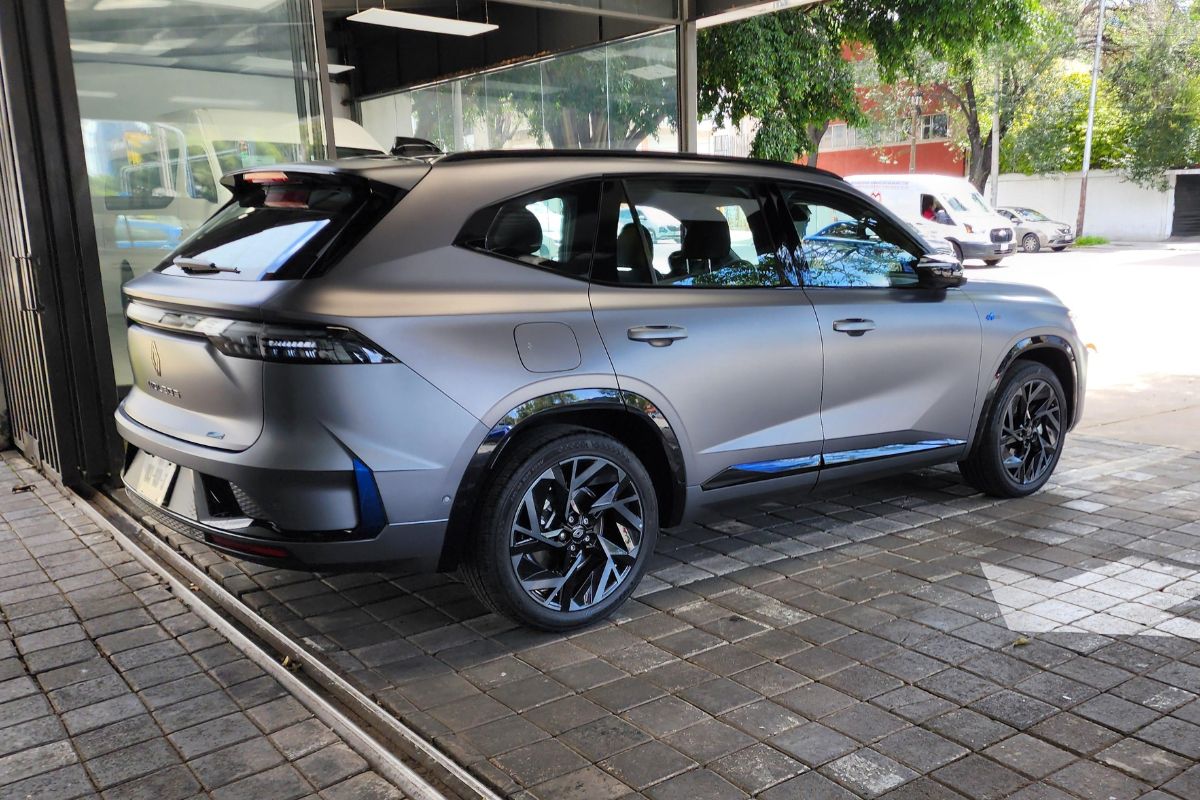
The new Renault Koleos has a screen exclusively for the passenger that is invisible to the driver, heated rear seats, and 29 assistance systems, but its Chinese competitors cost R$ 40,000 less and deliver more power.
-
The car stored for 38 years: when opening the barn door, what appears is breathtaking and looks like a scene from a movie!

-
Fiat works miracles in the Brazilian market, lowers the price of its 0 km hatch to R$ 69,990, reestablishes the model as the cheapest car in the country, and reignites the battle against Kwid and C3.

This practice increases internal heat and accelerates the degradation of the ATF (Automatic Transmission Fluid), responsible for lubricating and engaging the gears.
According to ZF Friedrichshafen, the world leader in automatic transmissions, “every 10 °C above the ideal temperature halves the lifespan of the fluid.” Over time, this causes wear to the internal clutch discs and loss of hydraulic pressure — a one-way road to overheating and total system failure.
2. Shifting From “R” (Reverse) To “D” (Drive) While The Car Is Still Moving
Many drivers make this quick shift when maneuvering or leaving parking spaces, but this movement is devastating to the internal components of the transmission.
When the lever is changed without the car being completely stopped, the hydraulic system tries to reverse the direction of rotation of the gears while they are in operation. This generates mechanical impacts on the planetary assemblies and can bend internal valves.
This type of error does not cause immediate failure, but progressively damages the assembly, creating noticeable jolts and jerks during shifts. In the long run, it leads to premature wear of the converter and can result in complete repairs costing between R$ 10 thousand and R$ 15 thousand.
3. Keeping The Car Stopped For Long Periods In “D”
At long traffic lights, traffic jams, or waits, it is common to see drivers keeping the car in “D” with their foot on the brake. Although it seems harmless, this keeps the hydraulic system under constant pressure and the fluid at elevated temperatures.
The ideal is to put the transmission in “N” (neutral) during prolonged stops, reducing the load on the converter and the internal clutch system. This simple action can increase the lifespan of the fluid and valve assembly by up to 30%, according to data from Aisin, a supplier for Toyota and Lexus.
4. Ignoring Fluid Exchange For The Transmission
One of the most serious mistakes is believing that the automatic transmission fluid “lasts forever.” Over time, ATF loses its viscosity and additive properties, accumulating metallic particles and friction debris. This causes blockage of valves and wear on sealing rings, leading to jerks and delays in shifts.
Manufacturers like ZF recommend changing the fluid every 60 thousand kilometers under normal use, or 40 thousand km in heavy urban traffic. Honda and Nissan suggest intervals of up to 80 thousand km, depending on the model and ambient temperature.
Ignoring this procedure can turn a perfectly functioning transmission into a ticking time bomb.
5. Accelerating Hard With The Car Still Cold
The transmission fluid, just like the engine oil, needs to reach a minimum temperature to circulate with the correct viscosity.
When the car is accelerated abruptly right after starting, the still thick fluid cannot adequately lubricate the internal clutches, causing dry friction.
Engineers from BorgWarner explain that the first shifts should be made smoothly, allowing the transmission to warm up along with the engine. Abrupt accelerations before this increase wear and can cause micro-cracks in the discs and seals, reducing shifting efficiency over time.
6. Towing Loads Above The Vehicle’s Capacity
Towing trailers, caravans, or even other cars requires extreme effort from the transmission. Even vehicles equipped with automatic transmissions need to adhere to the load limit specified in the manual. Exceeding this limit raises internal temperature and forces the torque converter and auxiliary radiator, which may not be able to dissipate the heat.
Additionally, every acceleration under heavy load hastens the degradation of the fluid and the wear on the hydraulic assembly. The result, over time, is the appearance of jerks, noises, and intermittent failures in the gears — classic symptoms of chronic overheating.
7. Believing That “Manual Downshift” Is Harmless
Many modern automatic cars have a sequential or sport mode that allows for manual shifts. The problem is that, when making abrupt downshifts at high RPM, the driver stresses the internal assemblies and friction discs.
In some models, the software limits this error — but in others, the command is accepted, and the transmission suffers severe hydraulic impacts.
According to ZF specialists, frequent and unnecessary manual downshifts can cut the lifespan of the internal discs by up to 40%, especially in dual-clutch transmissions.
Cost Of A Mistake That Repeats Daily
A complete automatic transmission repair can vary from R$ 8 thousand to R$ 15 thousand, depending on the model. In more severe cases, the system needs to be fully replaced, raising costs to over R$ 20 thousand for SUVs and premium vehicles.
All of this, most of the time, caused by small daily bad habits that could be easily avoided.
Preventive maintenance — timely fluid changes, respect for stopping times, and care with heat is the secret to ensuring that the transmission lasts 200 thousand km or more without issues.
In other words, the automatic transmission does not break overnight: it dies slowly, a victim of routine and the driver’s lack of attention.







-

-

-

-

-

25 pessoas reagiram a isso.