





 Portuguese
  English
  Spanish
 4 min of reading
  0 comments


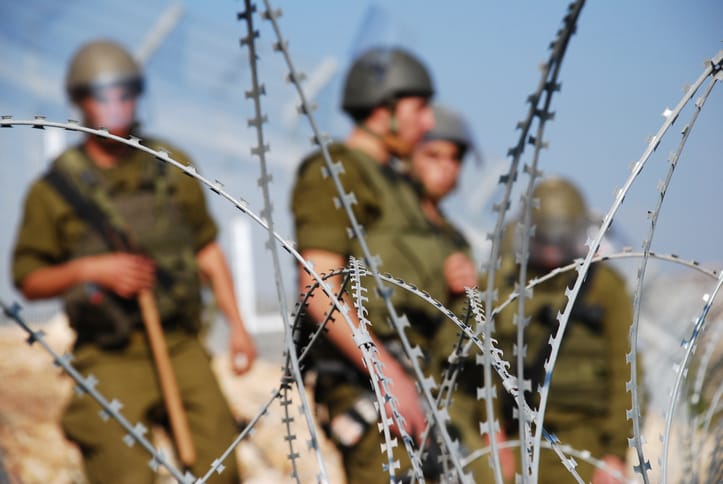
– Among those rescued are 13 Israelis, three foreigners, and one holder of a Russian passport. The rescue operation was successful and all are safe.
The representative of Qatar, who inspected the Rafah border over the weekend, expressed concern about the insufficiency of aid to the Gaza Strip to meet the region’s needs. Mahmoud al-Mordawi, a prominent member of the Hamas group in Beirut, stated that the entry of 300 trucks into northern Gaza on Sunday and Monday is crucial to address the shortages of recent days.
An attack by Israeli forces in the occupied West Bank resulted in the deaths of at least seven Palestinians, according to the Voice of Palestine radio station. There were no comments from the Israeli army regarding the events. Additionally, Israeli missiles struck Syria’s international airport in Damascus, rendering it out of service, as reported by the state news agency SANA.
The President of the United States, Joe Biden, stated that the first day of hostage release ‘went well’ and plans to speak with Netanyahu on Sunday. Furthermore, US Secretary of State Antony Blinken has a visit scheduled to Israel this week, marking the fourth visit since October 7, according to local media reports.
-
The rise in oil prices could ensure an extra revenue of R$ 100 billion for the Federal Government, indicates a recent economic study.

-
Naturgy begins an investment of R$ 1.6 million to expand the gas network in Niterói and benefit thousands of new residences and businesses.
-
A major turn in the Justice system suspends tax increases and directly impacts oil and gas companies in Brazil by affecting costs, contracts, and financial planning, leaving uncertain what could happen to the sector if these costs had increased.

-
Brava Energia begins drilling in Papa-Terra and Atlanta and could change the game by reducing costs in oil while increasing production and strengthening competitiveness in the offshore market.


Maritime Access Restriction and Money Seizure During Invasion in Gaza
On Sunday, authorities in Israel issued a warning prohibiting civilians in Gaza from approaching within 1 kilometer of the border with Israel or entering the sea.
The Israeli Ministry of Defense reported that during the ground invasion, the Israeli army seized approximately 5 million shekels (US$ 1.3 million) from Hamas. Currencies from Iraq, Jordan, and the US were mostly found in Hamas strongholds and the homes of suspects.
The maritime access prohibition measure and the seizure signify an escalation of containment and control actions by Israel in the Gaza region.
Still, the organization reported that many residents continue to face shortages of food and cooking fuel, and bakeries are non-operational. This situation raises serious concerns about nutrition, especially in northern Gaza, which has been the main target of the Israeli ground offensive. Additionally, it was reported that Israeli forces detained some Palestinians traveling along the “safe corridor” established by Israel, which runs through the territory from north to south.
Israel has used its military power in the densely populated region of the Gaza Strip since the attack. According to the health ministry controlled by Hamas, at least 15,000 people have been killed. The four-day humanitarian pause depends on the release of a total of 50 hostages by Hamas, as well as the release of 150 women and minors held in Israeli prisons.
The temporary cessation of hostilities in Gaza has “remained largely” in effect since it came into force on Friday, allowing the United Nations to ramp up the delivery of essential aid within and through Gaza, according to an update from the UN Office for the Coordination of Humanitarian Affairs. **This pause is crucial for delivering humanitarian assistance to the region.**
Lolwah Al-Khater, Qatar’s representative for international cooperation, informed Al-Jazeera TV that political efforts are underway to extend the current ceasefire, scheduled for a period of four days.
A delay in releases on Saturday, attributed by Hamas to Israel, highlighted the instability of the short-term ceasefire. Hamas is recognized as a terrorist group by the United States and the European Union. Militants from the group entered Israel on October 7, causing the deaths of 1,200 people and the abduction of approximately 240 others. This scenario emphasizes the importance of discussing the extension of the ceasefire to ensure safety and stability in the region.
Releases in Gaza and Mediated Agreements
Releases carried out in several phases are essential for an agreement mediated by Qatar and Egypt, which resulted in a pause in fighting in a war that has lasted more than six weeks. Additionally, it allowed for an increase in the supply of humanitarian aid to besieged Gaza.
In another situation, Hamas announced on Sunday that it would release an Israeli-Russian hostage as a gesture of thanks to the Russian stance in support of the Palestinian cause, and in response to efforts by President Vladimir Putin. This individual is believed to be among the 14 detained Israelis.
“We are committed to rescuing our hostages and will ensure that everyone is returned,” said Israeli Prime Minister Benjamin Netanyahu in an official statement.
The Prime Minister’s office stated that it had received a list of kidnapped individuals that the Hamas group was to deliver on Sunday. The Palestinian militant group controlling Gaza released a total of 26 Israeli citizens, including some dual nationals, as well as 14 Thais and one Filipino on Friday and Saturday.
The non-nationals were from Thailand, according to Qatar. Previously, US National Security Adviser Jake Sullivan stated that there were “reasons to believe” that at least one US citizen was among those released.
Negotiations are underway to extend the four-day ceasefire, as more trucks carrying humanitarian assistance make their way to Gaza on Sunday, covering areas in the north.
The Hamas group freed a total of 17 people last Sunday as part of a plan to release hostages during a temporary ceasefire with Israel. The goal is to extend the pause in fighting beyond the initial four-day period.
The released hostages were handed over to the care of the Red Cross and included 13 Israelis, three foreign nationals, and one individual with a Russian passport. The exchange was made in return for 39 Palestinian prisoners, according to Qatar‘s Foreign Ministry spokesperson, Majed Al-Ansari. Unlike the previous two nights, the hostages were released in the northern part of the Gaza Strip.
The hostage release operation is part of the effort to maintain the ceasefire and reduce tension between the involved parties.
Source: InfoMoney










Seja o primeiro a reagir!