





 Portuguese
  English
  Spanish
  5 min of reading
  0 comments


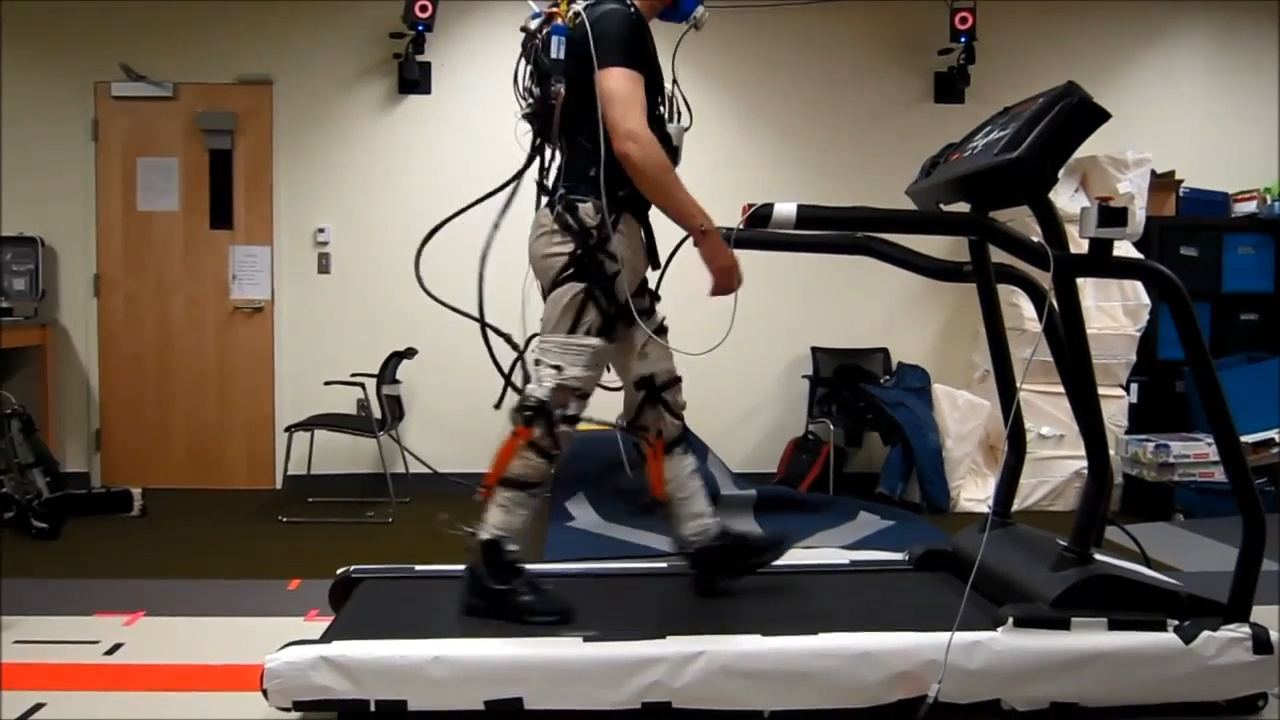
Harvard textile exoskeleton reduces effort when walking by up to 23% using flexible cables and miniaturized motors.
In 2017, researchers led by engineer Conor Walsh from Harvard University released experimental results on a new type of exoskeleton that breaks away from the traditional rigid model. The system, known as soft exosuit, was developed at the Wyss Institute and the School of Engineering and Applied Sciences, with support from programs like DARPA. According to tests conducted by the Wyss Institute and reported in specialized literature, the device achieved a record reduction of up to 23% in metabolic cost during locomotion, one of the largest gains ever recorded for this type of technology.
The most relevant data is that this level of efficiency is comparable to significantly reducing the perceived physical load during movement, functioning as if part of the muscular effort is transferred to the robotic system. Studies published in the journal Science Robotics confirm that flexible exoskeletons developed by teams linked to Harvard can reduce the energy cost of walking and running by directly assisting leg movements.
Unlike traditional exoskeletons, made of metal and rigid structures, this new approach uses fabrics and flexible components that follow the natural movement of the body. The system operates through cables and actuators that apply synchronized force to the leg muscles, reducing the effort needed to walk or run, without limiting the user’s mobility.
-
The Caspian Sea intrigues scientists as it is neither officially a sea nor a lake: the largest lake on the planet holds a hybrid crust, submerged cities, mud volcanoes, and billions of barrels of oil hidden at the bottom.

-
Why did the sky turn blood red in the west of Australia and it wasn’t sunset? Discover what is behind the change that took over the horizon for miles.

-
The most feared warplane of the United States is over 70 years old, carries 32 tons of explosives, flies 14,000 kilometers nonstop, and has just been sent to the United Kingdom amid escalating tensions with Iran.

-
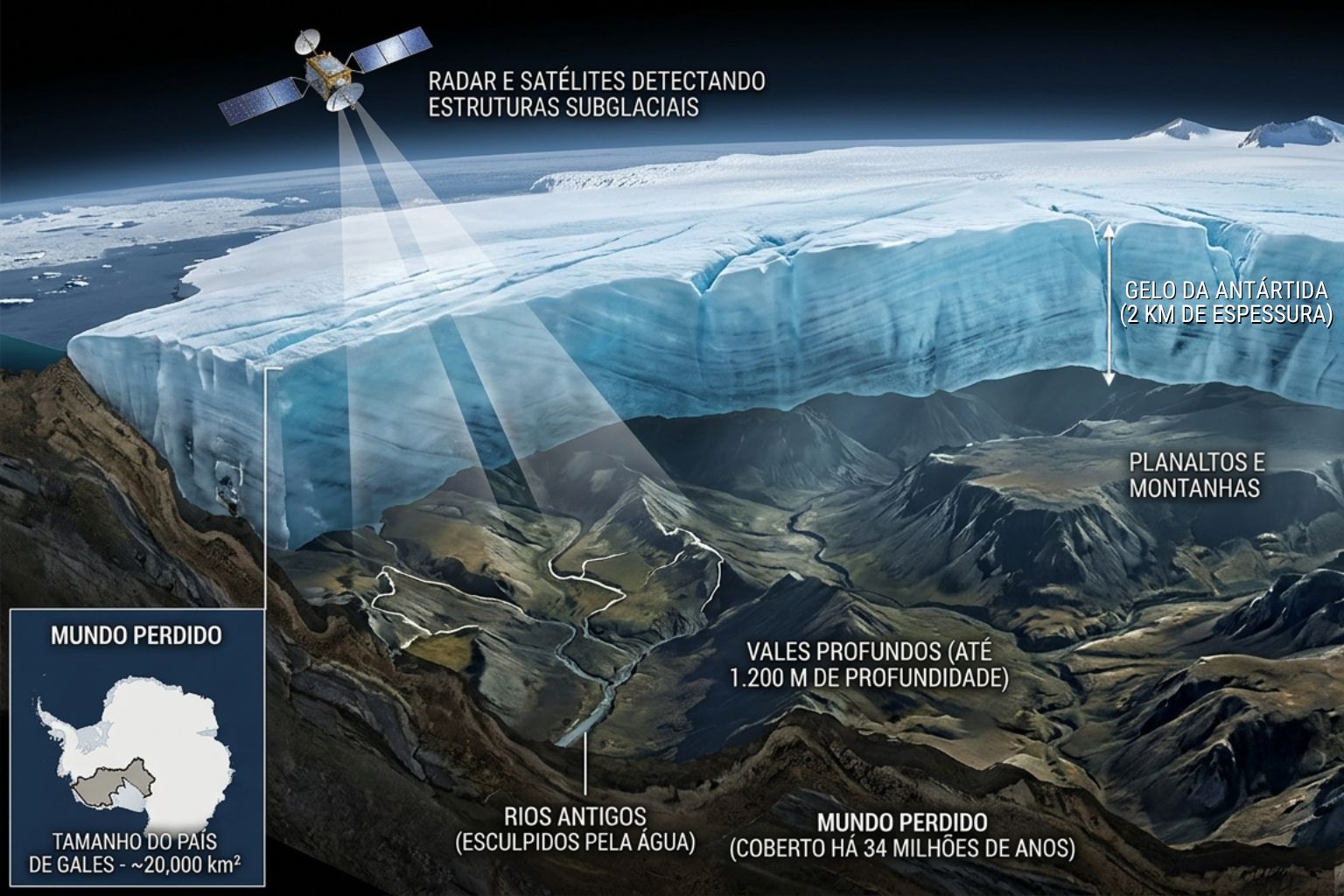
Satellites and radars revealed, beneath 2 kilometers of ice in Antarctica, a lost world the size of Wales, with rivers, valleys 1,200 meters deep, and plateaus sculpted by water, frozen for 34 million years, when the continent had temperate forests and was part of a supercontinent that included South America.

Soft exosuit functions as a smart clothing that assists movement
The principle of the textile exoskeleton appears simple but is complex in execution. Instead of supporting the body with external structures, the system acts like clothing that follows the user’s natural movement.
Flexible cables connected to miniaturized motors apply force at specific moments during walking, especially in phases when the body requires greater muscular effort.


This synchronized action reduces the energy required for each step, increasing the biomechanical efficiency of human movement.
The system is designed to primarily act on the ankle and hip joints, which play a central role in locomotion.
Difference between traditional exoskeleton and textile model
Conventional exoskeletons are known for their rigid structure, composed of metals and mechanical joints that replicate human movement. Although efficient in certain applications, these systems are heavy and can limit mobility.
The soft exosuit follows a completely different logic. By replacing rigid structures with fabrics and cables, the system eliminates much of the weight and allows for more natural movements.
This change represents an important evolution in the field of wearable robotics, bringing the technology closer to everyday use.
Reduction of up to 23% in walking effort has been proven in tests
Tests conducted by researchers demonstrated that the use of the exoskeleton can significantly reduce physical effort during walking. This result was measured through metabolic cost, an indicator that assesses the energy consumed by the body.
In controlled laboratory conditions, the system achieved reductions of up to 23%, depending on the configuration and type of assistance applied.
This level of efficiency places the device among the most advanced systems ever developed for aiding human locomotion. However, portable versions show smaller but still relevant gains.
Technology uses flexible cables and compact motors
The operation of the system depends on a set of flexible cables, similar to those used in transmission mechanisms, that connect the motors to the areas of the body where force will be applied.
The motors, usually positioned in a lightweight unit close to the body, generate the necessary traction to assist movement.
The combination of cables and motors allows for precise and controlled force application, without compromising the user’s flexibility. This design is essential to ensure comfort and efficiency.
Applications include military, medical, and sports use
The initial development of the soft exosuit focused on military applications, especially to reduce fatigue in soldiers carrying heavy equipment.
With the advancement of technology, other applications began to be explored, including medical rehabilitation and sports performance.

The ability to reduce physical effort opens possibilities for use in different contexts, from patient recovery to enhanced performance in physical activities. This versatility expands the potential of the technology.
Integration with sensors allows adaptation to human movement
The system is equipped with sensors that monitor the user’s movement in real-time. These sensors allow the exoskeleton to identify the exact moment of each phase of walking.
Based on this data, the motors are activated in a synchronized manner, ensuring that assistance is applied at the most efficient moment.
This integration between sensors and actuators is fundamental to the system’s operation, allowing for a dynamic response to human movement. Without this precision, the benefit of the equipment would be significantly reduced.
Limitations include additional weight and need for energy
Despite the advantages, the textile exoskeleton still faces limitations. The complete system includes components such as batteries and control units, which add weight to the assembly. Additionally, energy autonomy is an important factor for practical applications.
These challenges are common in emerging technologies and are part of the system’s evolution process. Research continues to be conducted to reduce weight and increase efficiency.

After initial validation in the laboratory, the soft exosuit began to be studied for commercial applications. Companies in the sports and technology sectors have shown interest in adapting the technology for everyday use. The goal is to create more accessible versions tailored to different user profiles.
The transition from the laboratory to the market is one of the main challenges but also one of the greatest opportunities for this technology. This process could lead to the popularization of the concept of wearable robotics.
Textile exoskeleton represents a new generation of human assistance
The creation of the soft exosuit marks a significant change in how technology can interact with the human body. Instead of replacing movement, the system acts as a complement, enhancing the user’s natural capacity.
This approach redefines the concept of exoskeleton, making it lighter, more flexible, and adaptable. The evolution of this technology could influence various areas, including health, industry, and mobility.
The textile exoskeleton developed by researchers at Harvard represents an important advance in robotics applied to the human body. By combining fabrics, flexible cables, and miniaturized motors, the system offers an innovative solution to reduce physical effort.
With proven results in tests and potential applications across multiple sectors, the soft exosuit positions itself as one of the most promising technologies at the interface between humans and machines. Continuous development will determine how far this innovation can be integrated into everyday life, efficiently and controllably enhancing human physical capabilities.








Seja o primeiro a reagir!