





 Portuguese
  English
  Spanish
  5 min of reading
  0 comments


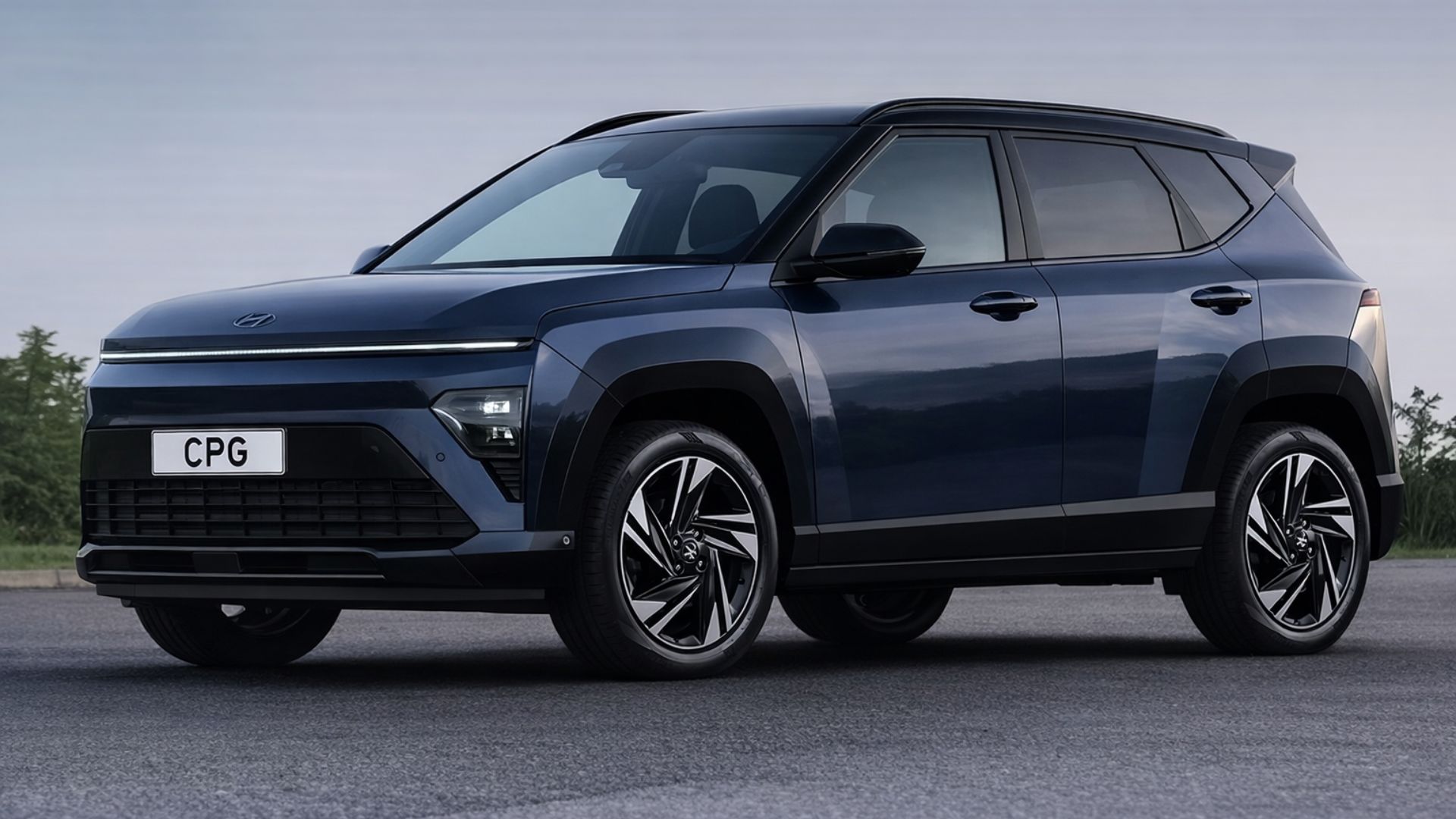
Compact SUV from Hyundai Emerges from the Next Generation of HB20, Adopts Solutions Already Consolidated in the Brazilian Market and Targets One of the Most Disputed Segments Today, with National Production, Turbo Flex Engine and Its Own Design to Face Urban Rivals.
Expected to hit the market in 2027, the Hyundai Bayon will be the brand’s new entry-level compact SUV in Brazil.
Produced nationally, the model has already been previewed by specialized publications and spotted testing in camouflage, allowing the confirmation of various project points.
Among them is the use of the 1.0 turbo flex engine with direct injection, already familiar to Brazilian consumers.
-
Less than a Tera TSI, up to 710 km of range and charging in 9 minutes: the new BYD Song Ultra expands the Chinese brand’s bet on increasingly faster, more technological, and competitively priced electric SUVs.

-
With a 1.0 engine producing 75 hp and costing less than R$ 70,000, Fiat’s car returns to the podium as the cheapest in the country; a temporary promotion for the 2026 Like version reduces the price of the Fiat Mobi.
-
With a mild hybrid system of 48 V, 176 hp and a price of R$ 175,990 in the Sahara version, the new Jeep Renegade changes mostly on the inside, improves slightly in fuel consumption, and remains almost the same car.
-
With a 293.5 cm³ engine and a range of up to 400 km with a 14.1-liter tank, the Honda CB 300F Twister 2026 has up to 24.7 hp, an initial price of R$ 25,150, and already exceeds R$ 29,000 in the Fipe Table.

With approximately 4.20 meters in length, the Bayon was designed to compete in an increasingly crowded segment.
This group includes models like Fiat Pulse, Volkswagen Tera, Renault Kardian, and Nissan Kait, all aimed at urban and family use.
The aspect that most draws attention in the project is the structural reuse of the upcoming HB20, a solution adopted to reduce costs and accelerate development.
Positioned below the Creta, the new SUV should arrive in stores about a year after the debut of the new generation of the compact hatch.
Production will be concentrated at the Piracicaba plant in the interior of São Paulo, as part of the investment plan announced by Hyundai for Brazil until 2032.
Shared Project with HB20 Expands Industrial Scale

More than just an inspiration, the relationship between Bayon and HB20 is technical and structural.
Previously released information and test images indicate that Hyundai will share body and structure elements of the future hatch with the SUV.
This type of strategy has become common in the Brazilian market in recent years.
For the Bayon, the reuse will be broad and little disguised from a technical perspective.
The front columns and doors of the HB20 are expected to be retained, forming the basis of the new model.
From this common architecture, specific parts will be included to create a unique identity for the SUV.
The differences will mainly focus on the front, rear, and elements that enhance the sports utility vehicle proposal.
Similar projects have already been adopted by other brands, such as Fiat Pulse and Argo, Volkswagen Nivus and Polo, along with the future Chevrolet Sonic, derived from the Onix.

In all these cases, the logic is to offer a visually distinct product without the costs of a completely new development.
Visual Changes Reinforce the SUV Identity
In the Bayon, Hyundai bets on a more robust design than that of the HB20.
The front is expected to gain a higher hood, exclusive wheel arches, and a roof rack, traditional elements of the segment.
At the rear, the design promises to be bolder, with more elaborate tail light cuts.
Throughout the development, the project underwent noticeable visual adjustments in the spy shots.
The headlights and rear lights adopted more vertical and segmented elements.
With this, the brand abandons the use of a continuous light strip, a solution applied in models like the Kona.
Despite these changes, the silhouette observed in the tests remains consistent with projections previously released by specialized press.
By concentrating changes at the extremities and in aesthetic details, Hyundai aims to enhance the sense of size and robustness, a decisive factor for many buyers.
Bayon Dimensions and Positioning in the Segment
Estimated dimensions of the Bayon indicate about 4.20 meters in length, a wheelbase close to 2.60 meters, and a height of around 1.60 meters.

This set clearly positions it among urban crossovers, focusing on everyday use and good utilization of internal space.
Within the segment, dimensions vary significantly among competitors.
The Volkswagen Tera, for example, is approximately 4.15 meters in length.
Fiat Pulse and Renault Kardian, on the other hand, are slightly above 4.09 and 4.11 meters, respectively.
The Nissan Kait, in turn, stands out for being larger, exceeding 4.30 meters and offering a wheelbase of 2.62 meters.
In this scenario, the Bayon tends to occupy an intermediate position, below the Creta and aligned with the profile of urban consumers.
Another important change involves Hyundai’s range strategy.
It is expected that the Bayon will take over the space currently occupied by the HB20S, which is not expected to have a new generation.
This move accompanies the Brazilian market’s preference for compact SUVs over sedans.
K2 Platform Supports the Project and Defines the Mechanical Set
The development of the Bayon is linked to the K2 platform, used by the Hyundai-Kia group.
The internal codenames emphasize the technical closeness to the next generation of the HB20.
In practice, it is a family of products conceived in an integrated manner.
Under the hood, the choice falls on the 1.0 turbo flex engine with direct injection from the Smartstream family.
This set represents an evolution of the current 1.0 TGDi already used in the national HB20.
This engine is known for delivering good response at low revs and superior efficiency compared to larger naturally aspirated engines.
The manufacturing of the Bayon will be concentrated in Piracicaba, where Hyundai maintains its industrial park in the country.
The project is part of the package of R$ 5.5 billion in investments planned until 2032, aimed at renewing the lineup and developing new technologies.







-

-

-

-

-

-

26 pessoas reagiram a isso.