





 Portuguese
  English
  Spanish
  5 min of reading
  0 comments


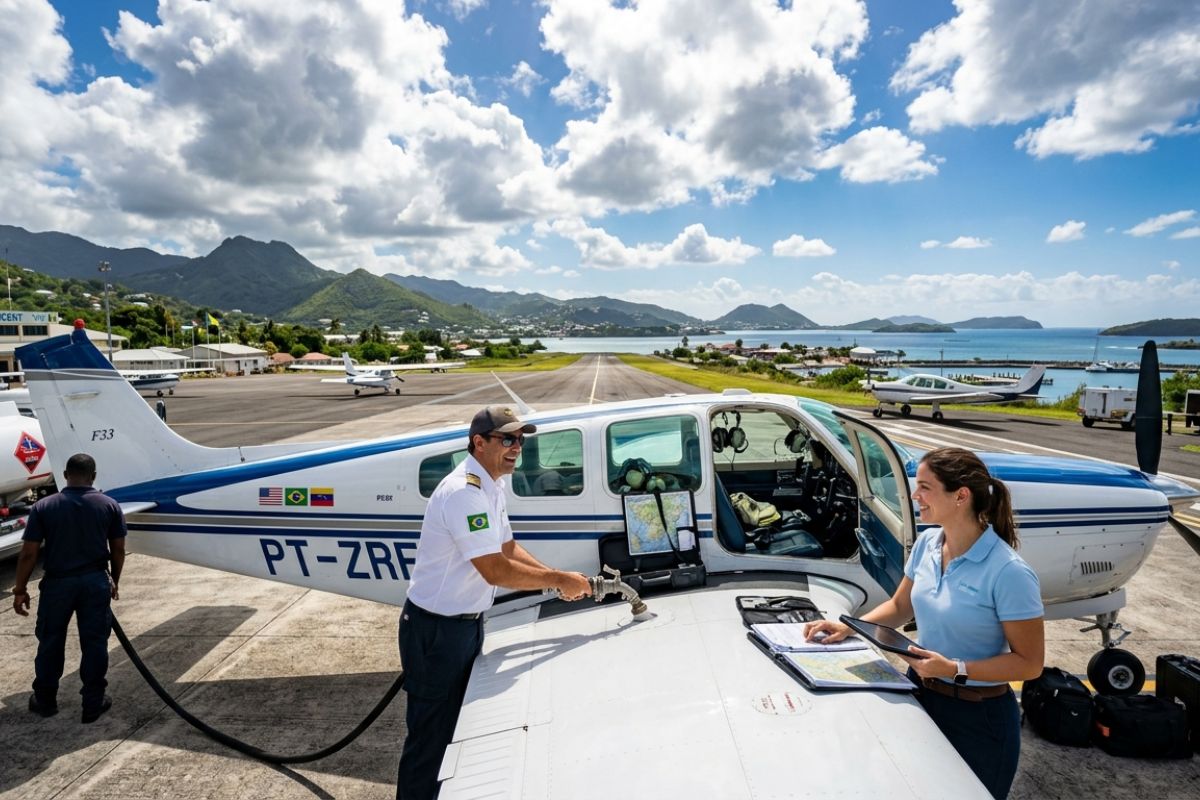
Monomotor takes off from Kissimmee, makes technical stops to refuel and organize documentation, crosses stretches over the sea with total focus on safety, and begins the journey in stages until reaching the country
The Bonanza F33 monoplane became the protagonist of an adventure that starts in Florida and extends in stages to Brazil, always in visual flight and with detailed planning. The duo departs from Kissimmee airport, next to Orlando, and begins an itinerary that combines checks, route decisions, strategic stops in the Caribbean, and an intense routine of documentation.
Throughout the journey, the monoplane is not treated as a “long trip,” but rather as the sum of several short flights, each with a clear objective: take off, land, refuel, review the plan, and adjust the next leg. The crossing becomes a logistical puzzle, where safety and documentation hold the same weight as fuel and weather.
The beginning of the journey in the Bonanza F33 monoplane
The adventure begins with a meeting at Kissimmee airport in Florida and the presentation of the plan: leave the United States and follow in visual flight towards Brazil, with a series of stages accompanying each leg. The chosen aircraft is a Bonanza F33, affectionately nicknamed, and the proposal is to show the real behind-the-scenes of a ferry flight.
-
Unknown Brazilian rewrites one of the pillars of physics and gains global prominence: discovery made in Rio becomes central theme of the 2027 Nobel Prize.

-
Brazilian city neighboring Paraguay becomes a ‘magnet’ for people seeking quality of life and high standards with exceptional growth and commutes of up to 15 minutes.

-
A rare storm transformed part of the Gulf into an unlikely scene of hail, extreme rain, and tornado risk in the middle of the desert, with volumes that exceeded the annual average in a single day.

-
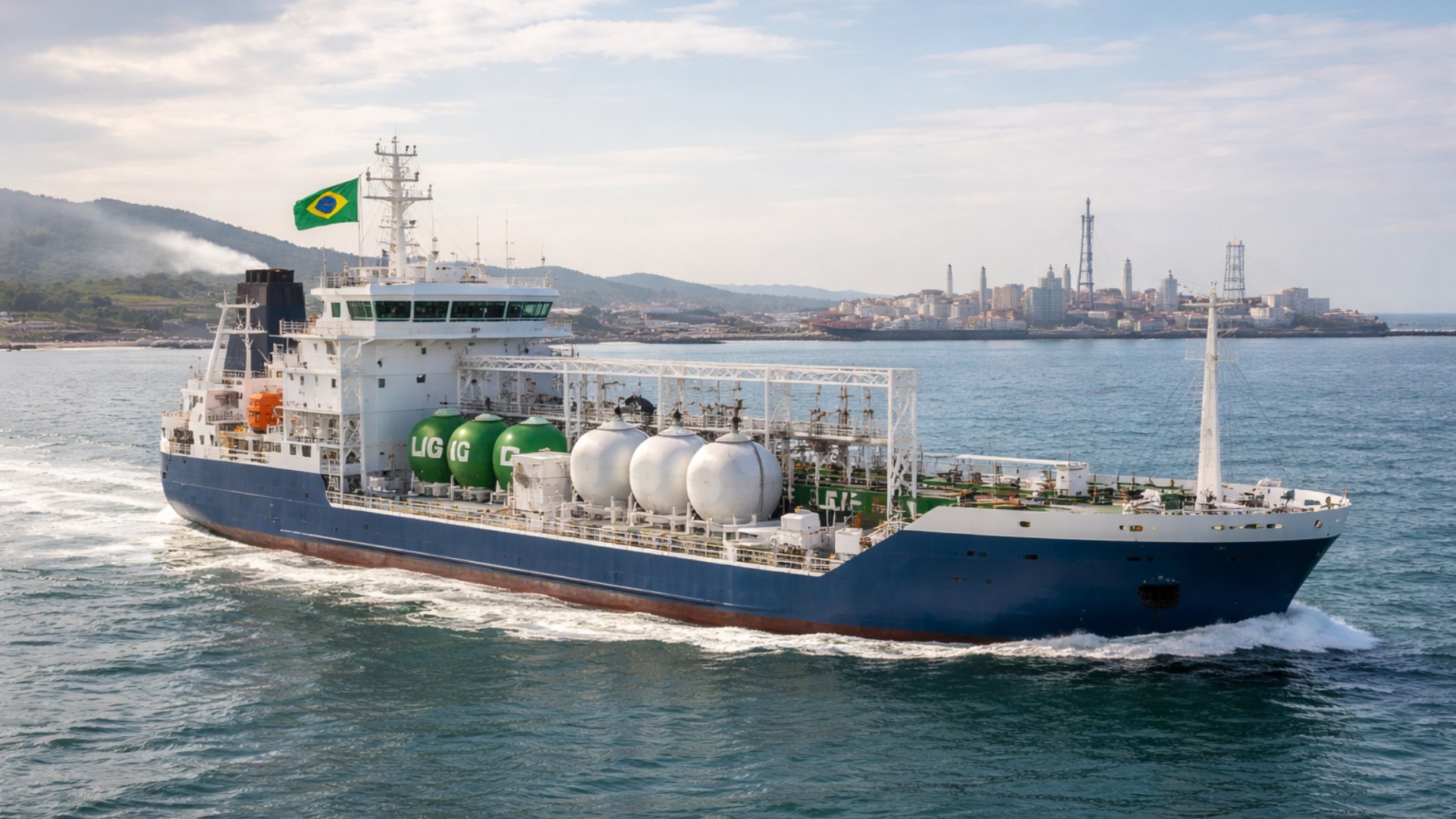
Brazil catches the world’s attention with ships powered by ethanol and biodiesel that have lower emissions, an unprecedented certification with advantages in chartering, and a revolution in cabotage.
Right on the first day, the crew makes one point clear: a monoplane crossing requires constant work, before, during, and after the flight. The departure region has heavy traffic and a lot of radio communication, which increases the attention load in a scenario with a high flow of aircraft.
Why the monoplane crossing is planned as several short flights

One of the central concepts of the itinerary is to see the United States and Brazil as a combination of smaller stages. Instead of treating the trip as a madness, the planning focuses on operational logic: choosing points where there is already infrastructure, cost-effectiveness, and alternate options.
The rule is not to invent new routes when there is a tried-and-true route that works. This means prioritizing already known locations, where it is known that there is refueling, service, and nearby alternatives in case something changes in the plan.
First stop in Florida: refueling, rest, and documentation
After the start, the team makes a first stop with a practical focus: land, organize the aircraft, and handle documentation. The monoplane spends the night in Fort Lauderdale, and the work continues on the ground, reviewing equipment and preparing everything that needs to be ready for the next day.
The routine reinforces the reality of the ferry: wake up early, sleep little, and maintain the pace. It’s not just fun. It’s organization, pre-takeoff, and constant checking, focusing on reducing risk stage by stage.
Departure documentation: how the monoplane leaves the USA without an immigration interview
When leaving the United States on a private flight, there is an important procedure: electronically register the departure. The crew explains that they do not need to go through a traditional immigration interview, but they must inform the departure time of the flight so that the country records that the crew members are no longer in American territory.
This detail is treated as essential, because it involves official control and avoids future problems. In a staged crossing, documentation is not an accessory; it is part of operational safety.
Safety over the ocean: life jackets, boats, and preparation before the Caribbean
When it comes time to cross the sea towards the Caribbean, the operation changes level. The duo highlights essential items: life jackets already worn and individual life rafts with inflation activation.
Before departing, the ritual that does not change appears: final check with the engine open, oil check, and complete visual inspection. In a long crossing, doing the basics well is invaluable.
First leg out of the continent: Bahamas as a technical stop
The initial plan had a destination, but aviation always requires alternatives. Due to heavy traffic, the route changes, and the duo chooses an alternative for landing in the Bahamas. The logic remains the same: the monoplane needs a place with infrastructure, where it is possible to refuel and proceed without stalling the operation.
During navigation, the conversation reinforces how the route is built: short legs at the beginning, then longer stretches, but nothing absurd when one knows exactly what is happening and maintains viable alternates. The crossing becomes discipline, not spectacle.
Refueling and checks: the monoplane requires repetition and method


After landing and refueling, the checking routine repeats. The monoplane undergoes an oil consumption check, a quick inspection, and preparation for the next leg. The goal is to detect any signs early and keep the engine stable for the next stretch.
The very dynamics show how the journey sustains itself: each stop is a small complete cycle. Arrive, review, refuel, organize documentation, and take off. It is this repetition that enables the staged crossing.
What comes next: route continues with new stops in the Caribbean
With the first stop completed, the plan continues to new stops in the Caribbean, maintaining the logic of stages and organization. The monoplane continues advancing as a combination of short flights, with decisions adjusted in real-time according to traffic, alternatives, and operating conditions.
The overall tone is one of building a journey, not a race. The crossing to Brazil appears as a process, with behind-the-scenes, choices, and responsibility at each leg.
And you, if you were on this monoplane heading to Brazil, which part would make you more tense: the international departure documentation or the hours over the sea between one stop and another?






Seja o primeiro a reagir!