





 Portuguese
  English
  Spanish
  5 min of reading
  5 comments


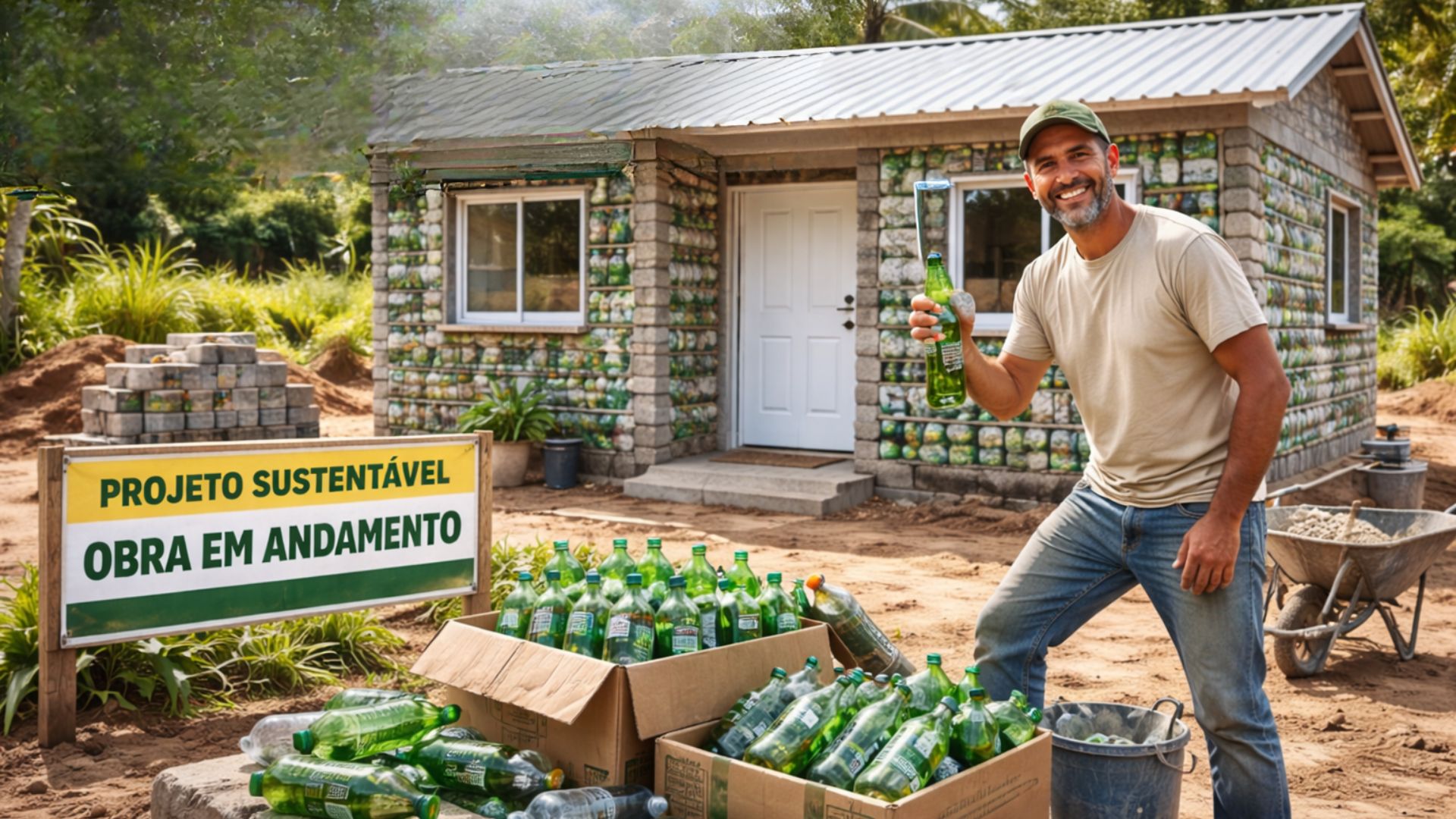


Heineken’s Experimental Project Transformed Beer Packaging into Reusable Construction Block, with Patented Design and Production of 100,000 Units in the Netherlands. The Idea Came After Observing Bottle Disposal in the Caribbean and Led to the Creation of a Real Small Structure Made from the Container Itself.
Heineken produced, in the 1960s, a bottle designed to gain a “second life” as construction material, with a shape intended for stacking, locking, and accepting mortar like a glass brick.
Named WOBO, short for “World Bottle”, the packaging went from concept to a practical demonstration in Alfred Heineken’s garden.
According to the institutional archive of the Heineken Collection Foundation, the brewery ordered 100,000 units of the model, in two sizes, 33 cl and 50 cl, manufactured in Leerdam, Netherlands, by Vereenigde Glasfabrieken, and also registered the design with a global patent.
-
Why was the Great Wall of China built? The truth that many are unaware of!

-
At 73.8 meters tall, the world’s tallest teapot-shaped building has 15 floors, ensures stability, and impresses with an internal space of 28,000 cubic meters.

-
Ambev has planted over 3 million trees and restored an area equivalent to the coastline from São Paulo to Natal, and the result after 15 years of silent investment has finally appeared for all of Brazil to see.

-
A new AI collar technology for cattle eliminates physical fences, creates virtual barriers, monitors animals 24/7, and detects changes in behavior and health.


The stated goal was to reduce waste in places with little infrastructure while providing a reusable block for walls and small structures.

Idea Arose After Observing Trash in the Dutch Antilles
The proposal originated from Alfred Heineken himself after a visit to the Dutch Antilles, where he reported being struck by the amount of casually discarded trash.
Among the waste, there were also bottles of the brand, which turned an image and disposal problem into the starting point for an industrial redesign.
Instead of relying on makeshift repurposing, common in “bottle houses” made with regular containers, the plan was to invert the logic and design the packaging from the factory for a second use.
In this model, the bottle would remain functional for filling and consumption but gain a geometry capable of functioning as a modular piece in masonry.
Architect John Habraken Was Called to Develop the Concept
To transform the intention into a viable object, Heineken sought out Dutch architect John Habraken, then director of the Foundation for Architects’ Research (SAR).
The challenge was to reconcile requirements that rarely align, because the same item needed to be comfortable to drink from, efficient in the production line, and stable when laid in rows.
According to the foundation’s records, the first designs made by Habraken met the construction-side needs but did not resemble the bottle that Alfred Heineken envisioned for the market.
The solution advanced when a second design succeeded in bringing the two worlds closer, maintaining the packaging role without giving up the block logic.
The Design of the WOBO Was Thought Out for Fitting and Use with Mortar

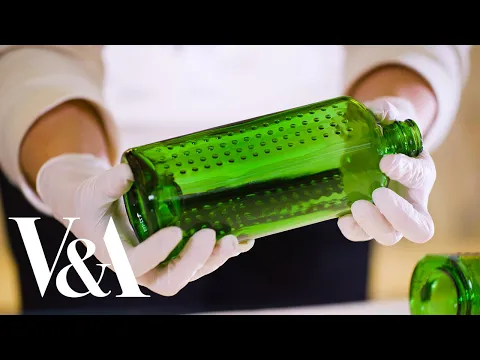
The final model broke from the traditional cylindrical profile and adopted flat sides, surface relief, and a concave base, characteristics described as central to alignment and adherence.
With this, the bottle was designed to be laid down in layers, as a repeatable module that accepts mortar.
In practice, the fitting exploited continuity between pieces, allowing one bottle to fit into another during stacking, while the texture assisted both handling and the “grip” of the setting material.
By treating the container as a construction unit, the proposal aimed to reduce adaptations on the construction site and bring the process closer to a repetitive assembly.
Two Sizes Allowed for Logic Similar to Traditional Masonry
The decision to produce 33 cl and 50 cl was not just a portfolio choice, as the different sizes functioned as a “half-brick” in the masonry logic.
This variation allows binding between rows, improving joint distribution and facilitating the execution of corners and openings without relying on cuts or improvisational measures.
Reports on the project highlight this concern with corners and gaps, a critical point when trying to build with containers not designed for that purpose.
Still, the foundation does not detail, at the same level of precision, how many bottles would be necessary for a structure, and estimates vary depending on the wall design.
House Built with WOBO Bottles Was Erected in Alfred Heineken’s Garden
Even with the environmental appeal and the visual impact of the concept, the project faced resistance within the company, especially in the marketing area, according to the narrative preserved by the Heineken Collection Foundation.

The fear was that the novelty would harm the brand’s image and open the door for questions about “improper use” of the product outside of consumption.
Despite this, the experience was carried forward as a full-scale prototype.
A “garden house” was built in Alfred Heineken’s garden using WOBO bottles, presenting a physical argument for viability, even though the initiative did not advance to wide market adoption.
Project Entered the Debate on Architecture and Waste Reuse
The episode circulated in the architecture and waste reuse circles for dealing with something beyond later recycling, as the packaging was redesigned to serve as a construction module.
Years later, the topic returned to the radar when British critic Martin Pawley published the book “Garbage Housing”, featuring the garden house with the bottles on the cover.
In this context, Habraken wrote to Alfred Heineken defending the pioneering nature of the initiative.
“The WOBO initiative of ten years ago is now widely seen as the first industrial initiative to develop recyclable packaging.”
The foundation reports that Alfred Heineken responded reaffirming his support for the project, but without indicating an immediate resumption on an industrial scale.
Effort to Expand the Concept in Eindhoven Was Ultimately Abandoned
The attempt to broaden the proposal included conversations with companies from different sectors, seeking materials and systems that would allow for a whole building based on the WOBO logic.
The plan anticipated a construction in an area linked to the Technical University Eindhoven, where the building would serve as offices for the SAR.
On the other hand, the initiative was eventually halted because the university and Alfred Heineken could not reach an agreement, and the building was not realized.
As a result, the WOBO remained as an emblematic experiment in packaging design with structural function, remembered for uniting logistics, consumption, and construction in a single object.







Usando la lógica y el sentido común…que proyecto de construcción se planifica con un avance tan relativo como el consumo de alcohol y de una marca específica antes de que lleguen las lluvias…¿?
Me encanta la idea,me parece una iniciativa muy creativa y generosa, el tema es que si se lanza con ese propósito, y a alguno no le de resultado o pase algo, si bien hacer la casa con respectivas botellas no es una imposición, ¿no correría riesgos la empresa de ser demandada por no tener el resultado que se desea ?
Y volver al modelo de envases retornables?
Aún con el costo en logística, la ganancia es mucho mayor; el sílice no es un material infinito…