





 Portuguese
  English
  Spanish
  3 min of reading
  31 comments





Court Confirms That Partners in Stable Union Have Inheritance Rights Even Without Deed: Ruling Can Ensure Million-Dollar Divisions in Inventories.
For a long time, stable unions were seen as relationships with fewer legal guarantees than formal marriages. However, Brazilian legislation and jurisprudence have evolved, and today the courts recognize that stable unions, even if not registered in a notary office, can generate the same property rights, including inheritance rights. The Civil Code (art. 1.723) already defines the stable union as a family entity. This means it can produce effects similar to those of marriage, such as the right to a share and inheritance. What truly matters is the proof that there was a common life, with characteristics of a family.
What Did The STF and STJ Decide
The landmark was the ruling of the Supreme Federal Court (STF) in 2017, in the judgment of General Repercussion Theme 498, which equated the inheritance rights of partners in stable unions to those of spouses in marriage.
From then on, it became established that the surviving partner cannot be treated differently regarding inheritance.
-
The noise law will no longer be in effect at 10 PM starting in June with a new rule valid during the 2026 World Cup.

-
The Chamber opens a debate on driver’s licenses at 16 years old as part of a reform that includes around 270 proposals to change the Brazilian Traffic Code and may redesign rules for licensing, enforcement, and circulation in the country.

-
The new Civil Code could revolutionize marriages in Brazil with “express divorce” and changes that could exclude spouses from inheritance.

-
Banco do Brasil sues famous influencer for million-dollar debt and intensifies debate on delinquency, risks of seizure, and direct impact on Gkay’s credibility.

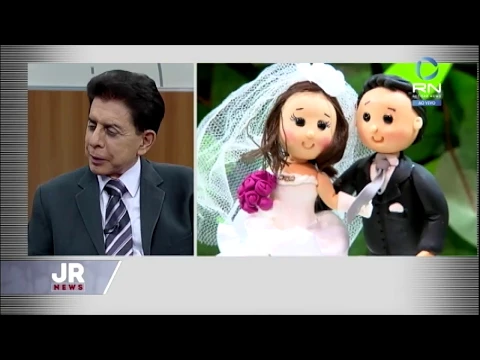

The Superior Court of Justice (STJ) also reinforced this understanding in several cases, confirming that, even without a contract or deed, if there is evidence of long-lasting, public, and continuous cohabitation, the stable union must be recognized.
How to Prove the Stable Union for Inheritance Purposes
One of the most important points is the proof of the stable union. Since there is not always a public deed, the surviving partner needs to provide elements that demonstrate the common life, such as:
- Joint bank accounts;
- Declarations of dependency in health plans or Income Tax;
- Testimonies from friends, neighbors, and family;
- Documents proving residence at the same address;
- Common children.
With these elements, the courts have recognized the partner’s right to inheritance, often against the resistance of other heirs.
Cases of Million-Dollar Disputes
In practice, this understanding has already been applied in million-dollar divisions. There are cases where partners of businessmen, landowners, or professionals have managed to prove the stable union and secure a significant portion of the estate, even when the deceased’s family tried to exclude this right.
This leads to heated discussions in inventories, especially when there are children from previous relationships. In various situations, the surviving partner ended up receiving high-value properties, businesses, or financial investments.
Impact on Brazilian Families
The decision to equate the rights brings legal security, but it also alerts to the importance of succession planning. Many couples live in stable unions without formalization and believe there are no rights involved.
However, in the event of death, the partner can claim inheritance, which can lead to surprises and legal disputes.
Thus, the courts reaffirm that affection and common life prevail over the formality of paper, ensuring asset protection to those who shared years of coexistence.
The courts’ understanding is clear: the absence of registration does not eliminate rights. On the contrary, it reinforces the need to present evidence of coexistence. This evolution of Justice reflects a Brazilian social reality where millions of couples live in stable unions without formalization but with all the commitments of a family.










Quem possui união estável, com separação de bens, tem direitos, na falta do companheiro?
Excelentes e muito esclarecedor.
Quando casai com meu marido, ele já havia recebido a herança, terei direito quando ele falecer.