





 Portuguese
  English
  Spanish
  5 min of reading
  0 comments


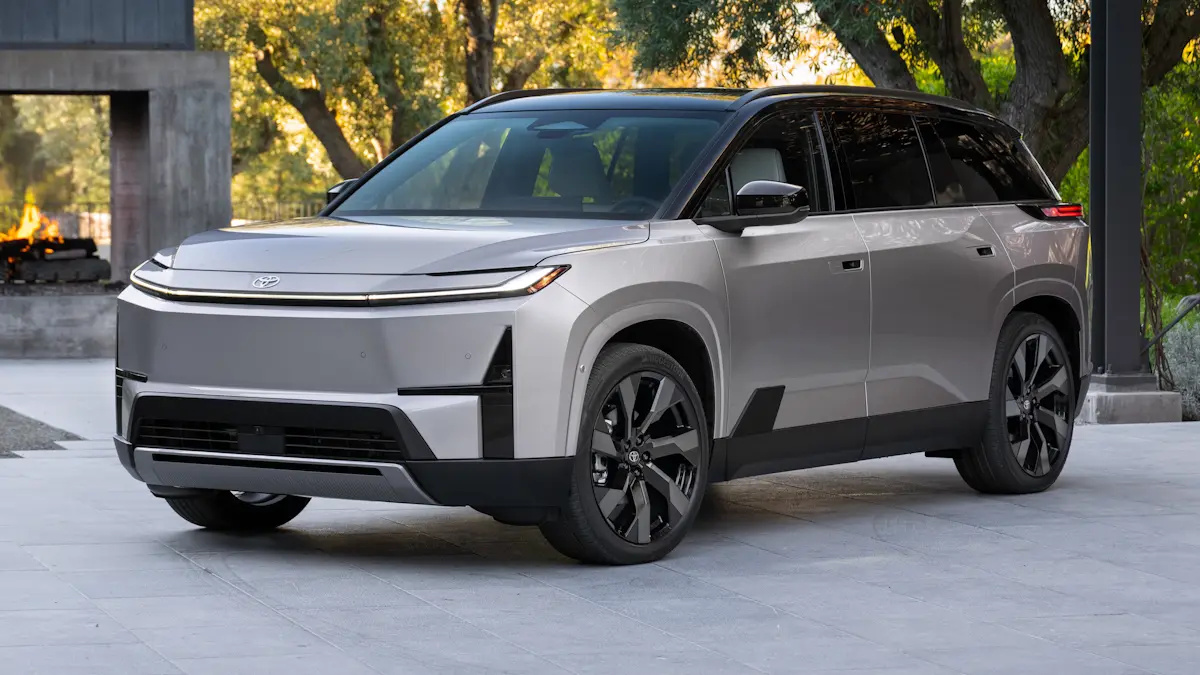
The Electric Highlander Marks Toyota’s Entry Into The Seven-Passenger Electric SUV Segment In The USA, With Local Production, New Batteries, And Focus On Recharging.
Versions, estimated range, and equipment have been anticipated, but the price has not yet appeared.
Toyota unveiled a new generation of the Highlander in the United States with a 100% electric powertrain and three rows of seating.
According to the automaker, the utility vehicle is the first BEV from the brand with seven seats sold in the American market and has been positioned to compete in the family electric SUV segment, currently occupied by models like the Kia EV9 and Hyundai Ioniq 9.
-
The car stored for 38 years: when opening the barn door, what appears is breathtaking and looks like a scene from a movie!

-
Fiat works miracles in the Brazilian market, lowers the price of its 0 km hatch to R$ 69,990, reestablishes the model as the cheapest car in the country, and reignites the battle against Kwid and C3.
-
Chevette with cooking gas: How the gas cylinder ends up being used in cars clandestinely and why this makeshift solution can result in leaks, explosions, damaged engines, and seized vehicles.

-
Fiat launches the new 2027 Toro hybrid with 48V, 176 hp, an electric motor of 15.5 hp, a 0.85 kWh battery, up to 7% fuel savings, 8% fewer emissions, and possible exemption from IPVA.
The manufacturer reported that the arrival at dealerships is scheduled for the end of 2026.
For now, there is no official price.
Highlander In The USA: History And Shift To Electric
Although the Highlander may not have the same presence among Brazilians, the model has a long history in the United States.
The first generation was showcased at the New York Auto Show in 2000 and, since 2009, the SUV has been produced on American soil, the main market for the lineup.
Now, the Highlander name will also be used for an electric product.

Toyota claims that the new model retains the proposal of three rows and capacity for up to seven occupants, but alters the technical foundation and powertrain compared to the Highlander sold with combustion engines.
Production In Kentucky And Batteries In North Carolina
According to Toyota, the electric Highlander will be assembled in Georgetown, in the state of Kentucky.
The company states that battery modules will be supplied by Toyota Battery Manufacturing North Carolina (TBMNC), in North Carolina, a unit established to support the expansion of electrified vehicles in the region.
The brand also reported that the SUV uses a modified version of the TNGA-K architecture, known for supporting combustion engine models from Toyota.
The adaptation, according to the automaker, was made to accommodate a high-capacity battery and enable local production of the vehicle.
Versions, Batteries, And Estimated Range Of The Electric Highlander
In the USA, the electric Highlander will be offered in two versions, XLE and Limited.
The XLE can be configured with front-wheel drive or all-wheel drive; while the Limited will always come with all-wheel drive, according to Toyota.
The automaker revealed two battery options, of 77.0 kWh and 95.8 kWh, depending on the configuration.
In the front-wheel drive setup, the reported power is 221 hp and the maximum torque reaches 198 lb-ft.
In the all-wheel drive versions, Toyota announces 338 hp and 323 lb-ft.
In terms of range, the company is working with estimates of up to 287 miles for the front-wheel drive XLE version with a 77 kWh battery.
In configurations with all-wheel drive and the same battery, the estimate drops to 270 miles.
Models with a 95.8 kWh battery have an estimated range of up to 320 miles.
Toyota also states that the vehicle offers battery pre-conditioning to assist with fast charging, especially in cold weather.
The brand cites a goal of charging from 10% to 80% in about 30 minutes with a fast charger of 150 kW, when conditions allow.
NACS Recharging And V2L Function To Power Devices
Another highlight presented by the company is the adoption of the NACS port, a charging standard that has solidified as a reference in the American market in recent years.
Toyota claims that this choice expands access to compatible charging stations in the country.
The electric Highlander will also feature vehicle-to-load (V2L) technology.
In the official material, the automaker states that the SUV can function as a power source for external equipment and, in some scenarios, assist as a backup in case of power outages, noting that usage depends on bidirectional accessories.
External Design And Screens In The Interior Of The Seven-Passenger SUV
Externally, the model follows the lines adopted by Toyota in its most recent visual language for electrics, with a front featuring a continuous light signature, pronounced fenders, and flush door handles.
The manufacturer claims it has redesigned the SUV’s proportions, with changes in dimensions to favor interior space and accommodate the battery.
In the cabin, Toyota confirms a 14-inch multimedia center and a 12.3-inch digital dashboard.

The model will feature wireless Apple CarPlay and Android Auto, as well as charging points and USB ports distributed across the three rows, according to the company.
The brand also reports customizable ambient lighting and the availability of a fixed panoramic glass roof.
In the seats, the electric Highlander will have SofTex upholstery; heated front seats will come standard, while ventilation in the front seats and heating in the second row will depend on the version and options.
Trunk And Flexibility Of The Three Rows
Toyota has yet to present a complete specification with all the load capacity data in measurement standards more common in Brazil.
Even so, it released numbers in cubic feet.
With the third row folded down, the indicated volume is 45.6 ft³.
With all seats in use, the brand reports 15.9 ft³.
As these data vary according to measurement methodology, direct comparison with other markets may require caution, but they provide a reference for available space in family use.
Safety Toyota Safety Sense 4.0 And Driver Assistances
The SUV will come with Toyota Safety Sense 4.0, according to the automaker.
The list includes automatic emergency braking with pedestrian detection, adaptive cruise control, and lane-keeping and signage reading assistances.
Additionally, Toyota mentions blind spot monitoring, rear cross-traffic alert, and maneuvering assistance features, which may vary depending on the chosen version.
Portfolio Strategy And Positioning Of The Electric Highlander
Upon announcing the model, Toyota retained the Highlander name for the electric variant, a strategy that typically aids in product recognition in the American market.
In a statement, David Christ, vice president of marketing for Toyota Motor North America, stated that the project is designed to be “a stylish and high-tech leader” among mid-size SUVs, linking the proposal to the interior space and features of the new model.
Still without a price and with sales expected for the end of 2026, the electric Highlander enters a segment that has gained traction in the USA as three-row SUVs began receiving battery versions.







Seja o primeiro a reagir!