





 Portuguese
  English
  Spanish
  4 min of reading
  8 comments


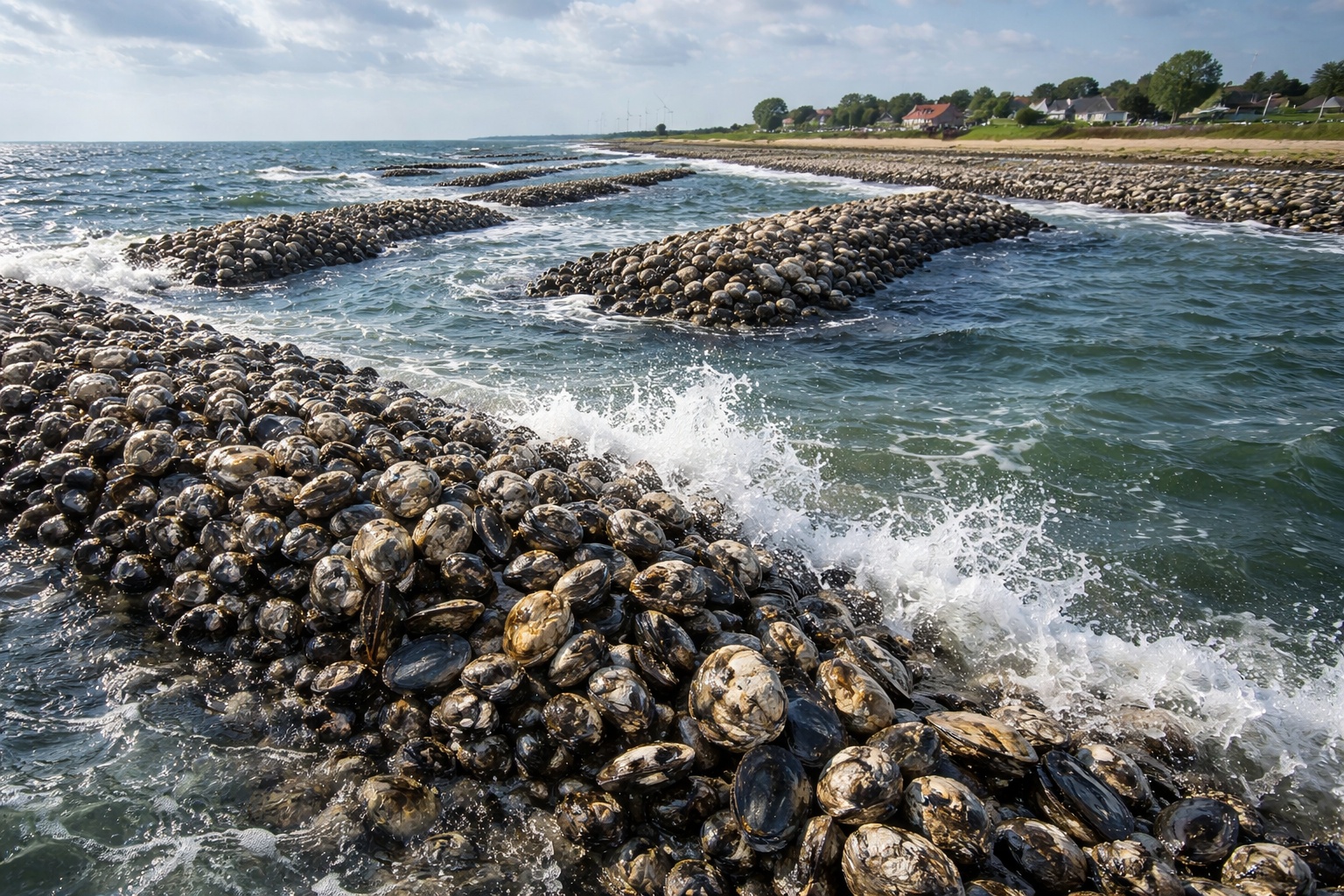


Netherlands Studies The Use Of Oysters And Mussels As Natural Solutions To Strengthen Dikes, Reduce Coastal Erosion And Confront Sea Level Rise.
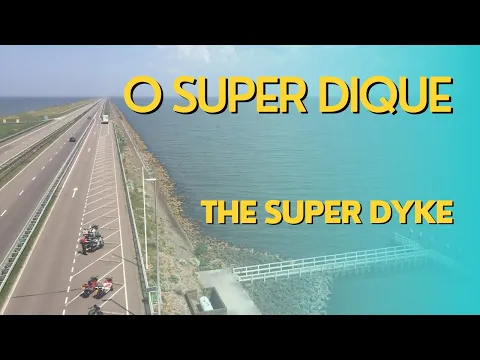
The relationship between the Netherlands and the sea has always been a matter of national survival. About one-third of Dutch territory is below sea level, and a large part of the population lives in areas that are naturally susceptible to flooding. Throughout the centuries, the country has built one of the most sophisticated coastal protection networks on the planet, based on concrete dikes, monumental dams, and highly complex hydraulic systems, such as the renowned Delta Works complex.
In recent years, however, in the face of rising sea levels, increased storm intensity, and the growing maintenance costs of these structures, the Netherlands has begun to expand its strategy. Without abandoning heavy engineering, the country started to study and integrate nature-based solutions, assessing how living organisms can act as allies in coastal protection. It is in this context that oysters and mussels come into play, not as substitutes for traditional dikes, but as part of a complementary approach.
Dutch Coastal Protection Strategy Begins To Integrate Natural Solutions
The change in approach is linked to the concept known as Building with Nature, widely adopted by Dutch research institutes and public agencies. The proposal is simple in theory but complex in practice: to use natural processes to reinforce existing artificial structures, reducing environmental impacts and increasing coastal resilience.
-
Marine fossils found at over 8,800 meters altitude on Everest and in large mountain ranges have proven that entire continents move, oceans disappear, and tectonic plates collide over millions of years, revolutionizing science in the 20th century.
-
What if the Sun disappeared suddenly? Simulation shows Earth in darkness within minutes, extreme cold, and rapid collapse of life on the planet.

-
A 2,400-year-old iron foundry has been discovered in Senegal with 100 tons of slag, 35 furnace bases, and signs of nearly eight centuries of continuous metallurgical activity.
-
Four humans are flying towards the Moon inside the Orion capsule launched by the SLS rocket, and on April 6, Artemis II will disappear behind the far side of the Moon without communication with Earth for nearly an hour.



Within this strategy, scientific projects analyze the role of natural oyster and mussel reefs in specific areas, such as the Wadden Sea, the Scheldt Estuary, and intertidal zones along the North Sea coast. These environments historically hosted extensive shellfish beds, which have been reduced over time due to pollution, dredging, and hydrodynamic changes caused by human works.
The current goal is not to create “biological dikes” in the literal sense but to understand how the restoration of these natural habitats can contribute to reducing wave energy and stabilizing coastal sediments, acting as an additional layer of protection.
How Oyster And Mussel Reefs Influence Coastal Erosion
From a physical standpoint, dense beds of mussels and oysters form irregular and porous structures that directly interfere with wave dynamics.
As water passes through these reefs, it loses speed and part of its energy, which reduces the force with which the waves hit the coast and the artificial structures.
Studies conducted by Dutch marine research institutes show that areas protected by natural reefs experience lower wave energy and less sediment mobilization compared to stretches of fully exposed coast. This effect does not eliminate the need for dikes but reduces the wear on these structures, prolonging their lifespan.
Another relevant aspect is the natural retention of sediments. The reduction in water speed favors the deposition of sand and silt, contributing to the stabilization of the seabed and the mitigation of erosion in sensitive areas.
Heavy Engineering Costs Drive The Search For Complementary Solutions
Maintaining Dutch coastal protection solely through traditional works requires continuous and long-term investments. Structures such as the Oosterscheldekering demand constant inspections, specialized maintenance, and periodic reinforcements to keep up with climate change and rising sea levels.
In this scenario, nature-based solutions emerge as a way to reduce future risks and costs by alleviating pressure on dikes and dams.
Technical reports and strategic analyses indicate that the integration of traditional infrastructure with natural solutions can reduce the need for emergency works, frequent dredging, and reconstructions after extreme events, generating economic gains over decades.
Although these benefits depend on local conditions and continuous monitoring, the hybrid approach has been seen as a pragmatic response to the growing complexity of coastal protection.
Environmental Benefits Reinforce The Living Infrastructure Strategy
In addition to structural gains, oysters and mussels offer significant environmental advantages. These organisms are highly efficient natural filterers, removing suspended particles, excess algae, and organic matter from the water.
In areas where natural beds are restored, improvements in water quality, increased transparency, and recovery of marine habitats are observed.
In the Wadden Sea, for example, the restoration of mussel beds is associated with the return of coastal birds, fish, and invertebrates that depend on these environments for food and reproduction.
This strengthening of ecosystems makes the coast more resilient to extreme events, creating a positive effect that goes beyond engineering.
Netherlands Combines Traditional Dikes And Nature-Based Solutions
The Dutch strategy makes it clear that dikes and dams continue to be the backbone of coastal protection. Natural solutions act as a first line of defense, reducing wave energy before it reaches artificial structures.
This combination of gray and green infrastructure has gained prominence in international climate adaptation forums and is already inspiring projects in countries such as Belgium, the United Kingdom, and the United States. The difference with the Netherlands lies in the integration of these solutions into national planning, rather than isolated initiatives.
What “Living Dikes” Reveal About The Future Of Coastal Engineering
In a scenario of global warming and continuous sea level rise, relying exclusively on concrete and steel is likely to become increasingly costly and complex. By studying how living organisms can collaborate with engineering, the Netherlands points to a paradigm shift in how to protect coastal territories.
It is not about replacing large works with biological solutions but recognizing that nature can reduce risks, costs, and impacts when intelligently integrated into long-term planning.
And you, reader: to what extent can nature-based solutions become a central part of critical infrastructure in a world increasingly affected by climate change?






Na Holanda existem os holandeses.
No Brasil, os brasileiros…
Assunto muito interessante , engenharia associada a vida marinha para auxiliar nos diques …
Natural systems such as phytoremediation clean water, provide wildlife habitat and protect homes. The problem is getting engineers to acknowledge the harm they”ve done & continue to do. Ego & ignorance