





 Portuguese
  English
  Spanish
  5 min of reading
  0 comments


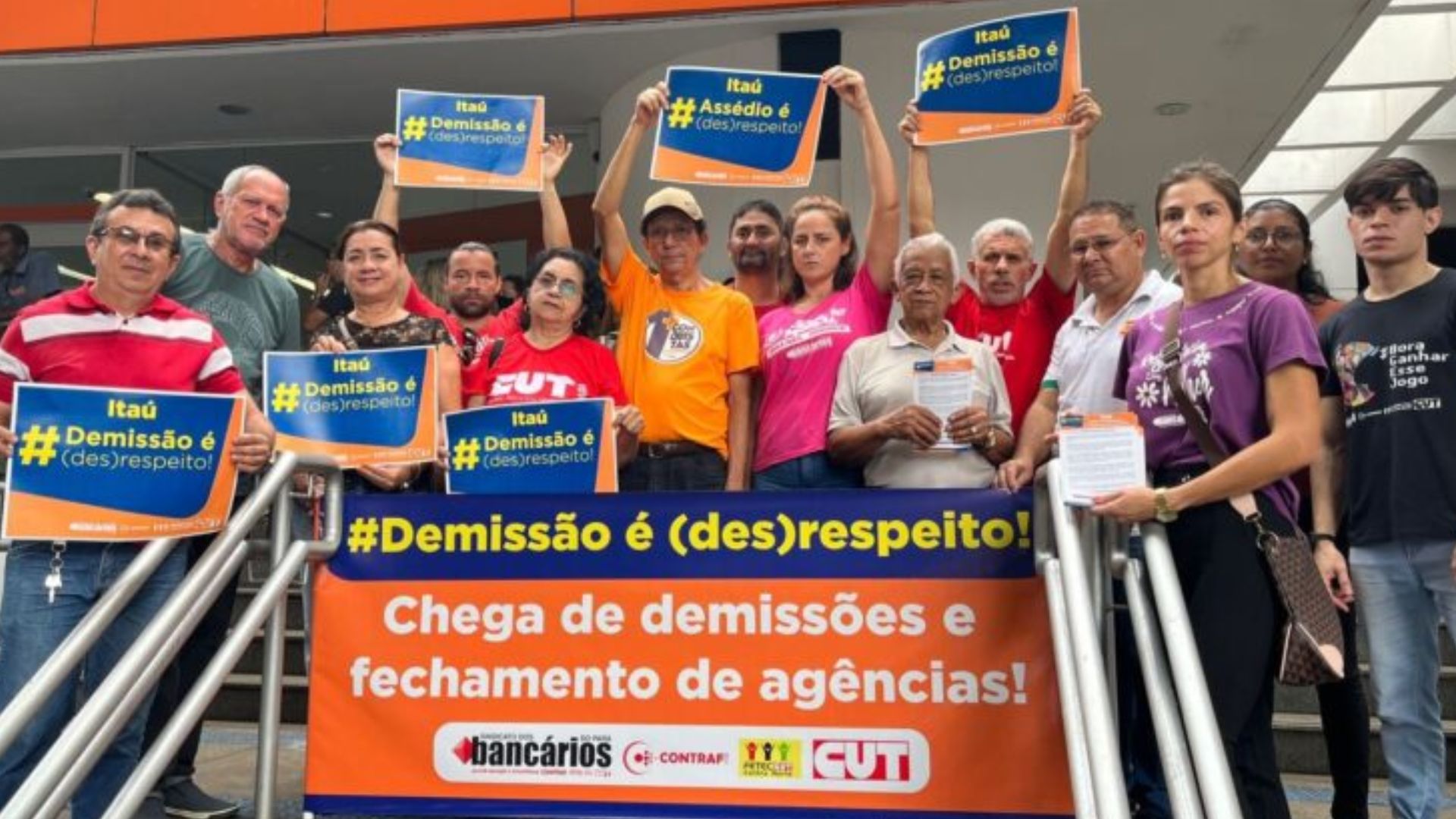
Itaú Unibanco Fired About One Thousand Workers in Remote or Hybrid Work, According to the Bank Workers’ Union, Justified by Low Participation in Home Office. The Decision Sparked Criticism for the Lack of Dialogue and Transparency.
Itaú Unibanco fired, on this Monday (8), about one thousand employees from the Technological Center (CT), CEIC, and Faria Lima hubs who were working in hybrid or fully remote modes, according to the Bank Workers’ Union of São Paulo, Osasco, and Region.
According to the entity, the dismissals occurred without prior warning and without dialogue with the union movement.
The bank’s justification was supposedly “low adherence to home office,” identified after more than six months of monitoring.
-
“No one will make us change the Pix,” says Lula after the US report.

-
Lula responds directly to Trump and says that Pix is from Brazil and will not change under pressure from anyone, after a report from the United States pointed out the Brazilian payment system as an American trade barrier.

-
Amazon has just announced a new fee on all deliveries, and your online purchases will become more expensive starting April 17, including for those buying from the United States here in Brazil.

-
He sold his share for R$ 4 thousand, saw the company become a giant worth R$ 19 trillion, and missed the opportunity of a lifetime.


Mass Dismissals and Lack of Dialogue
According to the Union, the terminations were communicated unilaterally and covered entire teams in technology and support areas.
The entity claims that there was no attempt at mediation, negotiation, or relocation of professionals to other areas before the termination of contracts.
Additionally, according to the Union, the assessment is that the procedure disrespects the historical relationship of negotiation with the category, even though labor reform has removed the requirement for prior authorization from the Union for collective dismissals.
For the entity, less traumatic measures could have been adopted, such as realigning goals and repositioning staff.
Monitoring and “Low Adherence” to Remote Work
According to reports collected by the entity, the bank based the cuts on records of “inactivity” on corporate machines, in some cases periods of four hours or more without interaction.
For the Union, this criterion is “extremely questionable” because it disregards the dynamics of banking remote work, potential technical failures, health contexts, periods of concentration without keyboard use, and the organization of teams.
“Today we were surprised by this mass dismissal made by the bank,” said the Union director and Itaú employee, Maikon Azzi.
He added that the records of idleness do not capture the complexity of tasks performed outside the system or in meetings and that, for this reason, they should not underpin such drastic decisions.
Conduct Method is Criticized
The Union leadership also criticized the procedure adopted.
“The gravest issue is the arbitrary way in which these dismissals occurred. There was no prior dialogue with the workers or with the union entities,” said Azzi.
According to him, even though the Consolidation of Labor Laws, in article 477-A, dispenses prior authorization from the Union, warnings, formal feedback, and opportunities for defense should be expected before such a measure.
According to the entity, mass dismissal without intermediary steps produces insecurity and can lead to labor disputes, especially when linked to technical criteria whose measurement is not transparent for the employee.
Demand for Justifications and Replacement of Positions
The Union reported that it has already contacted Itaú and demanded detailed explanations about the monitoring methodology that underpinned the dismissals.
According to the entity, the demand includes the replacement of the cut positions, arguing that the remaining teams are overloaded and that the sudden reduction in workforce compromises operational continuity.
According to the Union, the recommendation is that affected workers seek the entity for legal guidance and to register reports on the conduct of the dismissals, in order to support potential collective measures.
Home Office Under Pressure
For the bank workers’ representation, home office should not be used as an argument to increase control over productivity to levels considered abusive.
According to the entity, digital surveillance systems can overlook qualitative deliveries, study routines, and meetings external to monitored tools.
The assessment is that performance management policies need to be clear, negotiated, and compatible with the nature of activities, especially in technology areas.
Financial Context of the Bank
The president of the Union, Neiva Ribeiro, linked the dismissals to the efficiency agenda of the sector but questioned their necessity given Itaú’s recent results.
According to her, in just the last semester, the bank reported profit exceeding R$ 22.6 billion, with rising profitability, remaining the largest institution in the country by assets.
According to the leader, the productivity gains from digitalization could be reversed into better working conditions and job stability, instead of cuts.
According to the entity, even with robust results, the bank eliminated 518 positions in twelve months, reducing the holding’s workforce to 85,775 employees during the period.
The union’s read is that this movement pressures work in areas that are left with fewer staff.
What the Union Demands
The entity states that it will continue to demand from Itaú a “plausible and responsible” justification for the dismissals, detailing the criteria used.
According to the Union, a commitment to continuous dialogue processes will also be required, including the opening of negotiation tables to discuss internal relocations, training, and productivity goals compatible with remote and hybrid work.
According to the entity’s public statement, protests will be intensified in the coming weeks, with actions in the bank’s units and guidance for workers to formalize any irregularities observed in the dismissal process.
Human and Organizational Impact
Meanwhile, accounts received by the entity indicate immediate effects on the remaining teams, such as rushed redistribution of tasks and uncertainty about deadlines.
According to the Union, such situations tend to affect the quality of deliveries, team morale, and the internal climate, especially when management’s communication is not accompanied by clear parameters and paths for contestation.
According to the union leadership, transparency about indicators and evaluation methods is essential so that any deviations in conduct can be corrected without unjustly penalizing professionals who, due to system failures or work particularities, do not fit into automated productivity standards.
Next Steps
According to the entity, the immediate goal is to obtain an official position from the bank that details the numbers, clarifies the monitoring policy, and indicates mitigation measures for affected areas.
According to the Union, the replacement of positions and the opening of dialogue channels remain at the center of the agenda, as well as the defense of objective and auditable parameters for remote work.
In light of this scenario, what solutions can the bank and the workers’ representation build to balance productivity, transparency, and respect for people?








Seja o primeiro a reagir!