





 Portuguese
  English
  Spanish
  4 min of reading
  0 comments


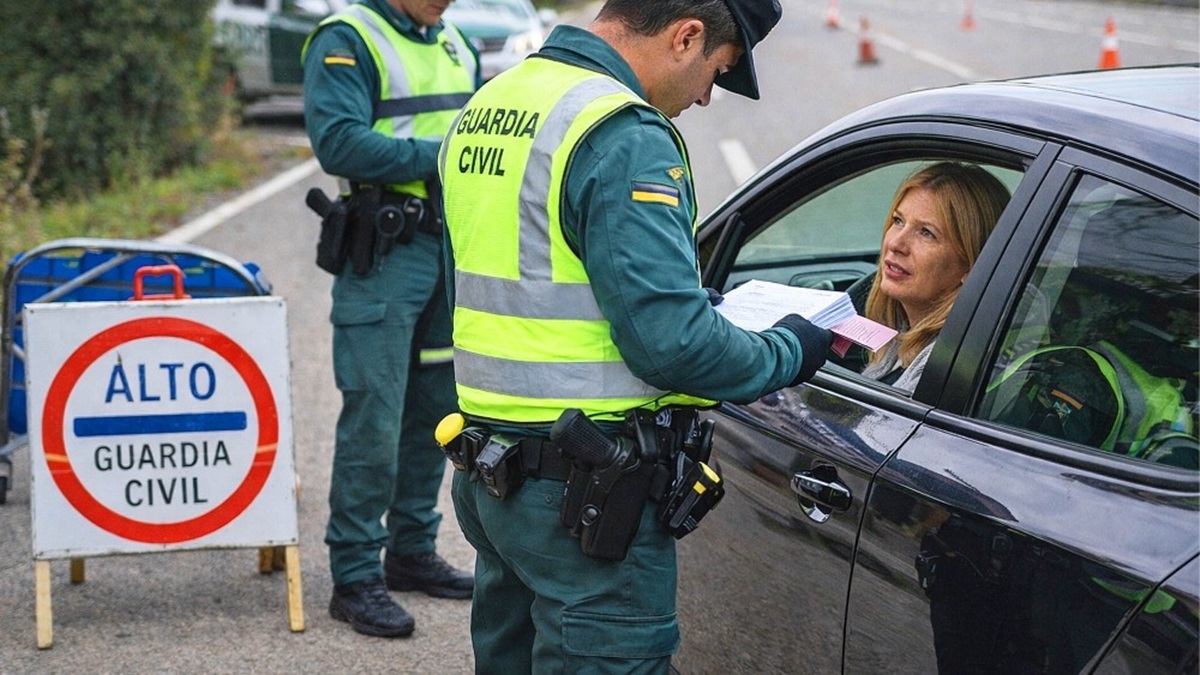
The Investigation by the Civil Guard in Santa Eulària des Riu, Ibiza, Revealed How a Message Posted in a Telegram Group, with Real-Time Alerts About a Traffic Check, Led to the Identification of the Author
A driver can be fined up to € 30,000 for alerting other users, through a Telegram group, about a Civil Guard traffic check in Ibiza during a vehicle and pedestrian enforcement operation, according to local authorities.
Enforcement and Change in Vehicle Flow
The case occurred during a check conducted by officers from the Civil Guard of Santa Eulària des Riu aimed at inspecting vehicles and pedestrians on a road in the area. During the operation, a car occupied by two women was stopped.
The occupants of the vehicle were identified by the officers, their information was verified, and they were released to continue their journey. The stop initially proceeded without any irregularities or immediate sanctions applied.
-
Less than a Tera TSI, up to 710 km of range and charging in 9 minutes: the new BYD Song Ultra expands the Chinese brand’s bet on increasingly faster, more technological, and competitively priced electric SUVs.

-
With a 1.0 engine producing 75 hp and costing less than R$ 70,000, Fiat’s car returns to the podium as the cheapest in the country; a temporary promotion for the 2026 Like version reduces the price of the Fiat Mobi.

-
With a mild hybrid system of 48 V, 176 hp and a price of R$ 175,990 in the Sahara version, the new Jeep Renegade changes mostly on the inside, improves slightly in fuel consumption, and remains almost the same car.

-
With a 293.5 cm³ engine and a range of up to 400 km with a 14.1-liter tank, the Honda CB 300F Twister 2026 has up to 24.7 hp, an initial price of R$ 25,150, and already exceeds R$ 29,000 in the Fipe Table.


Minutes after this stop, the officers began to notice a significant reduction in traffic on the main road where the check was being conducted, a behavior considered atypical during such operations.
In addition to the decreased flow, the officers observed that several vehicles began to use a local parallel road, apparently with the goal of avoiding the checkpoint set up by the Civil Guard.
Considering the maximum fine of € 30,000 applied to drivers who alert about Civil Guard checkpoints via Telegram, this amount would be enough to purchase about 31 new iPhones in Spain,
Message in Telegram Group Raised Suspicion
In light of the sudden change in traffic patterns, the Civil Guard began checks to identify the source of the information that was leading drivers to divert from the ongoing checkpoint.
During the investigation, the officers located a message posted in a Telegram group aimed at alerting users about incidents on the roads of Ibiza, including police checks.
In this group, identified as a space for sharing traffic alerts and road incidents, information was disseminated that there was a police checkpoint at the Santa Eulària roundabout.
The location mentioned in the message exactly coincided with the point where the Civil Guard was conducting the inspection at that moment, reinforcing the suspicion of a real-time information leak.
After a more thorough investigation, the authorities concluded that the author of the message was one of the women previously stopped at the checkpoint, who had been identified and released just a few minutes earlier.
Legal Framework and Fine Amounts Foreseen
Based on the facts gathered, the Civil Guard initiated a process to file a complaint against the author of the message for serious violations of the public safety legislation in force in Spain.
The complaint was based on Organic Law 4/2015, of March 30, on the protection of public safety, specifically in article 36.23, which deals with the unauthorized use of information relating to members of the Security Forces and Corps.
The legal provision also covers conduct that may endanger the safety of officers or compromise the success of an ongoing police operation.
For this type of infraction, the legislation provides for financial penalties ranging from € 601 to € 30,000, depending on the severity of the act and the harm caused to the security operation.
In the authorities’ understanding, the disclosure of the exact location of the checkpoint in real time constituted a behavior capable of undermining the effectiveness of enforcement and exposing officers and third parties to risks.
Impacts of Using Messaging Groups for Checkpoint Alerts
The Civil Guard emphasized that the dissemination of such information, especially about real-time control points, is prohibited and can directly affect road safety and the integrity of operations.
Alerting others about alcohol, drug, or document checks via social networks or messaging groups is considered an act that can facilitate evasion of these preventive measures.
According to the authorities, this type of practice negatively impacts road safety by allowing drivers to avoid points aimed at identifying serious infractions, such as driving under the influence of alcohol or drugs.
The use of groups on WhatsApp or Telegram to exchange information about checkpoints and radars has been the subject of warnings from the Spanish Traffic Directorate and other security agencies.
Although there is no specific regulation penalizing simple notifications about fixed radars, when that information is public, the disclosure of ongoing police operations is considered a serious infraction.
Difference Between Public Information and Ongoing Operations
The authorities stressed that information about the location of fixed speed radars is public and can be accessed through the official channels of the Traffic Directorate.
Navigation apps can also legally display this data, provided they are based on information officially provided by the competent authorities.
However, alerting about ongoing checks without authorization constitutes a distinct practice subject to severe legal consequences, as demonstrated in the case that occurred in Ibiza.
The headquarters of the Civil Guard in the Balearic Islands reinforced that the unauthorized disclosure of operational data can “endanger the safety of the operation and third parties,” as well as compromise the success of actions.
The episode highlights that online behaviors, even conducted in private messaging groups, can be classified under public safety legislation when they directly affect ongoing police actions.









Seja o primeiro a reagir!