





 English
  Francês
  Alemão
  Italiano
  Japonês
  Norueguês
  Portuguese
  Spanish
 5 min of reading
  8 comments


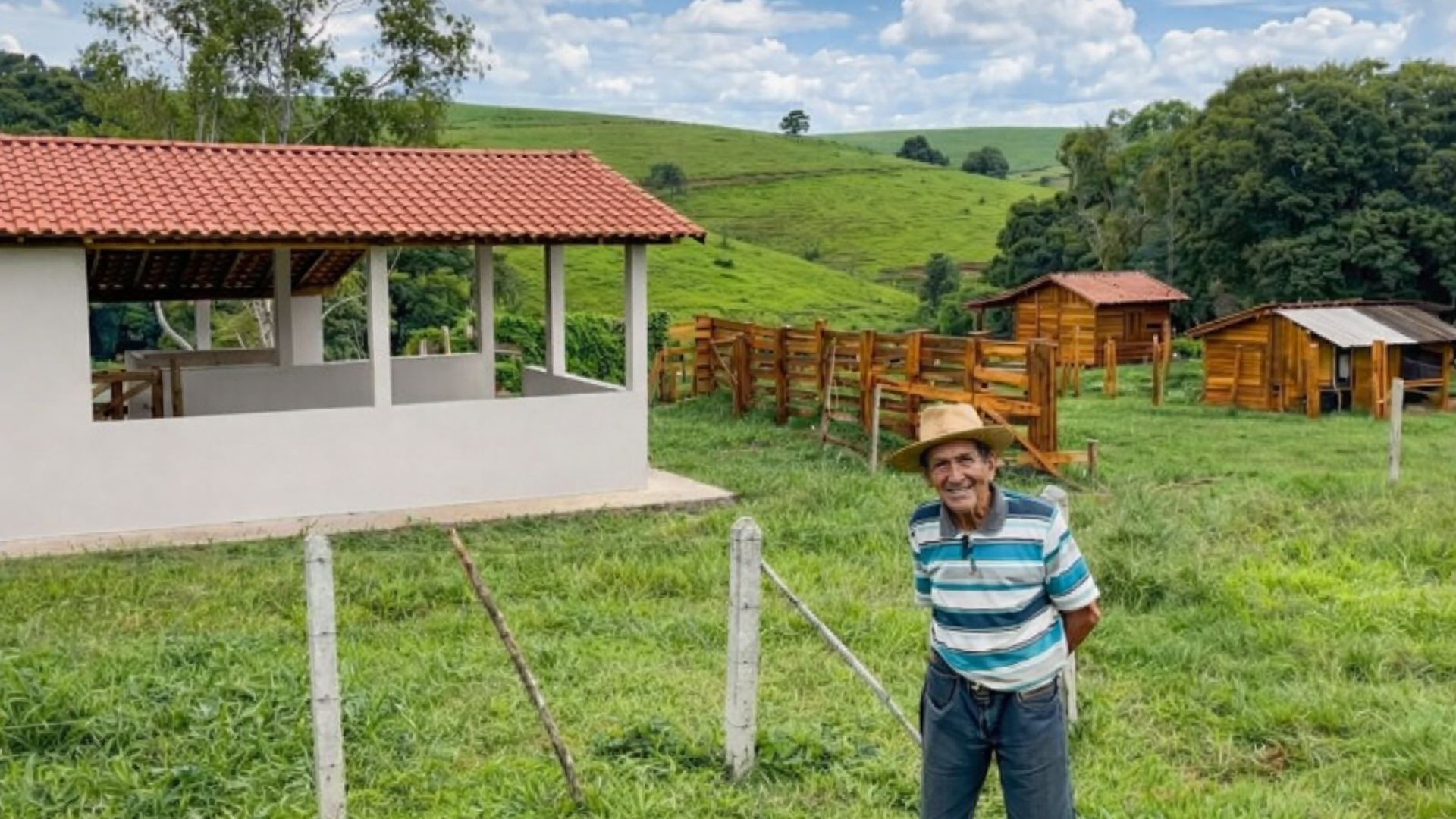


At Over 80, Rural Resident Preserves Old Habits, Stories of Loss, and a Lifetime Devoted to Farming, Away From the City, Supported by Coffee, Cattle, and Family Memory
From an early age, life in the countryside taught that time flows to a different rhythm. It is in this pace that Seu Neném lives, a resident of the rural area of Tapira, in Minas Gerais, a simple man, soft-spoken, with a sharp memory and stories that span generations. At 84 years old, as he himself reports, he carries a journey marked by hard work, family losses, changes of city, and decisions that shaped a unique destiny: he got engaged six times, but never married.
The information was shared through a video published on social media, showing friends visiting the farm where Seu Neném has lived alone for decades. According to the content shared by the channel responsible for the recording, the rural resident still maintains a routine based on coffee cultivation, cattle raising, and customs inherited from his parents and grandparents, on a property that was once much larger in the past.
Despite his advanced age, he remains lucid, active, and with excellent eyesight, claiming to see houses and details from a great distance, something that grabs the attention of those who visit him. Still, time has left its marks: brothers have passed away, the family has dwindled, and loneliness has become a part of his daily life.
-
A trick with a fan and a PET bottle goes viral in the extreme heat of 2026 and promises to cool the environment while using almost no electricity.

-
A 176,000-hectare farm in the Northeast is up for sale for R$ 1.2 billion, featuring a runway, fuel station, river, schools, and warehouses, and has become a phenomenon on social media due to its size, which surpasses that of Brazilian capitals.

-
Finding a 3.9 mm larva of the lionfish in the Amazon raises maximum alert and indicates that the invader may already be reproducing in the region.

-
On a tiny island of 6.3 hectares, Mitsubishi created a city for over 5,000 residents, sustained by underwater coal mining, until the project’s collapse left ruins that still impress Japan.


A Lifetime Dedicated to Farming, Coffee, and Cattle

Before living definitively on his current farm, Seu Neném passed through different cities in the region. According to him, he lived for four years in Monte Santo, spent time in the city, and then returned to the countryside, where he claims to have always felt better. On the farm, he still maintains traditional activities, such as growing coffee, raising Nellore cattle, and small vegetable patches, even if on a reduced scale.
In his accounts, he explains that he once produced about 100 liters of milk per day when he had dairy cows in the barn. Currently, production has decreased, and the cattle are raised more freely, focusing only on maintaining the property and basic sustenance. Even so, some animals attract attention for their size: according to him, there are oxen that weigh up to 800 kilograms, a significant number for livestock in the region.
In addition to the barn, the farm preserves old structures, such as the coffee drying shed, the drying yard, the water reservoir built by the resident himself, and a wooden house with flooring, typical of the old building system. Everything is maintained with simplicity but care, reinforcing the direct connection between manual labor and survival in the countryside.
Another detail revealing the attachment to traditions is the constant use of the wood stove, where coffee is prepared daily. According to him, the secret lies in using thin bamboo and dry twigs, which ensure a quick fire and always hot coffee, a ritual repeated every day for decades.
Engagements, Family Losses, and Decisions That Changed His Destiny

Despite never having married, Seu Neném shares that he had several girlfriends throughout his life and got engaged six times, although at times he corrects himself to say there were three formal engagements. Regardless of the exact count, none of those relationships led to marriage.
According to his own account, one of the main reasons was the family context. In one of the more serious attempts at marriage, a violent incident marked his journey: a brother was shot, an event that deeply affected the family and made him give up the union. This incident, he says, completely changed the course of his personal plans.
In addition to that event, the size of the family, internal conflicts, and responsibilities in farming also contributed to the postponement of marriage, until it never happened. Thus, life took a different path, marked by caring for the property and mutual support among siblings, sisters-in-law, and nephews.
Even living alone, Seu Neném is not completely isolated. Family members help by bringing food, doing shopping in town, and providing daily support. Still, he claims to prefer the tranquility of the farm to urban bustle, reinforcing that he never adapted to city life.
Memory, Tradition, and Resistance to Time in the Countryside
Among the objects kept in the house are true relics: old lanterns, kerosene lamps, metal cans, kitchen utensils, and structures that are no longer used, but remain preserved as part of history. Seu Neném also proudly recalls the times he participated in fishing trips and local tournaments, even winning a competition by catching a fish weighing nearly 4 kilograms, an achievement still told with enthusiasm today.
Another remarkable chapter involves music and dances held in the coffee drying shed. According to him, his own mother organized parties there, where couples danced to traditional music. There were more than 20 dances, held in his youth, a snapshot of a time when the social life of the countryside revolved around family, neighbors, and farming.
The property where he currently lives is part of an area that was once much larger. In the past, the farm had over 500 acres, later divided among heirs. Today, the part that belongs to the family totals about 105 acres, still considered extensive by regional standards.
Despite the difficulties, occasional setbacks, and physical limitations of age, Seu Neném summarizes his philosophy of life in few words: “life is good; you have to know how to carry on”. A simple phrase, but one that conveys decades of work, sacrifice, and resilience in the countryside of Brazil.






This is a lesson to the ladies. They need to know that, it’s not only with their presence that a man has to live.
How old are you
Congrats on a life well lived.