





 Portuguese
  English
  Spanish
  6 min of reading
  0 comments



In Overcrowded Slums of Islamabad, the Sewage Men Dive into Feces, Trash, and Gas to Unclog Drains Without Protection, Face Discrimination for Being Christians, Survive on Little Money, and Find in Family and Faith the Only Reason to Continue While the Rest of the City Pretends Not to See.
In the early decades of the 21st century, during the monsoon season in Islamabad, the capital of Pakistan, the sewage men entered clogged drains up to their necks, often without properly checking for gas, to prevent wastewater from flooding an entire slum’s homes.
As the city grew above the skyline, a marginalized Christian minority remained prohibited from building formal churches, pushed into overcrowded ghettos and to the most rejected work imaginable. In this scenario, every day on the job, these workers discovered in practice how much a plate of food and a spot in school for their children are worth.
Who Are the Sewage Men in the Slums of Islamabad

On the invisible margins of the Pakistani capital, the sewage men are called manual scavengers, the manual laborers responsible for keeping the sewers functioning in slums and the poorest urban neighborhoods.
-
Roman game becomes an enigma for 40 years in the Netherlands, until AI and 3D scanning test 100 rules, run 1,000 simulations, and identify a “blocking game” that no one has been able to decipher since 1984.

-
A scientist proved with a thermal camera that the fan does not cool the environment but reduces the temperature of your skin by up to 6 degrees thanks to a natural mechanism of the human body that almost no one understands how it really works.

-
Scientists find a new explanation for the origin of Earth, which may have formed solely from material close to the Sun, changing an old theory and indicating that Jupiter may have been the cause of it all.

-
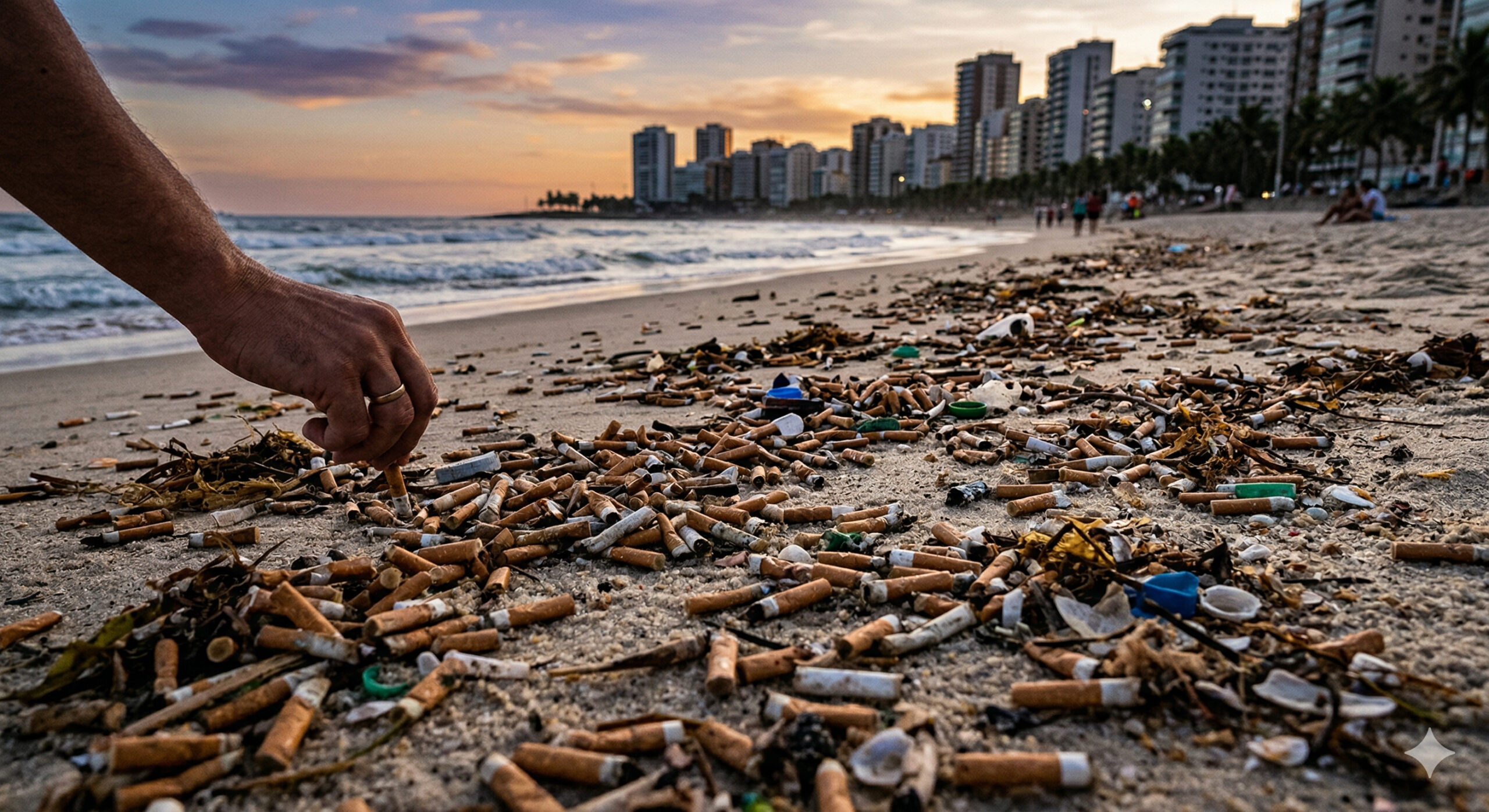
Brazilian beaches are among the most contaminated in the world by cigarette butts, with levels up to 40 times above the global average and areas where this waste already represents the majority of all the trash found.

They unclog drains and channels using almost always just a piece of wire and their own hands, amidst human waste and accumulated household garbage.
In Islamabad, there are about 40 slums, where over 100,000 people live without drinking water, with open sewage and drainage systems that overflow when it rains heavily.
In these areas, the work of the sewage men is the thin line between permanent flooding and some minimal circulation of wastewater, even in totally precarious conditions.
The workers walk the streets with tired expressions and improvised tools.
For most residents, however, they are part of the landscape, looked at sideways or simply ignored.
The scene that seems unbearable to any visitor, with the smell of gas and feces, is just another day at work for those who have learned to survive on the edge.
Poor Christians Pushed into Work That No One Wants

The sewage men are largely part of the Pakistani Christian community.
This religious minority lives in overcrowded ghettos, with limited access to education and health, and carries a historical stigma that pushes them into the most degrading jobs, such as manual sewage cleaning in neighborhoods that most of the population prefers not to see.
As they are not allowed to build official churches, Christians set up small temples within their own homes.
Pastors report that these spaces serve as spiritual refuges and community centers, where even the sewage men can, for a few minutes, feel part of something larger, be seen, heard, and remembered as people and not just as hands for a dirty job.
According to local leaders, no one outside the Christian community agrees to do this type of work, which ends up being restricted to a section already discriminated against in the population.
The result is a closed cycle: the stigma of sewage reinforces marginalization, which in turn reduces access to other occupations, keeping entire families trapped in the same activity for generations.
Diving in Feces, Toxic Gas, and Hidden Trash in Drains


In the field, the procedure is simple and brutal. In front of a clogged drain, the sewage man opens the cover, quickly assesses the smell, and at most, strikes a match to test for the presence of flammable gases.
If nothing explodes, he goes down.
In many cases, the check is almost automatic, and the worker enters without carefully assessing, relying only on his own experience.
Down there, it is impossible to describe the odor that mixes human feces, plastic bags, rags, rusty metal, and waste from the entire slum.
At some points, the wastewater reaches up to the chin, there is no firm footing for the feet, and the worker depends on colleagues holding a rope to avoid sinking.
A high concentration of gas can leave him unconscious in seconds, before anyone can pull him back.
Reports mention constant cuts on hands and feet, caused by pieces of metal and sharp objects hidden at the bottom of the drain.
In one of the most critical jobs, the worker tries to unclog the largest drain in the neighborhood, but recoils dizzy, out of breath, complaining about the smell of gas and the depth of the pit.
Colleagues say it would not be the first time someone died down there, suffocated or drowned.
Social Stigma and Isolation Within the Community
When they are not in the sewage, the sewage men deal with another type of weight: the gaze of the neighbors.
They say that, while walking through the city, people step aside, avoid physical contact, and comment that this “is not real work,” suggesting that the worker should find another profession, as if the choice were in the hands of those who are just trying not to go hungry.
Even within the Christian community, the stigma appears.
Some report having no friends because of the work, as the clothes remain soaked in sewage and many avoid sharing the same space, fearing diseases or simply due to repulsion.
The result is an isolation that extends from the street into their own network of relationships, forcing families to close in small circles.
At the same time, religious leaders insist on welcoming these workers into home churches, reinforcing the idea that, despite external discrimination, they should be recognized as an essential part of the community.
In simple services, among prayers and songs, the sewage men manage, albeit for a short time, to lift the symbolic weight of their work and regain some sense of dignity.
One Room for Two Families and the Weight of Supporting Five Children
After hours in the sewage, many sewage men return to tiny homes, where two families share the same room with several children.
One of the workers says he lives with his wife, five children, and close relatives under the same roof lent by his brother, who at least provides them with a place to sleep.
The routine is one of overcrowding, little privacy, and income always at the limit.
He reports that, on some days, the family has neither lunch nor dinner.
When any call for work comes in, no matter how bad the job, the feeling is one of relief, because that means enough money to buy basic food and, with luck, pay for the children’s school materials.
The wife acknowledges the harshness of the work but repeats that there are no alternatives if they want to feed the children.
The children know what their father does. They don’t like it, are ashamed of the stigma, but are happy when there is food on the table.
The worker insists on showing that, despite the dirt and the risks, he is an honest person who just wants to secure a better future for his children, giving them the education he himself never had.
Possible Happiness in the Toughest Job in the World
The reporter who follows the sewage men always asks the same question worldwide: what is happiness for you?
In the case of Niahad, one of the workers, the answer does not revolve around great dreams or immediate changes of country.
Happiness means arriving home alive, with some money in his pocket, seeing his children eat, and knowing they will be able to go to school the next day.
He acknowledges that the work is dangerous and degrading, but asserts that he has no choice and that, even so, he thanks God for every call that guarantees a payment.
For this father, every plate placed on the table is a small daily victory, a minimal step toward the idea that the children will have a life different from his, far from drains and sewage.
The story of these sewage men shows that, in extreme contexts, happiness ceases to be an abstract concept and becomes embodied in simple gestures: returning home breathing, hearing his children’s laughter, entering the small home church and feeling, for a few minutes, equal to any other person in the neighborhood.
In light of all this, what do you think is most shocking in the reality of the sewage men in Islamabad: the daily risk of silent death at work or the way society chooses to pretend they do not exist?







-

-

4 pessoas reagiram a isso.